Key Takeaway
The Zcash Grayscale ETF signals a critical phase of altcoin institutionalization, driving short-term volatility but long-term validation. While direct Indian market impact is minimal, it sets a precedent for broader crypto productization, subtly influencing sentiment for Indian tech companies with blockchain exposure.
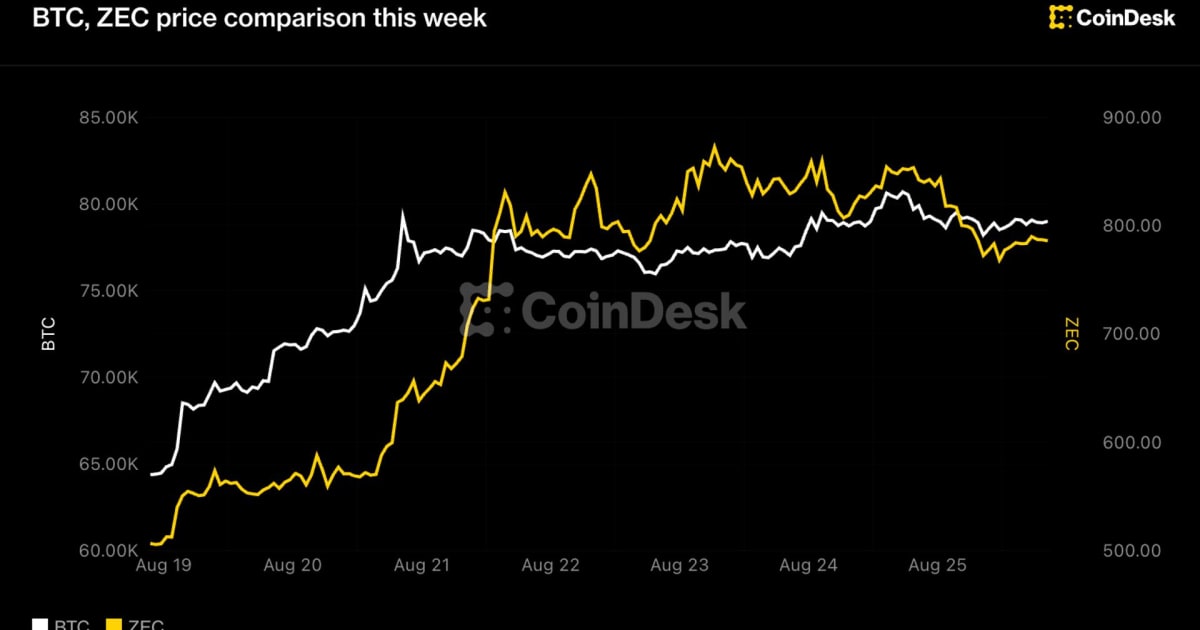
The recent launch of the Grayscale Zcash Trust, effectively an ETF, has ignited significant price swings in ZEC, showcasing the 'buy the rumor, sell the news' phenomenon. This event, though niche, represents a pivotal moment for altcoin institutionalization. We dissect its indirect implications for the Indian stock market, examining how increasing institutional crypto productization could shape investor sentiment and even subtly influence valuations for India's burgeoning blockchain and tech sector.
Zcash Grayscale ETF Launch: Decoding Altcoin Institutionalization and India's Indirect Crypto Stock Play
The digital asset landscape is in constant flux, but rare are the moments that truly signal a structural shift. The recent launch of the Grayscale Zcash Trust (ZEC) into a publicly traded vehicle on the OTC Markets, effectively functioning as an ETF, marks one such inflection point. While Zcash itself, a privacy-focused cryptocurrency, occupies a specialized niche with a market capitalization hovering around $500 million, the institutional wrapper it now inhabits carries far greater weight. This isn't merely about ZEC's price action; it's about the continued, deliberate march of institutional finance into the broader altcoin universe, a trend that warrants meticulous scrutiny from investors globally, including those navigating the intricacies of the Indian stock market.
The immediate aftermath saw Zcash's price exhibit textbook 'buy the rumor, sell the news' behavior. Following a pre-launch rally that saw ZEC climb over 60% in anticipation, the actual launch triggered an 8% pullback. This short-term volatility underscores the speculative nature inherent in nascent markets, yet it simultaneously validates the increasing appetite for structured, accessible crypto investment products. For Indian investors, the direct exposure to Zcash is negligible, given stringent regulatory stances and limited domestic trading avenues. However, the broader narrative of altcoin institutionalization is a subtle, yet potent, undercurrent that could, over time, influence sentiment and valuation metrics for Indian entities with tangential exposure to digital assets or blockchain technology. This phenomenon is not about direct capital flows into ZEC from India, but rather about the evolving perception of digital assets as a legitimate, if volatile, asset class, which in turn can indirectly color investor appetite for innovative tech plays within India's own dynamic economy.
What Does Altcoin Institutionalization Mean for Indian Tech Stocks?
The Grayscale Zcash Trust's debut, while focused on a single altcoin, provides a crucial lens through which to view the maturation of the cryptocurrency market. This is not the first institutional crypto product, but its expansion beyond Bitcoin and Ethereum into a smaller, albeit established, altcoin demonstrates a widening risk appetite among institutional investors and product developers. For India, a nation grappling with its own regulatory framework for cryptocurrencies, this global trend presents a paradoxical scenario. On one hand, the Reserve Bank of India (RBI) and the government have expressed reservations about private cryptocurrencies, citing financial stability concerns. On the other hand, India is a global leader in IT services and blockchain development, with numerous companies actively building solutions leveraging distributed ledger technology.
The indirect impact on the Indian stock market is primarily psychological and sector-specific, rather than direct capital reallocation. As institutional players globally create more avenues for crypto exposure, it subtly legitimizes the underlying technology. This growing acceptance could positively influence investor perception towards Indian IT companies that are deeply involved in blockchain development, even if their core business isn't directly tied to crypto asset trading. Consider companies like Tata Consultancy Services (TCS), with a market capitalization of approximately INR 13.5 trillion and a P/E ratio around 30x, which has been actively investing in blockchain research and developing enterprise-grade solutions across supply chain, finance, and healthcare. Similarly, Infosys (INFY), with a market cap of INR 6.2 trillion and a P/E of 25x, has dedicated blockchain units working on proof-of-concepts and deployments for global clients. While their revenue from blockchain services forms a small fraction of their overall top line (estimated at less than 1-2% for most, but growing at a faster clip than traditional services), the enhanced legitimacy of the crypto ecosystem could lead to increased client adoption of blockchain solutions, thereby boosting future revenue streams for these IT giants.
Historically, significant global financial product innovations, even in niche areas, have often had a 'halo effect' on related sectors in emerging markets. For instance, the proliferation of global SaaS ETFs in the mid-2010s, while not directly investing in Indian companies, coincided with a re-rating of Indian IT services companies focusing on cloud transformation, as investor confidence in digital-first business models surged. The current Grayscale Zcash development, while on a smaller scale, can be seen as a similar, albeit more nuanced, signal for the blockchain and digital asset space.
Which Indian Stocks Are Indirectly Affected by Crypto Institutionalization?
While no Indian company has direct, material exposure to Zcash or similar altcoins on its balance sheet, the increasing institutionalization of crypto assets globally fosters an environment conducive to blockchain innovation. This ripple effect can be observed in several Indian listed entities:
- Tata Consultancy Services (TCS): As a global leader in IT services, TCS has substantial investments in blockchain R&D. Their 'TCS BaNCS' platform offers blockchain-powered solutions for banking and capital markets. Increased institutional comfort with crypto assets could accelerate enterprise adoption of such distributed ledger technologies, boosting TCS's consulting and implementation revenue in this burgeoning area. For example, if global financial institutions perceive less regulatory risk in blockchain due to institutional productization, they might increase their spending on blockchain infrastructure, directly benefiting TCS's offerings.
- Infosys (INFY): Infosys also maintains a dedicated blockchain practice, delivering solutions for supply chain management, trade finance, and digital identity. A more mature crypto ecosystem, validated by institutional products, could encourage enterprises to move beyond pilot projects to full-scale blockchain deployments, thereby enhancing demand for Infosys's expertise. Their focus on 'Live Enterprise' solutions often incorporates blockchain components.
- Tech Mahindra (TECHM): With a strong focus on digital transformation, Tech Mahindra has positioned itself as a key player in the blockchain space, particularly in telecom and manufacturing. Their 'Block N Chain' platform and various partnerships demonstrate a commitment to this technology. A broader institutional embrace of crypto could indirectly de-risk blockchain investments for their clients, leading to higher project volumes for Tech Mahindra. The company's revenue from new-age technologies, including blockchain, has been a focus for growth.
- Wipro (WIPRO): Wipro has also been actively exploring blockchain applications, particularly in areas like financial services, healthcare, and retail. While perhaps not as vocal as some peers, their 'Wipro Blockchain Lab' indicates ongoing investment. The global trend towards crypto institutionalization could catalyze greater client interest in Wipro's blockchain consulting and implementation services.
- Persistent Systems (PERSISTENT): A mid-cap IT services company known for its product engineering capabilities, Persistent Systems has been involved in developing blockchain-based solutions for various clients, particularly in the financial services sector. As institutional confidence in blockchain grows, so too might the demand for specialized product engineering services, benefiting companies like Persistent Systems that excel in niche technology areas.
- Happiest Minds Technologies (HAPPSTMNDS): This relatively newer IT services firm, with a strong focus on digital technologies, has also indicated its foray into blockchain and Web3 services. While their blockchain revenue is currently nascent, the overall positive sentiment around institutional crypto could provide tailwinds for their specialized digital offerings, attracting new clients looking to leverage distributed ledger technology.
These companies, while not directly trading crypto, stand to benefit from the 'indirect network effect' of increasing institutional comfort and adoption of the underlying blockchain technology. Their P/E ratios and growth outlooks are primarily driven by their core IT services, but a burgeoning blockchain sector could add a premium, particularly as these companies report increasing revenue contributions from digital transformation and emerging technologies.
"The Grayscale Zcash ETF is a small but significant brick in the wall of institutional crypto adoption. For India, it’s a signal, not a direct driver. Our tech companies building blockchain solutions will see a gradual, positive shift in client perception and, eventually, project pipeline, even amidst domestic regulatory caution." - WelthWest Senior Analyst Perspective.
Investor Playbook: Navigating the Nuances of Crypto Institutionalization
For investors monitoring the Indian market, the Zcash ETF launch and the broader trend of altcoin institutionalization present a nuanced set of considerations. This is not a 'buy ZEC' signal for Indian equities, but rather a prompt to assess companies with strong blockchain capabilities:
- Watch List: Focus on established Indian IT services companies (TCS, Infosys, Tech Mahindra) with demonstrated blockchain R&D and client engagement. Also, keep an eye on agile mid-caps (Persistent Systems, Happiest Minds) that can quickly capitalize on emerging tech trends.
- Entry Points: Consider accumulating these stocks on dips, especially if broader market corrections occur. The impact from crypto institutionalization will be long-term and gradual, not an immediate catalyst for sharp price movements. Look for P/E ratios closer to their historical averages rather than peak valuations.
- Time Horizon: This is a long-term thematic play (3-5 years). The growth in blockchain revenue for Indian IT firms will be incremental, driven by sustained global enterprise adoption rather than short-term crypto price swings.
- What to Buy: Prioritize companies with strong balance sheets, diversified revenue streams, and a clear strategic focus on emerging technologies, including blockchain. Their core business provides stability while their blockchain initiatives offer growth potential.
- What to Sell/Avoid: Avoid any Indian entities that claim direct, material exposure to obscure altcoins without clear regulatory approval or a robust business model. Such claims often carry disproportionate risk.
Contrarian views exist. Bears might argue that Indian regulatory uncertainty will continue to stifle any meaningful domestic blockchain innovation tied to crypto assets, limiting the upside for even the most capable Indian IT firms. They would also point to the relatively small contribution of blockchain to the overall revenue of these giants, suggesting the impact will remain negligible. Bulls, however, contend that global institutional validation will eventually compel Indian regulators to create a more supportive framework, or at least foster an environment where Indian companies can export their blockchain expertise globally without domestic hindrance, driving significant long-term value.
Risk Matrix: Assessing the Hurdles for India's Blockchain-Exposed Stocks
While the long-term outlook for blockchain technology remains robust, several risks could temper the indirect benefits for Indian stocks:
- Regulatory Uncertainty (High Probability, Medium Impact): India's stance on cryptocurrencies remains cautious, with potential for further restrictive measures. While this primarily affects direct crypto trading, it can create a chilling effect on broader blockchain innovation within the country, potentially slowing down enterprise adoption or R&D for Indian companies operating domestically. The lack of a clear, progressive regulatory framework remains a significant overhang.
- 'Buy the Rumor, Sell the News' Phenomenon in Altcoins (Medium Probability, Low Impact on Indian Stocks): The Zcash price action post-ETF launch is a classic example. While this directly affects altcoin holders, it can create broader negative sentiment around the crypto ecosystem, which might indirectly and temporarily dampen enthusiasm for blockchain-related investments in general, including Indian tech stocks with blockchain exposure. The impact on Indian stocks would be largely sentimental, not fundamental.
- Blockchain Technology Adoption Pace (Medium Probability, Medium Impact): Despite institutional interest, the full-scale, widespread adoption of enterprise-grade blockchain solutions is still evolving. If the pace of adoption is slower than anticipated by industry analysts, the revenue contribution from blockchain services to Indian IT companies might not grow as quickly as projected, thereby limiting the positive impact on their stock valuations.
- Global Economic Slowdown & IT Spending Cuts (High Probability, High Impact): A significant global economic downturn could lead to reduced IT spending across the board, including on emerging technologies like blockchain. This would be a macro headwind for all Indian IT service providers, overshadowing any positive sentiment from crypto institutionalization. This remains the most significant risk to the sector as a whole.
What to Watch Next: Catalysts for Indian Blockchain-Linked Stocks
To stay ahead of this evolving narrative, investors should monitor several key developments:
- More Grayscale Altcoin Trusts: Observe if Grayscale or other asset managers launch similar trusts for other prominent altcoins. Each new product further validates the asset class and broadens institutional comfort.
- Indian Regulatory Clarity: Any definitive policy or legislative action from the Indian government or RBI regarding cryptocurrencies and blockchain will be paramount. A more supportive framework could unlock significant domestic potential.
- Earnings Calls of Indian IT Majors: Pay close attention to management commentary during quarterly earnings calls regarding their blockchain pipeline, client wins, and revenue contribution from digital and emerging technologies. Specific data points on blockchain-related projects will be crucial.
- Global Blockchain Enterprise Adoption Reports: Track reports from consulting firms (e.g., Gartner, Forrester) on enterprise blockchain spending and adoption trends. These will provide insights into the underlying demand for services offered by Indian IT firms.
- Interoperability and Scalability Solutions: Developments in blockchain technology that enhance interoperability and scalability (e.g., Ethereum 2.0 upgrades, layer-2 solutions, cross-chain bridges) could accelerate enterprise adoption by addressing current limitations.
The Zcash Grayscale ETF launch is a subtle tremor, not an earthquake, for the Indian financial markets. Yet, in the intricate world of global finance, even subtle tremors can signal deeper tectonic shifts. For the discerning investor, understanding these nuances is the key to unlocking long-term value in India's dynamic tech landscape, where the future of finance is increasingly intertwined with the future of blockchain.
Run a free AI Stock Screen
Our algorithmic screener scores any NSE/BSE stock on fundamentals, momentum, and risk — free to try, no card needed.
Try the AI Screener →Have questions about this story?
Ask Welth, our finance-focused AI research assistant, for a deeper breakdown — free trial included.
Chat with Welth AI →Disclaimer: This content is generated by WelthWest Research Desk based on publicly available reports and is for informational purposes only. It does not constitute financial advice, investment recommendations, or an offer to buy or sell securities. Always consult a qualified financial advisor before making investment decisions.