Key Takeaway
Bitcoin's stabilization and Zcash's surge signal a potential resurgence in risk appetite within the global crypto sphere. While direct Indian market exposure is limited, this trend could subtly influence speculative capital flows and accelerate blockchain adoption among Indian tech giants.
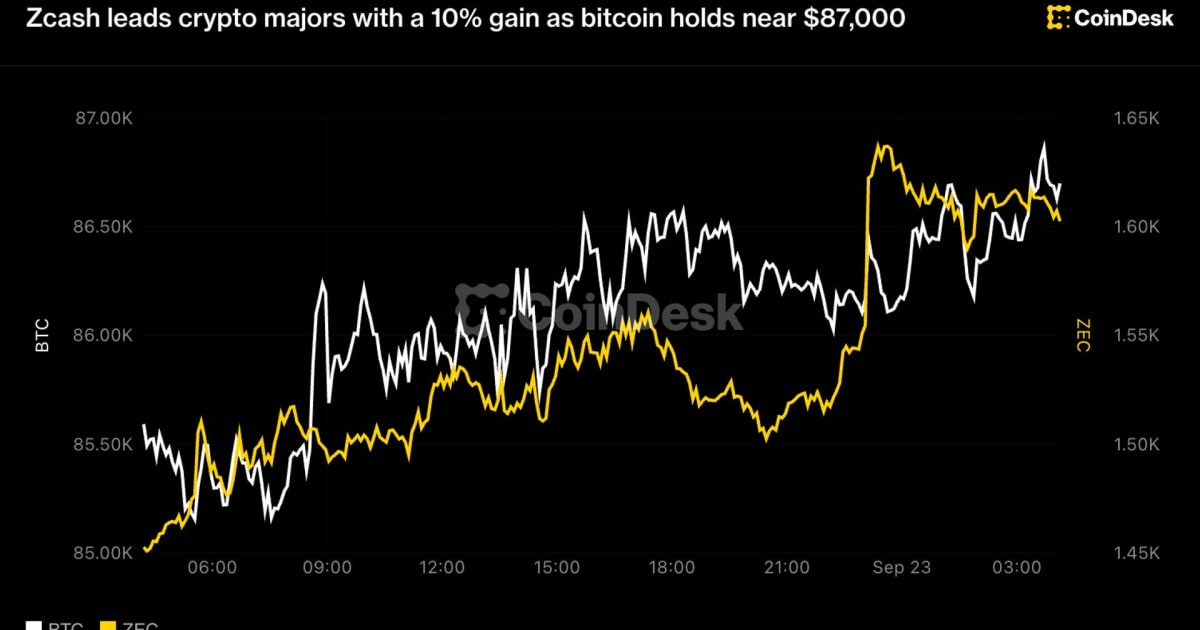
A significant rally in Zcash and other major cryptocurrencies, fueled by Bitcoin's sustained strength near $87,000, is sending ripples through global financial markets. WelthWest Research Desk dives deep into how this bullish crypto sentiment could indirectly affect India's tech sector, fintech innovators, and broader investor psychology, despite regulatory hurdles. Uncover the subtle shifts and opportunities for savvy Indian investors.
Zcash Leads Crypto Majors: Unpacking Bitcoin's Stability and India's Indirect Ripple Effect
The cryptocurrency market is buzzing with renewed vigor as Zcash (ZEC), a privacy-focused digital asset, spearheads a notable rally among major altcoins. This upward trajectory is underpinned by Bitcoin's (BTC) impressive stability, holding firm near the crucial $87,000 mark. For the global financial landscape, this confluence of events signals more than just a sector-specific upturn; it reflects a potential recalibration of risk appetite that, while not directly impacting the Indian equity market in a transactional sense, carries significant indirect implications for investor sentiment, technology adoption, and speculative capital flows.
The recent Zcash surge, demonstrating a robust 10% gain over a 24-hour period, is particularly noteworthy. This move, alongside similar upticks in other major altcoins, suggests a broadening of the crypto rally beyond just Bitcoin dominance. Historically, such 'altcoin seasons' often follow periods of Bitcoin consolidation, indicating increasing investor confidence to venture further out on the risk curve within the digital asset ecosystem. Bitcoin's current stability near $87,000 is not merely a price point; it represents a psychological anchor, reinforcing institutional confidence and potentially drawing in fresh capital that was previously hesitant due to volatility concerns. The total cryptocurrency market capitalization, which recently surpassed $2.5 trillion, is a testament to this expanding investor base and the growing mainstream acceptance of digital assets as a legitimate, albeit volatile, asset class.
How Does a Crypto Rally Impact Indian Stock Market Sentiment?
While direct investment from Indian financial institutions into Zcash or other cryptocurrencies remains largely restricted due to regulatory ambiguity, the psychological impact of a global crypto rally on Indian investor sentiment cannot be understated. Indian retail investors, known for their participation in speculative assets, often follow global trends. A sustained bullish run in cryptocurrencies could enhance overall risk appetite, potentially diverting a small fraction of speculative capital from traditional avenues like mid-cap or small-cap Indian equities towards global crypto platforms, or at least fostering a more adventurous investment mindset.
Moreover, the technological underpinnings of cryptocurrencies—blockchain—are increasingly relevant to India's burgeoning digital economy. Companies in the fintech and IT services sectors are actively exploring blockchain applications for supply chain management, digital identity, cross-border payments, and secure data storage. A vibrant global crypto market signals continued innovation and investment in blockchain infrastructure, which in turn could accelerate research and development efforts within Indian tech firms. This indirect influence is far more profound than any direct capital flow, as it shapes strategic priorities and investment in future-proof technologies.
Consider the historical parallel: during the 2021 crypto bull run, when Bitcoin touched its all-time high, the Nifty 50 saw a concurrent, albeit less direct, surge, gaining approximately 24% over the year. While correlation does not imply causation, the heightened speculative fervor and increased liquidity globally often create a 'rising tide lifts all boats' scenario, even if the boats are in different harbors. The current stability of Bitcoin near $87,000, after a period of significant volatility, could instill a similar sense of confidence, subtly influencing investor behavior across asset classes.
Indian Stocks to Watch: Indirect Beneficiaries of the Blockchain Boom
Despite the lack of direct crypto exposure, several Indian listed companies stand to gain indirectly from the broader blockchain and digital asset phenomenon. These are primarily found in the technology services, fintech, and digital transformation sectors, where the adoption of underlying blockchain technology is a strategic imperative.
- Infosys Ltd. (NSE: INFY): As a global IT services giant, Infosys is actively involved in blockchain consulting and solution development for enterprise clients. Their 'Blockchain as a Service' offerings are gaining traction, helping financial institutions and supply chain companies implement distributed ledger technologies. A bullish crypto market validates the underlying technology, leading to increased client interest and project mandates. Infosys's robust digital transformation segment, which contributes a significant portion of its revenue (e.g., Q4 FY22 digital revenues at 38.5% of total), would see accelerated growth. Sector peers like TCS (NSE: TCS) and Wipro (NSE: WIPRO) are also actively pursuing similar blockchain initiatives, benefiting from the same tailwinds.
- Larsen & Toubro Infotech Ltd. (LTI, now LTIMindtree NSE: LTIM): LTI has been a pioneer in developing blockchain solutions for various industries, including banking and manufacturing. Their focus on emerging technologies positions them well to capitalize on increased enterprise adoption of blockchain. The P/E ratio for LTIMindtree, reflecting investor confidence in its growth trajectory, is often influenced by its exposure to next-gen technologies. Sustained crypto interest could boost their order book for blockchain-related projects.
- Persistent Systems Ltd. (NSE: PERSISTENT): This mid-cap IT firm has a strong focus on product engineering and digital services, including significant work in blockchain and DLT (Distributed Ledger Technology). They partner with various global tech firms and have developed niche expertise in this domain. A thriving crypto market indirectly fuels innovation and demand for such specialized services, potentially boosting their deal pipeline and revenue growth.
- One97 Communications Ltd. (NSE: PAYTM): While Paytm's direct involvement in crypto is currently restricted by Indian regulations, its broader fintech ecosystem and ambition to be at the forefront of digital payments mean it closely watches blockchain developments. Any future regulatory clarity could see players like Paytm rapidly integrate blockchain for faster, cheaper, and more secure transactions. The company's vast user base and technological infrastructure position it as a potential early mover in a more crypto-friendly regulatory environment.
Expert Perspectives: Bulls vs. Bears on Crypto's Indian Influence
The debate surrounding cryptocurrency's long-term impact on India is multifaceted, with strong arguments from both bullish and bearish camps.
Bullish Argument: Proponents argue that the current crypto rally, especially Bitcoin's stability, signifies a maturing asset class gaining institutional acceptance. This global trend will inevitably push India towards a more progressive regulatory framework. "India cannot afford to be left behind in the global digital asset revolution," states a leading fintech analyst. "The underlying blockchain technology is too transformative to ignore. A strong crypto market globally only accelerates the need for clear regulations here, which will unlock massive opportunities for Indian fintech and IT companies." They point to the potential for blockchain to revolutionize remittances, land records, and supply chains, driving efficiency and transparency. Increased global capital flows into crypto could indirectly lead to more foreign direct investment (FDI) into Indian tech startups leveraging blockchain.
Bearish Argument: Skeptics, however, emphasize the speculative nature of cryptocurrencies and the inherent volatility. "These gains are often short-lived and driven by retail FOMO (Fear Of Missing Out)," cautions a prominent economist specializing in emerging markets. "The Indian market has its own unique dynamics, and the RBI's cautious stance on cryptocurrencies is well-founded given the risks of money laundering, terror financing, and financial instability." They argue that any 'ripple effect' on Indian stocks is negligible and primarily psychological, easily overshadowed by domestic macroeconomic factors, interest rate decisions, or geopolitical events. The lack of a clear regulatory framework in India means that any significant capital allocation to crypto by institutional players remains highly improbable, thus limiting any meaningful direct impact on Indian equities.
The truth likely lies somewhere in between. While direct financial market impact is minimal, the technological and psychological influences are undeniable. The ongoing global dialogue around central bank digital currencies (CBDCs) also adds another layer of complexity, as India's own digital Rupee initiative (e-RUPI) is a direct response to the decentralized crypto movement.
Actionable Investor Playbook: Navigating Crypto's Indirect Impact
For the discerning Indian investor, navigating the indirect effects of a global crypto rally requires a nuanced approach. The focus should be on companies that are either fundamental beneficiaries of broader technological shifts or those that might see increased speculative interest due to their future potential in a more crypto-friendly India.
- Buy/Accumulate: Consider accumulating shares of established Indian IT services companies with significant blockchain and digital transformation practices, such as Infosys (NSE: INFY) and LTIMindtree (NSE: LTIM). These companies offer a relatively safer way to gain exposure to the underlying technology without direct crypto volatility. Their robust balance sheets and diversified revenue streams provide a buffer against market fluctuations. Look for entry points during minor corrections, aiming for a medium-to-long term horizon (1-3 years) to benefit from the secular trend of enterprise blockchain adoption.
- Watch/Monitor: Keep a close eye on innovative fintech players like One97 Communications (NSE: PAYTM). While direct crypto involvement is restricted, their agility and technological infrastructure position them as potential beneficiaries if India's regulatory stance softens. Monitor their announcements regarding blockchain pilots or partnerships, which could signal future opportunities. This is a higher-risk, higher-reward play with a longer time horizon (3-5 years) contingent on regulatory shifts.
- Avoid/Reduce: Traditional safe-haven assets, particularly those sensitive to rising risk appetite, might see some short-term pressure. However, given the limited direct linkage, a significant shift in capital out of Indian safe havens is unlikely. Investors should avoid chasing highly speculative small-cap stocks purely based on 'blockchain' buzzwords without fundamental analysis.
Focus on companies demonstrating tangible revenue growth from blockchain-related projects, rather than those merely mentioning the technology. For instance, an IT firm reporting increased deal sizes or a growing percentage of digital revenue from DLT solutions would be a strong indicator.
Risk Matrix: Unpacking the Volatility
Despite the current bullish sentiment, the cryptocurrency market remains inherently risky. Indian investors must consider several specific factors:
- Regulatory Uncertainty in India (High Probability, High Impact): The lack of a clear, comprehensive regulatory framework for cryptocurrencies in India remains the single largest impediment. Any sudden restrictive policy announcements could negate speculative interest and further limit institutional participation, completely decoupling India from global crypto trends. The RBI's consistent caution underscores this risk.
- Global Crypto Market Volatility (Medium Probability, High Impact): While Bitcoin is stable now, the crypto market is notorious for rapid, unpredictable price swings. A sudden downturn in Bitcoin or Zcash could trigger a broader sell-off, dampening global risk appetite and indirectly affecting investor sentiment towards speculative assets in India.
- Cybersecurity Risks and Exchange Hacks (Low Probability, Medium Impact): Despite advancements, the crypto ecosystem is still susceptible to security breaches, which can erode investor confidence and lead to significant losses. A major global hack, while not directly affecting Indian stocks, could create a chilling effect on digital asset enthusiasm.
- Competition from CBDCs (Medium Probability, Medium Impact): The rise of central bank digital currencies (CBDCs) like India's e-Rupee could offer an alternative to private cryptocurrencies, potentially reducing their appeal for certain use cases, especially in retail payments. This could slow down the broader adoption of decentralized blockchain solutions if state-backed alternatives gain traction.
What to Watch Next: Catalysts and Data Points
Several key events and data releases will shape the trajectory of this story:
- Bitcoin Halving Event (Upcoming): While not directly tied to Zcash, the next Bitcoin halving, anticipated in April 2024, is historically a bullish catalyst for the entire crypto market. The reduced supply of new Bitcoins often leads to price appreciation, which can then ripple through altcoins like Zcash.
- US SEC Rulings on Spot ETFs (Ongoing): Further approvals of spot Bitcoin or Ethereum ETFs in the US would signal greater institutional acceptance and bring more regulated capital into the crypto space, reinforcing the bullish trend.
- RBI Statements on Crypto Regulation (Ad-Hoc): Any official statements, whitepapers, or legislative discussions from the Reserve Bank of India (RBI) or the Indian government regarding cryptocurrency regulation will be crucial. A more favorable stance could unlock significant opportunities for Indian fintechs.
- Quarterly Earnings of Indian IT Companies (Upcoming): Pay close attention to the management commentary from Infosys, LTIMindtree, and Persistent Systems during their upcoming earnings calls. Look for specific mentions of blockchain project wins, revenue contributions from DLT solutions, and outlooks on digital transformation spending, which will provide concrete data on the indirect impact.
- Global Macroeconomic Indicators: Inflation data, interest rate decisions from major central banks (Fed, ECB), and geopolitical developments will continue to influence overall risk appetite, which in turn affects the highly correlated crypto market.
The Zcash surge and Bitcoin's steadfastness near $87,000 are more than just isolated crypto events. They are indicators of evolving global financial dynamics, hinting at a future where digital assets and their underlying technologies play an increasingly central role. While India navigates its unique regulatory path, the astute investor must look beyond direct exposure to identify the subtle yet significant ripple effects across the Indian equity landscape.
See NA (direct impact on Indian stocks is negligible)'s AI Score
Our algorithmic screener scores NA (direct impact on Indian stocks is negligible) on fundamentals, momentum, and risk — free to try, no card needed.
Try the AI Screener →Have questions about this story?
Ask Welth, our finance-focused AI research assistant, for a deeper breakdown — free trial included.
Chat with Welth AI →Disclaimer: This content is generated by WelthWest Research Desk based on publicly available reports and is for informational purposes only. It does not constitute financial advice, investment recommendations, or an offer to buy or sell securities. Always consult a qualified financial advisor before making investment decisions.