Key Takeaway
The global pivot from high-flying AI tech to safe-haven gold signals a profound re-evaluation of risk. Indian IT and growth stocks face significant FII outflow pressure, demanding strategic portfolio adjustments for resilience.
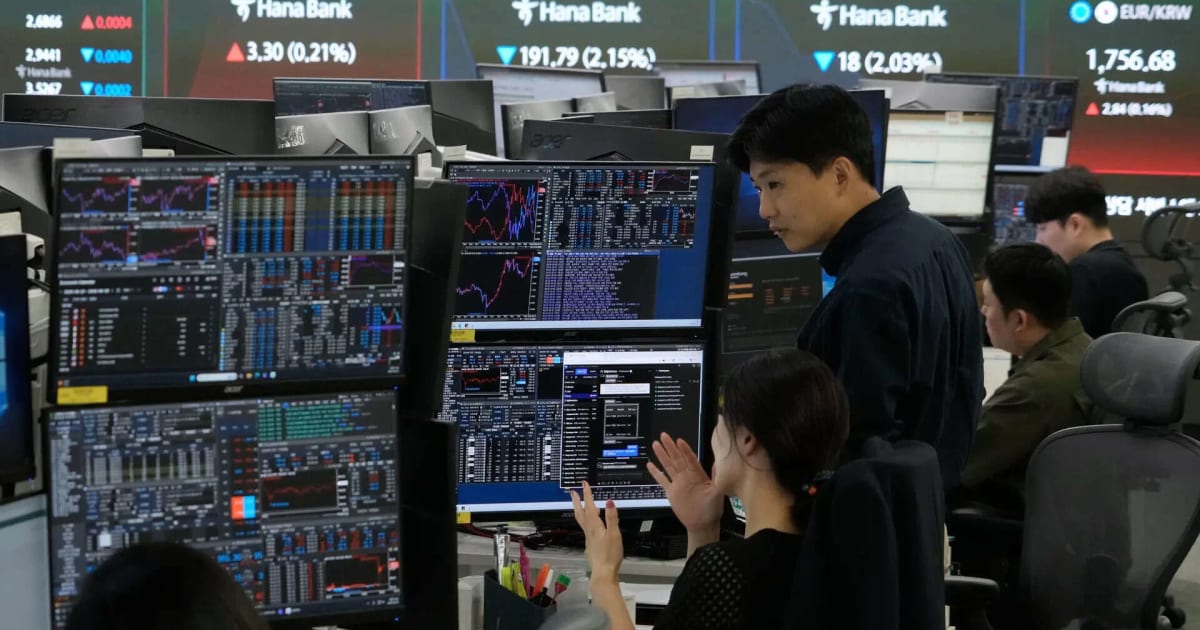
A significant global tech selloff, particularly impacting AI-linked stocks, is sending ripples across international markets, with India feeling the heat. This shift, coupled with a surge in gold prices, highlights investor caution ahead of critical earnings. Our deep dive reveals how this sentiment is reshaping capital flows, impacting key Indian sectors and individual stocks, and offers an actionable investor playbook.
AI Selloff & Gold Rally: Indian Tech Stocks Face Headwinds Amid Global Shift
The global investment landscape is undergoing a tectonic shift, with a pronounced selloff in US technology stocks, particularly those tethered to the burgeoning Artificial Intelligence narrative, coinciding with a robust rally in gold. This dual movement is far from a mere market fluctuation; it signals a profound re-evaluation of risk and valuation multiples, echoing through capital markets worldwide, including India. WelthWest Research Desk's latest analysis delves into the intricate mechanics of this sentiment pivot, its immediate ramifications for the Indian equity market, and an actionable roadmap for discerning investors.
At its core, the current market dynamic is driven by two powerful forces: a newfound caution surrounding the AI trade's sustainability and impending earnings reports from tech giants that will either validate or deflate lofty expectations. The euphoria that propelled AI-centric stocks to unprecedented valuations, often decoupling them from traditional metrics, is now confronting the harsh realities of execution and profitability. This re-calibration is not just about a few companies; it reflects a broader skepticism about the pace of AI monetization and the potential for overvaluation in a high-interest-rate environment. The concurrent surge in gold prices, reaching multi-year highs, is the quintessential flight-to-safety trade, as capital seeks refuge from perceived equity market volatility and geopolitical uncertainties. For India, a market heavily reliant on foreign institutional investor (FII) flows, this global sentiment shift translates directly into reduced appetite for riskier assets, particularly within the technology and high-growth sectors.
How Is the Global Tech Selloff Impacting Indian Stock Markets?
The reverberations of the US tech selloff are acutely felt in India, primarily through the conduit of FII capital. When global risk appetite diminishes, emerging markets like India often experience a withdrawal of foreign capital as investors de-risk portfolios. This trend is particularly detrimental to Indian technology stocks, which have historically attracted significant FII interest due to their growth prospects and exposure to global tech spending. The Nifty IT index, for instance, has already shown signs of vulnerability, with recent sessions witnessing sustained selling pressure. Historically, periods of significant FII outflows have correlated with broader market corrections. For example, during the 2022 global tech correction, the Nifty IT index experienced a decline of over 25% from its peak, while the broader Nifty 50 saw a more modest correction, highlighting the sector's sensitivity to global tech sentiment.
Beyond direct FII impact, the narrative shift also influences domestic investor sentiment. As international headlines trumpet tech stock woes, local participants often follow suit, leading to broader selling across growth-oriented segments. Valuations, which were already stretched for many Indian tech and growth stocks, now face intensified scrutiny. Companies with high Price-to-Earnings (P/E) ratios, justified by aggressive growth projections tied to global tech cycles, are particularly susceptible to re-rating. This isn't merely about earnings misses; it's about a fundamental reassessment of future growth trajectories and the discount rates applied to those future cash flows in a higher-for-longer interest rate environment.
The flight to safety also has a tangible impact. As global investors rotate out of equities, a portion of this capital finds its way into safe-haven assets like gold. This trend is reflected in the rising demand for physical gold and gold-backed financial instruments. While India has a strong domestic affinity for gold, the global rally reinforces its safe-haven status, potentially diverting even more capital away from equity markets. Companies like Titan Company (NSE: TITAN), while not a direct gold producer, benefit indirectly from increased consumer interest in gold and jewelry, acting as a proxy for robust domestic gold demand.
Which Indian Stocks Are Most Affected by the AI Trade Caution?
The current market dynamics present a mixed bag for Indian equities, creating clear winners and losers. Here’s a breakdown of specific stocks and sectors under the spotlight:
- Tata Consultancy Services (NSE: TCS): As India's largest IT services exporter with a market capitalization exceeding $170 billion, TCS is a bellwether for the sector. While its diversified service portfolio and robust deal pipeline offer some resilience, its significant exposure to global enterprise IT spending makes it vulnerable to a slowdown in tech budgets, especially if US clients pare back AI-related investments. Investors will be closely watching its upcoming earnings for commentary on client spending and deal conversions. A P/E ratio around 30x, while lower than some pure-play tech firms, still demands consistent growth.
- Infosys (NSE: INFY): Another IT titan, Infosys, with a market cap of over $75 billion, is similarly exposed. Its focus on digital transformation and cloud services, which includes AI integration, means that any deceleration in global AI adoption or project delays could impact its revenue growth. The stock's performance often mirrors FII sentiment towards the Indian IT sector. Historical data shows that during previous tech downturns, Infosys, despite its strong fundamentals, experienced significant drawdowns, reflecting broader sector-wide de-rating.
- Wipro (NSE: WIPRO): Wipro, a key player in the Indian IT services landscape, has been actively investing in AI capabilities. While this positions it for long-term growth, in the short term, increased caution in the AI trade could lead to slower project ramp-ups or deferrals from clients, impacting its quarterly performance. Its P/E multiple, typically lower than its larger peers, offers a relative value proposition but is still susceptible to sector-wide bearishness.
- HCL Technologies (NSE: HCLTECH): HCLTech, known for its strong presence in engineering and R&D services, including AI and machine learning, faces similar headwinds. Its ability to secure large deals and maintain high utilization rates will be crucial. Any perceived slowdown in global tech spending, particularly in areas like AI-driven product development, could pressure its growth outlook and profitability.
- Reliance Industries (NSE: RELIANCE): While primarily an energy and retail conglomerate, Reliance's ventures into technology, particularly through Jio Platforms and its digital services ambition, make it indirectly susceptible. Reduced investor appetite for growth stocks or a broader market correction driven by tech woes could impact its valuation multiples, especially for its unconsolidated digital businesses which are often valued on high growth projections.
- Titan Company (NSE: TITAN): As previously mentioned, Titan, a consumer discretionary giant with significant exposure to jewelry, stands to benefit from the flight to gold. While its core business is retail, the underlying demand for gold as a safe haven asset translates into increased sales of gold jewelry and related products. This makes it a unique beneficiary in a bearish equity environment, though its valuation remains premium at a P/E over 70x.
Investor Playbook: Navigating Volatility and Capitalizing on Opportunities
The current environment demands a nuanced and strategic approach from investors. Here's an actionable playbook:
What Should Investors Buy/Sell/Watch?
- Consider Reducing Exposure to High-Valuation Growth Tech: For investors with significant exposure to Indian IT and high-growth tech stocks that have seen substantial run-ups, consider trimming positions, especially in companies with P/E ratios significantly above their historical averages or sector peers without corresponding superior growth. This is not a call for outright panic selling but a prudent de-risking strategy.
- Allocate to Defensive Sectors and Quality Gold Proxies: Increase allocation to defensive sectors like Fast-Moving Consumer Goods (FMCG), pharmaceuticals, and select utilities that exhibit stable earnings regardless of market cycles. Furthermore, consider adding exposure to gold, either through physical gold, Gold ETFs (e.g., Nippon India ETF Gold BeES), or stocks that benefit from gold demand like Titan Company, particularly on dips.
- Focus on Value and Dividend Yields: In a higher interest rate environment, companies with strong balance sheets, consistent dividend payouts, and attractive valuations become more appealing. Look for fundamentally sound companies with P/E ratios below their industry averages and a track record of resilient performance during market downturns.
- Watch for Entry Points in Quality Tech: While the immediate outlook for tech is bearish, this correction could present attractive entry points for long-term investors in fundamentally strong Indian IT companies. Monitor key support levels and earnings reports for signs of stabilization. A 10-15% correction from recent highs in quality IT names could offer a compelling risk-reward proposition for a 3-5 year horizon.
Contrarian Views: Bulls vs. Bears
Bearish Argument: Bears contend that the AI bubble is still in its early stages of deflation. They point to still-elevated valuations in many tech stocks, the potential for further earnings disappointments, and the 'higher-for-longer' interest rate narrative as persistent headwinds. Furthermore, geopolitical tensions and the upcoming US presidential election add layers of uncertainty, reinforcing the appeal of safe havens. They foresee FII outflows continuing, placing sustained pressure on Indian equities, particularly the IT sector. This perspective suggests that the current tech selloff is not just a blip but a significant re-rating event, potentially leading to a sustained period of underperformance for growth stocks.
Bullish Argument: Bulls, conversely, argue that the underlying demand for AI and digital transformation remains robust. They believe that any current selloff is a healthy correction, shaking out speculative froth and creating opportunities for long-term investors. They emphasize the strong fundamentals of Indian IT companies, their cost competitiveness, and their ability to capture market share in a globalized tech landscape. For gold, bulls see its rally as a short-term reaction to uncertainty, expecting capital to flow back into equities once clarity emerges on the economic front and corporate earnings. They might also point to India's strong domestic consumption story and infrastructure push as factors that can cushion the impact of global tech volatility.
Risk Matrix: Key Threats to Monitor
Navigating the current market requires a clear understanding of potential pitfalls:
- Nvidia Earnings Disappointment (High Probability, High Impact): Nvidia's upcoming earnings report is a critical catalyst. As a bellwether for the AI industry, a significant miss on revenue or guidance could trigger another wave of tech selloffs globally, intensifying FII outflows from India and putting further pressure on the Nifty IT index. The market has priced in substantial growth, making any deviation highly impactful.
- Sustained Shift Towards Safe-Haven Assets (Medium Probability, Medium Impact): If global economic uncertainty or geopolitical tensions escalate, the flight to safe-haven assets like gold could become a more prolonged trend. This would divert capital away from riskier equity markets, potentially prolonging the bearish sentiment in Indian stocks and hindering a quick recovery.
- Unexpected Hawkish Commentary from the Federal Reserve (Medium Probability, High Impact): Any indication from the US Federal Reserve of a more aggressive stance on interest rate hikes or a delay in anticipated rate cuts could significantly increase the cost of capital, making growth stocks less attractive and potentially triggering a broader market correction. Higher US rates generally reduce the attractiveness of emerging market equities.
- Escalation of Geopolitical Tensions (Low Probability, High Impact): While less predictable, any major escalation in global conflicts could trigger a broad-based risk-off event, sending investors scrambling for safety and severely impacting equity markets worldwide, including India.
What to Watch Next: Catalysts and Data Points
Investors should closely monitor the following:
- US Tech Earnings Reports (Ongoing): The earnings season for major US tech companies, particularly those involved in AI, will provide crucial insights into the health of the sector and future spending trends. Specific attention should be paid to guidance and commentary on AI-related projects.
- Nvidia's Earnings Call (Specific Date - Check Calendar): This is arguably the most critical upcoming event. Nvidia's performance and outlook will set the tone for the AI narrative for the coming quarter.
- Federal Reserve FOMC Meetings and Speeches (Upcoming Dates): Any shifts in monetary policy rhetoric from the US Federal Reserve will have a profound impact on global liquidity and risk appetite.
- FII Flow Data (Daily/Weekly): Closely track foreign institutional investor activity in Indian equities. Sustained outflows signal continued pressure, while a reversal could indicate improving sentiment.
- Gold Price Movement (Daily): The trajectory of gold prices will serve as an indicator of broader risk perception in global markets. A sharp decline in gold could signal a return to risk-on sentiment for equities.
- Indian IT Companies' Deal Wins and Management Commentary (Quarterly): Beyond financial numbers, pay close attention to management commentary on client budgets, deal pipelines, and AI adoption trends during quarterly earnings calls for Indian IT majors.
The current market juncture represents a critical inflection point. While volatility is likely to persist, a well-researched and disciplined approach, focusing on quality, valuation, and diversification, will be key to navigating these turbulent waters and potentially capitalizing on future opportunities.
See TCS's AI Score
Our algorithmic screener scores TCS on fundamentals, momentum, and risk — free to try, no card needed.
Try the AI Screener →Have questions about this story?
Ask Welth, our finance-focused AI research assistant, for a deeper breakdown — free trial included.
Chat with Welth AI →Disclaimer: This content is generated by WelthWest Research Desk based on publicly available reports and is for informational purposes only. It does not constitute financial advice, investment recommendations, or an offer to buy or sell securities. Always consult a qualified financial advisor before making investment decisions.