Key Takeaway
The AI-led equity rally is hitting a valuation wall, forcing a violent rotation out of high-beta growth stocks. For Indian investors, this signals a shift from momentum-chasing to defensive capital preservation as FIIs recalibrate their exposure to US-dependent IT earnings.
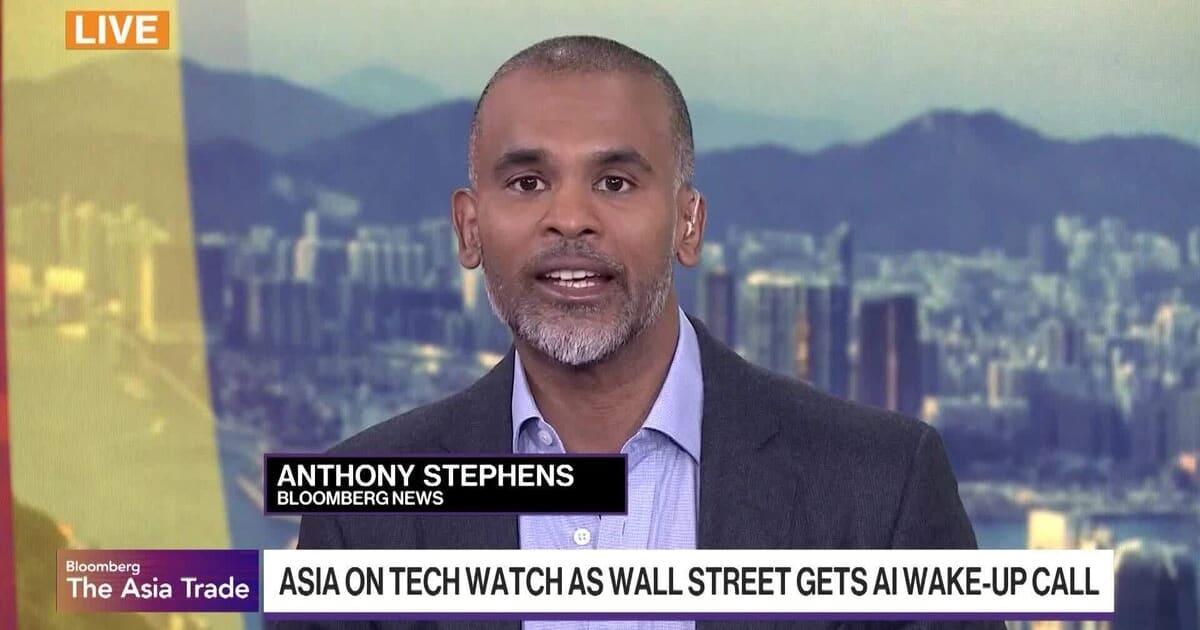
Global tech markets are undergoing a painful valuation correction, raising alarm bells for the Indian IT sector. We analyze the ripple effects on Nifty IT giants and why a defensive pivot might be the only hedge against sustained FII outflows.
The Great Valuation Reset: Why AI Hype is Meeting Reality
For the past eighteen months, global equity markets have been fueled by a singular narrative: the transformative potential of Artificial Intelligence. However, the recent global tech-led equity correction suggests that the 'AI premium' is being aggressively repriced. Investors are moving away from speculative growth models toward tangible, cash-generative returns, a shift that is sending shockwaves through the Indian Nifty IT index.
The core issue is not the technology itself, but the valuation multiples assigned to future earnings that remain unverified. As US tech giants face margin compression and shifting capital expenditure priorities, the downstream impact on Indian IT service providers—who derive over 60% of their revenue from North American discretionary tech spending—is becoming increasingly evident.
How does the global tech selloff impact Indian IT stocks?
The correlation between the NASDAQ-100 and the Nifty IT index has hit a three-year high. When global liquidity tightens, Foreign Institutional Investors (FIIs) treat Indian IT stocks as a proxy for US tech spending. Historically, in the 2022 rate-hiking cycle, the Nifty IT index corrected by nearly 25% as valuation multiples compressed from 30x to 22x earnings.
Current data shows that while Indian IT firms are not 'pure-play' AI hardware companies, their consultancy and digital transformation pipelines are inextricably linked to the capital budgets of the Fortune 500. If US enterprises pause cloud migration or digital overhaul projects to shore up their own balance sheets, Indian firms face immediate revenue headwinds.
Stock-by-Stock Breakdown: Assessing the Damage
- TCS (TATA CONSULTANCY SERVICES): As the bellwether, TCS faces the brunt of FII selling pressure. With a P/E ratio still hovering near 30x, any guidance miss on growth will lead to further multiple contraction.
- INFY (INFOSYS): Infosys is highly sensitive to the financial services vertical in the US. A cooling in fintech investment directly impacts their top-line growth.
- WIPRO: Currently navigating a turnaround, Wipro is particularly vulnerable to 'risk-off' sentiment due to its lower growth profile compared to peers, making it a target for institutional portfolio rebalancing.
- HCLTECH: Their heavy exposure to ER&D (Engineering, Research, and Development) makes them a bellwether for global semiconductor and manufacturing R&D spend, which is currently seeing a cyclical slowdown.
- TECHM: With a significant portion of revenue tied to the telecom sector, Tech Mahindra faces idiosyncratic risks unrelated to AI, compounding the pressure from the broader tech correction.
The Expert Divide: Bulls vs. Bears
The Bear Case: The 'AI-as-a-service' revenue stream is taking longer to materialize than anticipated. We are in a 'show me the money' phase where margin expansion is non-existent, and valuation multiples are revert to pre-pandemic averages.
The Bull Case: Indian IT remains a structural play on global operational efficiency. As US companies face wage inflation, they are more—not less—likely to outsource to Indian firms to cut costs, making the current selloff a generational entry point.
Actionable Investor Playbook: Navigating the Volatility
Investors should adopt a 'barbell' strategy. Reduce exposure to high-beta IT stocks that are currently trading at peak P/E multiples. Shift capital toward defensive sectors like FMCG and Pharma, which provide stable dividend yields and lower correlation to global risk sentiment.
Watchlist for Entry Points: Look for a 15-20% correction from 52-week highs in top-tier IT names. Accumulate only when the RSI (Relative Strength Index) hits oversold territory (sub-30) on a monthly timeframe, indicating that the 'weak hands' have been flushed out of the market.
Risk Matrix
| Risk Factor | Probability | Impact |
|---|---|---|
| US Recessionary Data | Medium | High |
| Sustained FII Selling | High | Medium |
| Currency Volatility (INR/USD) | Low | High |
What to Watch Next: Catalysts for a Rebound
The next major move will be dictated by the US Federal Reserve's interest rate trajectory and the upcoming quarterly earnings guidance from major US cloud hyperscalers. Watch for commentary on 'IT Services Budgets' during the next earnings cycle; any signal of a budget freeze will be the final catalyst for a deeper correction in Indian tech.
See TCS's AI Score
Our algorithmic screener scores TCS on fundamentals, momentum, and risk — free to try, no card needed.
Try the AI Screener →Have questions about this story?
Ask Welth, our finance-focused AI research assistant, for a deeper breakdown — free trial included.
Chat with Welth AI →Disclaimer: This content is generated by WelthWest Research Desk based on publicly available reports and is for informational purposes only. It does not constitute financial advice, investment recommendations, or an offer to buy or sell securities. Always consult a qualified financial advisor before making investment decisions.