Key Takeaway
The 'AI-as-a-cost-center' narrative is dead. Infosys’s pivot confirms that large-scale AI integration is now a revenue-generating engine, establishing a new valuation floor for India’s IT giants.
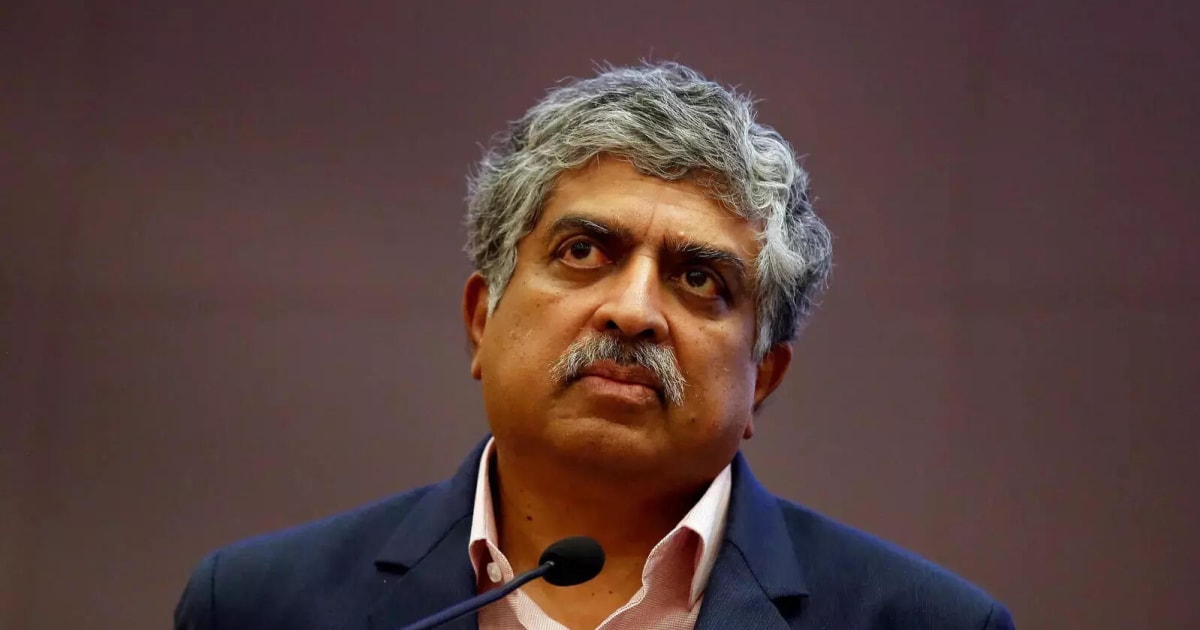
Infosys has officially validated AI as a structural tailwind, signaling a shift from margin-eroding experimentation to high-margin revenue realization. This development fundamentally shifts the outlook for Indian IT services, suggesting that Tier-1 firms are successfully pivoting to AI-augmented delivery models.
The End of the Automation Deflation Myth
For the past eighteen months, the Indian IT sector has been gripped by a singular fear: that Generative AI would act as a deflationary force, cannibalizing high-margin service contracts through automated code generation and process simplification. The market consensus was that AI would force a race to the bottom in billing rates. However, recent signals from industry bellwether Infosys (NSE: INFY) have shattered this narrative, confirming that AI is not a threat to the top line, but the primary catalyst for the next leg of structural growth.
This pivot represents a fundamental shift in the business model of Indian IT. We are no longer looking at simple 'cost-plus' outsourcing; we are witnessing the birth of 'AI-augmented transformation' services. As enterprises scramble to integrate Large Language Models (LLMs) into their proprietary data stacks, the demand for high-end data engineering, security, and governance has reached an inflection point.
Why is AI driving revenue rather than cannibalizing it?
The transition from experimental AI proofs-of-concept (PoCs) to full-scale production environments has created a massive backlog of technical debt that only Tier-1 IT providers can resolve. Unlike the Y2K or Cloud-migration cycles of the past, AI implementation requires a deep integration of legacy systems with modern neural networks. This is not a task that can be automated away—it is a task that requires an army of specialists, which is precisely why Indian IT majors are seeing their deal pipelines expand, not shrink.
The Market Parallels: 2022 vs. 2024
Recall the market sentiment in early 2022, when the Nifty IT index was priced for perfection at P/E multiples exceeding 35x. As interest rates climbed, valuations compressed sharply. Today, with Nifty IT trading at a more grounded forward P/E of approximately 25-28x, the current AI-driven growth cycle is being priced in from a position of relative undervaluation. We believe this provides a structural floor for the sector that was absent during the post-pandemic bubble.
Stock-by-Stock Analysis: Who Wins in the AI Era?
- Infosys (INFY): As the architect of the 'Topaz' AI suite, Infosys is best positioned to capture the enterprise AI upgrade cycle. With a massive market cap of over ₹7.8 lakh crore, its ability to scale AI infrastructure is unmatched.
- TCS (TCS): The industry incumbent remains the gold standard for long-term stability. Their 'AI-first' customer philosophy is likely to protect their premium margins, even as smaller competitors struggle to maintain pricing power.
- HCLTech (HCLTECH): HCL’s dominance in engineering and R&D services positions them to be a primary beneficiary of the hardware-software integration required for AI data centers.
- Wipro (WIPRO) & Tech Mahindra (TECHM): These firms are in a 'turnaround' phase. While they face higher execution risk, their aggressive pivot toward AI-integrated workflows provides significant upside potential if they can successfully transition their legacy client bases to new-age platforms.
The Contrarian Perspective: Bulls vs. Bears
The Bull Case: The 'AI-as-a-service' model allows IT firms to move away from headcount-based billing toward value-based pricing. If an AI solution saves a client $100M, the IT firm can capture a percentage of that efficiency, leading to higher margins than traditional time-and-material contracts.
The Bear Case: Skeptics argue that client IT budgets remain constrained by macroeconomic uncertainty. If enterprises fail to see a clear ROI on their AI investments by Q3/Q4 of the next fiscal year, we could see a sudden 'AI-spending freeze,' which would disproportionately hit firms that have over-leveraged their balance sheets on AI infrastructure.
Actionable Investor Playbook
Investors should distinguish between 'AI-washers'—companies merely rebranding existing services—and true 'AI-enablers.' We recommend a 'Core-Satellite' approach:
- Core (60%): Accumulate INFY and TCS on any broad market volatility. These are the defensive anchors that will consolidate market share as AI complexity increases.
- Satellite (40%): Monitor HCLTECH for exposure to the engineering services side of the AI boom.
- Time Horizon: This is a 3-5 year structural play. Do not get shaken out by quarterly margin fluctuations, which will likely be noisy as companies front-load their AI infrastructure investment costs.
Risk Matrix: What Could Go Wrong?
| Risk Factor | Probability | Impact |
|---|---|---|
| Execution Scalability | Moderate | High |
| Margin Compression (Pricing War) | Low | Moderate |
| Macro-Economic Recession | Moderate | High |
What to Watch Next
The upcoming earnings season will be the ultimate test. Watch for two specific metrics: 'AI-as-a-percentage-of-total-revenue' and 'Net New Deal TCV (Total Contract Value) specifically tagged to AI.' If these figures show consistent quarter-over-quarter growth, the valuation re-rating of the Indian IT sector is only just beginning.
See INFY's AI Score
Our algorithmic screener scores INFY on fundamentals, momentum, and risk — free to try, no card needed.
Try the AI Screener →Have questions about this story?
Ask Welth, our finance-focused AI research assistant, for a deeper breakdown — free trial included.
Chat with Welth AI →Disclaimer: This content is generated by WelthWest Research Desk based on publicly available reports and is for informational purposes only. It does not constitute financial advice, investment recommendations, or an offer to buy or sell securities. Always consult a qualified financial advisor before making investment decisions.