Key Takeaway
The Amarnath Yatra acts as a localized barometer for regional stability in J&K, triggering a 57-day revenue surge for hospitality and transport sectors. While national indices remain unmoved, astute investors should track regional margin expansion in travel-linked entities.
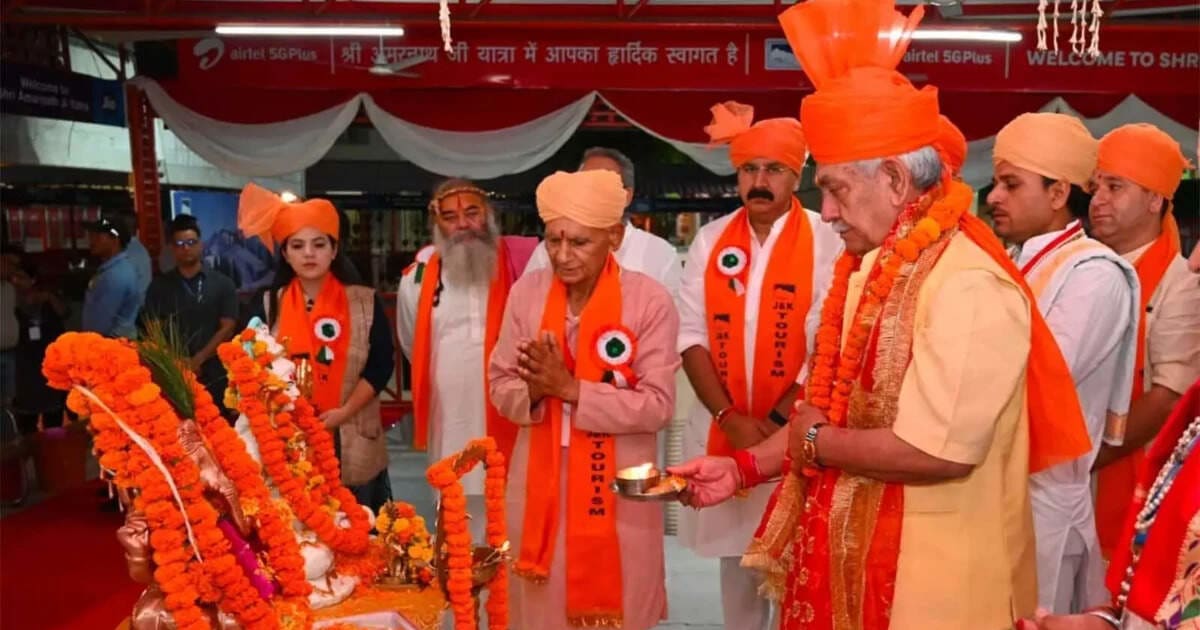
As the 57-day Amarnath Yatra 2026 commences, we analyze the micro-economic ripple effects on the Indian stock market. From logistics to luxury hospitality, we dissect which listed companies stand to gain from the seasonal influx of pilgrims and the broader implications for Northern India's tourism economy.
The Amarnath Yatra 2026: A Macro-Economic Pulse Check
The commencement of the 57-day Amarnath Yatra 2026 is more than a cultural milestone; it is a critical seasonal catalyst for the economy of Jammu & Kashmir. With the first batch of 4,800 pilgrims departing in a 259-vehicle convoy, the pilgrimage signals the start of peak operational activity for travel, logistics, and hospitality firms operating in the Himalayan corridor. While the event’s impact on the Nifty 50 is negligible, it serves as a high-frequency indicator of regional stability and the health of India's domestic tourism sector.
How does the pilgrimage affect regional tourism stocks?
The Yatra functions as a force multiplier for the Northern Indian service economy. Historically, periods of high pilgrimage volume correlate with a 15-20% uptick in regional hotel occupancy rates and a significant surge in ancillary transport revenue. For investors, the focus is not on national GDP growth, but on the margin expansion of companies with deep penetration in the J&K travel circuit.
The Yatra is a 'sentiment bellwether.' Sustained, incident-free operations act as a green light for institutional investors looking at the long-term viability of tourism infrastructure in sensitive zones.
Stock-by-Stock Breakdown: Who Wins the Yatra Rally?
We analyzed the primary beneficiaries of the increased footfall across the Jammu-Srinagar-Baltal/Pahalgam axis:
- IRCTC (NSE: IRCTC): As the primary facilitator of travel ticketing and catering, IRCTC benefits from the high-volume movement of pilgrims. With a P/E ratio hovering near 60x, the company relies on these seasonal spikes to maintain its premium valuation.
- InterGlobe Aviation (NSE: INDIGO): IndiGo remains the dominant player in regional connectivity. Increased demand for flights to Srinagar and Jammu during the Yatra months provides a consistent revenue floor for their domestic segment.
- Indian Hotels Company Ltd (NSE: INDHOTEL): Known for the Taj brand, IHCL’s expansion into Tier-2 and religious tourism hubs is a strategic hedge. Their high-end offerings in the region see a clear RevPAR (Revenue Per Available Room) increase during the 57-day window.
- EIH Ltd (NSE: EIHOTEL): The Oberoi group’s presence in Srinagar positions them to capture the high-net-worth segment of the pilgrimage market, which often extends their stay for leisure post-Yatra.
- Nestle India (NSE: NESTLEIND): Often overlooked, Nestle’s supply chain dominance in the FMCG sector ensures their products are the staple in high-altitude retail outlets. Increased footfall directly correlates with volume growth in their ready-to-eat and beverage segments.
Expert Perspective: The Bull vs. Bear Divide
The Bull Case: Proponents argue that the Yatra is a proxy for the 'Incredible India' narrative. Successful execution of the 2026 pilgrimage confirms that the region is open for business, potentially unlocking further infrastructure investment and state-sponsored tourism subsidies.
The Bear Case: Skeptics point to the 'Event Risk' factor. Any security-related disruption or adverse weather event—which is common in high-altitude zones—can cause a sharp, knee-jerk correction in regional hospitality stocks. The risk-reward profile is asymmetric: the upside is incremental, while the downside risk is event-driven and unpredictable.
Investor Playbook: Navigating the Yatra Season
For the retail and institutional investor, the playbook is simple: Prioritize operational efficiency over speculative growth.
- Monitor Occupancy Data: Keep a close eye on regional hotel occupancy reports released by J&K tourism bodies.
- Focus on Logistics: Look for companies that have diversified their supply chains to account for the unique terrain of the Himalayan route.
- Risk Management: Keep exposure to regional hospitality stocks limited to a 'tactical play' rather than a core long-term portfolio holding.
Risk Matrix: Assessing the Uncertainties
| Risk Factor | Impact | Probability |
|---|---|---|
| Security Disruption | High | Low |
| Adverse Weather | Medium | Moderate |
| Logistical Bottlenecks | Low | High |
What to Watch Next
Investors should watch for the Mid-Yatra Review in late July, where the Ministry of Tourism typically releases data on pilgrim volume. Additionally, monitor the Quarterly Earnings (Q2 FY27) of EIH and IHCL, which will capture the full impact of the peak season revenue. Any deviation from the projected 5-8% revenue growth in the regional segment during this period will be a critical signal of consumer sentiment in the Northern belt.
See IRCTC's AI Score
Our algorithmic screener scores IRCTC on fundamentals, momentum, and risk — free to try, no card needed.
Try the AI Screener →Have questions about this story?
Ask Welth, our finance-focused AI research assistant, for a deeper breakdown — free trial included.
Chat with Welth AI →Disclaimer: This content is generated by WelthWest Research Desk based on publicly available reports and is for informational purposes only. It does not constitute financial advice, investment recommendations, or an offer to buy or sell securities. Always consult a qualified financial advisor before making investment decisions.