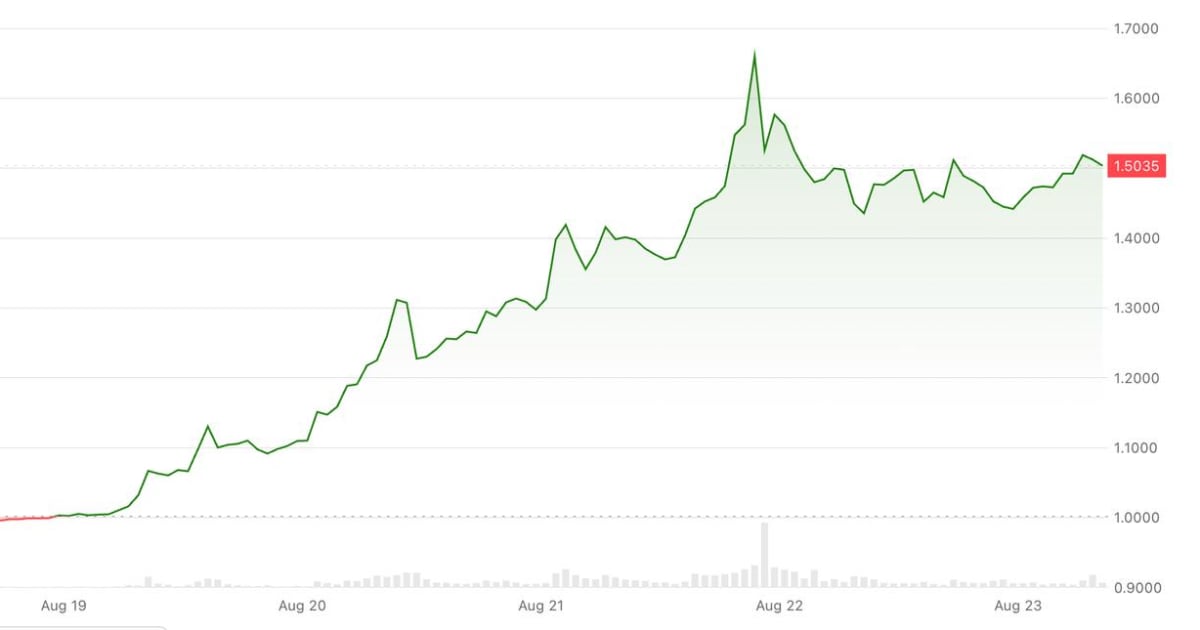
Key Takeaway
Anthropic's explosive revenue growth validates the accelerating commercialization of AI, signaling a robust bull market for technology enablers. For Indian investors, this translates into heightened opportunity for IT services firms with deep AI capabilities and semiconductor players, demanding a strategic portfolio pivot.
Recent reports of Anthropic's stunning revenue growth have ignited fresh optimism across the global AI sector. This deep dive from WelthWest Research Desk dissects the implications for Indian markets, pinpointing specific IT and semiconductor stocks poised to benefit. Understand the forces driving this AI surge and how to position your portfolio for long-term gains.
Anthropic's AI Revenue Surge: A Turning Point for Global Tech & Indian Equities
The global technology landscape is experiencing a seismic shift, and recent disclosures from AI powerhouse Anthropic have sent ripples of optimism through the investment community. Reports indicating a significant surge in Anthropic's revenue, driven by escalating enterprise adoption of its cutting-edge AI models, serve as a potent validator for the AI sector's commercial viability and rapid expansion. This isn't merely a fleeting news cycle; it's a critical inflection point, signaling a new phase of intense investment and technological integration that will profoundly reshape industries worldwide.
At WelthWest Research Desk, we view this development not just as a testament to Anthropic's execution, but as a bellwether for the broader AI ecosystem. The ability of a foundational AI model provider to translate technological prowess into substantial top-line growth underscores a fundamental shift in corporate spending priorities. Companies are no longer merely experimenting with AI; they are embedding it into core operational workflows, customer engagement strategies, and product development cycles. This accelerated adoption cycle, fueled by tangible ROI, creates a powerful tailwind for all participants in the AI value chain, from chip manufacturers to cloud providers and, crucially for Indian investors, IT services behemoths.
The immediate implication for global investment flows is clear: capital will increasingly gravitate towards companies demonstrating strong leverage to this AI supercycle. For the Indian market, this narrative is particularly compelling. India's formidable IT services sector, with its deep talent pool and established global client relationships, stands at the precipice of a transformative opportunity. Furthermore, the burgeoning domestic electronics manufacturing ecosystem, including semiconductor-related initiatives, will likely see renewed interest and investment. This is not just about catching up; it's about leading in a new technological paradigm.
How Will Anthropic's Success Impact Indian IT & Semiconductor Stocks?
The robust performance of an AI leader like Anthropic creates a direct positive feedback loop for Indian equities, particularly within the IT services and nascent semiconductor sectors. The underlying demand for sophisticated AI models, as evidenced by Anthropic's revenue figures, translates into an urgent need for implementation, integration, and customization services – a domain where Indian IT firms excel. Historically, significant technological shifts, such as the Y2K bug or the dot-com boom, have catalyzed massive outsourcing waves benefitting Indian IT. This AI-driven wave promises to be even larger in scope and complexity.
Consider the scale: the global AI market, projected to reach over $1 trillion by 2030, represents an unprecedented revenue pool. Indian IT services companies, with their existing global footprints and deep engineering capabilities, are perfectly positioned to capture a substantial share of this market. Their expertise in cloud migration, data engineering, and enterprise application development are foundational to successful AI deployments. Moreover, the increasing sophistication of AI models demands more powerful computing infrastructure, driving demand for advanced semiconductors. While India's semiconductor manufacturing is still nascent, the government's Production Linked Incentive (PLI) schemes are attracting significant foreign direct investment (FDI) into chip assembly, testing, and eventually, fabrication. Increased global AI demand only intensifies the strategic importance and investment appeal of these initiatives.
The last time a technological shift of this magnitude occurred was arguably with the widespread adoption of cloud computing in the early 2010s. During that period, Indian IT majors, after an initial period of adaptation, saw their valuations and revenue growth accelerate significantly. For instance, between 2010 and 2015, the Nifty IT index delivered compounded annual returns significantly higher than the broader Nifty 50, as companies like TCS and Infosys successfully pivoted to cloud services. We anticipate a similar, if not more pronounced, trajectory for companies that demonstrate strong AI capabilities and a clear strategy for monetizing this demand. The current market sentiment is bullish, driven by the realization that AI is no longer a futuristic concept but a present-day revenue driver.
Specific Indian Stocks Poised for an AI-Driven Upswing
The ripple effect of Anthropic's success will be felt across several key Indian listed entities. Investors seeking exposure to the AI supercycle through Indian markets should closely monitor the following:
- Tata Consultancy Services (TCS) (NSE: TCS): As India's largest IT services exporter with a market capitalization exceeding ₹14.5 trillion, TCS is a bellwether for the sector. Its extensive global client base and significant investments in AI research, including its 'Generative AI Co-innovation Network,' position it strongly. TCS's ability to secure large-scale transformation deals, often incorporating advanced analytics and AI, will be a key driver. Their Q1 FY25 results, for example, highlighted a robust deal win pipeline, with a growing proportion attributed to AI-led transformations. We anticipate a re-rating of its P/E multiple (currently around 30x forward earnings) as AI revenue contribution becomes more explicit.
- Infosys (NSE: INFY): A global leader in next-generation digital services, Infosys has been aggressively building out its AI capabilities through its 'Topaz' platform. The company's focus on enterprise AI, automation, and cloud-native solutions directly aligns with the accelerating demand seen by companies like Anthropic. Infosys’s strong consulting arm is crucial for guiding clients through complex AI adoption journeys. Their recent analyst calls have consistently emphasized significant client interest in generative AI pilots and implementations, suggesting a robust future order book.
- HCLTech (NSE: HCLTECH): With a strong focus on engineering and R&D services, HCLTech is uniquely positioned to benefit from the foundational aspects of AI development and deployment. Its investments in AI labs and partnerships with hyperscalers for AI infrastructure make it a critical enabler. As enterprises increasingly require customized AI solutions and specialized engineering talent, HCLTech's differentiated offerings will likely see elevated demand. Their stock, trading at a relatively attractive valuation compared to peers, could experience significant upside.
- Wipro (NSE: WIPRO): Under new leadership, Wipro has intensified its focus on AI and digital transformation. Its 'Wipro ai360' platform and strategic acquisitions in the AI space demonstrate a clear intent to capture market share. While Wipro has faced some challenges in growth consistency, the sheer scale of the AI opportunity could provide the necessary impetus for a turnaround, especially as enterprises accelerate their AI spending.
- Tech Mahindra (NSE: TECHM): With a strong presence in telecom and manufacturing sectors, Tech Mahindra's AI offerings are tailored to specific industry verticals, providing a competitive edge. Their focus on leveraging AI for network optimization, smart manufacturing, and customer experience transformation aligns well with the practical applications driving Anthropic's growth. As these industries increasingly adopt AI, Tech Mahindra stands to gain from its specialized expertise.
- Reliance Industries (NSE: RELIANCE): While not a pure-play IT services company, Reliance's ambitious foray into AI through Jio Platforms, including its own large language model (LLM) initiatives and partnerships, positions it as a significant domestic player. Its massive user base and ecosystem provide a unique testbed for AI applications in retail, telecom, and media. Success in these domestic AI ventures could unlock substantial value, reinforcing its position as a diversified tech conglomerate.
Contrarian Views: Is the AI Hype Sustainable?
While the bullish sentiment surrounding AI is palpable, it's crucial to acknowledge the counterarguments and potential headwinds. Bears would argue that the current valuations of many AI-leveraged companies, both globally and in India, already discount a significant portion of future growth. They might point to historical tech bubbles, where initial enthusiasm outpaced actual revenue generation, leading to sharp corrections.
One primary concern is the sustainability of the current growth rates. While Anthropic's revenue surge is impressive, replicating such exponential growth year after year becomes increasingly challenging as the base expands. Furthermore, the intense competition in the AI space, with tech giants like Google and Microsoft pouring billions into their own AI models, could lead to price wars and margin compression for smaller players or even foundational model providers. The cost of developing and running advanced AI models remains incredibly high, requiring massive capital expenditure in compute infrastructure.
Another bearish perspective highlights the potential for regulatory scrutiny. Governments globally are grappling with the ethical implications and societal impacts of AI, and impending regulations could introduce unforeseen compliance costs or restrict certain applications, thereby tempering growth. Geopolitical tensions, as subtly hinted at by broader market commentary, could also disrupt global tech supply chains, impacting everything from semiconductor availability to data center infrastructure, which are critical for AI development and deployment.
However, bulls counter that this AI cycle is fundamentally different from previous tech booms. The underlying technology, particularly generative AI, demonstrates capabilities that transcend mere incremental improvements, offering true step-function changes in productivity and innovation. They argue that the total addressable market for AI is so vast – encompassing virtually every industry and business function – that even with intense competition, there's ample room for multiple winners. The current valuations, while elevated, are justified by the unprecedented transformative potential and the long-term compounding effect of AI adoption across the global economy. Furthermore, the increasing 'stickiness' of AI solutions, once integrated into enterprise workflows, creates significant switching costs, ensuring recurring revenue streams for providers.
Actionable Investor Playbook: Navigating the AI Supercycle
For investors looking to capitalize on the AI-driven growth trajectory, a strategic and diversified approach is paramount:
- Buy Core IT Services with Proven AI Capabilities: Focus on large-cap Indian IT firms (TCS, Infosys, HCLTech) that have demonstrated significant investments in AI, strong client relationships, and a clear strategy for monetizing AI services. These companies offer a blend of stability and growth potential. Consider entry points during minor market corrections to optimize returns, aiming for a long-term horizon (3-5 years) to allow AI revenue streams to mature.
- Watch Mid-Cap & Niche AI Enablers: Keep a close eye on mid-cap IT companies or specialized firms that offer unique AI solutions or strong domain expertise in specific verticals (e.g., healthcare AI, financial AI). These could offer higher growth potential but come with increased risk. Thorough due diligence on their client base, IP, and execution capabilities is essential.
- Consider Semiconductor & Electronics Manufacturing Plays: While direct pure-play Indian semiconductor manufacturing stocks are limited, consider companies that are part of the broader electronics manufacturing services (EMS) ecosystem or those benefiting from government PLI schemes aimed at increasing domestic semiconductor capabilities. This is a longer-term thematic play, potentially requiring a 5-10 year horizon.
- Allocate Strategically to Global AI Leaders: For a more diversified approach, consider allocating a portion of your portfolio to global AI leaders (e.g., NVIDIA, Microsoft, Alphabet, Amazon) through international ETFs or direct investments, as these companies are at the forefront of AI innovation and infrastructure.
- Avoid Legacy Tech Without AI Integration: Gradually reduce exposure to companies heavily reliant on traditional business models without a clear and credible AI integration strategy. These firms face significant disruption risks and potential long-term erosion of market share.
Entry Points: While a 'buy the dip' strategy is often prudent, the secular nature of AI growth suggests that even current levels for strong AI players could prove attractive in the long run. Look for consolidations in the Nifty IT index or individual stock pullbacks of 5-10% from recent highs as potential entry opportunities. For example, if TCS were to retrace towards its 200-day moving average, it could present a compelling entry point.
AI Investment Risk Matrix: Assessing the Road Ahead
Despite the immense promise, investors must be cognizant of the specific risks inherent in the AI investment landscape:
- Sustainability of Hyper-Growth (Medium Probability, High Impact): The expectation of sustained exponential growth, fueled by initial adoption, might not materialize as the market matures or competitive pressures intensify. Any deceleration in revenue growth from key AI players could trigger a broad market correction in AI-related stocks.
- Regulatory Headwinds (Medium Probability, Medium Impact): Evolving global regulations around AI ethics, data privacy, and intellectual property could impose significant compliance costs, restrict certain AI applications, or lead to legal challenges, impacting profitability and innovation.
- Geopolitical & Supply Chain Disruptions (Medium Probability, Medium Impact): Heightened geopolitical tensions could disrupt the global supply chains for critical AI components, particularly advanced semiconductors. This could lead to increased costs, delays in AI infrastructure development, and impact the profitability of companies reliant on these components.
- Talent Scarcity & Wage Inflation (High Probability, Medium Impact): The demand for skilled AI talent far outstrips supply. This could lead to significant wage inflation for AI engineers and researchers, impacting the operating margins of IT services companies and increasing the cost of AI development for all players.
What to Watch Next: Catalysts for the AI Narrative
The AI story is dynamic, with several upcoming catalysts and data releases that will shape market sentiment and investment decisions:
- Q2 FY25 Earnings of Indian IT Majors (October-November 2024): Pay close attention to management commentary on AI deal wins, revenue contribution from AI services, and outlook for AI investments. Specific metrics on generative AI adoption rates will be key.
- Global Tech Conferences & Product Launches (Ongoing): Major announcements from hyperscalers (AWS, Azure, Google Cloud) and AI companies regarding new models, features, and partnerships will provide insights into the pace of innovation and market adoption.
- Government Policy & Regulatory Updates (Ongoing): Watch for any significant policy pronouncements from major economies (US, EU, India) regarding AI governance, data regulation, and incentives for AI development. India's progress on its National AI Strategy and semiconductor manufacturing policies will be crucial.
- Venture Capital Funding Rounds for AI Startups (Ongoing): The health of the private AI market, indicated by funding rounds for startups, can serve as a leading indicator for future public market interest and areas of innovation.
- Macroeconomic Data & Interest Rate Decisions (Ongoing): Global economic health and central bank policies will continue to influence overall market liquidity and investor appetite for growth stocks, including AI plays. A sustained period of lower interest rates could further fuel investment into high-growth tech sectors.
The AI revolution is not a distant future; it is unfolding now. Anthropic's recent revenue performance provides compelling evidence of this reality. Savvy investors who understand the intricate connections between global AI trends and the Indian market are best positioned to capitalize on this transformative era.
See TCS's AI Score
Our algorithmic screener scores TCS on fundamentals, momentum, and risk — free to try, no card needed.
Try the AI Screener →Have questions about this story?
Ask Welth, our finance-focused AI research assistant, for a deeper breakdown — free trial included.
Chat with Welth AI →Disclaimer: This content is generated by WelthWest Research Desk based on publicly available reports and is for informational purposes only. It does not constitute financial advice, investment recommendations, or an offer to buy or sell securities. Always consult a qualified financial advisor before making investment decisions.