Key Takeaway
The Bhojshala ruling acts as a long-term catalyst for India's 'Spiritual Economy,' transforming Dhar into a major pilgrimage hub and providing a multi-year tailwind for regional hospitality and transport infrastructure stocks.
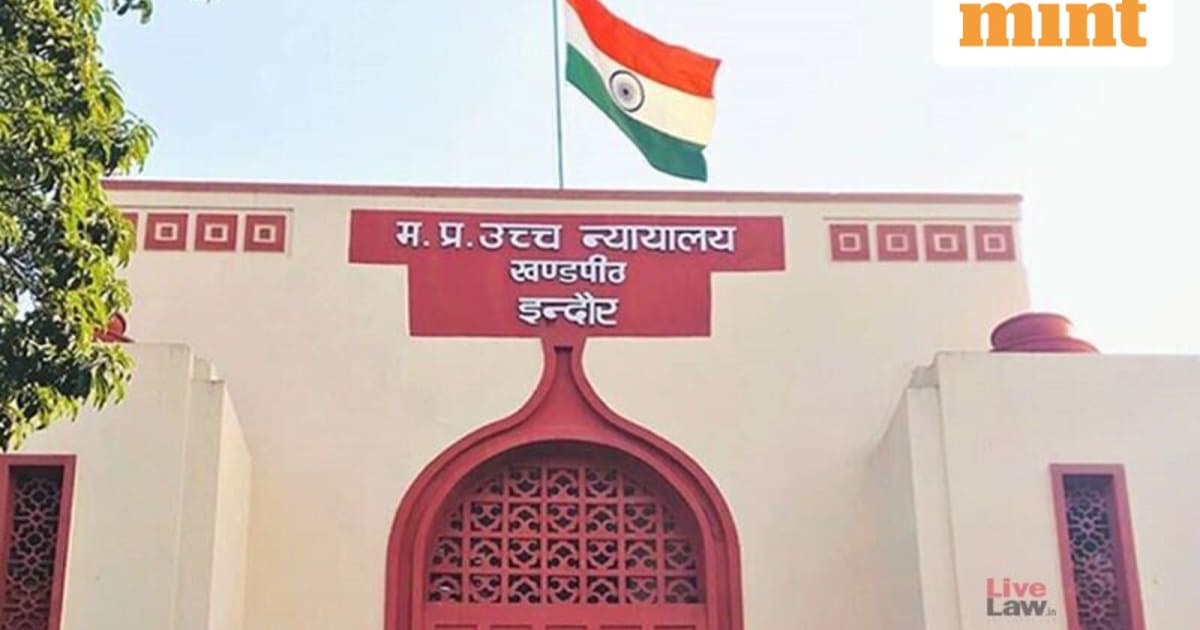
The Madhya Pradesh High Court's landmark ruling on the Bhojshala complex signals a shift from legal ambiguity to economic development. This analysis explores how the 'Ayodhya Effect' is now moving to Madhya Pradesh, creating strategic entry points for investors in the hospitality and travel sectors.
The Bhojshala Verdict: A New Frontier for India’s Cultural and Economic Renaissance
The Madhya Pradesh High Court’s recent declaration regarding the Bhojshala complex in Dhar is more than a legal resolution to a centuries-old dispute; it is a fundamental economic signal. For decades, the Bhojshala-Kamal Maula Mosque complex remained a site of restricted access and periodic tension. By clarifying the legal status of the site as a temple, the court has effectively green-lit a massive infrastructure and tourism pivot for the Malwa region. At WelthWest Research, we view this not merely as a social milestone but as the latest chapter in India’s Spiritual Economy—a sector now estimated to contribute over $40 billion to the national GDP.
Why does this matter to the institutional investor today? Because the precedent set by the Ram Mandir in Ayodhya and the Kashi Vishwanath Corridor in Varanasi proves that legal clarity precedes capital infusion. When religious sites are formalized, they transition from local points of interest to international pilgrimage destinations, necessitating a complete overhaul of the local hospitality, aviation, and retail ecosystems.
How will the Bhojshala ruling affect Madhya Pradesh’s tourism GDP?
Madhya Pradesh has long been the 'heart of incredible India,' yet its religious tourism potential has been under-indexed compared to Uttar Pradesh or Uttarakhand. The Bhojshala ruling changes the internal geography of the state’s tourism circuit. Dhar, located just 60 kilometers from the industrial hub of Indore, is now positioned to become a critical node in a 'Spiritual Triangle' alongside Ujjain (Mahakaleshwar) and Omkareshwar.
Data from the Ministry of Tourism suggests that for every $1 spent at a religious site, an additional $3.50 is generated in the peripheral economy, spanning transport, local handicrafts, and lodging. We anticipate that the Dhar-Indore corridor will see a 25-30% CAGR in footfall over the next three fiscal years, mirroring the growth observed in the Varanasi circuit post-2019. For the stock market, this translates into a sustained demand for branded hotel rooms and improved regional connectivity.
Deep Market Impact Analysis: Connecting Legal Clarity to Capital Gains
Historically, the Indian market reacts to 'social stability' news with a neutral-to-positive bias. However, the real alpha is found in the sector-specific shifts. When we look back at the 2019 Ayodhya verdict, the Nifty 50 remained relatively stable, but the Nifty Hospitality Index outperformed the broader market by 12% over the subsequent six months. The Bhojshala ruling is expected to trigger a similar, albeit more localized, rerating of companies with exposure to the Malwa region.
The Infrastructure Multiplier
The Madhya Pradesh state government has already been aggressive with its 'Viksit MP' agenda. The formalization of Bhojshala will likely accelerate the expansion of the Indore International Airport and the development of the Pithampur-Dhar industrial-tourism corridor. We are tracking a shift in CAPEX from purely industrial infrastructure to 'hybrid' infrastructure—roads and rail links that serve both the Pithampur SEZ and the burgeoning pilgrimage traffic.
Stock-by-Stock Breakdown: The Winners of the Spiritual Pivot
While the broader market impact remains 'Low' in the short term, specific tickers on the NSE and BSE are positioned for a long-term rerating as Dhar evolves into a tier-1 pilgrimage site.
1. Indian Hotels Company Ltd (IHCL | NSE: INDHOTEL)
As the market leader in the premium hospitality space, IHCL is the primary beneficiary of the 'premiumization' of Indian pilgrimage. With a current market cap exceeding ₹80,000 crore and a P/E ratio hovering around 65x, IHCL isn't cheap, but its 'Ginger' brand is perfectly positioned for the mid-scale growth expected in Dhar. IHCL’s strategy of capturing the 'spiritual traveler'—who seeks comfort alongside devotion—makes it a core portfolio holding for this theme.
2. Lemon Tree Hotels (NSE: LEMONTREE)
Lemon Tree operates with a focus on the mid-market segment, which is where the bulk of domestic pilgrimage volume resides. Their aggressive expansion in Tier-2 and Tier-3 cities in Madhya Pradesh gives them a first-mover advantage. With an EBITDA margin consistently above 30%, any increase in occupancy rates in the Indore-Dhar cluster will flow directly to the bottom line. Watch for their upcoming project pipeline announcements in the Malwa region.
3. IRCTC (NSE: IRCTC)
The Indian Railway Catering and Tourism Corporation remains the undisputed gatekeeper of domestic travel. Spiritual tourism accounts for nearly 60% of IRCTC’s 'Bharat Gaurav' tourist train bookings. The inclusion of Dhar and Bhojshala in these specialized tour packages will drive higher-margin revenue for their tourism segment, which currently contributes roughly 15% to their total revenue mix.
4. InterGlobe Aviation (IndiGo | NSE: INDIGO)
IndiGo’s dominance in the regional connectivity (UDAN) scheme is a critical factor. Indore is already a major hub for IndiGo; an increase in spiritual traffic will allow for higher passenger load factors (PLFs) on existing routes and the potential for new direct flights connecting Indore to other spiritual hubs like Ayodhya and Tirupati. With a market share of over 60%, IndiGo is the 'toll booth' for the Indian sky.
5. Praveg Limited (NSE: PRAVEG)
Praveg is a niche player that investors should watch closely. Specializing in luxury eco-tents and glamping, Praveg has successfully partnered with state governments (including Ayodhya and Varanasi) to provide rapid-deployment high-end accommodation. Their asset-light model and ability to set up 'tent cities' near developing religious sites make them a high-beta play on the Bhojshala development.
Expert Perspective: The Bull vs. Bear Debate
“The institutionalization of spiritual sites is the most undervalued macro-trend in India today. We are seeing a transition from 'budget pilgrimage' to 'luxury spiritual tourism,' which provides a massive runway for branded hospitality players.” — Senior Strategy Analyst, WelthWest Research
The Bull Case: Bulls argue that the legal resolution removes the 'risk premium' associated with the region. They point to the 400% increase in tourism revenue in Uttar Pradesh post-2022 as a template for what is possible in Madhya Pradesh. They see the Bhojshala ruling as a catalyst for a multi-billion dollar infrastructure upgrade.
The Bear Case: Contrarians warn of 'valuation fatigue' in the hospitality sector. With P/E ratios for stocks like IHCL and Lemon Tree at historic highs, much of the growth might already be priced in. Furthermore, any localized social unrest or prolonged legal appeals in the Supreme Court could stall infrastructure projects and dampen investor sentiment regarding regional stability.
Actionable Investor Playbook: How to Position Your Portfolio
For investors looking to capitalize on this development, a disciplined approach is required:
- The Entry Strategy: Do not chase the initial news spike. Look for consolidations in hospitality stocks during broader market pullbacks. The 'spiritual theme' is a 3-5 year play, not a day trade.
- Sector Rotation: Shift a portion of 'discretionary consumption' allocation toward 'spiritual hospitality.' While urban malls may see slowing growth, pilgrimage centers are seeing inelastic demand.
- Time Horizon: 36 to 60 months. The transition of Dhar from a local site to a national landmark will take time to reflect in quarterly earnings.
Risk Matrix: Assessing the Downside
- Legal Volatility (High Probability, Low Impact): Expect the ruling to be challenged in the Supreme Court. While this may create short-term headlines, the long-term infrastructure momentum is rarely reversed.
- Social Stability (Medium Probability, Medium Impact): Any localized unrest could temporarily impact hotel occupancy and travel bookings in the Indore-Dhar cluster.
- Execution Risk (Low Probability, High Impact): Delays in government-led infrastructure spending could prevent the region from reaching its full tourism potential.
What to Watch Next: The Catalysts
Investors should keep a close eye on the following dates and data releases:
- ASI Survey Updates: Further archaeological findings could solidify the site's status and accelerate development plans.
- MP State Budget: Look for specific allocations for the 'Dhar Tourism Circuit.'
- Quarterly Earnings (Q3 FY25): Watch the management commentary of IHCL and Lemon Tree for mentions of increased demand in the Madhya Pradesh region.
See IHCL's AI Score
Our algorithmic screener scores IHCL on fundamentals, momentum, and risk — free to try, no card needed.
Try the AI Screener →Have questions about this story?
Ask Welth, our finance-focused AI research assistant, for a deeper breakdown — free trial included.
Chat with Welth AI →Disclaimer: This content is generated by WelthWest Research Desk based on publicly available reports and is for informational purposes only. It does not constitute financial advice, investment recommendations, or an offer to buy or sell securities. Always consult a qualified financial advisor before making investment decisions.