Key Takeaway
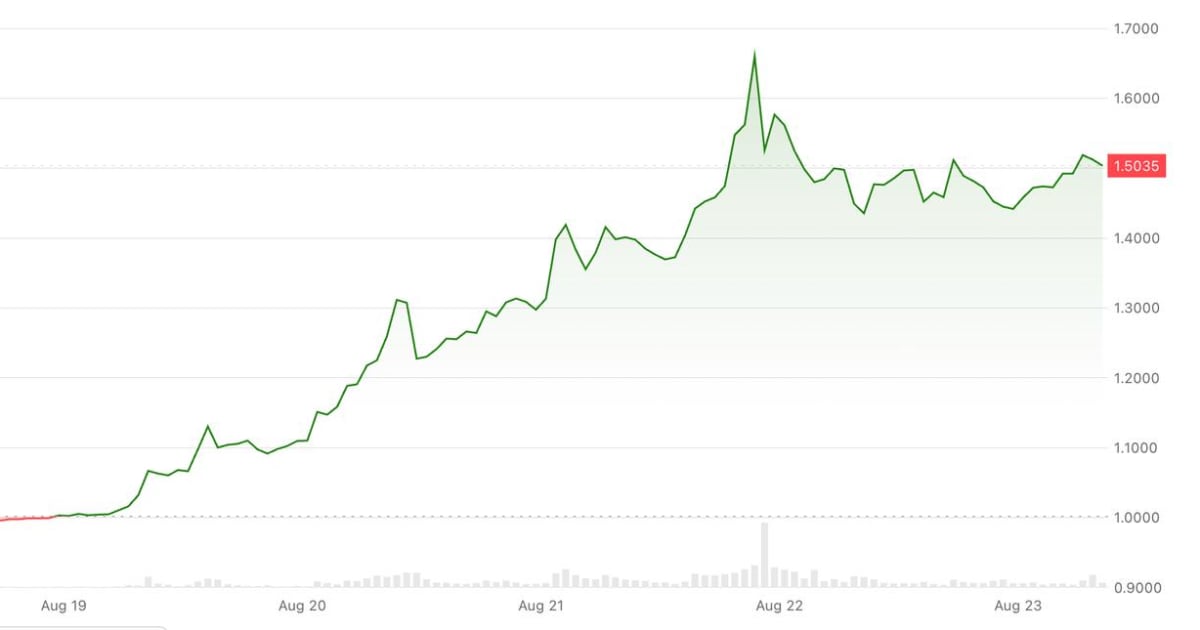
Bitcoin's battle to hold $64,000 amid escalating global yields and oil prices signals a potent risk-off sentiment, directly threatening speculative Indian technology stocks and potentially curtailing foreign institutional investor (FII) inflows into riskier market segments.
As Bitcoin falters below the critical $64,000 mark, driven by a confluence of rising global interest rates and surging crude oil prices, a palpable shift in risk appetite is evident. This analysis delves into the cascading effects on the Indian equity landscape, particularly its burgeoning tech sector and nascent cryptocurrency ecosystem.
Bitcoin's $64,000 Stumble: A Bellwether for Global Risk Appetite and Indian Equities
The cryptocurrency market, often seen as a canary in the coal mine for global risk sentiment, is currently flashing a stark warning. Bitcoin, the flagship digital asset, is finding it increasingly challenging to maintain its footing above the crucial $64,000 level. This struggle is not occurring in a vacuum; it is intricately linked to a broader macroeconomic narrative characterized by rising yields on sovereign debt and a persistent upward trend in oil prices. These twin pressures are simultaneously draining liquidity from speculative avenues and signaling a potential recalibration of investor portfolios away from high-growth, high-risk assets. For India, a market deeply intertwined with global capital flows and increasingly populated by technology-driven enterprises, this development warrants immediate and thorough examination.
Why the $64,000 Level Matters for Risk Assets
The psychological and technical significance of Bitcoin holding above $64,000 cannot be overstated. This level has served as a critical support zone, and its sustained breach could trigger a cascade of sell-offs across the crypto spectrum. However, the underlying drivers are more profound. The relentless climb in global benchmark yields, such as the US Treasury 10-year note, directly increases the cost of capital and makes safer, fixed-income investments more attractive relative to speculative ones. Simultaneously, elevated oil prices, driven by geopolitical tensions and supply-side constraints, act as a drag on economic growth and corporate margins, further dampening the appetite for risk. This confluence creates a challenging environment for assets that thrive on abundant liquidity and optimistic growth projections. The correlation between Bitcoin's price action and the broader market's risk-on/risk-off sentiment has become increasingly pronounced, making its current predicament a critical indicator for investors worldwide, including those focused on the Indian subcontinent.
The Ripple Effect: How Rising Yields and Oil Prices Dampen Indian Market Sentiment
The interconnectedness of global financial markets means that tremors in one segment invariably send ripples across others. The current pressure on Bitcoin is a direct manifestation of a global risk-off sentiment, which has significant implications for the Indian stock market. Specifically, the rising yields and oil prices create a multi-pronged challenge. Firstly, they signal a tightening financial environment, making it more expensive for companies to borrow and potentially slowing down investment and expansion plans. Secondly, as global investors re-evaluate their risk exposure, capital that might have flowed into emerging markets like India, especially into its more speculative segments, could be redirected towards safer havens or higher-yielding traditional assets. This could lead to a noticeable reduction in Foreign Institutional Investor (FII) inflows, a critical driver of liquidity and price appreciation in the Indian equity markets.
Historically, periods of rising global yields have often coincided with corrections in high-growth, high-valuation stock categories. We observed this phenomenon in late 2022 and early 2023, when the US Federal Reserve's aggressive rate hikes led to significant pullbacks in technology stocks globally, impacting even resilient markets like India. For instance, the Nifty IT index saw a substantial correction of over 25% during that period, mirroring the broader tech downturn. The current scenario, while driven by slightly different catalysts (inflationary pressures leading to yield hikes, coupled with supply shocks in oil), presents a similar risk profile. The narrative shifts from growth-at-all-costs to a more cautious approach, favoring value and stability over speculative exuberance.
Sector-Level Breakdown: The Vulnerable Pockets of the Indian Economy
The impact of this risk-off sentiment is not uniform across the Indian market. Certain sectors are inherently more susceptible to shifts in global liquidity and investor risk appetite. The most prominent among these are the cryptocurrency-related entities and the speculative technology stocks. The nascent Indian cryptocurrency ecosystem, comprising exchanges and related services, faces direct pressure. A downturn in global crypto prices translates to reduced trading volumes, lower commission revenues, and a general dampening of enthusiasm for the asset class. This, in turn, affects the valuations of companies operating within this space.
Beyond crypto, the high-growth, high-valuation technology stocks on Indian exchanges are also in the crosshairs. These companies, often characterized by rapidly expanding revenue but limited profitability, rely heavily on sustained investor optimism and access to capital. When the cost of capital rises and risk appetite wanes, their forward-looking valuations become particularly vulnerable. Investors begin to scrutinize cash flows and profitability more intensely, leading to a de-rating of these stocks. Even established companies with significant R&D investments or ambitious expansion plans that are not yet generating substantial profits can face headwinds.
Furthermore, the broader market sentiment can be affected. If risk assets like crypto and tech experience significant sell-offs, it can create a contagion effect, leading to increased caution across all market participants. This can result in a general slowdown in FII inflows into the Indian market, impacting not just speculative stocks but also potentially affecting broader market indices like the Nifty 50 and the BSE Sensex, albeit to a lesser degree than the most affected segments.
Cryptocurrency Ecosystem Under Pressure: Indian Exchanges in the Crosshairs
While India does not have a large number of publicly listed companies with direct, substantial exposure to Bitcoin or other cryptocurrencies, the indirect impact on its crypto exchanges is undeniable. Entities like WazirX and CoinDCX, which operate as trading platforms, are directly correlated with the health and activity of the global cryptocurrency market. A sustained decline in Bitcoin's price and overall market capitalization inevitably leads to lower trading volumes on these exchanges. This translates into reduced revenue, as most exchanges generate income from transaction fees.
For example, if Bitcoin's trading volume on a particular exchange halves due to price declines and investor apathy, the exchange's revenue from Bitcoin trading could also be significantly impacted. While specific revenue figures for these privately held entities are not publicly available, the logic is straightforward: less market activity means less revenue. Moreover, a bearish sentiment in crypto can also lead to a slowdown in user acquisition and retention, as new investors might be deterred from entering a falling market, and existing ones might reduce their holdings.
The regulatory environment also plays a crucial role. While the Indian government has imposed a 30% tax on crypto gains and a 1% TDS on transactions, which has already impacted trading volumes, further regulatory uncertainty or a global crackdown on crypto could exacerbate these challenges. Therefore, any significant downturn in global crypto assets is a direct signal of potential headwinds for the Indian crypto exchange landscape, even if they are not directly listed on the stock exchanges.
Indian Listed Companies with Crypto Exposure: A Limited, Yet Emerging, Landscape
As of current market analysis, the number of Indian listed companies with significant, direct exposure to cryptocurrency holdings as a core part of their balance sheet or business model is extremely limited. The regulatory ambiguity and the speculative nature of digital assets have largely kept mainstream listed entities at bay. However, it's crucial to consider indirect exposure. Some IT services companies might be exploring blockchain technology for enterprise solutions, but this is a different proposition from holding cryptocurrencies. Similarly, fintech companies might offer crypto-related services, but their primary revenue streams are often diversified.
The primary impact on listed Indian companies would be through broader market sentiment and FII flows rather than direct balance sheet exposure. If the crypto downturn triggers a significant risk-off sentiment that leads to substantial FII outflows from India, even fundamentally sound companies could see their stock prices depressed. For instance, if FIIs pull out $5 billion from Indian equities due to global risk aversion, this liquidity drain affects all stocks, regardless of their direct crypto involvement.
Should any Indian listed entity emerge with substantial crypto holdings or significant revenue streams directly tied to crypto trading volumes, they would be highly vulnerable. Investors should maintain vigilance for any such disclosures during earnings calls or annual reports. Currently, the focus remains on how the broader market sentiment, influenced by crypto's performance, affects sectors like technology and, by extension, the overall flow of capital into India.
Expert Perspectives: Bulls vs. Bears on Bitcoin's Pullback and Indian Market Impact
The current market environment, with Bitcoin struggling and yields rising, naturally elicits divided opinions among market participants. Bulls argue that this is a temporary correction, a healthy consolidation after a period of rapid ascent, and that the underlying fundamentals of Bitcoin and the broader digital asset space remain strong. They might point to ongoing institutional adoption, the development of new use cases like decentralized finance (DeFi) and non-fungible tokens (NFTs), and the persistent inflation narrative as reasons for long-term optimism.
From a bull's perspective regarding the Indian market, they would argue that the tech sector is undergoing a natural valuation reset, shedding froth and allowing fundamentally strong companies with robust business models to emerge. They might also highlight that FII outflows are often cyclical and that India's long-term growth story remains intact, making it an attractive destination once global macroeconomic conditions stabilize. They could suggest that any dip presents a buying opportunity for discerning investors looking for long-term value in quality tech and growth stocks.
Conversely, bears see the current situation as a precursor to a more significant downturn. They emphasize the sensitivity of speculative assets to rising interest rates, arguing that as yields continue to climb, the cost of holding non-yielding assets like Bitcoin becomes prohibitive. They might also point to potential regulatory crackdowns or unforeseen systemic risks within the crypto ecosystem as significant threats. For the Indian market, bears would highlight the historical tendency for FIIs to exit emerging markets during periods of global uncertainty and rising US rates, predicting prolonged underperformance for speculative tech stocks and potential downside for the broader indices.
Bears might also argue that the current oil price surge could lead to stagflationary pressures, further complicating central bank responses and increasing economic uncertainty. This would reinforce their bearish stance on risk assets, including Indian technology shares that trade at premium valuations. They would advocate for a defensive posture, favoring value stocks, financials, and defensive sectors.
What to Watch Next: Catalysts and Data Points Shaping the Narrative
The trajectory of Bitcoin and its impact on the Indian market will hinge on several key upcoming catalysts and data releases. Investors should closely monitor inflation data from major economies, particularly the US Consumer Price Index (CPI) and Producer Price Index (PPI), as these will heavily influence central bank policy decisions, especially the US Federal Reserve's stance on interest rates. Any sign of persistent inflation could lead to further yield increases, exacerbating the risk-off sentiment.
Secondly, the geopolitical landscape and its impact on oil prices are critical. Developments in major oil-producing regions and global diplomatic efforts will influence crude oil benchmarks like Brent and WTI. Sustained high oil prices will continue to exert pressure on global economic growth and corporate margins. For India, this also means a higher import bill, potentially widening the current account deficit and impacting the Rupee.
Thirdly, the flow of FII capital into India will be a key indicator. A sustained reversal or significant slowdown in FII inflows would signal a loss of confidence in Indian risk assets. Conversely, any sign of renewed FII buying, even amidst global headwinds, could provide a much-needed boost to the market. Investors should track the weekly FII investment data released by NSDL.
Finally, the performance of major global tech indices, such as the NASDAQ Composite, will offer clues about the broader sentiment towards technology stocks. A sustained decline in these global benchmarks will likely translate into further selling pressure on Indian IT and tech-related stocks. Upcoming earnings reports from major global and Indian tech companies will also be crucial for assessing the health of the sector.
Investor Playbook: Navigating the Risk-Off Environment
In the current environment of rising yields, elevated oil prices, and a struggling Bitcoin, a cautious and strategic approach is paramount for Indian investors. The focus should shift from aggressive growth chasing to capital preservation and value discovery.
- Reduce Exposure to Speculative Tech & High-Valuation Stocks: Investors holding high-growth, high-valuation technology stocks with unproven profitability should consider trimming their positions. This includes stocks with P/E ratios significantly above their industry peers or those with a history of losses but substantial market capitalization. A potential entry point for buying back into these names would be when their valuations become more reasonable, perhaps when P/E ratios contract by 20-30% from current levels, or when there's a clear path to sustained profitability. The time horizon for such a re-entry could be 6-12 months, contingent on macroeconomic stabilization.
- Consider Defensive Sectors and Value Stocks: Shift allocation towards sectors that tend to perform better in a risk-off environment. These include defensive sectors like Fast-Moving Consumer Goods (FMCG), Pharmaceuticals, and Utilities. Within financials, focus on well-capitalized banks with strong deposit bases and healthy loan growth prospects, rather than those heavily exposed to high-risk corporate lending. Look for companies with strong balance sheets, consistent dividend payouts, and stable earnings.
- Monitor Cryptocurrency Investments Closely: For those invested in cryptocurrencies, a strategy of dollar-cost averaging (DCA) might be appropriate if long-term conviction remains. However, strict stop-losses are advisable to limit downside risk. Investors should avoid increasing exposure significantly during periods of sharp decline unless there's a fundamental shift in market conditions. Consider exiting positions if Bitcoin breaks decisively below key support levels like $60,000, with a target for re-entry only after a confirmed trend reversal and stabilization above $70,000.
- Focus on Quality and Fundamentals: Regardless of the sector, prioritize companies with strong management, robust balance sheets, manageable debt levels, and sustainable competitive advantages. Companies with pricing power, able to pass on increased costs to consumers, will be more resilient.
- Watch FII Flows: Keep a close eye on FII investment data. A sustained outflow signals continued pressure, while renewed inflow could indicate a bottoming out of the risk-off sentiment.
Risk Matrix: Assessing the Threats to the Indian Market
The current macroeconomic confluence presents several identifiable risks to the Indian equity market, particularly its growth-oriented segments.
- Sustained High Yields & Fed Hawkishness (Probability: High): If inflation proves more persistent than anticipated, central banks globally, especially the US Federal Reserve, may maintain or even increase interest rates. This would further tighten liquidity, increase the cost of capital for businesses, and make risk assets less attractive, putting sustained downward pressure on Bitcoin and Indian growth stocks.
- Escalation of Geopolitical Tensions & Oil Price Shock (Probability: Medium): Further flare-ups in geopolitical conflicts, particularly in oil-producing regions, could lead to another surge in crude oil prices. This would not only increase inflation but also raise concerns about global economic recession, leading to a sharper flight to safety and impacting emerging markets like India severely.
- Crypto Contagion and Systemic Risk (Probability: Low to Medium): While the crypto market is still relatively small compared to traditional markets, a severe and widespread collapse of major crypto entities or a failure of a significant stablecoin could trigger broader financial instability. This could lead to a more severe risk-off sentiment spilling over into traditional equity markets, beyond the current speculative tech segment.
- Indian Specific Regulatory Changes (Probability: Low): While unlikely to be a primary driver of the current global trend, any unexpected adverse regulatory changes concerning cryptocurrency or foreign investment in India could exacerbate existing pressures on affected sectors.
The interplay of these risks will dictate the severity and duration of the current market sentiment. A 'perfect storm' scenario involving all these factors materializing simultaneously would represent the highest level of threat.
See WazirX (indirectly, as an exchange)'s AI Score
Our algorithmic screener scores WazirX (indirectly, as an exchange) on fundamentals, momentum, and risk — free to try, no card needed.
Try the AI Screener →Have questions about this story?
Ask Welth, our finance-focused AI research assistant, for a deeper breakdown — free trial included.
Chat with Welth AI →Disclaimer: This content is generated by WelthWest Research Desk based on publicly available reports and is for informational purposes only. It does not constitute financial advice, investment recommendations, or an offer to buy or sell securities. Always consult a qualified financial advisor before making investment decisions.