Key Takeaway
Bitcoin's crossing of a critical long-term moving average is a potent technical signal for digital asset enthusiasts, hinting at renewed bullish sentiment. While direct correlation is absent, this trend could subtly influence speculative capital flows, potentially impacting Indian equity markets and driving interest in crypto-adjacent businesses within India.
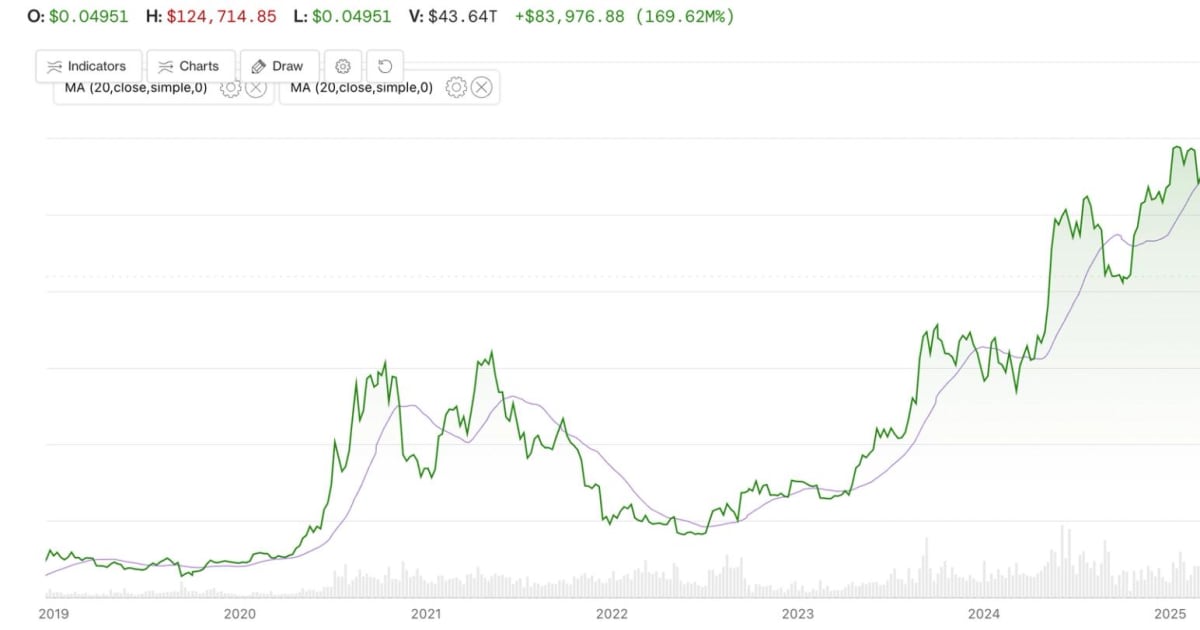
Bitcoin has achieved a significant technical milestone, surpassing a key long-term moving average, a move often interpreted as a precursor to sustained bullish momentum. This development, while not directly tied to India's economic fundamentals, warrants attention for its potential to redirect global speculative capital. WelthWest's analysis explores the nuanced impact on Indian stock market dynamics, FII flows, and identifies specific listed companies that could be indirectly affected.
Bitcoin's Technical Breakout: A New Dawn for Digital Assets and its Ripple Effect on India
In a move that has galvanized the cryptocurrency community, Bitcoin has decisively breached a significant long-term moving average. This technical indicator, closely watched by traders and analysts alike, often serves as a bellwether for extended market trends. While the direct impact on the traditional Indian financial landscape, governed by factors like the Reserve Bank of India's monetary policy and domestic corporate earnings, is not immediate, the implications of a sustained Bitcoin rally are multifaceted and warrant a comprehensive examination.
Why This Bitcoin Milestone Matters Now
The specific moving average in question, often the 200-day moving average (200-DMA), represents the average closing price of an asset over the past 200 trading days. When a price decisively moves above this level, it suggests that recent price action is stronger than the longer-term trend, often interpreted as a shift from a bearish or sideways market to a bullish one. For Bitcoin, having navigated through periods of extreme volatility and regulatory scrutiny, such a technical confirmation can rekindle investor confidence and attract new capital. This is particularly relevant as global liquidity conditions begin to adjust, and investors seek out asset classes with potential for outsized returns, even if perceived as higher risk.
The burgeoning acceptance of digital assets globally, evidenced by increasing institutional interest and the development of crypto-related financial products, means that major technical shifts in flagship cryptocurrencies like Bitcoin cannot be entirely divorced from broader capital market dynamics. The narrative is evolving from a fringe phenomenon to an increasingly integrated, albeit still nascent, part of the global investment universe.
Deep Market Impact Analysis: Connecting Bitcoin's Surge to Indian Equities
The Indian stock market, while largely insulated from direct Bitcoin price fluctuations, is susceptible to shifts in global capital allocation. A sustained and significant upward trajectory in Bitcoin could act as a magnet for speculative capital that might otherwise have flowed into emerging markets like India. Foreign Institutional Investor (FII) flows are a crucial determinant of Indian equity performance, and any diversion of global risk appetite towards digital assets could subtly temper the inflows into Indian equities, particularly those characterized by high beta or speculative appeal.
Consider historical parallels: During periods of strong global risk-on sentiment, often fueled by accommodative monetary policies or emerging asset class enthusiasm, FIIs have historically poured billions into Indian markets. For instance, in the bull run of 2021, when retail participation surged across various asset classes, India witnessed record FII inflows. If Bitcoin's rally effectively captures a significant portion of this speculative appetite, the incremental inflows into Indian equities might be less pronounced than anticipated during a similar global risk-on phase. The market capitalization of Bitcoin, currently exceeding $1 trillion, represents a substantial pool of investable capital, and even a small percentage shift can have tangible effects.
Furthermore, the growing investor acceptance of digital assets signals a maturing financial ecosystem. This could translate into increased interest and investment in companies that are building the infrastructure for this new asset class, both globally and potentially within India. While India's regulatory stance on cryptocurrencies remains a work in progress, the global trend towards more defined frameworks could spur domestic innovation and investment in blockchain technology and related services.
Sector-Level Breakdown: Where the Impact is Felt
The primary sector benefiting directly from a bullish Bitcoin trend is, unequivocally, the Cryptocurrency sector. This includes exchanges, crypto custodians, blockchain technology providers, and companies involved in mining and digital asset management. On a global scale, companies like Coinbase (COIN) and MicroStrategy (MSTR), which holds a significant amount of Bitcoin on its balance sheet, are direct beneficiaries. Their stock prices tend to exhibit a high correlation with Bitcoin's price movements.
Indirectly, traditional asset classes could experience a muted performance if capital is siphoned off. This includes sectors that typically attract retail speculative investment, such as certain small-cap or mid-cap stocks in the broader market, or even alternative investment funds that compete for similar investor capital. Companies heavily reliant on a constant influx of speculative retail capital, without strong underlying fundamental growth, might find their valuations facing headwinds if that capital seeks higher perceived returns in digital assets.
How will the RBI's stance on digital assets influence Indian market players?
The Reserve Bank of India (RBI) has maintained a cautious approach towards cryptocurrencies, primarily citing concerns related to financial stability, consumer protection, and illicit activities. However, the global trajectory towards regulatory clarity, even if phased, suggests that domestic players looking to engage with the crypto ecosystem will operate within an evolving framework. Any positive regulatory developments in India, such as the establishment of clear guidelines for crypto exchanges or the exploration of a central bank digital currency (CBDC), could significantly boost investor sentiment and create opportunities for listed Indian companies involved in technology, financial services, and even data analytics that can support the burgeoning digital asset space.
Stock-by-Stock Breakdown: Potential NSE/BSE Movers
While India does not have direct publicly listed cryptocurrency exchanges like in the US, several Indian companies are indirectly positioned to benefit or face implications from the evolving digital asset landscape. The impact is often through technological adoption, investment in blockchain, or exposure to related financial services.
- Info Edge (India) Ltd (NSE: INFOED): While primarily known for its online portals like Naukri.com, Info Edge has made strategic investments in companies exploring new digital frontiers. Its venture capital arm has a history of backing innovative tech startups. If the broader digital asset ecosystem gains traction, the value of its early-stage investments in tech and fintech could appreciate. Its P/E ratio, often high due to growth expectations, could see further upward pressure if its portfolio companies benefit from the crypto wave.
- Wipro Ltd (NSE: WIPRO): As a major IT services giant, Wipro is actively involved in blockchain development and consulting for its global clients. A surge in crypto adoption and the development of decentralized applications (dApps) would necessitate more robust IT infrastructure, security solutions, and blockchain integration services. Wipro's revenue from its digital and cloud services, which includes blockchain, could see increased demand. Its current P/E ratio of around 25-30 reflects its growth trajectory, which could be further bolstered by this trend.
- Tata Consultancy Services (TCS) (NSE: TCS): Similar to Wipro, TCS is a global leader in IT services and has been investing in blockchain and distributed ledger technologies. The company is working with various enterprises to explore and implement blockchain solutions across different industries. Increased activity and investment in the crypto space would naturally drive demand for TCS's expertise in this area, potentially boosting its revenue from specialized digital services. TCS's stable P/E of around 28-32 signifies its consistent growth, which could be enhanced.
- Tanla Platforms Ltd (NSE: TANLA): This company is focused on cloud communication and has been exploring blockchain applications for secure data exchange and digital identity solutions. As the digital asset ecosystem grows, the need for secure and verifiable digital interactions will increase, potentially benefiting Tanla's offerings in this space. Its revenue growth has been robust, and a strong crypto market could further accelerate its adoption of innovative solutions.
- Reliance Industries Ltd (NSE: RELIANCE): While a conglomerate with diverse interests, Reliance has been actively investing in digital transformation and exploring new technologies. Its ventures into areas like Jio Platforms and its focus on digital commerce could indirectly benefit from the broader adoption of digital assets and blockchain, especially in areas of digital payments, supply chain management, and decentralized finance (DeFi) integrations in the future. The sheer scale of its operations means any nascent trend can be amplified.
It is crucial to note that the impact on these companies is indirect and dependent on their existing or future strategic engagement with blockchain technology and digital asset infrastructure. Their stock performance will, first and foremost, be driven by their core businesses and overall market sentiment.
Expert Perspective: Bulls vs. Bears on Bitcoin's Breakout
Bulls argue that Bitcoin's breach of the 200-DMA is a strong confirmation of a new bull market cycle, driven by increasing institutional adoption, limited supply, and its potential as a hedge against inflation and currency debasement. They point to the increasing interconnectedness of global finance, where digital assets are becoming an integral part of the investment landscape. For India, bulls would suggest that this growing acceptance will eventually lead to more clarity and integration, creating opportunities for Indian tech companies and potentially attracting more sophisticated capital to the market.
Bears, however, remain cautious. They emphasize the inherent volatility of Bitcoin and the speculative nature of its price movements. They argue that technical signals, while important, are not guarantees and that regulatory uncertainty remains a significant overhang. Bears would suggest that any capital flowing into Bitcoin is highly transient and that the underlying fundamentals of the Indian economy and its stock market are more robust and sustainable drivers of investment. They might also highlight that a sustained Bitcoin rally could lead to increased scrutiny from regulators worldwide, potentially leading to crackdowns that could abruptly halt the rally.
How will crypto-related regulatory developments in India affect investor sentiment?
Investor sentiment in India towards crypto-related ventures is intrinsically linked to the clarity and direction of regulatory frameworks. A definitive and supportive regulatory stance from the government and the RBI would significantly de-risk investments in this sector, encouraging both domestic and international capital. Conversely, ambiguous or overly restrictive regulations could stifle innovation and deter investment, pushing capital towards more regulated markets. The ongoing evolution of policies globally, from outright bans to comprehensive regulatory structures, will inevitably influence India's approach and, consequently, the sentiment surrounding Indian companies with exposure to this domain.
Actionable Investor Playbook: Navigating the Digital Asset Wave
For investors in the Indian market, the Bitcoin breakout presents a nuanced opportunity rather than a direct call to action in the crypto market itself, unless they have a high-risk tolerance and are willing to invest directly in digital assets after thorough research.
- Watchlist: Blockchain Technology Providers & IT Services: Focus on NSE/BSE listed IT giants like TCS (TCS) and Wipro (WIPRO), and specialized tech firms like Tanla Platforms (TANLA). Monitor their quarterly results for any mention of increased demand for blockchain services or digital asset-related projects.
- Consider: Strategic Investments in Tech Ventures: Companies like Info Edge (INFOED) that have a diversified portfolio of tech investments might see indirect benefits. However, the impact here is highly dependent on the success of their portfolio companies.
- Monitor FII Flows Closely: Keep a keen eye on FII inflows into Indian equities. A sustained shift of capital towards digital assets could manifest as a slowdown or reversal in FII flows into the Indian market.
- Entry Points & Time Horizons: For IT stocks, consider dollar-cost averaging during market dips, with a medium to long-term horizon (2-5 years) to capitalize on the digital transformation trend. Direct crypto investments, if undertaken, require extreme caution and should only be with capital one can afford to lose entirely, with very short to medium-term speculative horizons.
- Avoid: Over-leveraged or Purely Speculative Bets: Steer clear of Indian companies whose primary business model is heavily reliant on speculative retail investment in unrelated areas, as they are more vulnerable to capital shifts.
Risk Matrix: Understanding the Perils
The current scenario, while bullish for Bitcoin, is fraught with risks that investors must acknowledge:
- Regulatory Uncertainty (High Probability, High Impact): The lack of clear, globally harmonized regulations for cryptocurrencies poses the most significant risk. Sudden regulatory crackdowns in major economies or India could lead to sharp price corrections and impact companies involved in the space.
- Market Volatility (Very High Probability, High Impact): Bitcoin and the broader crypto market are notoriously volatile. Technical signals can be misleading, and price swings can be extreme, leading to substantial losses for investors.
- Capital Flight from Traditional Assets (Medium Probability, Medium Impact): While the impact is indirect, a significant and sustained diversion of capital towards digital assets could lead to underperformance in certain segments of the Indian equity market, particularly those attracting speculative retail money.
- Technological Risks & Security Breaches (Medium Probability, High Impact): The underlying blockchain technology, while robust, is susceptible to sophisticated cyberattacks. Exchanges and wallets can be targets, leading to loss of assets and reputational damage for associated companies.
What to Watch Next: Upcoming Catalysts
Several factors will shape the narrative and impact going forward:
- Global Regulatory Developments: Key announcements from major central banks and governments regarding cryptocurrency regulation will be crucial.
- US Inflation Data & Fed Policy: Continued inflation concerns and potential shifts in US Federal Reserve monetary policy will influence global liquidity and risk appetite, affecting both crypto and equity markets.
- Bitcoin Halving Cycle (Next event expected in early 2024): Historically, Bitcoin halvings have been catalysts for price appreciation due to reduced new supply entering the market. While the impact is debated, it remains a significant event to monitor.
- Indian Budget & RBI Policy Statements: Any forward-looking statements or policy shifts concerning digital assets or financial technology from the Indian government or the RBI will be closely scrutinized.
- Corporate Earnings Reports: For Indian IT companies, earnings calls will be key to understanding any direct or indirect impact of blockchain and digital asset trends on their revenue streams and future outlook.
The convergence of these factors will determine whether Bitcoin's technical breakout translates into a sustained bull run and what its ultimate ripple effect will be on the Indian financial markets.
Run a free AI Stock Screen
Our algorithmic screener scores any NSE/BSE stock on fundamentals, momentum, and risk — free to try, no card needed.
Try the AI Screener →Have questions about this story?
Ask Welth, our finance-focused AI research assistant, for a deeper breakdown — free trial included.
Chat with Welth AI →Disclaimer: This content is generated by WelthWest Research Desk based on publicly available reports and is for informational purposes only. It does not constitute financial advice, investment recommendations, or an offer to buy or sell securities. Always consult a qualified financial advisor before making investment decisions.