Key Takeaway
Bitcoin's ETF-fueled ascent past $72,000 signals a global institutional embrace of digital assets. While not directly impacting Indian equities, this shift validates crypto as a legitimate asset class, subtly influencing capital flows from HNWIs and family offices in India and setting a precedent for future domestic crypto product regulations.
Bitcoin's recent breach of the $72,000 mark, propelled by significant institutional ETF inflows, marks a pivotal moment for digital assets. This WelthWest analysis delves into the global implications, dissecting how this cryptocurrency phenomenon, despite its seeming distance, reverberates through the Indian investment landscape, influencing wealth management strategies and potentially shaping future regulatory frameworks for digital assets in the subcontinent.
Bitcoin's ETF-Driven Breakout: A Global Shift Reshaping Indian Investment Horizons
The cryptocurrency world witnessed a seismic event as Bitcoin surged definitively past the $72,000 threshold, propelled by an unprecedented wave of inflows into spot Bitcoin Exchange Traded Funds (ETFs). This isn't merely a price milestone; it represents a profound validation of digital assets by mainstream finance, fundamentally altering the perception of cryptocurrencies from a speculative niche to a legitimate, investable asset class. For astute investors in India, this global phenomenon, while seemingly distant, carries significant, albeit indirect, implications for capital allocation, risk appetite, and the future trajectory of domestic financial markets.
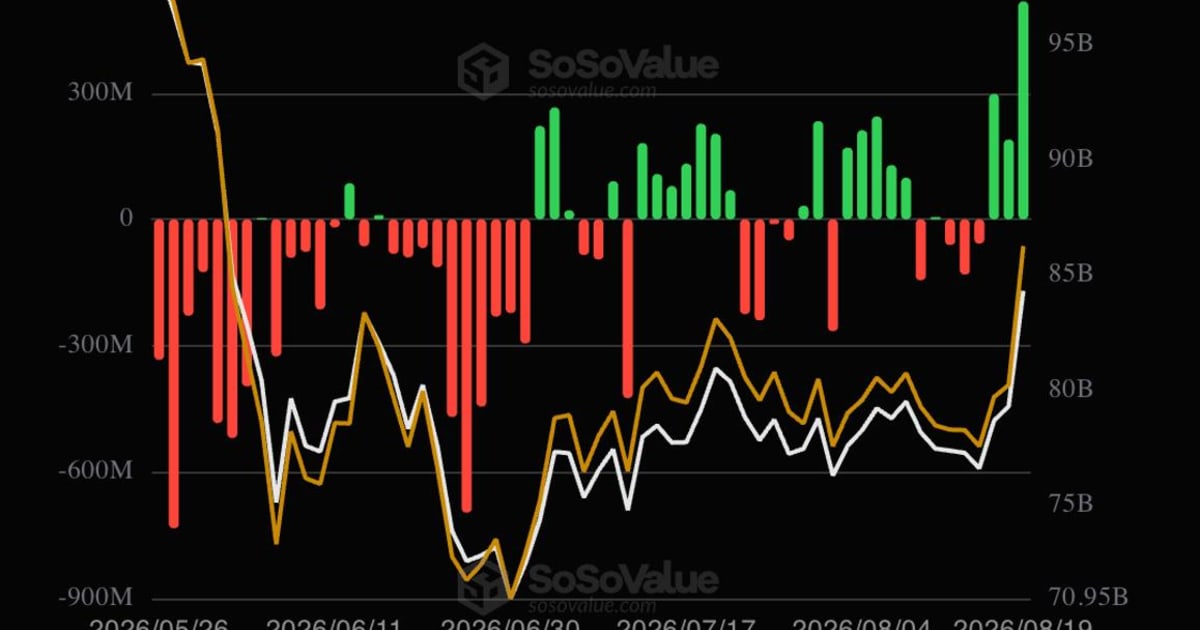
The core catalyst for this recent rally is clear: institutional adoption via regulated investment vehicles. Over the past few months, these Bitcoin ETFs have attracted billions of dollars, with recent daily inflows often exceeding $700 million. This sustained institutional capital injection differentiates the current bull run from previous, retail-driven cycles. It signals a maturation of the crypto market, where large asset managers, pension funds, and wealth advisors are increasingly comfortable allocating a portion of their portfolios to digital assets. This shift is not just about price; it's about infrastructure, regulatory clarity, and a growing acceptance that Bitcoin, and by extension, the broader digital asset ecosystem, is here to stay.
How Will Bitcoin's Institutional Surge Impact Indian Equity Markets?
The direct correlation between Bitcoin's price movements and the Nifty 50 or Sensex is minimal. India's strict regulatory stance on cryptocurrencies, including a 30% tax on crypto gains and a 1% TDS on transactions, largely insulates the domestic equity market from direct capital flight into crypto. However, this perspective overlooks the nuanced and indirect channels through which such a significant global financial event can ripple across the Indian investment landscape. The key lies in understanding the behavior of high-net-worth individuals (HNWIs), family offices, and institutional investors with global exposure.
Historically, when global risk-on sentiment for alternative assets intensifies, Indian HNWIs with diversified portfolios often re-evaluate their asset allocations. Many Indian family offices have established offshore entities or direct exposure to global crypto markets through various channels, despite domestic restrictions. A validated, institutionally-backed Bitcoin rally makes these allocations appear less speculative and more strategic. This could lead to a subtle rebalancing of capital, potentially diverting a marginal percentage of new investable wealth that might otherwise have flowed into traditional Indian equity or debt instruments towards global digital asset exposure. While this won't trigger a mass exodus from Indian stocks, it represents a fractional, yet persistent, shift in the marginal dollar of new investment.
Furthermore, the global embrace of Bitcoin ETFs sets a powerful precedent. India's regulatory environment is dynamic, and while a spot crypto ETF in India remains a distant prospect, the global trend could influence policymakers' long-term views on digital asset integration. Should India eventually move towards more regulated crypto products, the existing infrastructure and market acceptance seen globally will serve as a blueprint. This potential future scenario, even if years away, creates an underlying bullish sentiment for Indian companies that could eventually facilitate or participate in such an ecosystem.
Consider the parallel with global gold prices. When gold rallies due to geopolitical uncertainty or inflation concerns, it often impacts the sentiment around Indian gold-related equities, even if the direct drivers are global. Similarly, a global validation of a new asset class, even one with domestic restrictions, subtly alters the risk-reward calculus for sophisticated Indian investors. The current Bitcoin market cap, now well over $1.4 trillion, represents a significant pool of global capital, and its growth cannot be entirely ignored by any major economy's financial ecosystem.
Indian Stocks to Watch: Indirect Beneficiaries and Potential Disruptors
While no Indian company directly holds Bitcoin on its balance sheet or offers a spot Bitcoin ETF, several sectors and specific companies could experience indirect impacts or strategic shifts. Our analysis identifies key players:
- Infosys Ltd. (NSE: INFY): As a global leader in IT services, Infosys is heavily involved in digital transformation projects for major financial institutions worldwide. Many of these institutions are now exploring or implementing blockchain-based solutions and digital asset services. As global banks and asset managers increase their crypto exposure and develop new product offerings, the demand for IT consulting, security, and infrastructure development from companies like Infosys will likely rise. Their expertise in enterprise blockchain, cloud services, and cybersecurity positions them as an indirect beneficiary of the broader institutionalization of digital assets. Revenue from financial services clients, which constitutes a significant portion of Infosys's top line, could see a subtle boost as these clients ramp up their digital asset initiatives.
- Tech Mahindra Ltd. (NSE: TECHM): Tech Mahindra has been proactive in exploring blockchain and Web3 technologies, even establishing a 'Metaverse & Web3' practice. They have actively partnered with various blockchain platforms and are developing solutions for supply chain, finance, and telecommunications using distributed ledger technology. The global shift towards digital assets validates their strategic investments in these emerging areas. Increased enterprise adoption of blockchain, driven by the broader crypto acceptance, could translate into higher demand for their specialized services, improving their competitive positioning in a high-growth segment.
- Persistent Systems Ltd. (NSE: PERSISTENT): Known for its product engineering and digital transformation capabilities, Persistent Systems also serves a strong client base in the financial services sector. As financial institutions globally build out their digital asset infrastructure, from custody solutions to trading platforms, the need for specialized software development and integration services will grow. Persistent Systems, with its agile development model and focus on innovation, is well-positioned to capture a share of this expanding market for backend solutions and new product development related to digital assets.
- One97 Communications Ltd. (NSE: PAYTM): While Paytm's direct involvement in crypto is currently restricted, the broader sentiment around digital payments and digital assets could indirectly influence its long-term strategy and investor perception. Paytm is a leader in digital payments in India, and globally, cryptocurrencies are increasingly being explored as alternative payment rails. Should India's regulatory stance evolve over time, companies like Paytm, with their vast user base and digital infrastructure, would be prime candidates to integrate or offer crypto-related services. The current global validation of crypto could increase long-term optionality value for such digital-first financial platforms, even if near-term revenue impact is negligible.
It's crucial to emphasize that the impact on these Indian stocks is indirect and long-term, driven by strategic positioning and potential future market evolution rather than immediate revenue uplifts. Investors should monitor these companies' announcements regarding blockchain initiatives, partnerships, and financial services client growth for early indicators.
Expert Perspectives: Bulls vs. Bears on Bitcoin's Trajectory and Indian Market Influence
The institutional embrace of Bitcoin has naturally polarized expert opinions, creating a robust debate vital for any comprehensive investment strategy.
The Bullish Argument: Proponents argue that the current Bitcoin rally is fundamentally different and more sustainable. "This isn't just retail frenzy; it's the tip of the iceberg for institutional capital," states a prominent global asset manager. "Regulated ETFs provide a compliant, accessible gateway for trillions of dollars in wealth previously unable to touch crypto. We're seeing a supply shock against unprecedented demand. Bitcoin's scarcity, combined with its programmatic inflation schedule (halving events), makes it a compelling store of value in an era of fiat currency debasement." For India, bulls contend that while direct market impact is limited, the global trend signals a long-term shift towards digital assets as a legitimate portfolio diversifier. This will gradually influence Indian HNWIs and family offices, leading to a 'brain drain' of capital towards global crypto opportunities if domestic regulations remain overly restrictive, or conversely, pressure for more progressive local frameworks.
The Bearish Argument: Skeptics, however, caution against euphoria. "Bitcoin remains an inherently volatile asset, susceptible to rapid price corrections," warns a veteran Indian market analyst. "The 'greater fool' theory still applies to some extent, and regulatory crackdowns, particularly from major economies, could quickly reverse sentiment. Furthermore, the correlation with tech stocks in risk-on environments suggests it's not a true safe haven, but rather a high-beta growth play." Bears emphasize that India's stringent crypto regulations effectively ring-fence the domestic equity market from direct crypto volatility. Any indirect capital shifts would be marginal, and the primary drivers for Indian stocks will remain macroeconomic factors, corporate earnings, and domestic policy, not the price of Bitcoin. They also point to the potential for 'ETF fatigue' once initial institutional allocations are complete, leading to a slowdown in inflows.
The truth likely lies somewhere in between. While Bitcoin's volatility is undeniable, the institutional on-ramp via ETFs provides a layer of legitimacy and liquidity previously absent. For India, the long-term strategic implications for technology companies and financial service providers exploring blockchain cannot be ignored, even if direct market movements remain decoupled.
An Actionable Investor Playbook for the WelthWest Reader
Given the nuanced impact of Bitcoin's surge on the Indian market, a thoughtful, multi-pronged approach is essential for investors:
- Monitor Global Capital Flows: Keep a close watch on global Bitcoin ETF inflows/outflows. Sustained high inflows (e.g., above $500M daily for several weeks) indicate continued institutional demand, reinforcing the bullish sentiment. A sharp reversal could signal a broader risk-off move in alternative assets.
- Strategic Exposure to Indian IT Services: Consider allocating to well-established Indian IT service providers with strong financial services client bases and active blockchain/Web3 initiatives. Companies like Infosys (NSE: INFY) and Tech Mahindra (NSE: TECHM) offer indirect exposure to the global digital asset infrastructure build-out. Look for entry points during broader market corrections, aiming for a long-term horizon (3-5 years) to capitalize on the secular growth in enterprise blockchain adoption. Their current P/E ratios (e.g., Infosys ~25x, Tech Mahindra ~30x) should be evaluated against their growth prospects in this evolving digital landscape.
- Evaluate Digital Payment Innovators: While speculative, keep One97 Communications (NSE: PAYTM) on your watchlist. Any future softening of Indian crypto regulations could unlock significant optionality for such platforms. Monitor regulatory news closely. This is a higher-risk, higher-reward play with a very long time horizon (5+ years).
- Diversify with Traditional Safe Havens: Given crypto's inherent volatility, maintain a balanced portfolio. Traditional safe havens like physical gold or gold ETFs (e.g., Nippon India ETF Gold BeES, NSE: GOLDBEES) can act as a hedge against potential crypto corrections or broader market instability, especially if capital rotation away from traditional assets becomes too aggressive.
- Avoid Speculative Indian Micro-Caps: Steer clear of any small Indian companies making unverified claims about blockchain or crypto exposure. The Indian regulatory environment makes direct, legitimate crypto-related revenue streams highly unlikely for most. Focus on established players with proven enterprise solutions.
This playbook emphasizes indirect plays and long-term strategic positioning, acknowledging India's unique regulatory landscape. The goal is to benefit from the global trend without direct exposure to the high volatility of cryptocurrencies within the Indian equity market.
Risk Matrix: Navigating the Volatility and Regulatory Minefield
Investing in the shadow of a surging crypto market, even indirectly, carries distinct risks:
- Regulatory Crackdowns (Probability: Medium-High): Governments globally, including India, could implement stricter regulations or outright bans on certain crypto activities. A major crackdown from a G7 nation or a significant tightening by the RBI/SEBI could trigger a sharp price correction in Bitcoin and dampen overall market sentiment, indirectly affecting the long-term prospects of Indian tech companies eyeing this space. This remains the single biggest systemic risk to the digital asset ecosystem.
- High Volatility and Price Corrections (Probability: High): Despite institutional inflows, Bitcoin remains notoriously volatile. A 20-30% correction within weeks is not uncommon. Such rapid downturns, while not directly impacting Indian equity prices, can erode investor confidence in alternative assets globally, potentially leading to a broader risk-off sentiment that could affect emerging markets like India.
- Macroeconomic Headwinds (Probability: Medium): A global economic slowdown, persistent inflation, or rising interest rates could reduce investor appetite for riskier assets, including cryptocurrencies. If global liquidity tightens significantly, capital could flow out of digital assets and into traditional safe havens, indirectly impacting the 'risk-on' sentiment that benefits growth-oriented Indian tech stocks.
- Cybersecurity Risks & Exchange Failures (Probability: Medium): While ETFs mitigate some risks, the underlying crypto ecosystem is still vulnerable to hacks, exchange failures, and technological vulnerabilities. A major incident, particularly involving a large institutional player, could severely damage confidence and trigger a market-wide sell-off, with ripple effects across the broader digital asset world.
What to Watch Next: Catalysts for the Next Bitcoin & Blockchain Wave
The narrative around Bitcoin and its indirect impact on Indian markets is far from static. Key upcoming events and data releases will shape its trajectory:
- Ongoing Bitcoin ETF Inflow Data: Weekly and monthly reports on net inflows into spot Bitcoin ETFs (e.g., from BlackRock, Fidelity) will be crucial. Sustained positive inflows signal continued institutional demand. Any significant deceleration or net outflows would be a bearish signal.
- US Federal Reserve Monetary Policy: The Fed's stance on interest rates and quantitative easing directly impacts global liquidity and risk appetite. A dovish pivot could further fuel risk-on assets like Bitcoin, while a hawkish stance could lead to corrections. Watch for FOMC meeting minutes and inflation data releases.
- Upcoming Bitcoin Halving (Estimated April 2024): This programmatic event will cut the supply of new Bitcoins by half. Historically, halving events precede significant price rallies, though past performance is not indicative of future results. The market will closely watch how this supply shock interacts with current institutional demand.
- Global Regulatory Developments: Any new legislation or guidance from major economic blocs (EU MiCA, US SEC actions, UK regulatory frameworks) will significantly impact the global crypto landscape. India's own evolving stance on digital assets, though slow, bears monitoring for any shifts.
- Enterprise Blockchain Adoption Reports: Look for reports from consultancies (Gartner, Forrester) on the adoption rates of enterprise blockchain solutions by large corporations. Increased real-world utility of blockchain technology, beyond just speculative assets, will validate the long-term thesis for Indian IT service providers.
By diligently tracking these indicators, investors can position themselves to navigate the evolving landscape shaped by Bitcoin's institutional ascendancy and its subtle, yet significant, influence on the Indian investment ecosystem.
Run a free AI Stock Screen
Our algorithmic screener scores any NSE/BSE stock on fundamentals, momentum, and risk — free to try, no card needed.
Try the AI Screener →Have questions about this story?
Ask Welth, our finance-focused AI research assistant, for a deeper breakdown — free trial included.
Chat with Welth AI →Disclaimer: This content is generated by WelthWest Research Desk based on publicly available reports and is for informational purposes only. It does not constitute financial advice, investment recommendations, or an offer to buy or sell securities. Always consult a qualified financial advisor before making investment decisions.