Key Takeaway
The cooling of the global risk-on rally, marked by Bitcoin and Ethereum's consolidation, signals a potential pivot towards safer assets. For Indian equities, this could translate into subdued Foreign Institutional Investor (FII) inflows and a more cautious valuation environment, impacting speculative growth sectors.
As Bitcoin and Ethereum pause their ascent, mirroring a global stock market cooling, a significant shift in investor sentiment is brewing. This analysis unpacks the implications for India's financial landscape, predicting a potential slowdown in FII inflows and increased pressure on speculative assets. We examine specific Indian stock impacts and offer an actionable strategy.
Bitcoin, Ethereum Consolidate: Is the Global Risk-On Party Winding Down?
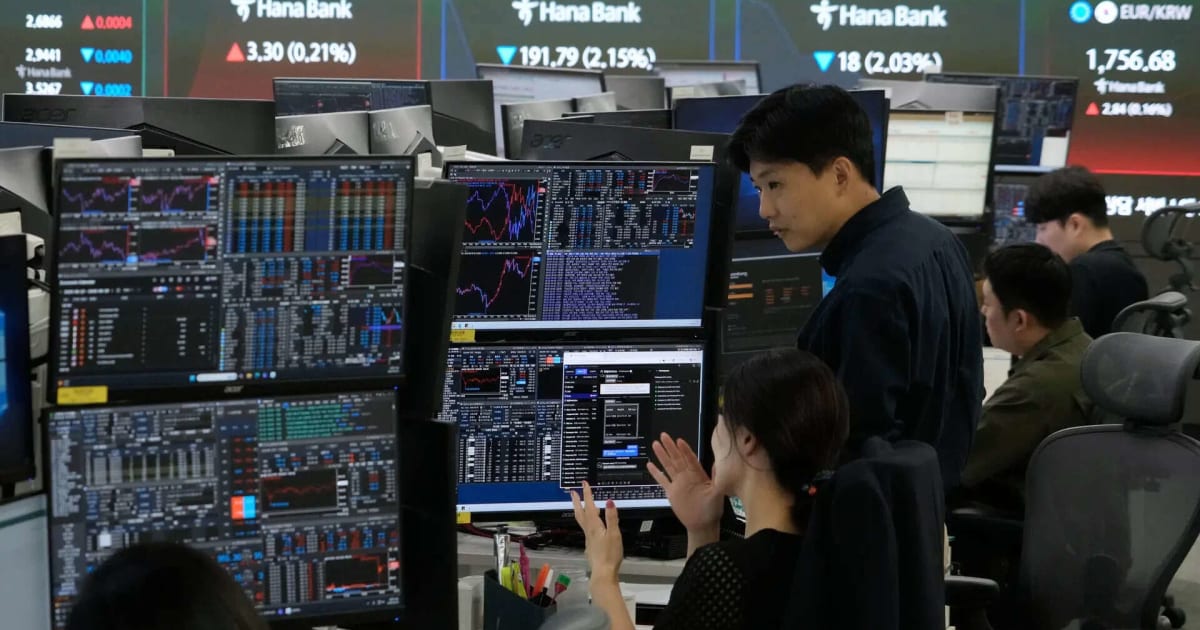
The cryptocurrency market, often seen as a barometer for global risk appetite, is exhibiting signs of a significant recalibration. Bitcoin (BTC) and Ethereum (ETH), the two largest digital assets by market capitalization, have recently moved from aggressive upward trajectories to a phase of consolidation. This pause in gains, occurring concurrently with a cooling of the broader global stock rally, is not merely a technical market maneuver; it represents a potential inflection point in investor sentiment, with profound implications for capital flows and asset valuations worldwide, including in the dynamic Indian market.
Why This Crypto Consolidation Matters Now for Indian Investors
The correlation between the cryptocurrency market and traditional equity markets, particularly tech-heavy indices, has become increasingly pronounced. When Bitcoin and Ethereum surge, it often coincides with a 'risk-on' environment where investors are eager to embrace higher-risk, higher-reward assets. Conversely, when these digital assets pause or retreat, it signals a potential flight to safety, a move away from speculative ventures towards more stable, albeit lower-yielding, investments. For India, this shift is particularly critical. The Indian stock market has heavily relied on Foreign Institutional Investor (FII) inflows to fuel its rallies, especially in growth-oriented sectors and mid-cap stocks. A global cooling of risk appetite can directly translate into reduced FII participation, impacting liquidity, equity valuations, and the overall momentum of the Indian equity benchmarks like the Nifty 50 and the Sensex. The current consolidation in crypto, therefore, acts as an early warning signal for a potential deceleration in capital flowing into emerging markets like India, prompting a re-evaluation of asset allocation strategies.
Deep Market Impact Analysis: The Ripple Effect on Indian Equities
The cooling of the global stock rally, amplified by the consolidation in major cryptocurrencies, is poised to exert a medium-term impact on Indian financial markets. Historically, periods of global deleveraging or a shift towards safer assets have seen a tangible slowdown in FII inflows into emerging markets. For instance, during the latter half of 2022, when global inflation fears and aggressive monetary tightening dominated headlines, FIIs became net sellers in Indian equities, contributing to a correction of approximately 15-20% in the Nifty 50 from its peak. While the current situation is not identical, the underlying sentiment of risk aversion is a recurring theme. The current market capitalization of Bitcoin hovers around $1.3 trillion, and Ethereum's around $400 billion; any significant outflows from these asset classes can easily reallocate into traditional safe havens like US Treasuries or, by extension, reduce the appetite for emerging market equities. This could lead to a compression of Price-to-Earnings (P/E) multiples across the Indian equity landscape, particularly for companies with higher valuations and those perceived as more speculative.
Sectoral Repercussions: From Tech Darlings to Digital Currencies
The immediate beneficiaries of a risk-off environment are typically defensive sectors such as Fast-Moving Consumer Goods (FMCG), Pharmaceuticals, and Utilities, which tend to offer stable earnings and dividends. Conversely, sectors that have benefited most from the recent risk-on rally are likely to face headwinds. This includes speculative technology stocks, companies with high P/E ratios and unproven business models, and, of course, the cryptocurrency ecosystem itself. Cryptocurrency exchanges and related businesses, which thrive on trading volumes and new investor adoption during bullish phases, are particularly vulnerable. A sustained cooling of the crypto market directly impacts their revenue streams, which are often transaction-fee-based. For Indian crypto exchanges, this means a potential slowdown in user acquisition and a decrease in trading activity, affecting their growth projections and profitability. Furthermore, companies that have integrated blockchain technology or have significant exposure to digital assets might also see their valuations come under pressure, irrespective of their core business performance, due to the broader negative sentiment surrounding the crypto space.
Stock-by-Stock Breakdown: Navigating the Affected Landscape on NSE & BSE
The potential recalibration of investor sentiment will inevitably cast a shadow on specific Indian stocks and their associated sectors. While direct crypto exposure is limited for most listed Indian companies, the indirect impact through FII flows and market sentiment is significant. We examine some key entities that could feel the brunt of this shift:
- WazirX (Unlisted, but indicative of sector health): Although not listed on Indian exchanges, WazirX, along with its peers CoinDCX and ZebPay, represents the frontline of the Indian crypto market. Their business models are intrinsically tied to trading volumes and investor interest in digital assets. A prolonged crypto winter or even a sustained period of low volatility would directly curtail their revenue, which is primarily derived from transaction fees. Given the substantial user growth seen during the recent bull run, a reversal could lead to a significant deceleration in their expansion plans and impact their valuation multiples if they were to pursue future funding rounds or an IPO.
- Info Edge (India) Ltd (NSE: INFOEDGE): As a prominent internet company with investments in various online platforms, Info Edge's subsidiary, Zomato, has shown interest in exploring blockchain applications. While its core business is robust, any broader market downturn or increased investor skepticism towards innovative, yet unproven, tech applications could temper its valuation. Info Edge's investment portfolio, which includes stakes in companies with nascent blockchain integrations, might face valuation headwinds if the overall sentiment towards emerging technologies sours.
- TCS (NSE: TCS) & Infosys (NSE: INFY): While these IT giants are less directly impacted due to their diversified revenue streams and strong fundamentals, a significant slowdown in global IT spending, often a consequence of a broader economic slowdown or reduced risk appetite, could affect their growth trajectory. Their P/E multiples, currently at a premium, might face some re-rating if the macro environment turns decidedly bearish. Historically, during periods of FII outflows and risk aversion, even large-cap IT stocks have experienced corrections, albeit less severe than mid-cap tech.
- Reliance Industries Ltd (NSE: RELIANCE): While RIL's diversified business across petrochemicals, retail, and telecom provides significant resilience, its foray into digital initiatives and potential future involvement in blockchain or other emerging technologies mean it is not entirely immune. A broader market risk-off sentiment could lead to a general de-rating of high-growth potential stocks, even those with strong underlying cash flows.
- Small & Mid-Cap IT Companies: Many smaller IT firms have been aggressively pursuing blockchain, AI, and other niche technology services. These companies, often trading at higher P/E multiples based on future growth expectations, are highly susceptible to a contraction in investor risk appetite. Their market capitalization, often in the range of $500 million to $2 billion, makes them prime candidates for FII outflows during risk-off phases.
How Will the Global Economic Slowdown Affect Indian IPO Market?
The cooling of global markets and the potential retreat of risk capital directly impact the appetite for Initial Public Offerings (IPOs). In India, the IPO market has been buoyant, fueled by strong retail participation and institutional interest. However, a sustained period of global uncertainty, coupled with reduced FII inflows, can significantly dampen investor sentiment for new listings. Companies looking to go public will face increased scrutiny, potentially lower valuations, and a more challenging fundraising environment. This could lead to a slowdown in the pipeline of upcoming IPOs, affecting investment banks and venture capital firms that rely on exit opportunities. The valuation multiples for newly listed companies might also compress more rapidly post-listing if the macro sentiment remains bearish, as investors become more selective and demand stronger proof of profitability and sustainable growth.
Expert Perspective: Bears vs. Bulls on the Crypto-Crypto-Equity Nexus
The current market juncture elicits divergent views among financial experts. Bulls argue that the consolidation in Bitcoin and Ethereum is a healthy correction, a necessary pause after a period of rapid appreciation, and that the underlying technology and adoption trends remain robust. They believe that capital will eventually flow back into risk assets, including cryptocurrencies and emerging market equities, once inflationary pressures subside and interest rate hikes stabilize. They might point to the persistent demand for digital assets as a store of value and a hedge against traditional financial system uncertainties. Furthermore, they would emphasize that India's structural growth story remains intact, attracting long-term institutional capital irrespective of short-term market fluctuations.
Conversely, Bears contend that the cooling of the global stock rally, coupled with crypto consolidation, is a precursor to a more significant downturn. They highlight the increasing correlation between crypto and tech stocks, suggesting that both are highly sensitive to interest rate environments and liquidity conditions. Bears would emphasize the ongoing geopolitical uncertainties, persistent inflation concerns in some economies, and the potential for further monetary tightening by global central banks as key risks. They might argue that the current crypto valuations are still detached from fundamental utility and that a deleveraging event could lead to substantial price declines, impacting sentiment across all risk assets. For India, they would foresee a sharp reduction in FII inflows, leading to a prolonged period of sideways movement or even a correction in the Nifty and Sensex, particularly impacting the high-valuation tech and mid-cap segments.
Actionable Investor Playbook: Navigating the Shift in Market Dynamics
In light of the evolving market sentiment, a strategic approach is paramount for investors looking to preserve capital and identify opportunities. The current environment calls for a balanced portfolio that prioritizes quality and resilience.
- Sell/Reduce Exposure: Consider trimming positions in highly speculative technology stocks with elevated P/E ratios and unproven profitability. Similarly, reduce exposure to companies with significant direct or indirect ties to the cryptocurrency ecosystem, especially those with limited revenue diversification. For individual investors holding significant crypto assets, consider implementing a dollar-cost averaging (DCA) strategy to reduce exposure or setting trailing stop-losses to protect gains.
- Buy/Increase Exposure: Focus on high-quality, large-cap companies in defensive sectors such as FMCG (e.g., Hindustan Unilever Ltd - NSE: HLL), Pharmaceuticals (e.g., Sun Pharmaceutical Industries Ltd - NSE: SUNPHARMA), and select Utilities (e.g., Power Grid Corporation of India Ltd - NSE: POWERGRID). These sectors tend to exhibit lower volatility and more stable earnings during periods of economic uncertainty. Also, consider adding to positions in well-managed financial institutions with strong balance sheets and diversified lending portfolios, as they can benefit from stable interest rate environments and increased demand for credit.
- Watchlist: Keep a close eye on companies that are financially sound and have strong balance sheets but have been unfairly punished by the broader market sentiment. These could present attractive entry points for long-term investment. Monitor FII inflow data closely; a sustained reversal of outflows would be a strong signal for increasing risk appetite.
- Entry Points & Time Horizons: For defensive sectors, consider accumulating positions gradually over the next 1-3 months, aiming for entry points during minor market pullbacks. For speculative assets, it would be prudent to wait for clearer signs of market stabilization or a definitive shift back to risk-on sentiment, potentially over a 6-12 month horizon. Long-term investors (3-5+ years) can continue to accumulate quality assets, viewing any market dips as buying opportunities.
Risk Matrix: Quantifying Potential Downside
While the current consolidation is a signal, it's crucial to assess the probability and potential impact of various risks:
- Risk 1: Prolonged Global Monetary Tightening (Probability: Medium-High, Impact: High): If major central banks, particularly the US Federal Reserve, continue aggressive interest rate hikes or maintain high rates for an extended period, global liquidity will remain constrained. This would further dampen risk appetite and could trigger broader sell-offs across equities and cryptocurrencies. The impact on Indian markets would be severe, leading to significant FII outflows and a deep correction.
- Risk 2: Escalation of Geopolitical Tensions (Probability: Medium, Impact: High): Any significant escalation in existing geopolitical conflicts or the emergence of new ones could lead to a sharp increase in global uncertainty and a flight to safety, irrespective of monetary policy. This would have an immediate and negative impact on emerging market assets.
- Risk 3: Regulatory Crackdown on Crypto (Probability: Medium, Impact: Medium): Increased regulatory scrutiny or outright bans on cryptocurrencies in major economies could lead to significant price drops and a loss of investor confidence. While India has adopted a more measured approach, global regulatory actions can still influence sentiment and capital flows.
- Risk 4: Deeper-Than-Expected Economic Slowdown (Probability: Medium, Impact: Medium-High): A more severe global economic recession than currently anticipated would directly impact corporate earnings and consumer demand, leading to a widespread downturn in stock markets worldwide. Indian companies, despite their domestic strengths, would not be immune to such a global shock.
What to Watch Next: Catalysts and Data Points
Several key events and data releases will shape the trajectory of this narrative:
- Central Bank Monetary Policy Meetings: Upcoming announcements from the US Federal Reserve, the European Central Bank, and the Reserve Bank of India (RBI) will be critical in signaling future interest rate paths. Any deviation from expected hawkishness could be a significant market mover.
- Inflation Data Releases: Key inflation reports (CPI and PPI) from major economies will influence central bank decisions and, consequently, market sentiment.
- FII Inflow/Outflow Data: Daily and weekly data on FII investment flows into Indian equities will provide real-time insights into foreign investor sentiment. A sustained reversal from net selling to net buying would be a strong bullish indicator for Indian markets.
- Corporate Earnings Season: The upcoming earnings season for Indian companies will provide an update on corporate health and future outlook. Strong earnings, especially from sectors less sensitive to global demand, could offer pockets of resilience.
- Major Cryptocurrency Developments: Significant news related to regulatory approvals, technological upgrades, or major institutional adoption within the crypto space could influence the digital asset market and, by extension, broader risk sentiment.
The current consolidation in Bitcoin and Ethereum, alongside a cooling global equity rally, presents a pivotal moment for investors. By understanding the interconnectedness of global markets and focusing on fundamental strengths, investors can navigate this period of recalibration and position themselves for long-term success in the Indian equity landscape.
See WazirX's AI Score
Our algorithmic screener scores WazirX on fundamentals, momentum, and risk — free to try, no card needed.
Try the AI Screener →Have questions about this story?
Ask Welth, our finance-focused AI research assistant, for a deeper breakdown — free trial included.
Chat with Welth AI →Disclaimer: This content is generated by WelthWest Research Desk based on publicly available reports and is for informational purposes only. It does not constitute financial advice, investment recommendations, or an offer to buy or sell securities. Always consult a qualified financial advisor before making investment decisions.