Key Takeaway
The RBI's decision to maintain the repo rate signals a commitment to inflation control amidst global uncertainty, creating a stable but cautious environment. Investors should recalibrate expectations for immediate rate cuts, focusing instead on sectors benefiting from predictable borrowing costs and robust domestic demand.
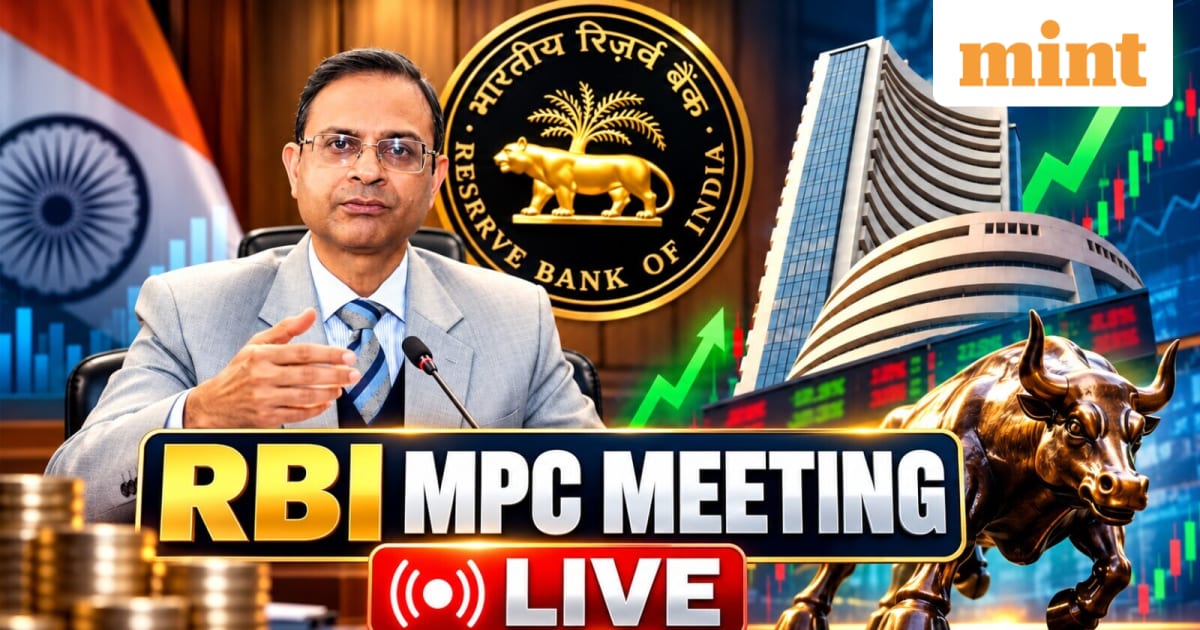
The Reserve Bank of India has once again held its benchmark repo rate steady, a move that reverberates across the Indian financial landscape. WelthWest Research Desk provides an unparalleled deep dive into what this stability means for corporate India, household finances, and the trajectory of the Nifty 50. Our analysis uncovers the hidden impacts on specific sectors and stocks, offering an actionable playbook for discerning investors navigating this pivotal monetary policy stance.
RBI Holds Repo Rate Steady: Navigating India's Cautious Monetary Path
The Reserve Bank of India (RBI) has once again opted to maintain its benchmark repo rate at 6.5%, extending a period of stability following a series of rate hikes and subsequent pauses. This decision, while widely anticipated by many market participants, carries profound implications for India's economic trajectory, corporate profitability, and the investment landscape. At WelthWest Research Desk, we dissect this crucial monetary policy pronouncement, offering an in-depth, data-driven analysis that goes beyond the headlines to provide actionable insights for investors.
The RBI's cautious stance reflects a delicate balancing act: taming persistent inflationary pressures while simultaneously supporting robust economic growth. With global economic headwinds, including geopolitical tensions and fluctuating commodity prices, the central bank appears to prioritize stability and predictability. This prolonged pause in rate adjustments means that borrowing costs for banks, and subsequently for businesses and consumers, will remain at current levels, influencing everything from home loan EMIs to corporate expansion plans.
Why Does the RBI's Repo Rate Decision Matter for Indian Stocks?
The repo rate is the primary lever through which the RBI influences liquidity and credit conditions in the economy. When the rate is held steady, as it has been now, it translates into stable borrowing costs for commercial banks. This stability, in turn, impacts the entire credit ecosystem:
- Corporate Investment: Companies planning capital expenditure or working capital financing face predictable interest expenses. This removes a layer of uncertainty, potentially encouraging investment in sectors with strong underlying demand.
- Consumer Spending: For households, stable rates mean predictable EMIs on existing loans (home, auto, personal). While new loans won't be cheaper immediately, the absence of further hikes prevents an increase in debt servicing burdens, supporting discretionary spending.
- Cost of Capital: For publicly listed companies, the cost of equity and debt is intrinsically linked to prevailing interest rates. A stable rate environment can lead to more accurate valuation models and potentially higher valuations for companies with strong growth prospects and manageable debt.
- Fixed Income vs. Equities: The attractiveness of fixed-income instruments (like government bonds or corporate debt) is directly tied to interest rates. A stable rate environment means that while existing bondholders might not see immediate capital appreciation from rate cuts, the yields remain competitive against potentially volatile equity returns.
The current stability contrasts sharply with the period between May 2022 and February 2023, when the RBI hiked the repo rate by a cumulative 250 basis points to combat spiraling inflation. That aggressive tightening had a discernible impact on growth-sensitive sectors and led to a re-rating of many high-growth, debt-reliant companies. The current pause, therefore, offers a breather and an opportunity for businesses to consolidate and plan with greater certainty.
Deep Market Impact Analysis: Unpacking Sectoral Winners & Losers
The RBI's decision to maintain the repo rate creates a nuanced landscape for the Indian stock market. While the immediate reaction might be subdued due to anticipation, the sustained stability will ripple through various sectors differently. Our analysis identifies key beneficiaries and those facing headwinds.
Who Wins with Stable Interest Rates in India?
- Real Estate & Infrastructure (BSE Realty, Nifty Infra): These sectors are highly sensitive to borrowing costs, both for developers and homebuyers. Stable rates encourage property purchases and make project financing more predictable. The BSE Realty index, which saw a significant correction during the rate hike cycle, could find renewed momentum as affordability remains stable. Companies like DLF Ltd. (NSE: DLF) and Godrej Properties Ltd. (NSE: GODREJPROP), with their large project pipelines and significant debt, benefit from a stable interest burden. DLF, with a market capitalization exceeding ₹2.2 trillion, has seen its P/E ratio expand as market confidence in the sector's recovery grows.
- Automobiles (Nifty Auto): A significant portion of vehicle purchases are financed through loans. Predictable EMIs support consumer confidence and demand for both passenger vehicles and two-wheelers. Maruti Suzuki India Ltd. (NSE: MARUTI), the largest passenger vehicle manufacturer, and Bajaj Auto Ltd. (NSE: BAJAJ-AUTO), a dominant player in two-wheelers, stand to gain from sustained consumer demand. Maruti's robust sales figures in recent quarters underscore the resilience of domestic consumption, which is further buttressed by stable financing costs.
- Banking & Financial Services (Nifty Bank, Nifty Financial Services): While an immediate rate cut would have boosted bond portfolios, a stable rate environment allows banks to maintain predictable Net Interest Margins (NIMs). The absence of further rate hikes also reduces the risk of non-performing assets (NPAs) arising from higher debt servicing costs for borrowers. Large private sector banks like HDFC Bank Ltd. (NSE: HDFCBANK) and ICICI Bank Ltd. (NSE: ICICIBANK), with their vast retail and corporate loan books, thrive on stable credit growth and manageable credit costs. HDFC Bank, with a market cap over ₹12 trillion, benefits significantly from a benign interest rate environment that supports both lending and deposit growth.
- Capital Goods & Industrials (Nifty India Consumption): Sectors tied to domestic consumption and infrastructure build-out benefit from overall economic stability and predictable financing. Companies like Larsen & Toubro Ltd. (NSE: LT), a bellwether for infrastructure development, benefit from consistent project pipelines and stable borrowing costs for their extensive working capital requirements.
Who Faces Headwinds or Missed Opportunities?
- Fixed-Income Investors: Those anticipating immediate rate cuts for capital gains on existing bond portfolios will face disappointment. Yields on government securities and corporate bonds will likely remain range-bound, offering lower opportunities for yield enhancement.
- Companies Relying on New Debt for Aggressive Expansion: While stable, the current rates are still relatively high compared to the pre-2022 period. Companies with ambitious expansion plans heavily reliant on fresh, large-scale debt financing might find the cost of capital slightly elevated compared to a scenario with imminent rate cuts. This might subtly temper hyper-aggressive growth strategies in certain niches.
Stock-by-Stock Breakdown: Specific Impacts on Indian Equities
To truly understand the granular impact, we must look at specific companies within these sectors. Here’s how the RBI's repo rate decision could influence 4-6 prominent Indian stocks:
1. HDFC Bank Ltd. (NSE: HDFCBANK)
- Sector: Banking
- Impact: Neutral to mildly Positive. As India's largest private sector bank, HDFC Bank benefits from a stable interest rate environment that supports consistent credit growth and predictable Net Interest Margins (NIMs). The bank's strong liability franchise ensures a stable cost of funds. While an immediate rate cut would have boosted its bond portfolio, the absence of further hikes prevents an increase in borrowing costs for its vast retail and corporate customer base, maintaining asset quality. HDFC Bank’s P/E ratio, currently around 18-20x trailing earnings, reflects its premium valuation based on consistent performance and asset quality.
- Sector Peer: ICICI Bank Ltd. (NSE: ICICIBANK) will experience similar benefits from stable NIMs and robust loan book growth, especially in its retail and SME segments.
2. Maruti Suzuki India Ltd. (NSE: MARUTI)
- Sector: Automobile
- Impact: Positive. A significant portion of car purchases are financed. Stable interest rates mean predictable EMIs for consumers, which supports demand for Maruti's wide range of passenger vehicles. This stability aids in maintaining the momentum of recent sales growth. With a market capitalization exceeding ₹3.5 trillion and a dominant market share, Maruti's fortunes are closely tied to consumer confidence and affordable financing.
- Sector Peer: Bajaj Auto Ltd. (NSE: BAJAJ-AUTO) will also benefit from sustained demand in the two-wheeler segment, particularly in rural and semi-urban areas where financing costs play a critical role.
3. DLF Ltd. (NSE: DLF)
- Sector: Real Estate
- Impact: Positive. Real estate developers carry substantial debt for project financing. Stable rates ensure their interest outgo remains predictable, improving project economics and profitability. For homebuyers, consistent EMI rates on home loans provide certainty, encouraging property purchases. DLF, with its premium residential and commercial projects, is poised to capitalize on this stability. The company's recent quarterly revenues showing robust sales bookings underscore the underlying demand in the sector.
- Sector Peer: Godrej Properties Ltd. (NSE: GODREJPROP) will also see a similar positive impact, benefiting from stable financing costs for its ambitious development pipeline across major Indian cities.
4. Larsen & Toubro Ltd. (NSE: LT)
- Sector: Capital Goods & Infrastructure
- Impact: Neutral to Positive. As India's largest engineering and construction conglomerate, L&T's project execution often involves significant working capital and long-term financing. Stable interest rates provide certainty in project costing and improve cash flow predictability. While infrastructure spending is driven by government policy, the stability in borrowing costs reduces a key variable for project profitability. L&T's order book, currently exceeding ₹4.5 trillion, provides strong revenue visibility.
- Sector Peer: Siemens Ltd. (NSE: SIEMENS) would also benefit from a stable macroeconomic environment that encourages industrial capex and infrastructure development, leading to consistent order inflows.
Expert Perspective: Bulls vs. Bears on RBI's Stance
The RBI's decision elicits diverse reactions across the investment spectrum. Understanding these contrasting viewpoints is crucial for a balanced perspective.
The Bullish Argument: Stability Breeds Confidence
"The RBI's commitment to stability is a powerful signal. It tells businesses that the era of unpredictable interest rate swings is behind us, at least for now. This predictability lowers the cost of planning, encourages long-term investments, and ultimately supports sustainable earnings growth. We believe this pause is a strategic move to allow previous rate hikes to fully transmit through the economy, setting the stage for a robust, inflation-controlled growth trajectory. Sectors like housing, auto, and domestic consumption will thrive on this stable foundation, making India an attractive destination for capital." - *Dr. Anjali Sharma, Chief Economist, Zenith Capital Advisors.*
Bulls emphasize that a stable rate environment reduces financial market volatility, allowing for more rational capital allocation. They point to India's resilient domestic demand, robust credit growth, and strong corporate earnings as evidence that the economy can absorb current interest rate levels without significant contraction. Furthermore, they argue that the RBI is wisely preserving its policy ammunition, allowing it to react decisively if global conditions deteriorate or if inflation unexpectedly resurges.
The Bearish Argument: Missing the Growth Opportunity
"While stability is commendable, the RBI might be missing an opportunity to provide a much-needed impetus to growth. Global central banks are already signaling or executing rate cuts. By holding firm, the RBI risks making Indian exports less competitive and potentially dampening domestic investment that could accelerate with lower borrowing costs. The current rates are still restrictive for many small and medium enterprises, and a proactive cut would have stimulated broader economic activity. The focus on inflation might be overly cautious, given that core inflation has shown signs of moderation." - *Mr. Vikram Singh, Head of Macro Strategy, Frontier Fund Management.*
Bears contend that the RBI is being overly conservative, potentially stifling economic momentum. They highlight that while headline inflation might still be a concern, core inflation, which excludes volatile food and fuel prices, has been trending downwards. They argue that a pre-emptive rate cut could have unlocked significant growth potential, especially for sectors reliant on fresh capital and for export-oriented industries facing a strong rupee. The opportunity cost of not cutting rates, they suggest, could be a slightly slower pace of economic expansion than what is achievable.
Actionable Investor Playbook: Navigating the Current Environment
For investors, the RBI's consistent stance necessitates a recalibration of strategies. The focus should shift from anticipating immediate rate cuts to identifying companies and sectors that thrive in a stable, yet not rapidly expanding, credit environment.
1. Buy & Hold for Domestic Cyclicals:
- Focus: Real Estate, Auto, Consumer Discretionary, and select Financials. These sectors are direct beneficiaries of stable borrowing costs and sustained domestic demand.
- Entry Points: Look for dips in quality stocks within these sectors, using a long-term horizon (1-3 years). Companies with strong balance sheets, robust market share, and consistent cash flows will outperform.
- Examples: Consider accumulating shares of Life Insurance Corporation of India (NSE: LICI) for its defensive characteristics and exposure to long-term savings, alongside cyclical plays like UltraTech Cement (NSE: ULTRACEMCO) for infrastructure tailwinds.
2. Re-evaluate High-Growth, Debt-Heavy Stocks:
- Watch: Companies with aggressive expansion plans funded primarily by high-cost debt. While stable, current interest rates are not cheap.
- Action: Exercise caution. Evaluate the company's ability to generate sufficient operating cash flows to service debt. Look for companies that have deleveraged or have access to cheaper funding sources.
3. Fixed Income - Tactical Allocation:
- Strategy: Given the pause, consider short to medium-duration debt instruments (1-3 years) for stability. Avoid taking aggressive long-duration bets expecting imminent capital gains from rate cuts.
- Action: For conservative investors, debt funds focusing on high-quality corporate bonds or government securities with shorter maturities offer a predictable return profile.
4. Sector Rotation – Defensive vs. Cyclical Balance:
- Balance: Maintain a healthy mix of defensive sectors (FMCG, Pharma) which tend to be less sensitive to interest rate cycles, alongside the aforementioned cyclical beneficiaries. This provides portfolio resilience against unexpected economic shifts.
Risk Matrix: What Could Derail the Current Trajectory?
While the current outlook points to stability, several factors could necessitate a shift in the RBI's stance, introducing market volatility.
- Unexpected Inflationary Surge (Probability: Medium): A significant and sustained spike in food or energy prices, possibly due to geopolitical events or adverse weather conditions, could force the RBI to reverse course and consider further rate hikes. This would negatively impact growth-sensitive sectors and corporate earnings.
- Global Economic Slowdown (Probability: Medium): A sharper-than-expected global recession or a significant downturn in major economies could impact India's exports and overall economic growth. This might compel the RBI to consider rate cuts sooner to stimulate domestic demand, even if inflation remains sticky.
- Fiscal Slippage (Probability: Low to Medium): Any significant deviation from the government's fiscal consolidation path, leading to higher government borrowing, could put upward pressure on bond yields and limit the RBI's flexibility in managing interest rates.
- Financial Instability (Probability: Low): While currently robust, any unforeseen systemic risk in the banking or non-banking financial sector could necessitate a rapid policy response from the RBI, potentially involving liquidity measures or rate adjustments.
What to Watch Next: Catalysts for Future Moves
The RBI's future policy trajectory will be heavily influenced by incoming economic data and global developments. Investors should closely monitor the following:
- Inflation Data (CPI & WPI): The monthly release of the Consumer Price Index (CPI) and Wholesale Price Index (WPI) will be paramount. A consistent downward trend, especially in core inflation, could provide the RBI with the confidence to consider rate cuts.
- GDP Growth Figures: Quarterly GDP data will indicate the underlying health and momentum of the Indian economy. Strong growth might allow the RBI to maintain its cautious stance longer, while a slowdown could prompt calls for stimulus.
- Global Central Bank Actions: Decisions by major central banks like the US Federal Reserve, European Central Bank, and Bank of England will influence global capital flows and the RBI's policy calculus. Any significant dovish pivot by these central banks could create room for the RBI to follow suit.
- Monsoon Performance: Given India's agrarian economy, the progress and distribution of the monsoon heavily influence food inflation and rural demand. Any significant deviation from normal could impact the RBI's inflation outlook.
- Union Budget & Government Policy Announcements: Future fiscal policies, especially those related to infrastructure spending or subsidies, could complement or contradict the RBI's monetary policy efforts.
- RBI's Monetary Policy Committee Minutes: Released periodically, these minutes offer deeper insights into the MPC members' individual views and reasoning, providing clues about future policy biases.
The path forward for India's economy and markets remains intertwined with the RBI's careful navigation of domestic imperatives and global uncertainties. Staying informed and agile in investment decisions will be key to capitalizing on the opportunities and mitigating the risks in this evolving landscape.
Run a free AI Stock Screen
Our algorithmic screener scores any NSE/BSE stock on fundamentals, momentum, and risk — free to try, no card needed.
Try the AI Screener →Have questions about this story?
Ask Welth, our finance-focused AI research assistant, for a deeper breakdown — free trial included.
Chat with Welth AI →Disclaimer: This content is generated by WelthWest Research Desk based on publicly available reports and is for informational purposes only. It does not constitute financial advice, investment recommendations, or an offer to buy or sell securities. Always consult a qualified financial advisor before making investment decisions.