Key Takeaway
A weakening Bitcoin, driven by shifting Federal Reserve expectations, is creating a 'risk-off' environment that could subtly crimp foreign investment into Indian equities and pressure crypto-linked companies.
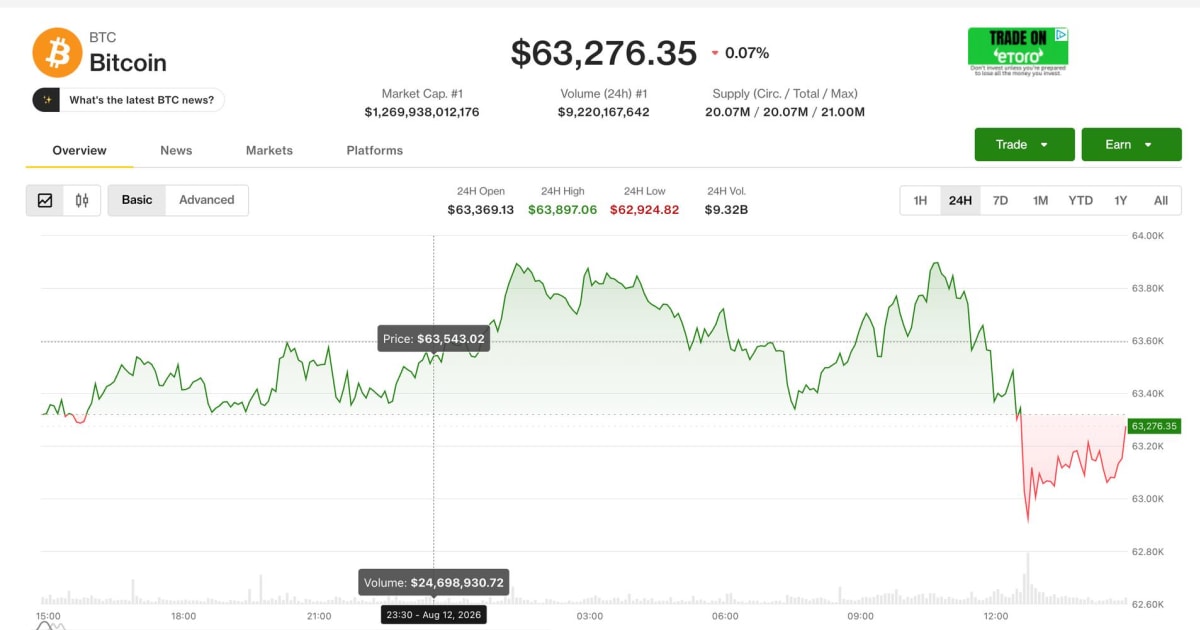
As Bitcoin tumbles on diminishing prospects of imminent Federal Reserve rate hikes, a broader sentiment of investor caution is emerging. This analysis delves into the indirect but significant implications for Indian financial markets, examining potential impacts on FII flows, crypto-related stocks, and the overall risk appetite for speculative assets.
Bitcoin's Descent Amid Shifting Fed Sands: A Global Risk Indicator?
The digital asset market has once again found itself in the crosshairs of global macroeconomic shifts, with Bitcoin experiencing a notable price correction. This downturn, occurring against a backdrop of fading expectations for aggressive interest rate hikes by the U.S. Federal Reserve, serves as a critical barometer for speculative investor sentiment worldwide. While the direct transactional link between Bitcoin and the traditional Indian financial system remains nascent, its price action often acts as an early warning signal for broader shifts in risk appetite, potentially influencing foreign institutional investor (FII) flows and the performance of Indian equities, particularly those with exposure to nascent digital asset ecosystems.
The narrative surrounding Federal Reserve policy has been a dominant force in financial markets for months. Initially, the market had priced in a higher probability of further substantial rate increases to combat persistent inflation. However, recent economic data, including moderating inflation figures and signs of cooling labor markets, have begun to temper these expectations. This recalibration by the market is directly impacting the appeal of high-risk, high-reward assets like cryptocurrencies. As the prospect of higher yields on less volatile assets like U.S. Treasuries becomes more defined, the relative attractiveness of speculative investments diminishes, leading to capital outflows and price depreciation. Bitcoin, as the flagship cryptocurrency, often leads this deleveraging process.
Why This Bitcoin Downturn Matters for Indian Investors
The immediate impact on the Indian stock market from a Bitcoin price fall might not be a direct contagion. However, its significance lies in its role as a bellwether for global risk sentiment. When speculative assets like Bitcoin experience sharp declines, it often signals a broader 'risk-off' environment. This means investors globally tend to shy away from assets perceived as riskier, including emerging market equities. For India, a primary destination for FII capital, a sustained period of global risk aversion could translate into reduced inflows or even outflows, impacting liquidity and potentially suppressing stock valuations across various sectors.
Moreover, the burgeoning cryptocurrency ecosystem in India, while still under regulatory flux, has seen the emergence of several companies and financial products with direct or indirect ties to digital assets. A prolonged downturn in Bitcoin and other cryptocurrencies can directly impact the revenue streams, market capitalization, and investor perception of these entities. This includes Indian crypto exchanges that derive income from trading volumes and transaction fees, as well as publicly listed companies that have diversified into holding or trading digital assets.
Deep Market Impact Analysis: Connecting Crypto Volatility to Indian Equities
The correlation between global risk assets and Indian equities, particularly during periods of heightened volatility, is a well-documented phenomenon. While India's domestic economic fundamentals remain robust, its stock market is not immune to global capital flows and investor sentiment. A significant decline in Bitcoin, signaling a global retreat from risk, can trigger a reassessment of emerging market risk premiums. If FIIs perceive a heightened risk of contagion or a general 'flight to safety,' they may reallocate capital away from markets like India, even if domestic macroeconomic indicators remain positive.
Historically, periods of broad market deleveraging have seen a synchronized decline in risk assets. For instance, during the global financial turmoil of 2022, the Nifty 50 experienced a significant drawdown of over 15% from its peak. While the current scenario is not a systemic financial crisis, the underlying principle of risk aversion holds. If Bitcoin's decline deepens and triggers wider panic selling in other speculative digital assets, this sentiment can spill over into broader risk markets, including equities. The Indian market, with its growing participation in global financial trends, is susceptible to such contagion effects, albeit with a lag and at a reduced magnitude compared to direct linkages.
The sector-specific impact on Indian stocks is primarily concentrated within the nascent cryptocurrency-related segment. Companies that operate crypto exchanges or offer services linked to digital assets are directly exposed to trading volumes and asset valuations. A sustained bear market in cryptocurrencies would invariably lead to lower trading activity, reduced fee income, and a decline in the perceived value of their underlying digital asset holdings. This can put pressure on their profitability, market capitalization, and ability to raise further capital.
How Will RBI Rate Decisions Influence Crypto-Related Stocks?
While the current Bitcoin volatility is driven by Federal Reserve expectations, the Reserve Bank of India's (RBI) monetary policy stance remains a crucial factor for the domestic market. Should the RBI adopt a more dovish stance, perhaps signaling potential rate cuts sooner than anticipated, it could provide a counterbalancing effect on Indian equities, offering a degree of insulation from global risk-off sentiment. Conversely, if the RBI maintains a hawkish stance to manage domestic inflation, it could exacerbate the negative impact of global risk aversion by increasing the cost of capital for Indian businesses and potentially dampening domestic demand.
The interplay between global monetary policy and domestic central bank actions creates a complex environment for investors. For crypto-related stocks in India, a combination of global bearishness in digital assets and a tightening domestic monetary policy would represent a double whammy, significantly increasing their downside risk. Conversely, a dovish RBI stance, coupled with a stabilization or recovery in global crypto markets, could offer a reprieve.
Stock-by-Stock Breakdown: Identifying Vulnerable Indian Equities
The direct listing of cryptocurrency exchanges on Indian stock exchanges is limited. However, several companies have indirect exposure or are closely watched by investors in this emerging sector. The impact on these entities is primarily through investor sentiment, potential shifts in capital allocation, and, in some cases, direct business linkages.
- WazirX (Indirect Exposure): While not a publicly traded entity itself, WazirX, a prominent Indian crypto exchange, is owned by Binance. Any significant downturn in global crypto volumes and asset values directly impacts Binance's revenue, and by extension, its subsidiaries like WazirX. Investors tracking the Indian crypto landscape would monitor the performance and operational health of such platforms as indicators of broader market sentiment and potential future business opportunities or risks for Indian companies looking to partner or invest in the space. The valuation of companies with potential acquisition interest in such platforms would also be affected.
- CoinDCX (Indirect Exposure): Similar to WazirX, CoinDCX is a privately held Indian cryptocurrency exchange. Its valuation and growth prospects are intrinsically linked to the health of the cryptocurrency market. A sustained bear market could hinder its ability to raise further funding at attractive valuations, impacting its expansion plans and potentially its long-term viability. Investors looking for exposure to the Indian crypto sector often analyze the performance of these private entities to gauge the overall market sentiment, which can indirectly influence related public companies.
- ZebPay (Indirect Exposure): Another key player in the Indian crypto exchange landscape, ZebPay's fortunes are directly tied to trading volumes and user engagement on its platform. A decline in Bitcoin and other cryptocurrencies leads to reduced trading activity, impacting revenue generated from transaction fees. While privately held, its operational challenges or successes serve as a proxy for the health of the Indian crypto exchange market.
- Companies with Crypto Holdings (Hypothetical Impact): While no major listed Indian company has announced significant direct holdings in Bitcoin as of current reporting, any future diversification into crypto assets by established entities would make them vulnerable. For instance, if a large diversified conglomerate like Reliance Industries or Tata Group were to allocate a material portion of its treasury to cryptocurrencies, its stock price would then become directly sensitive to Bitcoin's price movements. Currently, the primary risk for such entities is indirect, through their exposure to broader market sentiment that influences their core businesses.
- IT Services Companies (Potential Indirect Impact): Indian IT services firms that offer blockchain development or consulting services could see a slowdown in demand if companies across various sectors reduce discretionary spending on new technologies due to economic uncertainty. While not directly tied to Bitcoin's price, a prolonged 'risk-off' sentiment can lead to budget cuts in innovation and digital transformation projects, affecting the growth trajectory of these IT service providers. For example, companies like Infosys (NSE: INFY) or Tata Consultancy Services (NSE: TCS), which have blockchain capabilities, might experience a marginal dip in project pipelines if clients become more cautious about future technology investments.
Expert Perspectives: Bears vs. Bulls on Bitcoin's Impact
Bearish View: "The current Bitcoin decline is a clear signal of a global deleveraging event. As liquidity dries up and risk premiums rise, expect FIIs to pull back significantly from emerging markets like India. This isn't just about crypto; it's about a fundamental shift in investor psychology that will pressure all risk assets, including Indian equities. Companies with even tangential exposure to speculative markets will face headwinds."
Bullish View: "Bitcoin's volatility is a feature, not a bug, of nascent asset classes. While there might be short-term outflows from emerging markets, India's strong domestic growth story and attractive valuations will ultimately draw capital back. The Federal Reserve's pivot, once fully priced in, could actually lead to a more stable global liquidity environment, benefiting Indian equities in the medium to long term. Crypto-related companies are still in their infancy, and their long-term potential remains robust despite short-term price fluctuations."
The debate highlights the divergence in how market participants interpret macroeconomic signals and their downstream effects. While bears emphasize the immediate risk of capital flight and contagion, bulls point to India's underlying economic strength and the potential for a more stable liquidity environment post-Fed pivot.
Actionable Investor Playbook: Navigating the Current Market Climate
In light of Bitcoin's decline and the shifting macroeconomic landscape, investors should adopt a cautious yet strategic approach:
- Monitor FII Flows Closely: Track daily and weekly FII investment data into Indian equities. Significant and sustained outflows are a key indicator of global risk aversion impacting the Indian market.
- De-risk Portfolios (Temporarily): Consider reducing exposure to highly speculative assets or sectors that are most sensitive to FII sentiment. This might include small-cap stocks with high valuations or companies with direct crypto exposure.
- Focus on Quality and Value: Prioritize fundamentally strong companies with robust balance sheets, consistent earnings, and attractive valuations. Blue-chip stocks in sectors like banking, IT services (with strong recurring revenue models), and consumer staples are likely to be more resilient.
- Crypto-Related Stocks: Avoid or Observe from Sidelines: For Indian crypto exchanges or companies with significant crypto holdings, the current environment is highly unfavorable. It is advisable to avoid new investments and observe from the sidelines until there is a clear stabilization in the digital asset market and regulatory clarity in India.
- Long-Term Perspective on Blockchain: While direct crypto investments are risky, the underlying blockchain technology continues to have long-term potential. Investors interested in this theme might consider diversified IT services companies that are building blockchain capabilities, but with a long-term investment horizon (3-5+ years) and a focus on companies with proven execution.
- Entry Points: Look for opportunities to enter quality stocks on significant market dips (e.g., Nifty falling by 5-10% from recent highs), provided the underlying fundamentals remain intact. For speculative assets, patience is key; wait for clear signs of trend reversal and reduced volatility.
Risk Matrix: Quantifying Potential Downside
The current market presents several interconnected risks:
- Risk of Further Crypto Contagion (Probability: Medium - 50-60%): A deeper plunge in Bitcoin or a major crypto exchange failure could trigger panic selling across other speculative assets, including tech stocks and emerging market equities.
- Sustained FII Outflows (Probability: Medium - 40-50%): Persistent global risk aversion could lead to prolonged FII withdrawals from India, impacting liquidity and valuations across the stock market.
- Regulatory Uncertainty in India (Probability: High - 70-80%): The lack of a clear and consistent regulatory framework for cryptocurrencies in India remains a significant overhang, making it difficult for domestic crypto-related businesses to plan and attract investment. Any adverse regulatory development could severely impact this nascent sector.
- Global Economic Slowdown (Probability: Medium - 50-60%): If the global economy enters a more pronounced slowdown, it will inevitably impact corporate earnings and investor sentiment worldwide, including in India, regardless of specific crypto market movements.
What to Watch Next: Upcoming Catalysts
Investors should keep a close watch on the following:
- U.S. Federal Reserve Commentary: Any further signals from Fed officials regarding interest rate policy, inflation outlook, and quantitative tightening will be critical. Minutes from FOMC meetings and speeches by Fed governors are key events.
- Indian Inflation Data: CPI and WPI data releases in India will guide the RBI's monetary policy decisions and, consequently, the outlook for domestic interest rates.
- FII Investment Data: Daily and weekly net FII investment figures into Indian equities are a primary indicator of foreign investor sentiment.
- Bitcoin and Major Cryptocurrency Price Action: Continued volatility or stabilization in Bitcoin and other major cryptocurrencies will set the tone for the broader risk asset class.
- Developments in Indian Crypto Regulation: Any official statements or policy announcements from the Indian government or the RBI regarding cryptocurrency regulation will be closely scrutinized.
The interplay of these factors will determine the short-to-medium term trajectory for both global risk assets and the Indian stock market. While the direct link to Bitcoin's price is often indirect for Indian equities, its role as a sentiment indicator cannot be underestimated.
See WazirX (indirect)'s AI Score
Our algorithmic screener scores WazirX (indirect) on fundamentals, momentum, and risk — free to try, no card needed.
Try the AI Screener →Have questions about this story?
Ask Welth, our finance-focused AI research assistant, for a deeper breakdown — free trial included.
Chat with Welth AI →Disclaimer: This content is generated by WelthWest Research Desk based on publicly available reports and is for informational purposes only. It does not constitute financial advice, investment recommendations, or an offer to buy or sell securities. Always consult a qualified financial advisor before making investment decisions.