Key Takeaway
Bitcoin's ceiling near $64,000, coupled with surging yields and oil prices, is creating a palpable 'risk-off' sentiment across global financial markets. This dynamic poses a significant headwind for speculative assets and growth-oriented Indian equities, demanding a cautious approach from investors.
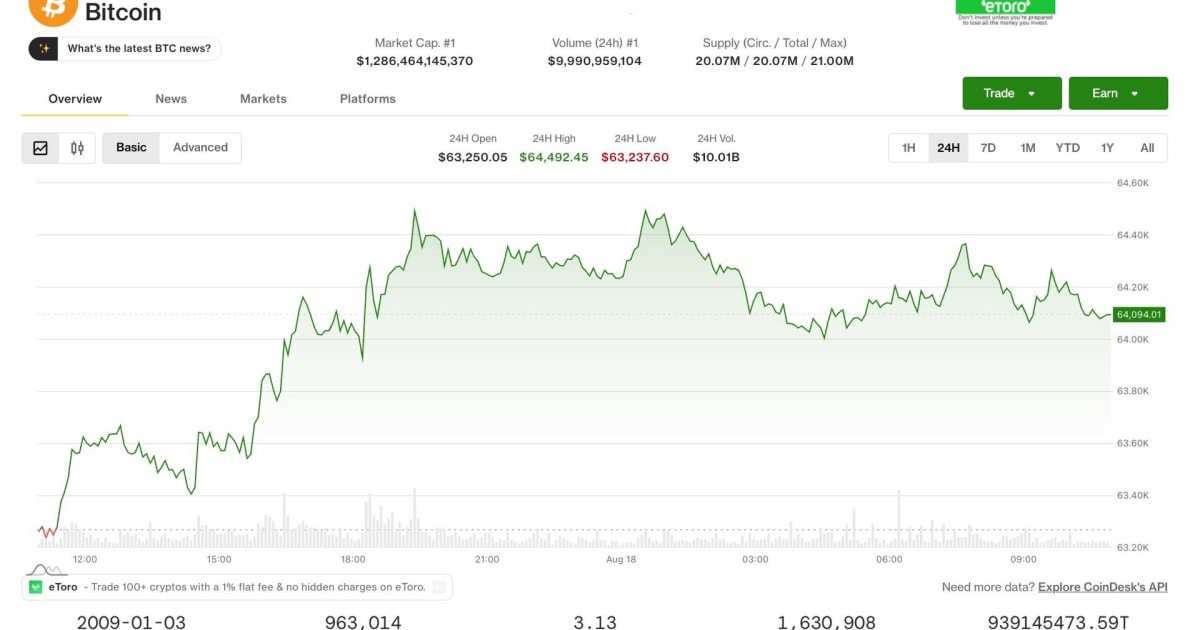
As Bitcoin struggles to break past $64,000, a confluence of rising global yields and escalating oil prices is casting a shadow over risk assets. This analysis delves into the broader implications for the Indian stock market, identifying key sectors and specific NSE/BSE stocks vulnerable to this emerging bearish trend, while offering actionable investment strategies.
Bitcoin's $64,000 Stalemate: A Bellwether for Global Risk Aversion
The cryptocurrency market, often seen as a leading indicator of speculative appetite, is currently exhibiting a pronounced pause. Bitcoin, the flagship digital asset, has found itself tethered near the $64,000 mark, an area that was once a stepping stone to new all-time highs but now appears to be a significant psychological and technical resistance. This stagnation is not occurring in a vacuum; it is intrinsically linked to a broader recalibration of global financial market sentiment, driven by two potent macroeconomic forces: escalating interest rates and soaring commodity prices, specifically crude oil.
Why This Bitcoin Pause Matters Now: Unpacking the 'Risk-Off' Signal
The current juncture is critical for understanding the interplay between macroeconomics and speculative assets. Rising yields, whether driven by anticipated central bank tightening or heightened inflation expectations, fundamentally alter the investment landscape. When government bond yields, considered relatively safe havens, climb, they present a more attractive alternative to riskier assets like equities and cryptocurrencies. This increased attractiveness of fixed income reduces the liquidity available for, and the perceived reward from, more volatile investments. Essentially, the cost of capital rises, making future earnings for growth companies less valuable and dampening the speculative fervor that often propels digital assets higher. Simultaneously, the surge in oil prices, a key driver of inflation and a significant input cost for numerous industries, further exacerbates inflationary pressures. Higher energy costs can compress corporate profit margins, reduce consumer discretionary spending, and ultimately lead to a slowdown in economic growth – a scenario inimical to the expansionary narratives that underpin many growth stocks and cryptocurrencies.
The Ripple Effect: How Global Headwinds Impact Indian Equities
The interconnectedness of global markets means that these macroeconomic shifts in developed economies have a tangible impact on India's vibrant equity landscape. The Indian stock market, particularly its growth and technology-heavy segments, is highly sensitive to global liquidity conditions and investor sentiment. A pronounced 'risk-off' environment typically leads to capital outflows from emerging markets, including India, as investors seek safer havens. This can manifest as increased selling pressure on the National Stock Exchange (NSE) and Bombay Stock Exchange (BSE), driving down stock prices across various sectors.
Historically, periods of rising global yields have often coincided with corrections in emerging market equities. For instance, during the tightening cycle of 2022, the Nifty 50 experienced a significant drawdown as global interest rates climbed. The current scenario, with yields on US Treasuries showing an upward trajectory, mirrors some of these earlier pressures. Furthermore, India's significant reliance on imported crude oil makes it particularly vulnerable to oil price spikes. A sustained increase in crude prices, as witnessed recently, not only fuels domestic inflation but also widens the country's current account deficit, potentially impacting the rupee and further deterring foreign portfolio investment. This dual threat – tightening global liquidity and rising commodity-driven inflation – creates a challenging backdrop for Indian equities.
Sectoral Breakdown: Where the Pain is Most Acute
The current market dynamics are creating distinct winners and losers, with a clear bias towards caution. The most immediate casualties of a 'risk-off' sentiment are speculative assets and high-growth sectors that are valued on future earnings potential.
- Cryptocurrencies: Bitcoin and Ethereum, along with the broader altcoin market, are directly exposed. A reduction in global liquidity and a preference for tangible assets or safer yields typically lead to significant sell-offs.
- Technology and Growth Stocks: Companies whose valuations are heavily predicated on rapid future growth and profitability are particularly susceptible to rising discount rates. Their future earnings are discounted more heavily in a higher-yield environment.
- Consumer Discretionary: As inflation bites and consumer confidence wanes due to higher energy costs and potential economic slowdowns, spending on non-essential goods and services tends to decline.
Conversely, sectors that benefit from inflation or provide essential services may exhibit more resilience. Defensive sectors like FMCG (Fast-Moving Consumer Goods) and pharmaceuticals, along with certain commodity producers, might offer relative refuge. However, the broad risk aversion can still drag down even these more stable segments to some extent.
How Will RBI Rate Decisions Influence Indian Stocks Amid Global Volatility?
The Reserve Bank of India's (RBI) monetary policy stance is a crucial factor for Indian equities. While global trends are influential, the RBI's decisions on interest rates can either amplify or mitigate these external pressures. If the RBI maintains a hawkish stance to combat domestic inflation, it could lead to higher borrowing costs for Indian companies and consumers, further pressuring growth stocks. Conversely, a more accommodative stance, if deemed appropriate despite global tightening, could offer some support. However, the RBI's actions are increasingly influenced by global central bank policies, especially the US Federal Reserve, creating a delicate balancing act. Investors are closely watching for any signals that suggest the RBI might diverge significantly from the global monetary tightening path, a scenario that could lead to currency volatility and impact foreign investor sentiment.
Stock-by-Stock Impact: Navigating the NSE/BSE Landscape
The broad market headwinds translate into specific pressures on individual stocks listed on Indian exchanges. Investors need to identify those most exposed to the current 'risk-off' narrative driven by yields and oil.
- WazirX (Unaffiliated Exchange, but indicative of sector sentiment): While not directly listed, exchanges and platforms dealing with cryptocurrencies will feel the direct impact of reduced trading volumes and investor interest in digital assets. If Bitcoin and Ethereum see sustained declines, the revenue and profitability of crypto-related businesses will suffer. For instance, a 20% drop in Bitcoin could easily lead to a 30-40% drop in trading volumes for exchanges.
- CoinDCX (Unaffiliated Exchange, similar to WazirX): Similar to WazirX, CoinDCX's business model is intrinsically tied to the health and speculative interest in the crypto market. Reduced inflows and increased outflows from crypto assets directly impact transaction fees and asset under management (AUM), which are critical revenue drivers.
- Reliance Industries (NSE: RELIANCE): While a diversified conglomerate, Reliance's significant exposure to the energy sector, particularly through its refining and petrochemical operations, makes it sensitive to oil price fluctuations. Higher crude prices can boost refining margins, but also increase feedstock costs for its petrochemical business and indirectly impact consumer demand for its retail and telecom businesses. For example, a sustained $10/barrel increase in crude oil can impact its refining segment's EBITDA by several hundred million dollars. Its P/E ratio, currently around 25-30, reflects growth expectations that could be tempered by a sustained energy price shock.
- Tata Motors (NSE: TATAMOTORS): As a major player in the automotive sector, particularly with its Jaguar Land Rover (JLR) division, Tata Motors falls under the consumer discretionary umbrella. A global economic slowdown or reduced consumer confidence stemming from higher inflation and interest rates can dampen demand for new vehicles, especially premium ones. Its P/E ratio, often volatile but recently trading around 15-20, is sensitive to such demand shifts. A significant downturn could see this ratio compress further.
- Infosys (NSE: INFY): This IT services giant, while relatively stable, is a bellwether for the broader IT sector, which is heavily reliant on global IT spending. As companies in the US and Europe face tighter budgets due to higher interest rates and economic uncertainty, IT outsourcing budgets can be scrutinized. Infosys, with a P/E ratio typically in the range of 20-25, is valued on its consistent growth. Any slowdown in client spending or project cancellations due to a global recessionary fear would impact its revenue growth projections and stock performance.
Other technology stocks like Tata Consultancy Services (TCS) and Wipro, as well as other auto manufacturers like Maruti Suzuki, will experience similar pressures due to their sectorial exposures and reliance on consumer or corporate spending.
Expert Perspective: Bulls vs. Bears on the Current Market Trajectory
The current market environment invites divergent views from market participants. Bulls might argue that the Bitcoin pause is a temporary consolidation, a healthy breather before another leg up, driven by persistent institutional interest and the ongoing halving cycle's long-term supply dynamics. They may point to underlying technological advancements and the growing adoption of crypto as a store of value. Regarding equities, bulls could highlight India's robust domestic demand, strong corporate earnings growth in certain sectors, and the government's continued focus on infrastructure development as factors insulating the market from global volatility. They might also believe that inflation will prove transitory, allowing central banks to pivot back to more accommodative policies sooner than expected.
Conversely, bears emphasize the confluence of macro-economic headwinds. They argue that rising yields are not a temporary phenomenon but a necessary adjustment to persistent inflation, and that oil prices are being supported by geopolitical factors and supply constraints, suggesting a prolonged period of higher energy costs. Bears would see the Bitcoin stall as a precursor to a deeper correction, as speculative capital flees to safety. For Indian equities, they would highlight the sensitivity to global capital flows, the potential for a sharper-than-expected global slowdown impacting export-oriented sectors, and the domestic challenges posed by elevated inflation and interest rates, which could curb consumer and corporate spending.
Actionable Investor Playbook: Navigating the 'Risk-Off' Terrain
Given the prevailing bearish sentiment and the identified risks, a strategic and cautious approach is warranted. Investors should consider the following:
- De-risk Portfolios: Reduce exposure to highly speculative assets like cryptocurrencies and highly valued growth stocks that are most vulnerable to rising yields and economic slowdowns. Consider trimming positions in technology and consumer discretionary stocks that show signs of slowing demand.
- Focus on Quality and Value: Shift capital towards fundamentally strong companies with robust balance sheets, consistent profitability, and lower debt levels. Look for businesses with pricing power that can withstand inflationary pressures. Sectors like defensive FMCG, pharmaceuticals, and potentially select infrastructure or capital goods companies with strong order books may offer relative resilience.
- Dollar-Cost Averaging (DCA) in Select Equities: For long-term investors, market downturns present opportunities. Instead of trying to time the bottom, gradually increase exposure to fundamentally sound Indian stocks at lower price points over time. This strategy mitigates the risk of investing a lump sum at a market peak.
- Watch for Entry Points: For assets like Bitcoin and Ethereum, wait for clear signs of a sustained trend reversal, confirmation of support levels, and a more favorable macro-economic backdrop before considering re-entry. For equities, look for significant price dislocations in quality stocks due to market overreactions, rather than fundamental deterioration. For instance, a P/E contraction below historical averages for a strong company could signal an attractive entry.
- Time Horizon: This 'risk-off' period could extend for several months, influenced by central bank policies and geopolitical events. Investors with a shorter time horizon (less than 1-2 years) should prioritize capital preservation. Long-term investors (5+ years) can use this period for strategic accumulation of quality assets at attractive valuations.
Risk Matrix: Probability Assessment of Key Threats
- Sustained High Oil Prices (Probability: Medium-High): Geopolitical tensions in oil-producing regions and ongoing supply management by OPEC+ suggest oil prices could remain elevated, exacerbating inflation and impacting global growth.
- Further Yield Increases (Probability: Medium): If inflation proves more stubborn than anticipated, major central banks might be forced to hike rates further or maintain them at higher levels for longer, increasing pressure on risk assets.
- Sharp Bitcoin/Crypto Sell-off Triggering Broader Market Panic (Probability: Low-Medium): While the correlation between crypto and traditional markets has varied, a severe crash in digital assets could create a negative wealth effect and trigger panic selling across other speculative assets.
- Global Recession (Probability: Medium): The combination of inflation, tightening monetary policy, and geopolitical shocks increases the probability of a global economic downturn, which would severely impact corporate earnings and equity markets worldwide.
What to Watch Next: Upcoming Catalysts and Data Releases
Investors should closely monitor several key developments that will shape the trajectory of Bitcoin, global yields, oil prices, and consequently, the Indian stock market.
- US Inflation Data (CPI/PCE): These releases are critical for gauging the persistence of inflation and influencing the US Federal Reserve's monetary policy decisions. A higher-than-expected reading could push yields up further.
- OPEC+ Meetings and Geopolitical Developments: Any announcements regarding oil production quotas or significant escalations in geopolitical conflicts will directly impact crude prices.
- Central Bank Commentary (Fed, ECB, RBI): Statements and meeting minutes from major central banks, particularly the US Federal Reserve, will provide crucial insights into future interest rate paths. The RBI's upcoming monetary policy review will also be closely watched for its domestic guidance.
- Corporate Earnings Season (Global and Indian): The upcoming earnings season will provide real-time data on how companies are weathering inflation, higher interest rates, and potential demand slowdowns. Weak earnings across key sectors could validate the bearish outlook.
- Bitcoin Halving Aftermath: While the halving event has occurred, its long-term impact on Bitcoin's supply dynamics and price is still unfolding. Market participants will be observing if the narrative of reduced supply translates into sustained price appreciation amidst macro headwinds.
The current market juncture demands vigilance and a strategic re-evaluation of investment portfolios. The confluence of rising yields and oil prices is creating a challenging environment for risk assets, and understanding these dynamics is paramount for navigating the Indian stock market effectively.
See WazirX's AI Score
Our algorithmic screener scores WazirX on fundamentals, momentum, and risk — free to try, no card needed.
Try the AI Screener →Have questions about this story?
Ask Welth, our finance-focused AI research assistant, for a deeper breakdown — free trial included.
Chat with Welth AI →Disclaimer: This content is generated by WelthWest Research Desk based on publicly available reports and is for informational purposes only. It does not constitute financial advice, investment recommendations, or an offer to buy or sell securities. Always consult a qualified financial advisor before making investment decisions.