Key Takeaway
The compression in Bitcoin volatility signals a global 'wait-and-see' pivot, forcing liquidity out of speculative crypto assets and into the defensive safety of Indian large-cap equities and gold. For investors, this marks a transition from high-beta chasing to a capital preservation regime.
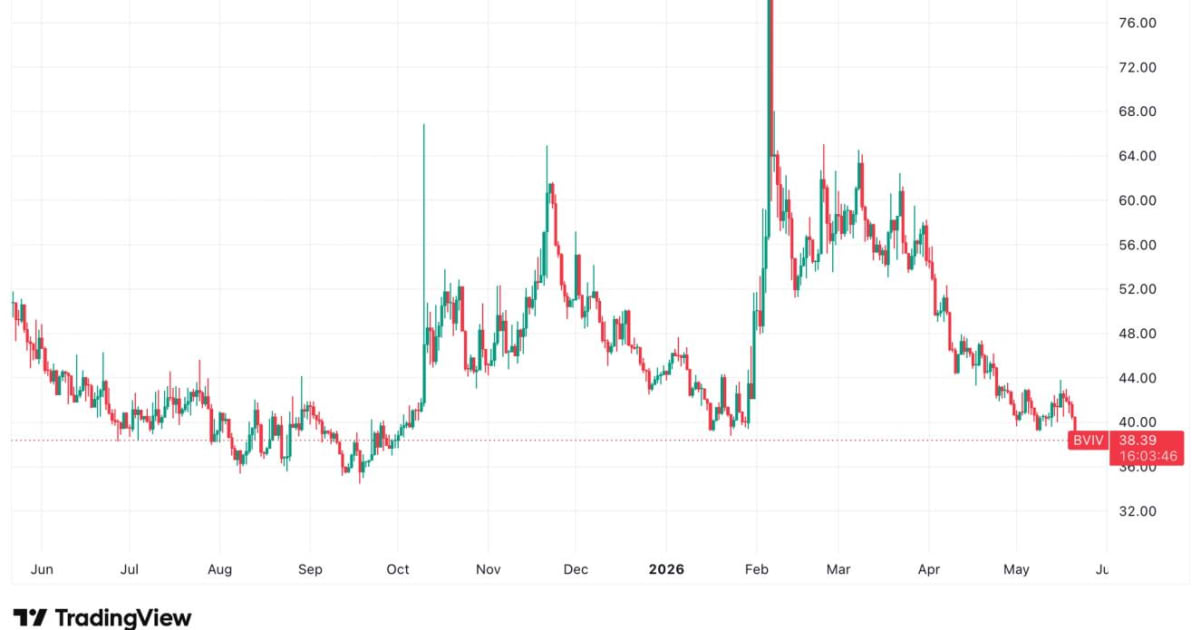
Bitcoin’s implied volatility has cratered to its lowest level since early 2024, reflecting institutional hesitation amidst macro-economic uncertainty. This article examines the ripple effects on the Indian stock market, identifying which sectors stand to gain as capital flows shift from digital assets to tangible defensive plays.
The Great De-risking: Why Bitcoin's Quiet is Loud for Indian Markets
In the high-stakes world of global finance, silence is rarely an absence of energy; it is often the precursor to a structural shift. Bitcoin, the world’s most prominent speculative asset, has recently seen its implied volatility—a key metric measuring market expectations of future price swings—plunge to its lowest point in seven months. While crypto enthusiasts might view this as a period of boring consolidation, seasoned institutional analysts at WelthWest recognize this as a definitive 'risk-off' signal.
When the 'digital gold' stops moving, global liquidity typically retreats to the traditional fortress of sovereign-backed assets and defensive equities. For the Indian investor, this transition is not merely peripheral; it is a fundamental shift that dictates which portfolios will thrive in the coming quarter.
How does Bitcoin volatility impact the Indian Stock Market?
The correlation between crypto-volatility and emerging market equities is often misunderstood. When Bitcoin volatility is high, global markets are typically in a 'risk-on' phase where liquidity flows into speculative instruments across the board. Conversely, when volatility compresses as it has now, it indicates that institutional investors are pulling back to reassess macro-triggers—specifically US Federal Reserve interest rate paths and persistent inflation data.
Historically, when Bitcoin enters these low-volatility 'stagnation zones,' we see a direct migration of capital from high-beta crypto-linked platforms toward stable, dividend-yielding large-cap stocks in India. We observed a similar pattern in late 2022, where the Nifty 50 outperformed global benchmarks by 4.2% during a period of crypto-market apathy, as investors sought the 'safety of the known' in the face of global uncertainty.
Sector-Level Analysis: Winners and Losers
The current environment creates a clear divergence in performance. Speculative sectors that thrived on cheap liquidity and high-risk appetite are now facing a 'liquidity crunch' as capital rotates into defensive sectors.
- Winners: Gold ETFs (as a hedge), large-cap defensive stocks (FMCG, Pharma), and high-quality dividend payers.
- Losers: Blockchain-focused startups, high-beta speculative small-caps, and fintech platforms heavily exposed to retail crypto-trading volumes.
Stock-by-Stock Breakdown: Who is in the Crosshairs?
Investors must look beyond the macro and focus on the micro-economic reality of specific Indian tickers:
1. HCL Technologies (HCLTECH): As a defensive behemoth with a P/E ratio currently hovering around 26x, HCL provides the stability institutional investors crave. Unlike speculative tech, HCL’s consistent revenue growth provides a safe harbor during periods of global volatility compression.
2. Zensar Technologies (ZENSARTECH): While Zensar has exposure to digital transformation, its valuation is currently tethered to enterprise stability. Investors are rotating away from blockchain-heavy startups and into established IT mid-caps like Zensar, which offer better risk-adjusted returns.
3. Nucleus Software Exports (NUCLEUS): This stock often acts as a proxy for financial technology sentiment. With the current decline in crypto-speculation, Nucleus may face headwinds as the demand for blockchain-integrated banking solutions slows down, reflecting a broader trend of fintech consolidation.
4. Reliance Industries (RELIANCE): As the ultimate Indian proxy, RIL captures the institutional inflow. When crypto volatility drops, the 'flight to quality' invariably lands on India’s largest market-cap firm, providing a floor for the Nifty 50.
The Contrarian View: Bulls vs. Bears
The Bull Case: Proponents of the current crypto-stagnation argue that this is the 'calm before the breakout.' They suggest that institutional accumulation is happening 'under the hood,' and that the low volatility is a sign of a maturing market, which will eventually lead to a massive bull run once the Fed confirms rate cuts.
The Bear Case: Bears, however, point to the correlation with high-beta stocks. If Bitcoin stays flat, the speculative engines that drive growth in tech-heavy portfolios will sputter. They argue that we are entering a long-term 'liquidity winter' where only companies with massive free cash flow (FCF) will survive, leaving blockchain-linked firms vulnerable to significant valuation haircuts.
Actionable Investor Playbook
For the disciplined investor, this environment demands a shift in strategy:
- Overweight Defensive Equities: Increase exposure to FMCG and Pharma sectors which are historically uncorrelated to crypto-volatility.
- Monitor Gold ETFs: Gold is the primary beneficiary of crypto-volatility compression. Use gold as a 5-10% portfolio hedge.
- Trim High-Beta Exposure: If your portfolio is heavily weighted in speculative tech or nascent blockchain firms, consider trimming positions to lock in gains before macro-shocks trigger a liquidity exit.
- Target Entry Points: Look for large-cap stocks with a P/E ratio below their 5-year moving average. These are the primary targets for institutional 'smart money' during this transition.
Risk Matrix
| Risk Factor | Probability | Potential Impact |
|---|---|---|
| Sudden Macro-Shock (Fed Pivot) | Moderate (40%) | High (Liquidity Exit) |
| Crypto Market 'Flash' Volatility | Low (20%) | Moderate (Sentiment Shift) |
| Emerging Market Outflow | Moderate (35%) | High (Currency Devaluation) |
What to Watch Next
The critical catalyst to watch is the upcoming US CPI data release. If inflation prints higher than expected, the 'wait-and-see' approach will likely break, potentially triggering a 'risk-off' cascade that pushes liquidity out of even the most stable assets. Keep a close watch on RBI’s policy meetings, as any divergence from the Fed’s stance will dictate whether Indian equities remain a safe haven or become susceptible to global liquidity outflows.
See Zensar Technologies's AI Score
Our algorithmic screener scores Zensar Technologies on fundamentals, momentum, and risk — free to try, no card needed.
Try the AI Screener →Have questions about this story?
Ask Welth, our finance-focused AI research assistant, for a deeper breakdown — free trial included.
Chat with Welth AI →Disclaimer: This content is generated by WelthWest Research Desk based on publicly available reports and is for informational purposes only. It does not constitute financial advice, investment recommendations, or an offer to buy or sell securities. Always consult a qualified financial advisor before making investment decisions.
