Key Takeaway
The $83 million Bitget XRP hack is more than a single exchange's problem; it's a stark reminder of crypto's systemic security risks. While direct Indian market exposure is low, expect intensified regulatory scrutiny and dampened institutional interest, indirectly impacting crypto-linked Indian equities and investment products.
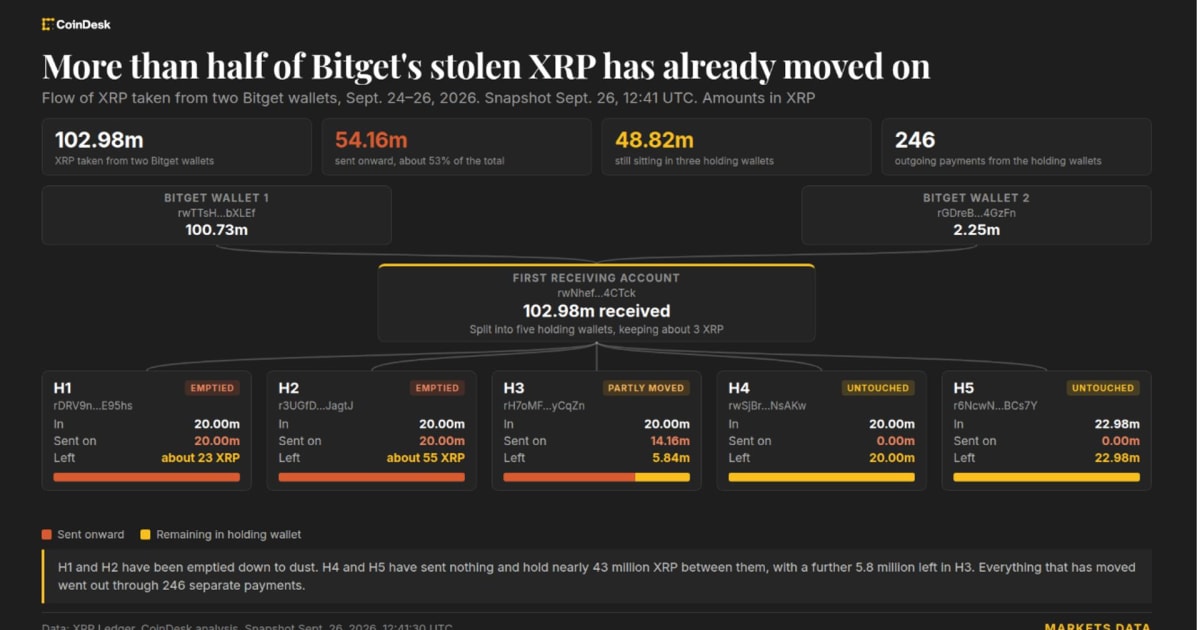
A significant $83 million XRP hack on cryptocurrency exchange Bitget has reignited investor concerns about digital asset security. This incident, while specific to a global exchange, carries broader implications for the nascent crypto industry, particularly in how it might influence regulatory approaches and institutional adoption worldwide. WelthWest Research Desk delves into the potential downstream effects on the Indian financial landscape, scrutinizing specific NSE/BSE stocks and offering an actionable investor playbook.
Bitget's $83 Million XRP Hack: A Bellwether for Crypto Security and Indian Market Ripple Effects
The digital asset world was jolted recently by the news of a substantial $83 million hack targeting XRP holdings on the global cryptocurrency exchange Bitget. This incident is far from an isolated event; it serves as a potent reminder of the persistent security vulnerabilities that plague the burgeoning crypto ecosystem. While the immediate direct impact on India's financial markets might appear contained given the specific asset and exchange involved, the broader implications are significant. WelthWest Research Desk believes this breach will amplify regulatory pressures globally, potentially temper institutional enthusiasm for crypto assets, and consequently, cast a shadow over crypto-linked investment products and companies with digital asset exposure within India.
The timing of this breach is particularly noteworthy. Coming amidst a period of renewed retail and institutional interest in cryptocurrencies, fueled by recent ETF approvals and a generally bullish sentiment, such a high-profile security failure can quickly erode fragile investor confidence. For Indian investors navigating a complex regulatory environment, this event underscores the inherent risks beyond price volatility – risks that relate directly to the custodial security of their digital holdings. Our analysis delves deep into the market ramifications, connecting the dots between this global event and its specific, albeit indirect, impact on the Indian stock market.
What Does the Bitget Hack Mean for Global Crypto Security and Investor Trust?
The Bitget hack involving $83 million in XRP is not merely a financial loss for one platform; it's a systemic stress test for the entire cryptocurrency industry's security posture. The fact that such a substantial sum could be exfiltrated, reportedly without immediate intervention from the asset issuer (Ripple in this case), highlights a critical vulnerability: the interplay between exchange security protocols and the immutability of blockchain transactions. This incident will undoubtedly trigger a fresh wave of internal audits across major cryptocurrency exchanges globally, compelling them to fortify their cold storage solutions, multi-signature protocols, and internal security frameworks. For investors, particularly those new to the crypto space, this event serves as a harsh lesson in the importance of due diligence regarding exchange security and the merits of self-custody for significant holdings.
Historically, major hacks have often preceded periods of increased regulatory scrutiny. For instance, the Mt. Gox collapse in 2014, while a different scale and nature, catalyzed the first serious global discussions around crypto regulation. More recently, the FTX collapse in late 2022, primarily a fraud event, led to an unprecedented tightening of oversight globally, dampening institutional inflows for months. This Bitget incident, while not an insolvency event, reinforces the narrative of operational risk within crypto exchanges. The immediate sentiment is undeniably bearish for the crypto sector, as confidence is a fragile commodity in nascent markets. While XRP's price might see short-term volatility, the greater concern is the broader chilling effect on institutional capital that demands robust security and regulatory clarity.
How Will India's Financial Markets React to Heightened Crypto Security Concerns?
While India's direct exposure to Bitget or XRP is limited, the indirect impact on the Indian financial markets, particularly on companies with tangential links to the crypto ecosystem, cannot be overlooked. India's regulatory stance on cryptocurrencies has been cautious, with ongoing discussions around a comprehensive legal framework. This hack provides fresh ammunition for regulators advocating for stricter oversight. The Reserve Bank of India (RBI) has consistently voiced concerns about the risks associated with private cryptocurrencies, and events like the Bitget hack only validate their cautious approach. This could translate into more stringent KYC/AML requirements for Indian crypto exchanges, potential delays in favorable regulatory frameworks, and increased scrutiny on payment gateways facilitating crypto transactions.
For the Indian stock market, the ripple effects will be most felt in sectors and companies that have either direct or indirect exposure to the digital asset economy. This includes IT service providers with blockchain development arms, fintech companies exploring crypto integration, and even certain investment funds that might have exposure to global crypto-linked equities. The sentiment shift from 'innovation' to 'risk' could lead to a re-evaluation of valuation multiples for companies perceived to have high crypto exposure. Historically, during periods of heightened global financial uncertainty or specific sector-related risks, the Nifty 50 has shown sensitivity to capital flight from riskier assets. While the Bitget hack alone won't trigger a Nifty crash, it adds another layer of caution for foreign institutional investors (FIIs) assessing emerging market risk, especially in sectors perceived as 'future tech' but lacking mature regulatory frameworks.
Specific NSE/BSE Stocks: Who Wins, Who Loses, and Who's Watching?
The Bitget XRP hack, while not directly tied to any Indian listed entity, creates a nuanced environment for several NSE/BSE stocks. The sentiment shift towards caution in crypto markets will inevitably impact companies that either derive revenue from blockchain/crypto services or have invested in the space.
- Infosys (NSE: INFY): As a global IT services giant, Infosys has a significant blockchain and digital transformation practice. While not directly exposed to crypto assets, a slowdown in enterprise blockchain adoption due to regulatory uncertainty or reduced institutional confidence could indirectly affect its consulting and implementation projects. Bears would argue that a flight from 'bleeding-edge' tech could see enterprises defer blockchain investments, impacting future revenue streams in this segment. Bulls might counter that increased security concerns could paradoxically boost demand for Infosys's cybersecurity and robust blockchain audit services. Analysts will be closely watching their commentary on enterprise blockchain pipeline in upcoming earnings calls.
- Tech Mahindra (NSE: TECHM): Another IT major with strong blockchain initiatives, Tech Mahindra has actively explored partnerships in the Web3 space. Similar to Infosys, any chilling effect on corporate crypto adoption could dampen prospects for its blockchain-related ventures. TechM's P/E ratio of ~30x (as of early 2024) already prices in significant growth, and any perceived headwinds in emerging tech could lead to a re-rating. Investors should monitor their blockchain-specific revenue disclosures and partnership announcements for signs of momentum shift.
- One 97 Communications (Paytm) (NSE: PAYTM): While Paytm has steered clear of direct crypto offerings in India due to regulatory ambiguity, its fintech ecosystem is highly sensitive to broader digital payment trends and regulatory sentiment. A negative regulatory overhang on digital assets could, in theory, create a more cautious environment for all fintech innovation, even if unrelated to crypto. Given Paytm's journey back to profitability and focus on expanding its financial services, any increased regulatory scrutiny on the digital payments landscape due to crypto concerns could indirectly affect its operational agility and investor sentiment.
- Angel One (NSE: ANGELONE): As a prominent Indian stockbroker with a significant retail client base, Angel One has seen an uptake in demat accounts and trading activity. While they don't offer crypto trading, their client base includes tech-savvy millennials and Gen Z who are often active in both traditional and crypto markets. A significant downturn in global crypto sentiment could subtly reduce overall risk appetite among these investors, potentially translating into reduced trading volumes in other speculative segments of the equity market. The company's strong growth trajectory (revenue CAGR of ~50% over 3 years) is partly fueled by this demographic, making it sensitive to shifts in retail investor confidence.
- CoinDCX (Unlisted, but relevant peer): While not listed, major Indian crypto exchanges like CoinDCX represent the direct industry facing the brunt of such news. Increased regulatory pressure, stricter compliance costs, and a potential dip in trading volumes due to diminished investor confidence will directly impact their profitability and growth prospects. This unlisted segment serves as a proxy for the direct sentiment in the Indian crypto space.
Expert Perspectives: Bulls vs. Bears on Crypto's Future Post-Hack
The Bitget hack naturally ignites a fervent debate among market participants. Bears will amplify the narrative of systemic risk, arguing that crypto, despite its technological advancements, remains an immature and insecure asset class. They will point to the repeated instances of hacks, rug pulls, and operational failures as evidence that the industry lacks the robust safeguards required for mainstream institutional adoption. For bears, this incident reinforces the need for heavy-handed regulation, which they believe will ultimately stifle innovation and limit crypto's growth potential. They might suggest that capital will increasingly flow back to traditional, regulated assets perceived as safer havens. "This isn't an isolated event; it's a recurring pattern that highlights fundamental flaws in the decentralized finance ethos when applied to centralized custodianship," a prominent bearish analyst might argue.
Conversely, Bulls will frame this incident as a growing pain, a necessary evolutionary step in a rapidly maturing industry. They will emphasize that security breaches are not unique to crypto; traditional finance too has its share of cyberattacks and frauds. For bulls, such events accelerate the adoption of better security practices, multi-party computation (MPC) wallets, and hardware security modules (HSMs). They might also argue that the market's resilience in the face of previous, larger hacks demonstrates its underlying strength and long-term trajectory. "Every major industry faced its challenges in its early days. This hack will force exchanges to innovate on security, ultimately making the ecosystem stronger and more resilient for the next wave of adoption," a bullish venture capitalist might contend. They would highlight the ongoing development of more secure infrastructure and the increasing professionalization of the industry as mitigating factors.
Actionable Investor Playbook: Navigating Crypto's Security Minefield
For Indian investors, the Bitget hack necessitates a recalibration of risk assessment and a strategic approach to crypto-linked investments.
- Watch & Hold (Long-term Crypto Exposure): For those with existing direct crypto exposure, the immediate advice is to review the security practices of their chosen exchanges. Consider diversifying holdings across multiple reputable exchanges or exploring self-custody solutions for significant amounts. This is a watch-and-hold scenario, awaiting clearer regulatory signals and enhanced security standards.
- Monitor (Indian IT & Fintech Stocks): For NSE/BSE stocks like Infosys and Tech Mahindra, this is a monitoring phase. Look for any explicit commentary from management regarding their blockchain pipeline and client sentiment. Any significant deceleration in enterprise blockchain project wins or a shift in focus could be a red flag. For Paytm, monitor regulatory news closely, as any spillover caution into broader digital payments could create headwinds.
- Selective Entry (Value in Security Providers): Paradoxically, increased security concerns might create opportunities in companies specializing in cybersecurity and blockchain forensics. While direct Indian listed players in this niche are scarce, global ETFs tracking cybersecurity could be an indirect play.
- Avoid (Highly Leveraged Crypto Plays): Steer clear of any highly leveraged crypto-related investment products, especially those offered by less-regulated entities. The risk of sudden deleveraging or operational failure is amplified in a climate of heightened security concerns.
Time Horizon: The immediate impact is short-term sentiment-driven. The medium-term impact (3-6 months) will be shaped by regulatory responses and how quickly exchanges implement enhanced security. The long-term outlook (1-3 years) depends on the industry's ability to mature its security infrastructure and restore institutional confidence.
Risk Matrix: Assessing the Downside Potential
This incident introduces several specific risks for investors:
- Increased Regulatory Pressure (Probability: High): Global regulators, including those in India, will likely use this incident as justification for stricter oversight on crypto exchanges, potentially leading to higher compliance costs, slower innovation, and limited product offerings.
- Erosion of Investor Confidence (Probability: Medium-High): Repeated hacks, even if minor individually, cumulatively erode trust, especially among new retail and institutional investors. This could lead to reduced trading volumes and capital outflows from the crypto market.
- Stifled Institutional Adoption (Probability: Medium): Institutions prioritize security and regulatory clarity. Persistent security breaches deter large-scale institutional investment, slowing down the integration of crypto into mainstream finance.
- Contagion Risk (Probability: Low): While direct contagion from the Bitget hack to other exchanges is low (it's not an insolvency event), a systemic failure of a much larger exchange due to a similar breach could trigger broader market panic.
What to Watch Next: Catalysts and Data Points
The evolution of this story and its market impact will hinge on several key developments:
- Regulatory Announcements: Keep an eye on pronouncements from global financial watchdogs (e.g., SEC, FCA, RBI) regarding new guidelines or enforcement actions related to crypto exchange security. Specific dates for parliamentary discussions on India's crypto bill will be crucial.
- Exchange Security Upgrades: Monitor announcements from major exchanges about enhanced security measures, insurance funds, and independent audits. Concrete steps will help restore confidence.
- Institutional Inflow Data: Track data on institutional crypto product inflows (e.g., Grayscale, BlackRock ETFs). A sustained dip would signal dampened institutional interest.
- XRP Price Action: While not the primary concern, XRP's price stability or further significant drops could indicate broader market sentiment towards the asset and its ecosystem.
- Earnings Calls of IT Majors: Listen closely to the commentary from Infosys, Tech Mahindra, and other IT service providers on their blockchain and digital transformation segments in their upcoming quarterly earnings calls. Any shifts in outlook will be telling.
The Bitget XRP hack is a stark reminder that the digital frontier, while promising, remains fraught with risk. For Indian investors, a nuanced understanding of these global events and their potential local reverberations is paramount for informed decision-making.
Run a free AI Stock Screen
Our algorithmic screener scores any NSE/BSE stock on fundamentals, momentum, and risk — free to try, no card needed.
Try the AI Screener →Have questions about this story?
Ask Welth, our finance-focused AI research assistant, for a deeper breakdown — free trial included.
Chat with Welth AI →Disclaimer: This content is generated by WelthWest Research Desk based on publicly available reports and is for informational purposes only. It does not constitute financial advice, investment recommendations, or an offer to buy or sell securities. Always consult a qualified financial advisor before making investment decisions.