Key Takeaway
Soaring bond market volatility, signaled by a rising MOVE Index, indicates a significant repricing of risk. This divergence from buoyant equity and crypto markets suggests an impending correction, demanding a defensive pivot in Indian equity portfolios and a re-evaluation of high-growth, high-debt strategies.
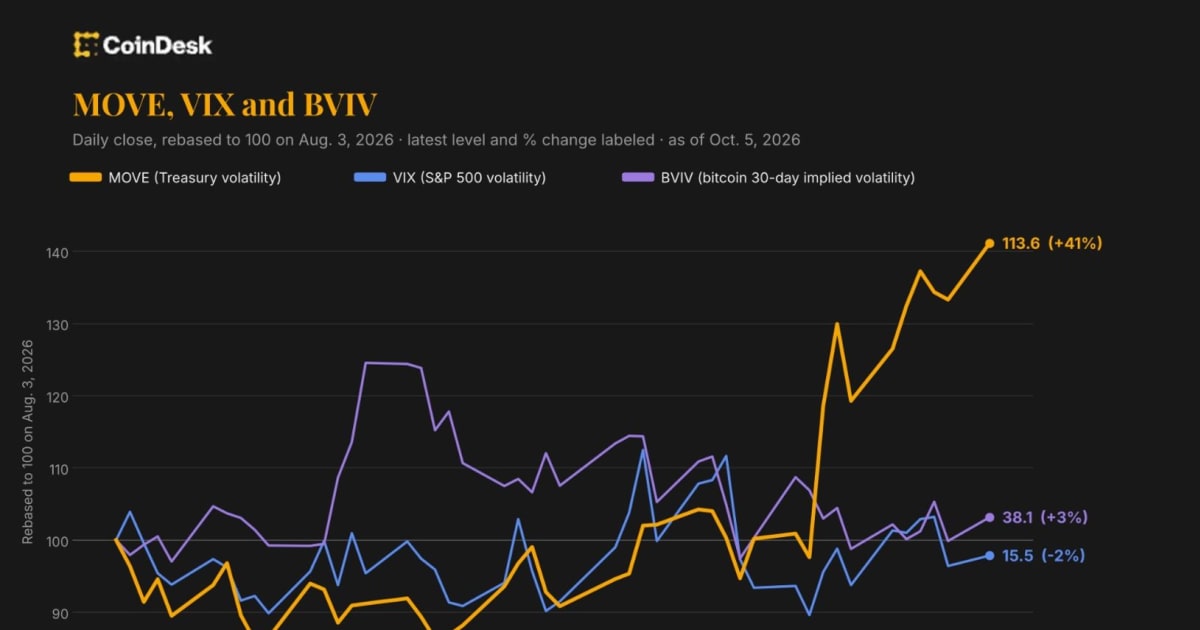
The 'VIX of bonds,' the MOVE Index, is flashing red, signaling unprecedented uncertainty in fixed-income markets. Yet, global equities and Bitcoin remain largely unperturbed, creating a perilous disconnect. This deep dive explores how this bond market turbulence could ripple through the Indian economy, impacting specific sectors and stocks, and offers an actionable investor playbook to navigate the brewing storm.
Bond Market Turmoil: Is India's Equity Rally on Borrowed Time?
The global financial landscape is sending a dissonant signal. While equity markets, including India's robust indices, and digital assets like Bitcoin continue their upward trajectory, a critical barometer of market health – bond market volatility – is flashing a stark warning. The MOVE Index, often dubbed the 'VIX of bonds,' has been on a pronounced ascent, indicating a significant increase in uncertainty and potential for sharp price movements within fixed-income markets. This divergence is not merely an academic curiosity; it represents a fundamental repricing of risk that, if left unaddressed, could trigger a widespread recalibration across all asset classes, profoundly impacting Indian equities.
At WelthWest Research Desk, our deep dive into this phenomenon reveals a developing chasm between risk perception in the bond market and the prevailing optimism elsewhere. Historically, periods of elevated bond market volatility precede broader market re-evaluations. The current scenario suggests that the 'smart money' in fixed income is bracing for significant shifts, potentially signaling a less benign interest rate environment or an economic slowdown not yet priced into more speculative assets. For Indian investors, understanding this dynamic is paramount, as the country's growth narrative, while strong, is not immune to global capital flow shifts and a repricing of risk appetite.
What Does Rising Bond Volatility Mean for Investors?
The MOVE Index measures implied volatility in U.S. Treasury options. Its rise signifies that bond traders are anticipating larger, more frequent price swings in government debt. This isn't just about bond prices; it's a proxy for systemic risk. When bond volatility climbs, it often reflects concerns about inflation, central bank policy (like the RBI's stance), and overall economic stability. The current disconnect – where bond volatility rises while equity and crypto markets remain buoyant – suggests a potential 'lag effect.' Equity markets, often driven by momentum and sentiment, may be underestimating the fundamental shifts implied by the bond market's unease.
For India, a sustained period of global bond market turbulence can manifest in several ways: increased cost of capital for Indian corporations borrowing internationally, potential outflows from foreign portfolio investors (FPIs) seeking safer havens, and a reassessment of domestic interest rate trajectories by the Reserve Bank of India (RBI). Given India's significant reliance on foreign capital for growth and infrastructure development, any disruption in global risk appetite directly impacts the availability and cost of funds, potentially dampening investment and consumption.
Deep Market Impact Analysis: How Bond Volatility Echoes in India
The implications of this rising bond volatility for the Indian stock market are multifaceted and potentially severe. A sustained increase in the MOVE Index signals a broader de-risking trend, which historically leads to capital rotating out of emerging markets like India. While the Nifty 50 has shown remarkable resilience, this divergence cannot persist indefinitely without a market correction. The last time bond volatility spiked significantly in early 2022, preceding the global monetary tightening cycle, the Nifty 50 saw a 10% correction over a few months, with specific sectors experiencing even steeper declines.
Sector-Level Breakdown:
- High-Debt Sectors (Utilities, Infrastructure, Real Estate): Companies in these sectors are particularly vulnerable. As interest rates rise or borrowing costs increase due to higher risk premiums, their debt servicing costs escalate, directly impacting profitability. Many Indian infrastructure companies, for instance, operate on thin margins and carry substantial long-term debt.
- Growth Stocks (IT Services, New-Age Tech): These companies often rely on future earnings potential, which is discounted back to present value using prevailing interest rates. Higher interest rates or increased perceived risk make future earnings less valuable today, leading to a de-rating of their valuations. The Indian IT sector, while globally competitive, could face headwinds from clients tightening budgets in a higher interest rate environment.
- Fixed-Income Funds: Investors in Indian debt funds, particularly those with longer duration portfolios, could experience capital losses as bond yields rise and prices fall. This could trigger redemption pressures, further exacerbating market instability.
- Banking & Financial Services: While higher interest rates can sometimes benefit banks by improving net interest margins (NIMs), a sharp increase in bond volatility signals broader economic uncertainty. This could lead to higher non-performing assets (NPAs) if corporate borrowers struggle, and reduce demand for new loans, offsetting any NIM benefits.
Consider the broader economic context: India's robust GDP growth projections are often predicated on stable capital flows and a manageable interest rate environment. If global bond markets signal a more restrictive monetary policy outlook or heightened recession risks, it could dampen foreign direct investment (FDI) and portfolio investment, which are crucial for sustaining India's growth momentum. The Indian Rupee could also face depreciation pressure as FPIs repatriate capital, making imports more expensive and potentially fueling domestic inflation.
Stock-by-Stock Breakdown: Indian Equities Under Pressure
Identifying specific Indian equities most susceptible to this bond market tremor is crucial for risk management. Here are 4-6 specific NSE/BSE stocks and their sector peers that warrant close attention:
- Reliance Industries Ltd. (NSE: RELIANCE): While a diversified behemoth, Reliance carries substantial debt, particularly from its aggressive expansion into telecom (Jio) and retail. A significant portion of its future growth is predicated on continued access to capital at reasonable rates. A sustained rise in borrowing costs could impact its project economics and profitability. Its current market cap stands at approximately INR 19.5 trillion. Peer: Adani Enterprises (NSE: ADANIENT), another highly diversified conglomerate with significant debt-funded infrastructure projects, would face similar pressures.
- Info Edge (India) Ltd. (NSE: NAUKRI): As a prominent player in the Indian internet services space (Naukri.com, 99acres.com), Info Edge is a classic growth stock. Its valuation, with a TTM P/E ratio exceeding 60x, is heavily dependent on future growth expectations and low discount rates. Higher interest rates would significantly reduce the present value of its long-term cash flows, leading to potential de-rating. Peer: Zomato (NSE: ZOMATO), another new-age tech stock, would be similarly impacted due to its growth-oriented valuation model.
- Larsen & Toubro Ltd. (NSE: LT): A bellwether for India's infrastructure and capital goods sector, L&T relies heavily on project financing and government spending. Higher interest rates increase the cost of capital for both L&T and its clients, potentially delaying or reducing new project awards. The company's large order book could also see margins squeezed if input costs rise and project financing becomes more expensive. Peer: GMR Infrastructure (NSE: GMRINFRA), with its significant debt load from airport and energy projects, would face direct and immediate pressure from rising borrowing costs.
- DLF Ltd. (NSE: DLF): As one of India's largest real estate developers, DLF is inherently sensitive to interest rates. Higher rates increase mortgage costs for homebuyers, impacting demand, and also raise the cost of construction finance for the company. The real estate sector thrives on affordable credit, and a shift in this paradigm could significantly slow down sales and project launches. Peer: Godrej Properties (NSE: GODREJPROP), while having a stronger balance sheet, would still see demand affected by higher borrowing costs for consumers.
- HDFC Bank Ltd. (NSE: HDFCBANK): While a strong financial institution, banks are not immune. A sharp rise in bond yields could lead to mark-to-market losses on their bond portfolios. More critically, if the bond market volatility translates into broader economic slowdown or increased corporate defaults, HDFC Bank's asset quality could deteriorate. Furthermore, if FPIs pull out, it could reduce liquidity in the banking system. Peer: ICICI Bank (NSE: ICICIBANK) would face similar challenges, especially concerning bond portfolio valuations and potential asset quality concerns in a tightening credit environment.
Expert Perspective: Bulls vs. Bears on Bond Volatility
The interpretation of current bond market signals is not monolithic. A divergence of opinion exists among market strategists:
The Bears' Argument: Proponents of a bearish outlook emphasize that bond markets are often the first to signal systemic stress. They argue that the rising MOVE Index is a clear indication that inflation is proving stickier than anticipated, or that central banks, including the RBI, will be forced to maintain higher rates for longer, or even hike further. This perspective suggests that the current equity rally is built on a fragile foundation of 'hope' rather than fundamental strength, and that a sharp correction is imminent as bond market realities permeate other asset classes. They point to historical precedents where bond market dislocations eventually cascaded into broader market sell-offs, citing the 2008 financial crisis or the 1994 bond market rout as examples, albeit with different catalysts.
The Bulls' Argument: Conversely, the bullish camp downplays the significance of bond volatility in isolation. They contend that the U.S. bond market is reacting more to specific U.S. Treasury supply/demand dynamics and Federal Reserve commentary, which may not directly translate to global economic slowdown or a permanent shift in risk appetite. For India specifically, bulls argue that strong domestic consumption, robust corporate earnings, and government infrastructure spending provide a significant buffer against global headwinds. They might also suggest that India's relatively lower external debt and strong forex reserves make it more resilient to FPI outflows. Furthermore, some believe that the 'disconnect' is temporary, and that either bond volatility will subside, or equities will absorb the higher rates without a significant downturn, supported by robust earnings growth.
Actionable Investor Playbook: Navigating the Uncertainty
Given the nuanced and potentially volatile environment, a proactive and diversified investment strategy is essential for Indian investors. This isn't a call for panic, but for prudent adjustments.
What to Buy:
- Quality Defensives: Focus on companies with stable earnings, strong balance sheets (low debt-to-equity), and consistent dividend payouts. Sectors like Fast-Moving Consumer Goods (FMCG) and Pharmaceuticals tend to perform relatively well during periods of uncertainty. Consider stocks like Hindustan Unilever (NSE: HUL) or Sun Pharmaceutical Industries (NSE: SUNPHARMA). Entry points could be on any market dips, with a long-term horizon (3-5 years).
- Value Stocks: Look for companies with strong underlying fundamentals trading at attractive valuations (low P/E, P/B ratios). These often have less downside risk than high-growth, high-valuation stocks in a rising rate environment. Consider established manufacturing or old economy stocks.
- Short-Duration Debt Funds: For fixed-income exposure, move away from long-duration funds which are highly sensitive to interest rate changes. Short-duration or ultra-short duration debt funds offer better capital protection in a rising yield environment.
What to Sell/Reduce:
- High-Debt, High-Growth Stocks: Re-evaluate positions in companies with significant leverage, especially those in capital-intensive sectors like infrastructure, real estate, and some segments of telecom. Growth stocks with elevated valuations and limited profitability should also be scrutinized. Consider trimming positions in stocks like DLF (NSE: DLF) or certain new-age tech platforms that have yet to achieve consistent profitability.
- Long-Duration Fixed-Income Funds: If you hold long-duration bond funds, consider reducing exposure to mitigate potential capital losses as bond yields climb.
What to Watch:
- Corporate Earnings: Monitor quarterly earnings reports closely for signs of margin pressure, particularly for companies with high import dependencies or significant debt.
- FPI Flows: Keep an eye on foreign portfolio investor (FPI) equity and debt flow data for India. Sustained outflows could signal a broader de-risking trend.
- RBI Commentary: Any shift in the Reserve Bank of India's stance on interest rates, liquidity, or inflation targeting will be critical.
Risk Matrix: Potential Headwinds for Indian Markets
Understanding the specific risks is paramount for proactive portfolio management:
- Sustained Global Monetary Tightening (Probability: Medium-High): If global central banks, particularly the US Fed, continue to signal higher-for-longer interest rates to combat persistent inflation, it will exert upward pressure on global yields. This makes emerging market assets less attractive and increases the cost of capital for Indian entities. This scenario could lead to a 10-15% correction in the Nifty 50 over a 3-6 month horizon.
- Sharp FPI Outflows (Probability: Medium): A significant and sustained reversal of foreign portfolio investment (FPI) flows from Indian equities and debt could trigger a liquidity crunch and depress asset prices. Such outflows are often catalyzed by a 'flight to safety' during global risk-off events or significantly higher yields in developed markets. This could see the Indian Rupee depreciate by 3-5% against the USD, adding inflationary pressure.
- Domestic Inflation Resurgence (Probability: Medium): While the RBI has managed inflation relatively well, any resurgence due to supply chain disruptions, commodity price spikes, or a depreciating Rupee would force the central bank to maintain a hawkish stance, potentially leading to further rate hikes. This would directly impact consumer spending and corporate profitability, especially for companies with high input costs, potentially reducing corporate earnings growth by 2-3% points.
- Global Economic Slowdown/Recession (Probability: Medium): A deeper-than-expected global economic slowdown or recession, particularly in key export markets for India (e.g., US, Europe), would impact Indian export-oriented sectors like IT services, textiles, and engineering goods. This would also reduce global demand for commodities, affecting pricing for Indian producers and potentially leading to job losses in export-dependent industries.
What to Watch Next: Catalysts and Key Data Releases
The coming weeks and months will be critical in determining the trajectory of bond market volatility and its impact on Indian equities. Investors should closely monitor the following:
- US Federal Reserve Meetings: Upcoming FOMC meetings (e.g., March, May, June 2024 dates) and accompanying statements will provide crucial insights into the Fed's interest rate path and balance sheet policies. Any hawkish surprises could reignite bond volatility.
- Inflation Data: Global (US CPI, PPI) and domestic (India CPI, WPI) inflation reports will be key. Persistent inflation above central bank targets will necessitate continued tight monetary policy, keeping bond yields elevated. The next India CPI data release, for instance, will be around mid-month.
- Q4 FY24 Indian Corporate Earnings: The upcoming earnings season for Indian companies will reveal the extent to which rising input costs and higher interest rates are impacting profitability and growth outlooks. Pay particular attention to commentary on future guidance.
- Global Geopolitical Developments: Any escalation of existing geopolitical tensions or emergence of new conflicts can trigger risk-off sentiment, leading to a flight to safety in government bonds and exacerbating volatility.
- RBI Monetary Policy Committee (MPC) Meetings: The RBI's MPC meetings (e.g., April, June 2024 dates) will provide guidance on domestic interest rate policy. Any unexpected shifts in policy stance will have direct implications for Indian bond yields and equity markets.
The current divergence between bond market signals and broader market sentiment presents both a challenge and an opportunity. By understanding the underlying dynamics and adopting a disciplined, data-driven approach, investors can navigate this period of heightened uncertainty and position their portfolios for long-term resilience.
Run a free AI Stock Screen
Our algorithmic screener scores any NSE/BSE stock on fundamentals, momentum, and risk — free to try, no card needed.
Try the AI Screener →Have questions about this story?
Ask Welth, our finance-focused AI research assistant, for a deeper breakdown — free trial included.
Chat with Welth AI →Disclaimer: This content is generated by WelthWest Research Desk based on publicly available reports and is for informational purposes only. It does not constitute financial advice, investment recommendations, or an offer to buy or sell securities. Always consult a qualified financial advisor before making investment decisions.