Key Takeaway
Cryptocurrencies, notably Bitcoin and Ethereum, are demonstrating unprecedented resilience against hawkish Fed policy, signaling a potential decoupling from traditional risk assets. For Indian investors, this narrative subtly strengthens the long-term prospects of enterprise blockchain adoption, indirectly buoying select IT service majors.
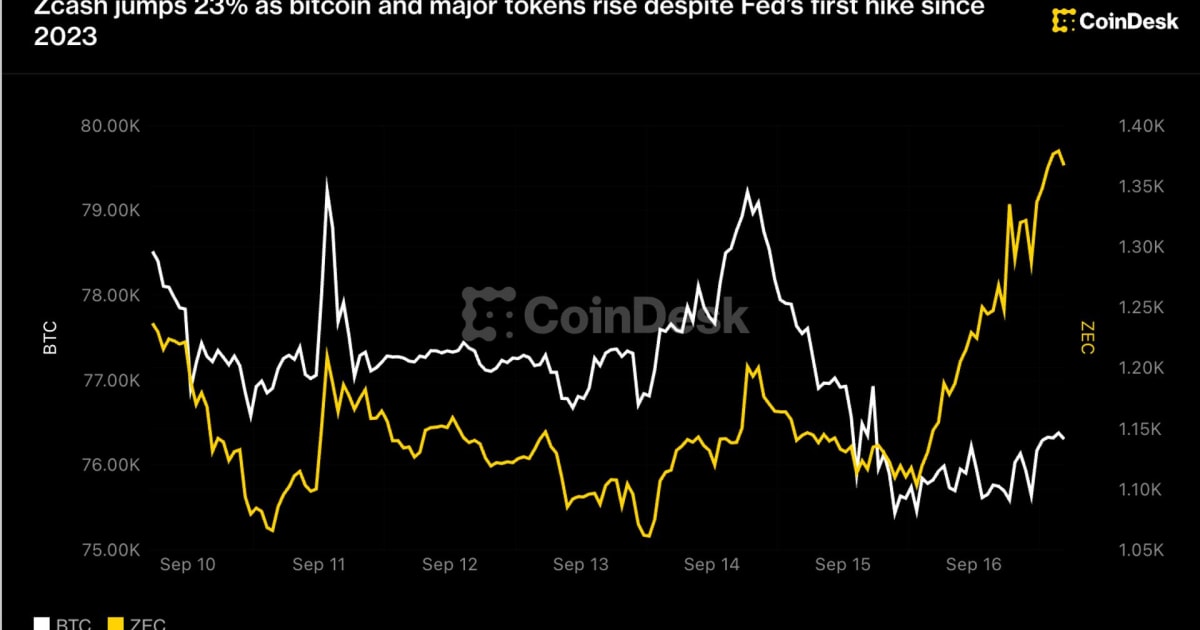
The cryptocurrency market just delivered a masterclass in defiance, surging post-Fed rate hike. This counter-intuitive rally challenges conventional wisdom about risk assets and begs the question: is crypto truly decoupling? We dissect the global implications and reveal the surprising, albeit indirect, beneficiaries within the Indian stock market.
Crypto's Unshakeable Rise: Decoupling from the Fed & India's Indirect Play
The financial world watched with bated breath as the US Federal Reserve, in a move widely anticipated yet still impactful, raised interest rates. Historically, such hawkish monetary policy tightens liquidity, sending ripples of apprehension across risk assets, from equities to emerging markets. Yet, the cryptocurrency market, particularly its titans Bitcoin (BTC) and Ethereum (ETH), performed a striking ballet of defiance, not merely holding ground but surging upwards. This counter-intuitive rally, a stark departure from previous cycles, demands a rigorous re-evaluation of digital assets' place in the global financial ecosystem and, critically, their subtle, yet growing, influence on India's tech sector.
For too long, cryptocurrencies were painted with the broad brush of 'risk assets,' their price movements often mirroring high-growth tech stocks, particularly during periods of economic uncertainty. The recent Fed rate hike, the first significant increase since 2023, was expected to trigger a 'risk-off' cascade. Instead, Bitcoin's market capitalization, already north of $1.3 trillion, saw notable gains, while Ethereum, with its robust decentralized finance (DeFi) ecosystem, mirrored this upward trajectory. This resilience isn't just a fleeting blip; it's a profound signal that the underlying demand for digital assets, perhaps driven by inflation hedging narratives or growing institutional adoption, is maturing beyond simple speculative fervor. The 'so what' for Indian investors is not direct crypto exposure, given regulatory ambiguities, but rather the reinforced conviction in the foundational technology – blockchain – which is increasingly becoming a strategic imperative for India's global IT giants.
Why Did Cryptocurrencies Defy the Fed? Unpacking the Decoupling Narrative
The traditional economic playbook dictates that rising interest rates increase the cost of capital, making riskier assets less attractive. So, why did crypto buck this trend? Several factors are at play, suggesting a potential structural shift rather than mere market noise. Firstly, a significant portion of the Fed's rate hike was already 'priced in' by sophisticated market participants. The announcement, therefore, lacked the element of surprise that often triggers sharp sell-offs. Secondly, the narrative around Bitcoin as a 'digital gold' or an inflation hedge has gained traction amidst persistent global inflationary pressures. As traditional fiat currencies face erosion of purchasing power, a finite, decentralized asset like Bitcoin presents an alternative store of value, attracting capital that might otherwise flow into physical gold or inflation-protected securities. This argument gains further credence when considering the sheer volume of institutional capital now flowing into crypto via regulated vehicles and corporate treasuries, providing a deeper, more stable liquidity base than in previous cycles.
Thirdly, the ongoing development and adoption within the broader blockchain ecosystem continue unabated, irrespective of macro-economic headwinds. Ethereum's robust network, supporting a burgeoning DeFi and NFT market, demonstrates utility beyond pure speculation. This intrinsic value proposition, coupled with continuous technological advancements (such as scalability solutions), fosters a loyal user base and developer community, creating a demand floor. Lastly, the global regulatory landscape, while still fragmented, is slowly moving towards greater clarity in major economies, fostering confidence among institutional players. This confluence of factors paints a picture of a maturing asset class, one less susceptible to knee-jerk reactions to traditional monetary policy shifts and increasingly charting its own course.
Deep Market Impact Analysis: Connecting Crypto's Resilience to Indian Tech
While direct investment in cryptocurrencies through regulated Indian exchanges remains a grey area, the global bullish sentiment surrounding digital assets has a subtle, yet significant, ripple effect on the Indian stock market, particularly within the IT services sector. Indian IT companies, renowned for their global delivery models and technological prowess, are at the forefront of enterprise blockchain adoption. As global demand for blockchain-based solutions intensifies, driven by financial institutions, supply chain logistics, and healthcare, these Indian behemoths stand to gain substantially.
Historically, periods of heightened technological innovation globally have translated into increased project mandates for Indian IT services. For instance, during the dot-com boom of the late 1990s and early 2000s, Indian IT companies like Infosys and Wipro saw unprecedented growth, capitalizing on the global demand for Y2K solutions and enterprise resource planning (ERP) implementations. Similarly, the current surge in blockchain interest, fueled by crypto's resilience, is driving enterprises worldwide to explore distributed ledger technology (DLT) for enhanced security, transparency, and efficiency. This translates into lucrative consulting, development, and maintenance contracts for Indian IT firms.
Consider the growth trajectory of digital transformation services within these companies. Blockchain and DLT are integral components of this transformation. While specific revenue figures for blockchain-only projects are often subsumed under broader 'digital' segments, industry estimates suggest a robust CAGR for enterprise blockchain solutions. Companies that have proactively invested in blockchain capabilities, talent acquisition, and strategic partnerships are poised to capture a larger share of this burgeoning market. The global blockchain market size is projected to reach over $160 billion by 2029, growing at a CAGR exceeding 80% from 2022. Even a fraction of this market translates into significant revenue streams for the Indian IT titans.
How Will Global Blockchain Adoption Boost Indian IT Stocks?
The current crypto rally reinforces the narrative of blockchain's long-term viability, moving it beyond speculative hype to a foundational technology. This increased confidence directly benefits Indian IT service providers in several ways:
- Increased Client Mandates: Global financial institutions, logistics companies, and healthcare providers are accelerating their exploration and implementation of blockchain solutions for everything from cross-border payments to supply chain traceability. Indian IT firms are preferred partners for these complex, large-scale projects due to their expertise and cost-effectiveness.
- Talent Development & IP Creation: Continuous engagement in cutting-edge blockchain projects allows Indian IT companies to develop proprietary intellectual property, upskill their workforce in niche DLT areas, and attract top-tier talent, further solidifying their competitive advantage.
- Strategic Partnerships: The evolving blockchain ecosystem fosters collaborations between tech giants, startups, and service providers. Indian IT firms are actively engaging in these partnerships, expanding their reach and solution offerings.
- Enhanced Digital Transformation Revenue: Blockchain is a critical enabler for various digital transformation initiatives, including cybersecurity, cloud adoption, and AI integration. As demand for these services grows, so does the embedded demand for blockchain expertise.
Stock-by-Stock Breakdown: Indian IT Giants Poised for Indirect Gains
While no Indian stock offers direct exposure to cryptocurrency price movements, several NSE/BSE listed companies are strategically positioned to benefit from the broader global adoption of blockchain technology, fueled by the renewed bullish sentiment in the crypto market. These companies have established dedicated blockchain practices, invested in R&D, and secured significant client mandates in this domain.
1. Tata Consultancy Services (TCS) (NSE: TCS, BSE: 532540): As India's largest IT services exporter, TCS has been an early mover in enterprise blockchain. They offer a comprehensive suite of DLT solutions, from consulting to implementation, across banking, supply chain, and government sectors. Their 'Quartz' blockchain solution is a testament to their commitment. With a trailing P/E ratio typically hovering in the high 20s to low 30s, TCS commands a premium reflecting its market leadership and robust digital growth. Increased blockchain projects contribute to their digital revenue segment, which consistently outperforms traditional IT services, bolstering overall revenue growth and profitability. Sector peer: Infosys (NSE: INFY, BSE: 500209), which also has a strong blockchain practice, particularly in financial services.
2. Infosys (NSE: INFY, BSE: 500209): A global leader in next-generation digital services, Infosys has significant investments in blockchain and DLT. They've developed solutions for trade finance, supply chain management, and digital identity using blockchain. Their strategic partnerships with global blockchain consortia further enhance their capabilities. Infosys's focus on innovative solutions positions it to capture rising demand. Its P/E ratio often mirrors TCS, reflecting its strong market position and growth prospects. Blockchain projects contribute to their 'Digital' segment, which has been a key driver of their revenue growth, often posting double-digit percentage increases quarter-on-quarter.
3. Wipro (NSE: WIPRO, BSE: 507685): Wipro has also made significant strides in the blockchain space, offering services in blockchain consulting, platform development, and integration. They cater to diverse industries, including banking, retail, and manufacturing, helping clients leverage blockchain for process optimization and new business models. Wipro's consistent focus on R&D and strategic alliances in emerging technologies, including blockchain, positions them for long-term growth. While its P/E might be slightly lower than TCS or Infosys, its strategic shift towards high-growth digital areas, including blockchain, could lead to re-rating potential. Sector peer: HCLTech (NSE: HCLTECH, BSE: 532281), which has also been expanding its DLT capabilities.
4. Tech Mahindra (NSE: TECHM, BSE: 532755): Tech Mahindra has been particularly aggressive in its blockchain initiatives, establishing dedicated labs and partnering with various startups and enterprises. They focus on practical applications of blockchain in telecommunications, manufacturing, and financial services. Their proactive approach to emerging technologies makes them a key beneficiary of increased global blockchain adoption. Tech Mahindra's P/E typically ranges in the mid-20s. Their emphasis on innovation and digital transformation, where blockchain plays a crucial role, contributes significantly to their revenue from new-age technologies.
Expert Perspective: Bulls vs. Bears on Crypto's Decoupling
The recent crypto rally has ignited a fierce debate among financial experts. The Bulls argue that this is definitive proof of crypto's maturation and its increasing independence from traditional markets. They point to:
"The market is finally recognizing Bitcoin's intrinsic value as a decentralized, scarce asset, a true inflation hedge. Institutional adoption is no longer a 'future' event; it's here, providing deep liquidity and stability that wasn't present in previous cycles. The Fed's actions are less impactful when a significant portion of the market has already priced them in and when global macro narratives, like persistent inflation, favor alternative assets." - A prominent crypto economist.
They also highlight the continuous innovation within the Ethereum ecosystem, such as upgrades enhancing scalability and security, making it a robust platform for decentralized applications, irrespective of short-term interest rate fluctuations. For Indian IT, bulls believe this narrative further validates their long-term investments in enterprise blockchain, predicting an acceleration in client spending for DLT solutions.
The Bears, however, remain skeptical, cautioning against prematurely declaring a decoupling. Their arguments include:
"One data point does not make a trend. Crypto markets are notoriously volatile, and correlation can shift rapidly. While there might be short-term decoupling, a sustained global economic downturn or a severe liquidity crisis would likely pull all risk assets, including crypto, down. Furthermore, regulatory uncertainty, particularly in major economies, remains a significant overhang." - A traditional asset manager.
Bears also suggest that the rally might be a 'dead cat bounce' or a result of specific technical market dynamics rather than a fundamental shift. For Indian IT, bears acknowledge the potential for blockchain projects but caution that the revenue contribution, while growing, is still a small percentage of overall company revenues, and a global tech spending slowdown could still impact these firms.
Actionable Investor Playbook: Navigating the Crypto-Influenced Tech Landscape
For Indian investors looking to capitalize on this evolving dynamic, a nuanced approach is essential. Direct crypto investment remains fraught with regulatory uncertainty, making indirect plays through the equity market a more prudent strategy.
- Buy/Accumulate: High-quality Indian IT services companies with demonstrated blockchain capabilities and a strong 'digital' segment growth. Focus on large-cap players like TCS and Infosys for their stability and global reach. Consider mid-cap players like Persistent Systems (NSE: PERSISTENT, BSE: 532893) or L&T Technology Services (NSE: LTTS, BSE: 540005) if they show increasing traction in DLT projects, though their direct blockchain exposure might be less pronounced than the top tier.
- Watch: Companies actively investing in blockchain startups or forming strategic partnerships. Look for quarterly earnings calls where management specifically highlights growth in DLT-related projects and pipeline. Monitor regulatory developments in India regarding cryptocurrencies; any clarity could open new avenues for fintech companies.
- Time Horizon: This is a long-term play (3-5 years minimum). The benefits of enterprise blockchain adoption will accrue gradually, not overnight. The indirect impact on Indian IT stocks is more about sustained revenue growth and competitive advantage rather than short-term price spikes.
- Entry Points: Consider accumulating these IT stocks on market corrections, using a systematic investment plan (SIP) approach to average out costs. For instance, if Nifty IT Index corrects by 5-7% from its highs, it could present an attractive entry point for these fundamentally strong companies.
Risk Matrix: Navigating the Uncharted Waters
Despite the bullish sentiment, several risks could impact this narrative, both for global crypto markets and indirectly for Indian IT stocks.
- Indian Regulatory Uncertainty (High Probability): The lack of clear, comprehensive cryptocurrency regulation in India remains the paramount risk. A sudden adverse regulatory stance could dampen investor sentiment towards digital assets, even if indirect, and slow down domestic enterprise blockchain adoption. Probability: High.
- Global Macroeconomic Headwinds (Medium Probability): While crypto showed resilience, a severe global recession or a protracted period of high inflation combined with aggressive monetary tightening across major economies could still trigger a broad 'risk-off' sentiment, impacting crypto and global tech spending. Probability: Medium.
- Blockchain Technology Adoption Lag (Low Probability): Despite the hype, the full-scale, widespread enterprise adoption of blockchain is still in its nascent stages. Implementation challenges, scalability issues, and interoperability concerns could slow down the pace, impacting the revenue growth projections for IT service providers. Probability: Low to Medium.
- Competitive Landscape (Medium Probability): The blockchain solutions market is becoming increasingly competitive, with new startups and specialized firms emerging globally. Indian IT giants will need to continually innovate and differentiate to maintain their market share and pricing power. Probability: Medium.
What to Watch Next: Catalysts for the Crypto-Tech Connection
The intersection of crypto resilience and Indian tech growth is dynamic. Investors should monitor several key indicators and events:
- Global Central Bank Actions: Beyond the US Fed, watch the European Central Bank (ECB) and Bank of England (BOE) for their monetary policy decisions. Coordinated hawkish moves could still test crypto's decoupling thesis.
- Indian Government's Stance on Crypto: Any official pronouncement or legislative movement from the Indian government regarding crypto regulation will be a major catalyst. Dates to watch: upcoming parliamentary sessions and any statements from the Ministry of Finance or RBI.
- Quarterly Earnings of Indian IT Companies: Pay close attention to the commentary from management on blockchain project wins, pipeline, and the growth contribution from their 'digital' segments. Look for specific mentions of DLT or Web3 engagements.
- Major Blockchain Network Upgrades: Significant upgrades to major networks like Ethereum (e.g., further scaling solutions beyond the Merge) could boost confidence in the underlying technology and drive broader enterprise interest.
- Institutional Crypto Adoption Data: Keep an eye on reports from major financial institutions (e.g., Grayscale, Fidelity, BlackRock) on their crypto asset under management (AUM) and institutional client demand. Increased AUM signals sustained institutional interest.
- Global Regulatory Frameworks: Developments in crypto regulation in key markets like the EU (MiCA), UK, and US will set precedents and influence global adoption trends.
See No direct Indian stock names, as crypto is not regulated in India for direct investment via listed equities. However, companies like Wipro, Infosys, TCS (IT services) could indirectly benefit from increased enterprise blockchain adoption globally.'s AI Score
Our algorithmic screener scores No direct Indian stock names, as crypto is not regulated in India for direct investment via listed equities. However, companies like Wipro, Infosys, TCS (IT services) could indirectly benefit from increased enterprise blockchain adoption globally. on fundamentals, momentum, and risk — free to try, no card needed.
Try the AI Screener →Have questions about this story?
Ask Welth, our finance-focused AI research assistant, for a deeper breakdown — free trial included.
Chat with Welth AI →Disclaimer: This content is generated by WelthWest Research Desk based on publicly available reports and is for informational purposes only. It does not constitute financial advice, investment recommendations, or an offer to buy or sell securities. Always consult a qualified financial advisor before making investment decisions.