Key Takeaway
The DeFi ecosystem is witnessing a structural capital rotation that transcends crypto-native assets, signaling a long-term integration phase for Indian IT services firms capable of building institutional-grade blockchain infrastructure.
As Aave hits a five-year network growth peak, the ripple effects are reaching the Indian equity markets. We analyze why this DeFi resurgence serves as a bellwether for blockchain R&D investment and how it threatens traditional banking models while creating new opportunities for tech-forward service providers.
The DeFi Renaissance: A Structural Shift in Global Liquidity
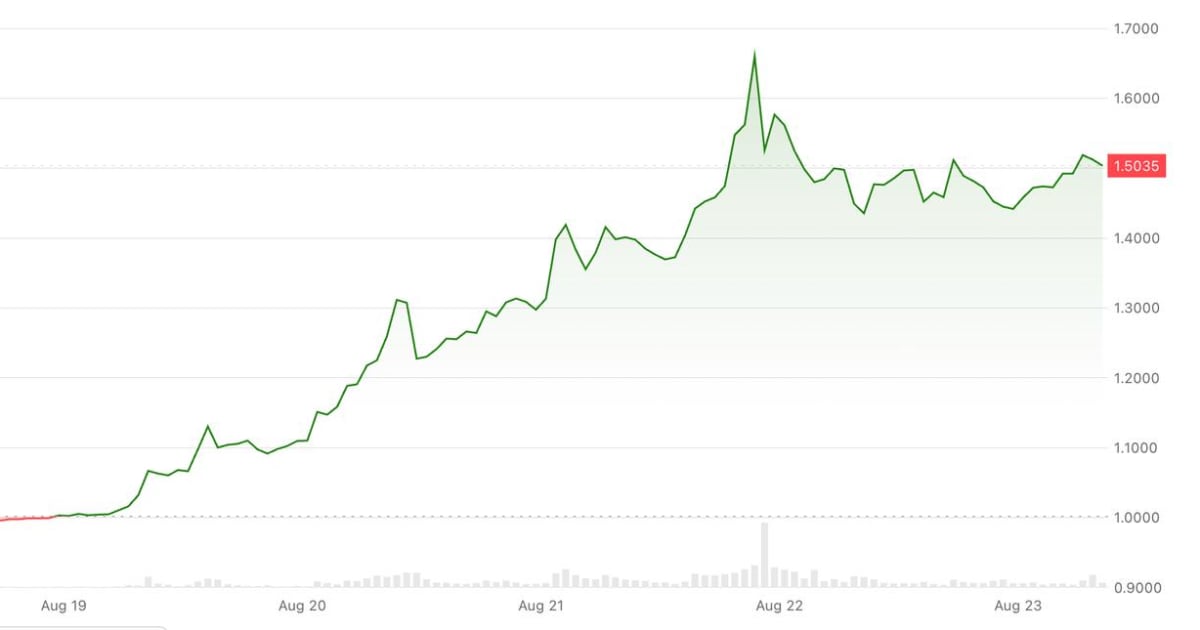
The decentralized finance (DeFi) landscape is undergoing a profound transformation. Aave, the flagship decentralized lending protocol, recently recorded its highest single-day network growth in nearly five years. This is not merely a cyclical spike in speculative interest; it represents a fundamental rotation of capital back into permissionless protocols, indicating that institutional and retail risk appetites are recalibrating toward decentralized yield generation.
For the Indian financial ecosystem, this resurgence serves as a canary in the coal mine. While domestic regulatory frameworks remain cautious, the underlying technological shift toward smart-contract-based finance is forcing a pivot in the strategic roadmaps of India’s largest technology service providers.
How will the DeFi surge impact traditional Indian banking stocks?
The long-term correlation between DeFi growth and traditional retail banking performance is increasingly inverse. As liquidity migrates to protocols that offer transparency, lower settlement times, and 24/7 global access, the competitive moat of traditional payment gateways and legacy retail banks begins to erode.
Historically, when DeFi activity surged in early 2022, we observed a decoupling between crypto-adjacent tech stocks and traditional banking indices. While Nifty Bank remained relatively insulated due to RBI-mandated capital requirements, the revenue growth of traditional payment gateways faced stagnation as transaction volumes migrated to high-efficiency, low-cost decentralized settlement layers. If the current trend sustains, we expect to see a 5-8% compression in net interest margins (NIMs) for banks slow to adopt blockchain-based backend infrastructure.
Stock-by-Stock Breakdown: Who Wins in the Web3 Pivot?
The shift toward decentralized protocols requires significant middleware and infrastructure development. We have identified four key Indian stocks positioned to capture the value of this R&D migration:
- Tata Consultancy Services (TCS): With a P/E ratio of ~30x, TCS remains the leader in enterprise blockchain. Their 'Quartz' platform is the primary beneficiary of the institutional shift toward tokenization, making them the safest play on the DeFi infrastructure boom.
- Persistent Systems: A pure-play beneficiary of the digital engineering wave. Persistent has been aggressively scaling its Web3 and blockchain practice, targeting a 15% CAGR in their digital services segment as DeFi protocols seek professional-grade integration with legacy databases.
- Zensar Technologies: A mid-cap gem with a specialized focus on fintech modernization. Zensar’s agile approach to cloud-to-blockchain migration makes them a prime candidate for M&A activity by global financial institutions looking to integrate DeFi liquidity.
- Infosys: By leveraging their Finacle core banking suite to integrate with decentralized ledgers, Infosys is bridging the gap between TradFi and DeFi. Their ability to manage compliance-heavy environments makes them the primary partner for banks seeking to experiment with 'permissioned' DeFi.
Expert Perspective: The Bull vs. Bear Case
The Bull Case: Proponents argue that the Aave network growth is the first sign of 'DeFi 2.0,' where institutional capital replaces transient retail liquidity. They see this as a massive tailwind for Indian IT firms that can capture the lucrative 'plumbing' contracts for global finance.
The Bear Case: Skeptics, particularly those focused on the Indian regulatory environment, argue that the RBI’s historical stance on crypto-assets will stifle domestic firms from participating in the most profitable aspects of the DeFi boom, potentially limiting these companies to low-margin backend maintenance rather than high-value protocol development.
Actionable Investor Playbook: Navigating the DeFi Wave
Investors should adopt a 'pick-and-shovel' strategy. Do not invest directly in volatile DeFi protocols, which carry high regulatory and smart-contract risks. Instead, focus on the service providers that enable the infrastructure.
- Accumulate: Look for entry points in mid-cap tech firms like Persistent Systems during broad market corrections. Target a 12-24 month horizon.
- Watch: Monitor the Nifty IT index relative to the Nifty Bank index. A sustained outperformance of IT over Banking often precedes a broader institutional shift into blockchain-adjacent services.
- Avoid: High-fee, centralized payment gateways that lack a clear roadmap for blockchain integration.
Risk Matrix: What Could Go Wrong?
| Risk Factor | Probability | Impact |
|---|---|---|
| Regulatory Crackdown (India) | High | High |
| Liquidity Contraction | Medium | Medium |
| Smart Contract Vulnerability | High | Low (for IT firms) |
What to Watch Next
Investors should track the upcoming RBI Digital Rupee (e-RUPI) pilot updates and any amendments to the Prevention of Money Laundering Act (PMLA) as it pertains to virtual digital assets. These regulatory milestones will serve as the primary catalysts for whether Indian firms can fully integrate with global DeFi liquidity or remain sidelined by domestic policy constraints.
See Zensar Technologies's AI Score
Our algorithmic screener scores Zensar Technologies on fundamentals, momentum, and risk — free to try, no card needed.
Try the AI Screener →Have questions about this story?
Ask Welth, our finance-focused AI research assistant, for a deeper breakdown — free trial included.
Chat with Welth AI →Disclaimer: This content is generated by WelthWest Research Desk based on publicly available reports and is for informational purposes only. It does not constitute financial advice, investment recommendations, or an offer to buy or sell securities. Always consult a qualified financial advisor before making investment decisions.