Key Takeaway
Delhivery’s 30% revenue surge against flat profits signals that India’s logistics sector has entered a 'scale-at-any-cost' phase. Investors must now prioritize operational efficiency over top-line growth as integration headwinds threaten short-term margins.
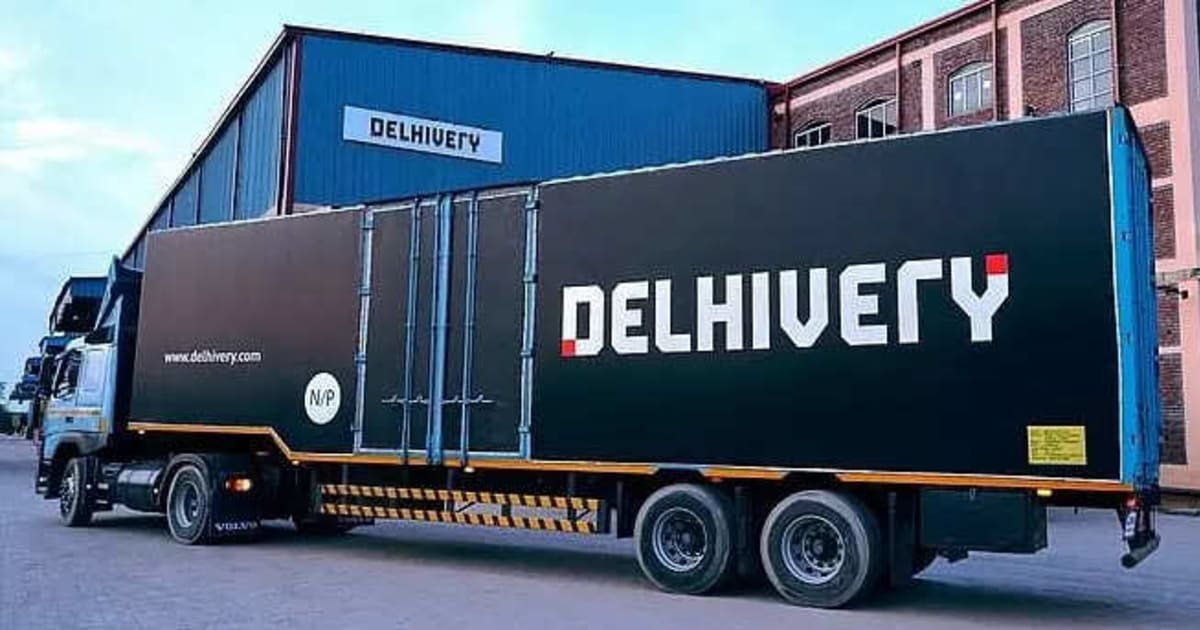
Delhivery’s latest quarterly performance highlights a defining moment for India's logistics-tech space. While e-commerce demand remains robust, the cost of scaling infrastructure is putting heavy pressure on bottom-line profitability. We break down the winners, losers, and the strategic road ahead for logistics investors.
The Great Logistics Balancing Act: Delhivery Q4 Analysis
In the high-stakes theater of Indian logistics, the latest quarterly report from Delhivery (NSE: DELHIVERY) serves as a definitive case study in the friction between rapid scaling and operational maturity. With a 30% jump in operating revenue contrasted against stagnant net profits of Rs 72 crore, the company has effectively signaled that the era of 'growth at all costs' is being superseded by a more complex, cost-intensive integration phase.
For the broader Indian stock market, this is not merely a single company narrative. It is a bellwether for the entire e-commerce supply chain, indicating that while consumer demand remains resilient, the infrastructure required to service this demand is becoming exponentially more expensive to integrate.
Why is Delhivery’s margin compression a signal for the broader Indian market?
Historically, when the logistics sector faces margin compression during high-growth cycles, it mirrors the 2022 supply chain bottlenecks that saw the Nifty Logistics Index oscillate violently. The current reality is that Delhivery is paying the 'integration premium.' As the company absorbs recent acquisitions and expands its automated sortation centers, the upfront cost is masking the long-term efficiency gains.
This is a critical inflection point. The Indian market is currently pricing in a shift where logistics firms must prove that their technology-led moat can actually lower the cost-per-shipment over time. If the integration costs remain sticky, we expect a re-rating of the entire sector, moving from 'growth-tech' valuations to 'industrial-utility' valuations.
The Sector-Level Breakdown: Winners and Losers
The divergence in the sector is becoming clearer. E-commerce platforms are the clear winners here, as they benefit from the price wars and improved delivery speeds provided by third-party logistics (3PL) providers. Conversely, traditional logistics firms with high manual overhead are finding it increasingly difficult to compete with the data-driven precision of tech-first players, leading to potential market share erosion.
How will the current logistics shift affect your stock portfolio?
To understand the impact on your holdings, we must look at the specific competitive landscape. The following stocks represent the current battlefield of Indian logistics:
- Delhivery (DELHIVERY): The primary subject. Market cap ~$5.2B. The focus for investors should be on their 'cost-per-packet' metric. Success here is binary: either they unlock massive operating leverage by FY27, or they remain trapped in a perpetual cycle of integration costs.
- Blue Dart Express (BLUEDART): As a premium player, Blue Dart remains shielded by its brand equity. However, it faces pressure from Delhivery’s aggressive pricing. Watch their margins closely; if they begin to compress, it suggests industry-wide yield pressure.
- TCI Express (TCIEXP): A B2B focused player. They offer a contrarian hedge. Their business model is less sensitive to the e-commerce consumer-facing cost pressures that impact Delhivery, making them a potential defensive play.
- Container Corporation of India (CONCOR): Essential for the long-haul movement of goods. As Delhivery scales, the demand for rail-based logistics increases. CONCOR acts as a 'pick-and-shovel' play on the overall growth of Indian domestic consumption.
Expert Perspective: The Bull vs. Bear Case
The current market sentiment is neutral, reflecting a 'wait-and-see' approach. Bulls argue that the integration costs are a one-time capital expenditure necessary to build a permanent, unassailable lead in the Indian market. Bears, however, point to the flat net profit as evidence that the company has not yet found a path to sustainable, non-dilutive growth.
Actionable Investor Playbook
For investors, the strategy should be disciplined:
- Watch for Margin Expansion: Do not buy into the revenue growth story alone. Look for sequential improvements in EBITDA margins. If margins remain flat over the next two quarters, the stock is likely to remain range-bound.
- Monitor Interest Rate Sensitivity: Logistics is highly capital-intensive. Any hawkish stance from the RBI that keeps borrowing costs high will disproportionately hurt companies like Delhivery that rely on heavy debt for infrastructure expansion.
- Time Horizon: This is not a quarterly trade. The play here is a 24-36 month horizon, betting on the consolidation of the Indian logistics market where only 2-3 players will survive with significant scale.
Risk Matrix
- Inflationary Input Costs: High probability. Rising fuel and labor costs could further compress operating margins by 150-200 bps.
- Integration Delays: Medium probability. Failure to successfully merge tech stacks from recent acquisitions could lead to significant operational inefficiencies.
- E-commerce Demand Softening: Low probability. While India's consumption story is strong, any macroeconomic slowdown would immediately hit parcel volumes, the lifeblood of Delhivery's business.
What to watch next?
Investors should circle the next quarterly filing date and pay close attention to the 'Management Commentary' regarding their Sortation Capacity Utilization. This is the single most important data point that will dictate the stock’s trajectory. If utilization rates cross 85%, we expect a significant breakout in net profitability, signaling that the 'integration phase' is finally yielding to the 'harvesting phase'.
See DELHIVERY's AI Score
Our algorithmic screener scores DELHIVERY on fundamentals, momentum, and risk — free to try, no card needed.
Try the AI Screener →Have questions about this story?
Ask Welth, our finance-focused AI research assistant, for a deeper breakdown — free trial included.
Chat with Welth AI →Disclaimer: This content is generated by WelthWest Research Desk based on publicly available reports and is for informational purposes only. It does not constitute financial advice, investment recommendations, or an offer to buy or sell securities. Always consult a qualified financial advisor before making investment decisions.