Key Takeaway
The Nagpur Consumer Court’s ruling against SBI sets a dangerous precedent for the bancassurance model, shifting the burden of disclosure from the policyholder to the bank, potentially triggering a wave of dormant insurance claims and higher compliance costs across the Nifty Bank index.
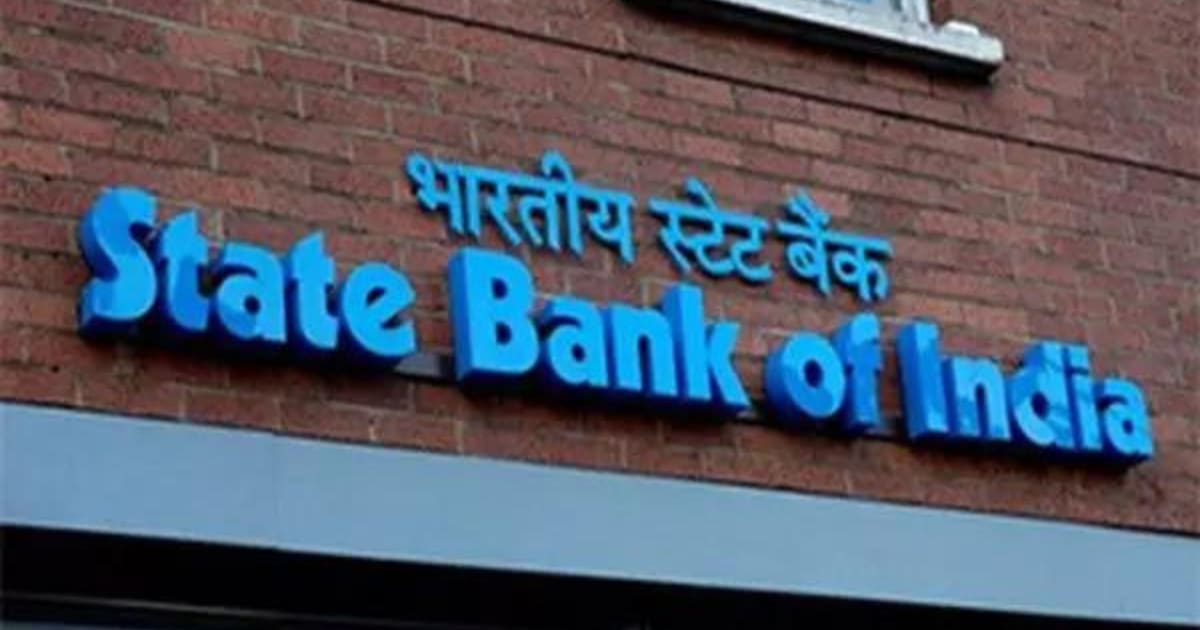
A landmark consumer court ruling has ordered State Bank of India (SBI) to settle a 6-year-old insurance claim, overriding standard limitation periods due to a failure in disclosure. This deep dive explores how this pivot in legal liability threatens the high-margin bancassurance revenue of major Indian lenders and what it means for SBIN, HDFCBANK, and ICICIBANK investors.
The Nagpur Precedent: Why a Single Consumer Court Ruling Shook the Banking Sector
In a decision that has sent ripples through the compliance departments of India’s largest financial institutions, the Nagpur District Consumer Disputes Redressal Commission recently ordered the State Bank of India (NSE: SBIN) to pay a claim of Rs 5 lakh to the widow of an account holder, despite a six-year delay in filing. The bank’s primary defense—that the claim was barred by the statute of limitations—was summarily rejected. The court’s reasoning was surgical: because the bank failed to proactively inform the nominee of the insurance policy's existence, the 'cause of action' only began when the nominee discovered the policy, not when the death occurred.
For decades, the Bancassurance model—where banks act as intermediaries to sell insurance products—has been a 'cash cow' for the Indian banking sector. It provides high-margin, non-interest income with seemingly low risk. However, this ruling fundamentally alters the risk-reward calculus. It transforms the bank from a mere facilitator into a fiduciary with an active duty of disclosure. If this precedent holds, the billions of rupees in 'unclaimed' or 'dormant' insurance policies sitting on the books of Indian insurers could suddenly become active liabilities for their banking partners.
How will the SBI court ruling affect bancassurance revenue?
Bancassurance is the lifeblood of 'Other Income' for Indian banks. For a behemoth like SBIN, which has a market capitalization exceeding ₹7.5 lakh crore, the fee income from third-party products is a critical driver of Return on Assets (RoA). In FY24, major private and public sector banks saw their fee income grow by 12-18% year-on-year, largely driven by insurance cross-selling.
However, the Nagpur ruling introduces a 'Compliance Tax' on this revenue. Banks must now move beyond 'point-of-sale' interactions. To mitigate legal risk, they will likely have to implement robust digital notification systems, recurring disclosure protocols, and dedicated desks to track the life status of account holders. This increases operational overhead (OpEx). Historically, when the UK faced a similar 'mis-selling' crisis with Payment Protection Insurance (PPI), the resulting compensation payouts and administrative costs wiped out years of profit for major high-street banks. While the Indian context is different, the structural risk of systemic litigation is now on the table.
Deep Market Impact: The Erosion of the 'Limitation' Shield
The Indian stock market often prices in credit risk and interest rate risk with precision, but it frequently underestimates legal and regulatory risk. The Nifty Bank and Nifty Financial Services indices have traded at premiums based on the efficiency of the bancassurance model. If banks are held liable for claims they didn't even underwrite—simply because they didn't disclose the policy effectively—it creates an unquantifiable contingent liability.
Consider the data: The Insurance Regulatory and Development Authority of India (IRDAI) reported that as of March 2023, the total amount of unclaimed insurance money in India stood at over ₹25,000 crore. A significant portion of these policies was sold through bank channels. If consumer courts across the country adopt the Nagpur logic, we could see a 'reopening' of thousands of dormant claims. This would force banks to increase their legal provisions, directly impacting the bottom line and potentially leading to a de-rating of P/E multiples across the sector.
Stock-by-Stock Breakdown: The Winners and Losers
- State Bank of India (NSE: SBIN): As the direct subject of the ruling, SBI faces the most immediate reputational and operational pressure. With a P/E ratio currently hovering around 10.5x, the stock is valued for its stability. Any sign of a mass-litigation trend could see this multiple contract as investors price in 'hidden' liabilities.
- HDFC Bank (NSE: HDFCBANK): As the leader in the private banking space, HDFC Bank has a massive bancassurance tie-up with HDFC Life. Its 'Other Income' is highly sensitive to insurance commissions. Increased disclosure requirements could slow down the sales velocity, impacting its high-teens growth targets.
- ICICI Bank (NSE: ICICIBANK): ICICI Bank has one of the most integrated bancassurance models with ICICI Prudential and ICICI Lombard. While its technology stack is superior, the legal precedent applies to the 'intent' of disclosure, which is harder to automate than the sale itself.
- SBI Life Insurance (NSE: SBILIFE): While the bank is being blamed for non-disclosure, the insurer is the one that eventually pays the claim. SBILIFE, with its massive AUM, might see a spike in 'late-stage' claims, impacting its Persistency Ratios and New Business Margins (VNB).
- HDFC Life Insurance (NSE: HDFCLIFE): Similar to SBI Life, HDFC Life relies heavily on the HDFC Bank network. Any friction in the bank's sales process due to tighter compliance will directly hit the insurer's top line.
Expert Perspective: The Bull vs. Bear Case
"The ruling is a wake-up call for the 'selling-at-all-costs' culture in Indian banking. While it may increase short-term costs, it will eventually lead to a more sustainable and trust-based financial ecosystem." — Senior Analyst, WelthWest Research
The Bear View: Bears argue that this is the 'thin end of the wedge.' They point to the 2019 Consumer Protection Act, which has already empowered consumers. They believe that the Indian banking sector is entering a period of 'Regulatory Overhang,' where the cost of doing business will rise significantly, compressing Net Interest Margins (NIMs) indirectly through higher OpEx.
The Bull View: Bulls contend that the impact is 'Low' because the quantum of individual claims (like the ₹5 lakh in this case) is a rounding error for a bank with a balance sheet of ₹60 lakh crore. they argue that the market is overreacting and that banks will simply update their digital terms and conditions (T&Cs) to automate disclosure, effectively neutralizing the legal risk.
Is this a 'Black Swan' event for Indian banks?
While not a Black Swan yet, it is a 'Grey Rhino'—a highly probable, high-impact threat that is often ignored until it moves. The 2022 Supreme Court ruling on 'unpaid dues' for telcos showed how legal interpretations can suddenly bankrupt or severely cripple an industry. For banks, the risk isn't bankruptcy, but rather a sustained erosion of the high-margin fee income that investors have come to rely on for double-digit earnings growth.
Actionable Investor Playbook: Navigating the Bancassurance Risk
Investors should not panic-sell, but a tactical reallocation is warranted. Here is the WelthWest strategy:
- Watch the 'Other Income' Line: In the upcoming Q3 and Q4 FY25 earnings reports, pay close attention to the growth rate of insurance commissions. If they stall, it’s a sign that banks are tightening their belts due to compliance fears.
- Entry Points for SBIN: If the stock dips toward the ₹740-₹760 range on the back of this news, it may offer a value play, provided the bank clarifies its disclosure roadmap.
- Sector Rotation: Consider shifting a portion of banking exposure to FinTechs or Pure-Play NBFCs that don't have the same level of bancassurance liability or have more transparent, digital-first disclosure models.
- Time Horizon: This is a medium-term risk (12-24 months). The legal system moves slowly, and it will take several more high-profile rulings before the 'litigation floodgates' truly open.
Risk Matrix
| Risk Factor | Probability | Impact |
|---|---|---|
| Legal Contagion (Similar rulings in other states) | High | Medium |
| IRDAI/RBI Regulatory Tightening | Medium | High |
| Operational Cost Spike (Compliance) | High | Low |
What to Watch Next: Catalysts for the Story
The story doesn't end in Nagpur. Here are the key triggers to monitor over the next 90 days:
- SBI’s Appeal: If SBI appeals this in the National Consumer Disputes Redressal Commission (NCDRC) and loses again, the ruling becomes a national benchmark.
- RBI’s Stance on 'Customer Rights': Any circular from the Reserve Bank of India regarding the 'Charter of Customer Rights' that specifically mentions bancassurance disclosure will be a major bearish signal for bank stocks.
- Quarterly Provisioning: Look for any 'exceptional items' or increased legal provisions in the balance sheets of HDFCBANK and ICICIBANK in the next two quarters.
Ultimately, the SBI consumer court ruling serves as a reminder that in the modern financial era, transparency is not a courtesy—it is a liability. Investors who ignore this shift do so at their own peril.
See SBIN's AI Score
Our algorithmic screener scores SBIN on fundamentals, momentum, and risk — free to try, no card needed.
Try the AI Screener →Have questions about this story?
Ask Welth, our finance-focused AI research assistant, for a deeper breakdown — free trial included.
Chat with Welth AI →Disclaimer: This content is generated by WelthWest Research Desk based on publicly available reports and is for informational purposes only. It does not constitute financial advice, investment recommendations, or an offer to buy or sell securities. Always consult a qualified financial advisor before making investment decisions.