Key Takeaway
The ECI’s massive 5.8 crore voter purge signals a shift toward administrative hyper-efficiency, potentially reducing fiscal leakages in state-level welfare schemes and reinforcing the 'Clean Governance' premium in Indian equities.
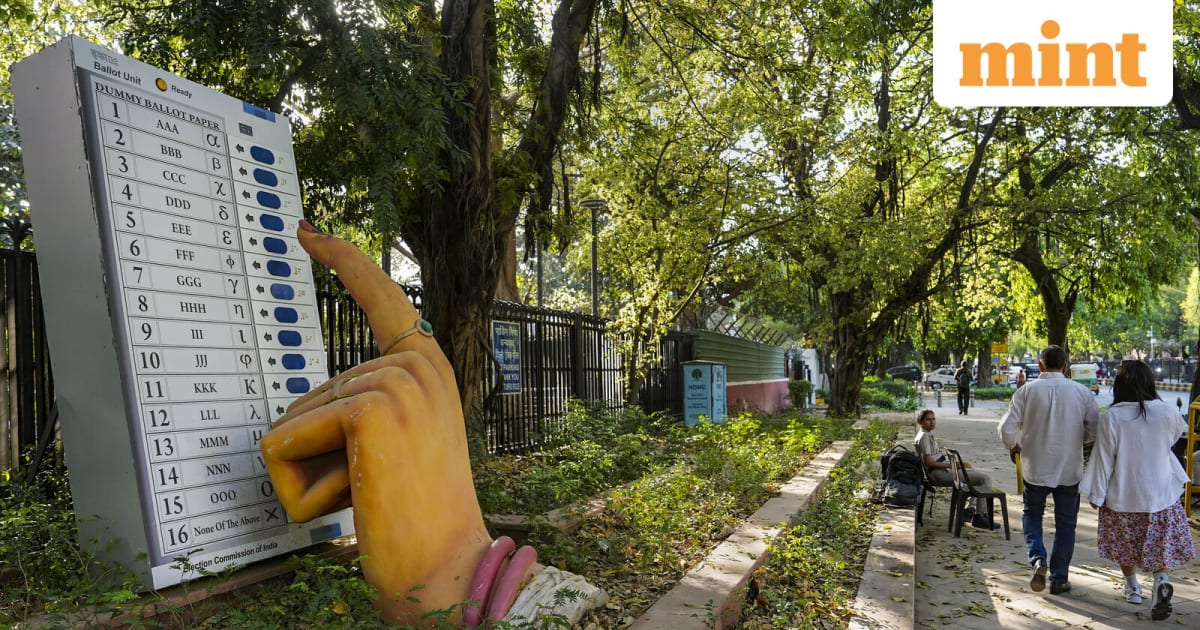
The Election Commission of India (ECI) has completed a massive cleanup, removing 5.8 crore ineligible names from the electoral rolls. While seemingly a political move, this 'Special Intensive Revision' has deep economic undertones, promising tighter fiscal discipline and more efficient targeting of the ₹7.5 lakh crore annual subsidy bill. This deep dive explores the ripple effects on India's fiscal deficit, data analytics providers, and the consumer goods sector.
The Great Cleanup: Why the ECI Purge is a Fiscal Signal for Investors
In an unprecedented administrative maneuver, the Election Commission of India (ECI) has struck off approximately 5.82 crore (58.2 million) names from the national electoral rolls. To put this in perspective, the number of deleted voters exceeds the entire population of South Korea. This 'Special Intensive Revision' (SIR) wasn't just about cleaning up duplicates or removing the deceased; it represents a fundamental hardening of India's digital infrastructure. For the institutional investor at WelthWest Research Desk, the narrative isn't about the ballot box—it’s about the fiscal multiplier.
Historically, electoral rolls have served as the primary database for state-level welfare distribution. When these rolls are bloated with 'ghost' voters or duplicate entries, the leakage in Direct Benefit Transfers (DBT) and localized social security schemes becomes a significant drag on state exchequers. By purging nearly 6% of the total voter base, the ECI is inadvertently providing the government with a surgical tool to prune fiscal deficits. In a market currently obsessed with fiscal consolidation targets (aiming for 4.5% by FY26), such administrative efficiency is a quiet but potent bullish signal.
How will the electoral roll cleanup affect India's fiscal deficit?
The primary economic impact of the SIR lies in the optimization of Revenue Expenditure. India’s subsidy and welfare architecture—spanning food, fertilizer, and state-specific cash transfers—is increasingly linked to digital identity markers. While Aadhaar remains the primary KYC (Know Your Customer) tool, the electoral roll is often the secondary verification layer for state-level schemes like the Ladli Behna Yojana or various farmer income support programs.
When 5.8 crore names are removed, the potential for 'ghost beneficiaries' to siphon off state funds diminishes. If we assume even a conservative 5% of these deleted names were linked to some form of state-level leakage, the savings could run into thousands of crores. For the Indian Stock Market, this translates to improved State Development Loan (SDL) spreads and a more robust fiscal position for the Union government, which ultimately supports the Nifty 50's valuation multiples by lowering the risk-free rate of return (G-Sec yields).
Deep Market Impact: Connecting the Dots to NSE/BSE
While the ECI purge does not trigger a direct 'buy' or 'sell' signal for the Nifty Bank or Nifty IT indices in the short term, it reinforces the structural theme of 'Formalization and Digitization.' This is a continuation of the trend we saw during the 2016-2018 period when the linking of PAN and Aadhaar led to a surge in tax compliance and a subsequent rerating of the financial services sector.
- Data Integrity as a Moat: Companies involved in government technology (GovTech) and data analytics are the primary beneficiaries of this drive for accuracy.
- FMCG and Rural Demand: There is a counter-narrative here. If welfare leakages are plugged, the 'unearned' liquidity in rural pockets might see a temporary dip, potentially affecting the volume growth of low-ticket consumer staples.
- Fiscal Space for Capex: Every rupee saved in welfare leakage is a rupee that can be diverted to Infrastructure Capex, benefiting the Nifty Infrastructure Index.
Stock-by-Stock Breakdown: Who Wins and Who Watches?
1. KFin Technologies Ltd (NSE: KFINTECH)
As a leader in investor solutions and data management, KFintech thrives in an environment where data accuracy is prioritized. While they don't manage electoral rolls, the push for cleaner national databases increases the demand for their sophisticated registry and data analytics services among corporate and government-linked entities. With a Market Cap of ~₹14,000 Cr and a robust ROE of 25%+, KFintech is a proxy play on India's data integrity theme.
2. Tata Consultancy Services (NSE: TCS)
TCS is the backbone of India's 'Digital India' mission, including the MCA21 and various e-governance portals. The ECI's ability to purge 5.8 crore names using advanced deduplication technology highlights the scale of government IT spending. TCS, with its massive ₹15 Lakh Cr Market Cap, remains the primary beneficiary of long-term government contracts aimed at digitizing the administrative state.
3. Hindustan Unilever Ltd (NSE: HUL)
HUL is a 'watch' stock in this scenario. The company, with a P/E ratio hovering around 55x, is highly sensitive to rural welfare spending. If the purge leads to a significant reduction in 'leakage-driven' cash flow in rural India, we might see a marginal impact on the sales of mass-market brands like Lifebuoy or Wheel. However, long-term efficiency usually leads to better-targeted spending, which is net-positive for genuine consumption.
4. Computer Age Management Services (NSE: CAMS)
Similar to KFintech, CAMS (Market Cap ~₹18,000 Cr) benefits from the broader trend of financialization and data accuracy. As the government tightens its databases, the friction between different financial identifiers (EPIC, PAN, Aadhaar) reduces, making the onboarding process for Mutual Funds and Insurance—CAMS's bread and butter—much smoother.
Expert Perspective: The Bull vs. Bear Case
"The ECI purge is the 'Demonetization of Data.' By removing 5.8 crore ghost entries, the government is essentially raising the ROI on every rupee of welfare spent. This is a massive tailwind for India's fiscal credibility on the global stage." — Senior Macro Strategist, WelthWest Research.
The Bull View: Bulls argue that this move reduces 'political noise' and ensures that government subsidies reach only the intended recipients. This leads to a higher Fiscal Multiplier, as genuine beneficiaries have a higher propensity to consume, thereby boosting GDP growth and corporate earnings.
The Bear View: Bears caution that such 'Special Intensive Revisions' can be prone to errors. If legitimate voters are disenfranchised, it could lead to social unrest or legal challenges. For the markets, this translates to 'Policy Risk.' Any disruption in the democratic process or allegations of bias can lead to foreign institutional investor (FII) jitters, potentially impacting the USD/INR exchange rate.
Actionable Investor Playbook
Investors should not trade the ECI news as a standalone event but rather as a validation of the 'Digital Governance' investment thesis. Here is how to play it:
- Accumulate GovTech Leaders: Stocks like TCS and LTIMindtree should be bought on dips, as government digitization is a multi-year secular trend.
- Watch Rural Staples: Keep a close eye on the Q3 and Q4 commentary of Dabur (DABUR) and HUL regarding rural demand elasticity. If the purge impacts liquidity, these stocks might face short-term headwind.
- Time Horizon: This is a 12-24 month play. The fiscal benefits of a cleaner electoral roll will manifest in the Union Budget 2025-26 as lower-than-expected revenue expenditure.
Risk Matrix: Assessing the Downside
| Risk Factor | Probability | Impact on Markets |
|---|---|---|
| Exclusion Errors: Legitimate voters being deleted leading to protests. | Medium | Temporary volatility in Nifty 50. |
| Legal Challenges: Opposition parties filing PILs in the Supreme Court. | High | Policy-related noise; neutral for long-term fundamentals. |
| Reduced Rural Liquidity: Sharp drop in 'ghost' welfare cash flow. | Low | Marginal downside for FMCG and 2-wheeler stocks (e.g., Hero MotoCorp). |
What to watch next?
The next major catalyst will be the State Assembly Elections in late 2024. Watch for reports of 'Voter Turnout' and 'Disenfranchisement Claims.' If the elections proceed smoothly without significant legal hurdles regarding the deleted names, the market will price in the 'Efficiency Gain.' Additionally, keep an eye on the Controller General of Accounts (CGA) data for monthly fiscal deficit updates to see if welfare spending growth starts to decelerate relative to GDP.
See None directly's AI Score
Our algorithmic screener scores None directly on fundamentals, momentum, and risk — free to try, no card needed.
Try the AI Screener →Have questions about this story?
Ask Welth, our finance-focused AI research assistant, for a deeper breakdown — free trial included.
Chat with Welth AI →Disclaimer: This content is generated by WelthWest Research Desk based on publicly available reports and is for informational purposes only. It does not constitute financial advice, investment recommendations, or an offer to buy or sell securities. Always consult a qualified financial advisor before making investment decisions.