Key Takeaway
Eli Lilly’s massive AI partnership validates tech-led drug discovery, creating a lucrative tailwind for Indian IT firms and CROs capable of scaling AI-driven R&D.
Eli Lilly has inked a monumental $2.75 billion deal with Insilico Medicine, cementing AI as the future of pharmaceutical R&D. For Indian investors, this is the starting gun for a massive transformation in the IT services and Contract Research Organization (CRO) sectors. We analyze the winners, the losers, and the risks in this high-stakes tech pivot.
The AI Pharma Revolution is Officially Here
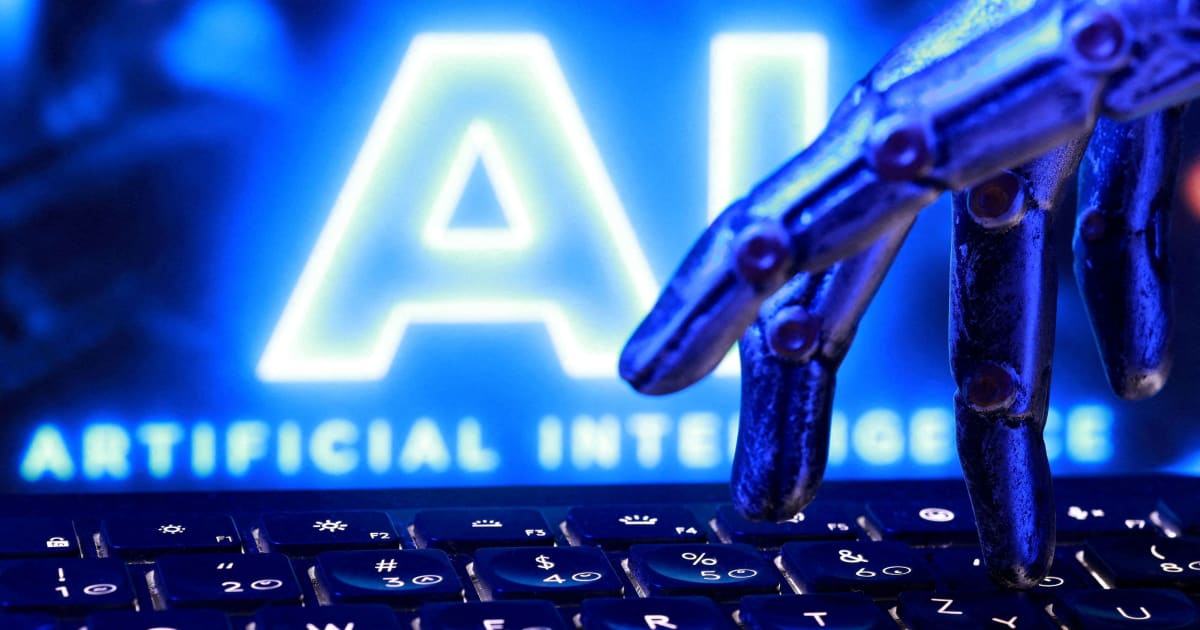
The pharmaceutical industry just had its 'ChatGPT moment.' Eli Lilly, a titan in the global drug space, has just committed a staggering $2.75 billion to an AI-driven drug discovery partnership with Insilico Medicine. This isn't just another corporate press release; it is a structural pivot that signals the end of the 'trial-and-error' era of medicine. By leveraging generative AI to identify and optimize drug candidates, Lilly is effectively shaving years off the R&D cycle—and the global market is taking notes.
The 'India Advantage': Why Our Markets Are Primed
While the headlines are dominated by Western biotech, the real engine room for this transformation is increasingly located in India. As global pharma giants rush to integrate AI into their pipelines, they are facing a massive 'talent and infrastructure' gap. This is where Indian IT majors and Contract Research Organizations (CROs) come into play. We are witnessing a convergence of two of India’s strongest sectors: Information Technology and Life Sciences.
Indian IT service providers have spent the last decade building deep domain expertise in life sciences. Now, they are layering AI and machine learning capabilities on top of that foundation. For global firms, outsourcing R&D to Indian partners who can offer both deep clinical knowledge and AI-led data analytics is no longer a cost-saving luxury—it is a competitive necessity.
Winners and Losers: Who Moves the Needle?
The market is already beginning to price in this paradigm shift. Here is how the landscape looks:
The Winners:
- Indian IT Giants (TCS, Infosys, Wipro, HCL Tech): These companies are no longer just 'code shops.' Their aggressive pivot toward AI-led healthcare platforms puts them in the driver’s seat to capture the massive surge in global pharma R&D spend.
- CROs (Syngene International, Divi's Laboratories): Companies that have invested in 'smart' laboratory infrastructure and data-driven drug discovery pipelines are now the most attractive acquisition or partnership targets for Big Pharma.
The Losers:
- Legacy R&D Providers: Service providers that rely solely on manual, labor-intensive clinical trial management without AI integration are facing an existential threat. The market will likely de-rate them as they struggle to compete with AI-enabled speed.
- Traditional Drug Discovery Firms: Pharma companies that are slow to digitize their pipeline will find themselves falling behind in the race to patent, ultimately burning through cash while their competitors innovate at a fraction of the time.
Investor Insight: What to Watch Next
Investors should stop looking at IT companies as mere 'back-office support.' Instead, start analyzing their 'Life Sciences AI' revenue share. Look for companies that are securing multi-year contracts with global biotech firms. Similarly, watch the CRO space for capital expenditure in in-silico modeling capabilities—this is the new metric for future-proofing their balance sheets.
The Risks: Don't Get Caught in the Hype Cycle
While the sentiment is undeniably bullish, caution is required. AI is a powerful tool, but it is not a magic wand. Clinical trials remain notoriously difficult, and an AI-discovered molecule is still subject to the same rigorous FDA/CDSCO hurdles as any other. Furthermore, we are entering a gray area regarding Intellectual Property rights for AI-generated discoveries. Regulatory bodies are still catching up to the technology, and legal battles over 'who owns the molecule' could create significant volatility for companies betting too heavily on unproven AI models.
Ultimately, the Eli Lilly deal proves that the future of medicine is digital. For the Indian market, this is a multi-year growth story that savvy investors should be tracking closely. The tech-enabled R&D boom is just getting started.
See TCS's AI Score
Our algorithmic screener scores TCS on fundamentals, momentum, and risk — free to try, no card needed.
Try the AI Screener →Have questions about this story?
Ask Welth, our finance-focused AI research assistant, for a deeper breakdown — free trial included.
Chat with Welth AI →Disclaimer: This content is generated by WelthWest Research Desk based on publicly available reports and is for informational purposes only. It does not constitute financial advice, investment recommendations, or an offer to buy or sell securities. Always consult a qualified financial advisor before making investment decisions.