Key Takeaway
Ethereum's escalating unstaking queue is a critical liquidity signal, not just for crypto but also for global risk sentiment. While direct Indian market impact is limited, indirect selling pressure on crypto assets could ripple through venture-backed firms and specific tech stocks, demanding a cautious approach from investors.
Ethereum's staking exit queue is lengthening, raising concerns about potential liquidity and selling pressure across the crypto ecosystem. This deep dive by WelthWest Research Desk explores the intricate, albeit indirect, pathways through which this global crypto event could influence Indian investors and specific NSE/BSE listed companies. We provide actionable insights for navigating this evolving landscape.
Ethereum's Unstaking Queue: A Silent Alarm for Global Crypto Liquidity and Indian Market Ripples
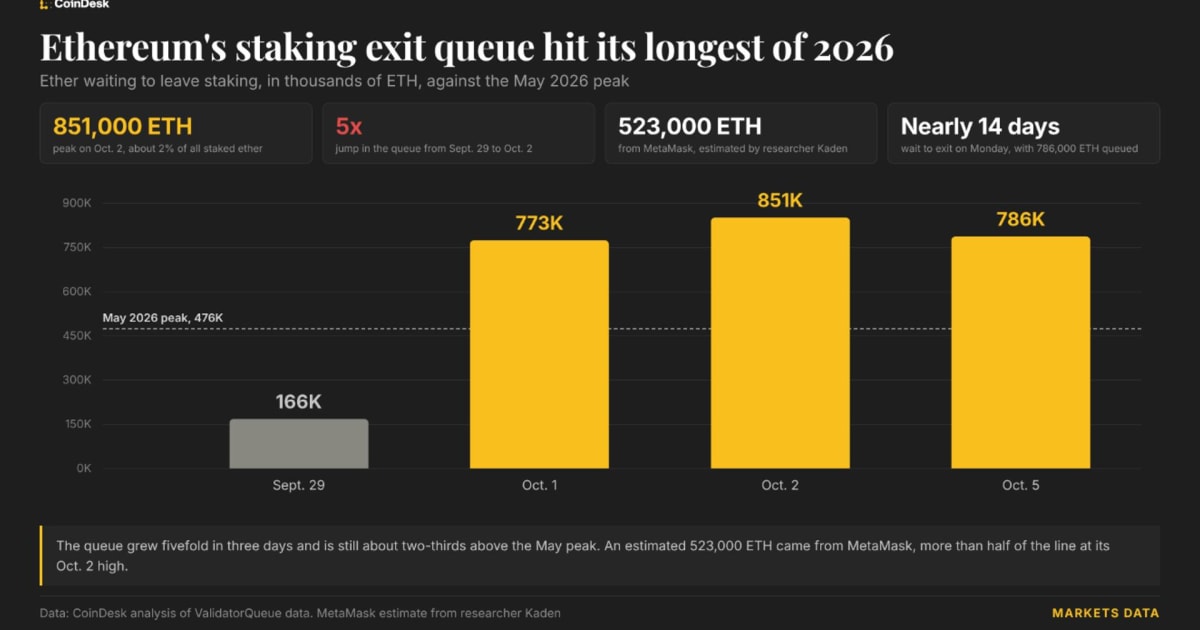
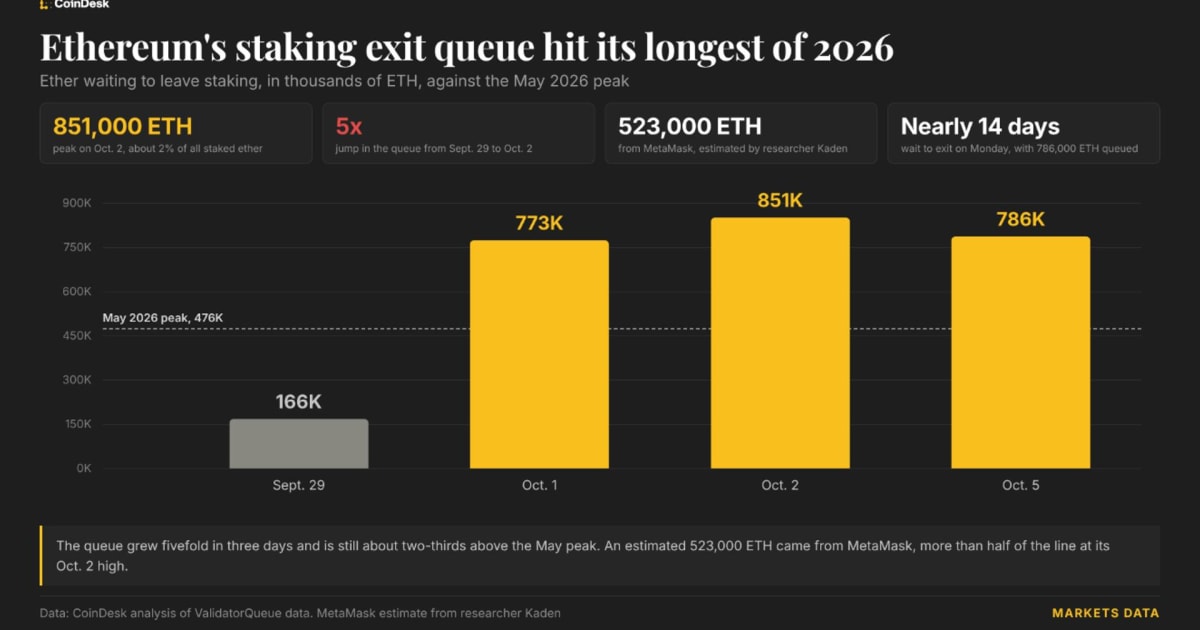
The digital asset world is currently observing a phenomenon that, while seemingly confined to the blockchain's technical architecture, carries significant implications for broader market sentiment and, by extension, could cast a long shadow over indirectly exposed Indian equity portfolios. We are referring to the burgeoning exit queue for staked Ethereum (ETH), a metric that has quietly swelled, indicating a growing desire among investors to withdraw their locked-up assets.
At WelthWest Research Desk, our analysis indicates that this isn't merely a technical glitch; it's a critical liquidity signal. The current two-week waiting period for unstaking ETH, encompassing several hundred thousand ETH tokens valued in the billions of US dollars, suggests a potential shift in investor confidence or an increased need for capital redeployment. While the Indian market's direct exposure to cryptocurrencies is regulated and limited, the indirect impact on investor sentiment, capital allocation, and companies with tangential crypto ventures cannot be overlooked. This development necessitates a re-evaluation of risk in a segment often perceived as uncorrelated, but which, in reality, is deeply intertwined with global risk appetite.
What Does Ethereum's Staking Exit Queue Mean for Investors Right Now?
The Ethereum blockchain transitioned to a Proof-of-Stake (PoS) consensus mechanism in September 2022, allowing participants to 'stake' their ETH to secure the network and earn rewards. The ability to unstake these assets, however, was only enabled with the 'Shapella' upgrade in April 2023. Initially, unstaking queues were short. However, recent weeks have seen a noticeable lengthening, with over 1.5 million ETH (approximately $5.5 billion at current prices) now awaiting withdrawal, translating to an average wait time that can extend beyond 14 days. This backlog is a clear indicator of increased selling pressure or a desire for liquidity by a significant cohort of stakers.
Why this matters now: In a market environment already grappling with global macroeconomic uncertainties, higher interest rates, and geopolitical tensions, any signal of potential liquidity stress in a major asset class like Ethereum is amplified. Ethereum, with a market capitalization exceeding $400 billion, is the second-largest cryptocurrency, and its movements often dictate broader crypto market sentiment. A sustained increase in unstaking could lead to increased supply on exchanges, potentially driving down ETH's price. This price volatility, while not directly impacting the Nifty 50 or Sensex, can dampen overall investor confidence in risk assets, including those in emerging markets like India. Furthermore, it highlights a potential shift away from long-term staking commitments, suggesting a more tactical, perhaps bearish, outlook from some crypto participants.
Deep Market Impact Analysis: Connecting Crypto to Indian Equities
While India's regulatory stance on cryptocurrencies remains cautious, with the RBI expressing strong reservations, the nation's burgeoning tech sector and a significant retail investor base *do* have indirect exposure. This exposure manifests in several ways:
- Venture Capital & Startup Ecosystem: Many Indian startups, particularly in Web3, blockchain development, and fintech, have received funding from global VCs with significant crypto exposure. A downturn in crypto markets could lead to reduced funding rounds or lower valuations for these startups, indirectly impacting the broader Indian startup ecosystem and related investment firms.
- Retail Investor Sentiment: Despite regulatory hurdles, a substantial number of Indian retail investors participate in crypto markets through international exchanges or peer-to-peer transactions. A significant price correction in ETH or other major cryptocurrencies due to unstaking pressure could lead to wealth erosion for these investors, potentially impacting their disposable income for other investments, including equities.
- Tech Sector & IT Services: Indian IT service giants, while not directly holding crypto, often provide blockchain development, consulting, and infrastructure services to global crypto companies and institutions. A prolonged crypto bear market or regulatory tightening could impact their project pipelines and revenue streams from this niche, albeit growing, segment.
Historically, periods of significant stress in global asset classes, even those with limited direct Indian exposure, have often led to broader risk-off sentiment. For instance, during the Terra-Luna collapse in May 2022, while Indian stocks weren't directly affected, global risk aversion saw foreign institutional investors (FIIs) pull out significant capital from Indian equities, contributing to a Nifty correction of over 5% in that month alone. While the Ethereum unstaking queue is a different magnitude of event, it serves as a reminder of interconnected global financial markets.
Stock-by-Stock Breakdown: Indian Equities on Our Watchlist
While no Indian company directly holds a significant portion of staked Ethereum, we've identified several NSE/BSE listed entities that could experience indirect impacts:
- Infosys (NSE: INFY): As a leading global IT services provider, Infosys is actively involved in blockchain solutions for enterprise clients. A sustained crypto downturn could lead to reduced spending or delayed projects from their clients in the financial services and technology sectors exploring blockchain applications. While blockchain remains a small part of their overall revenue, a negative sentiment could marginally impact future growth narratives. Sector peer: TCS (NSE: TCS), which also has a dedicated blockchain unit.
- Persistent Systems (NSE: PERSISTENT): Known for its strong focus on digital engineering and niche technology solutions, Persistent Systems has been proactively engaging in Web3 and blockchain projects, particularly in partnerships with global fintech firms. A slowdown in the crypto space could affect new project acquisitions or client budgets in this segment. Their P/E ratio of over 45x demands robust growth, which could be challenged if the crypto winter deepens.
- Route Mobile (NSE: ROUTEMOBILE): While primarily a CPaaS provider, Route Mobile’s expansion into digital identity and emerging technologies could see indirect effects. A general risk-off sentiment globally, spurred by crypto concerns, could impact venture funding for new digital ventures that rely on their communication platforms.
- Nazara Technologies (NSE: NAZARA): As a diversified gaming and sports media platform, Nazara has explored Web3 gaming and NFTs. While their core business is robust, any significant contraction in the global Web3 gaming ecosystem due to crypto liquidity concerns could impact their nascent ventures in this space. They have previously made strategic investments in companies with Web3 exposure.
- Angel One (NSE: ANGELONE): As a major retail brokerage, Angel One benefits from high trading volumes and new client acquisitions. While they do not offer direct crypto trading, a significant downturn in crypto assets could impact the overall risk appetite of retail investors. If a portion of their client base experiences losses in crypto, it could reduce their capital available for equity trading, potentially impacting brokerage revenues. Sector peer: Zerodha (unlisted, but indicative of broader retail brokerage trends).
Expert Perspective: Bulls vs. Bears on Ethereum's Liquidity
The interpretation of Ethereum's unstaking queue is a battleground for differing market perspectives:
The Bears' Argument: Proponents of a bearish outlook view the increasing queue as a clear sign of impending selling pressure. They argue that a substantial portion of early stakers, who committed ETH when prices were much lower, are now looking to de-risk or take profits. This 'unlocking' of supply, combined with a potential lack of new capital entering the staking ecosystem, could create an imbalance, pushing ETH prices lower. They point to the fact that the total value of staked ETH still represents over 25% of the total supply, meaning a significant portion remains locked, and any further increase in unstaking could exacerbate selling pressure. This could signal broader apprehension towards staking mechanisms or the crypto market in general, leading to a flight to safety.
The Bulls' Argument: Conversely, optimists contend that the unstaking queue is a healthy market mechanism. They argue that it represents natural market dynamics – stakers adjusting their portfolios, potentially moving to other opportunities, or simply realizing profits after a period of capital appreciation. They highlight that the *net* staking balance (new stakes minus unstakes) has remained positive for much of the post-Shapella period, indicating continued confidence. Furthermore, they believe that increased liquidity is ultimately beneficial for market efficiency and that any temporary selling pressure will be absorbed by long-term holders and new entrants attracted by potentially lower prices. Some even suggest that the ability to unstake removes a significant risk factor, making staking more attractive to a wider audience in the long run.
"The lengthening Ethereum unstaking queue is a double-edged sword. While it signals potential liquidity needs and profit-taking, it also demonstrates the network's functional maturity. The key is to monitor the net flow – are more ETH being unstaked than newly staked over a sustained period? That's the real indicator of systemic stress." - WelthWest Senior Analyst.
Actionable Investor Playbook: Navigating the Crypto Ripple
For Indian investors looking to navigate these indirect ripples, a measured and informed approach is crucial:
- Watchlist Crypto-Exposed Stocks: Keep a close eye on the performance of the aforementioned IT services companies (Infosys, Persistent Systems), fintech players, and any listed entities with known ventures into Web3 or blockchain. Monitor their quarterly reports for any commentary on client spending in these areas.
- Monitor Global Risk Appetite: Track global indices like the S&P 500 and Nasdaq. A significant downturn in major crypto assets often correlates with a broader risk-off sentiment, which can impact FII flows into Indian equities.
- Consider Diversification: Ensure your portfolio is well-diversified across sectors and asset classes. Reducing overconcentration in high-growth, high-beta tech stocks that could be indirectly affected by global sentiment shifts is prudent.
- Entry Points for Quality Tech: If a broader market correction occurs due to global risk aversion, it could present attractive entry points for fundamentally strong Indian IT and tech stocks. Look for companies with robust balance sheets, diversified revenue streams, and attractive valuations (e.g., P/E ratios below sector averages or historical trends).
- Time Horizon: For investors with a long-term horizon (3-5 years), temporary volatility driven by crypto market dynamics might offer opportunities. Short-term traders should exercise extreme caution and employ strict risk management.
- Avoid Speculative Crypto Exposure: While direct advice on crypto is beyond our scope, the current situation underscores the inherent volatility and liquidity risks in the asset class. Investors should ensure any crypto exposure is within their risk tolerance and not impact their core financial goals.
Risk Matrix: Assessing the Probabilities
Here's our assessment of key risks associated with the Ethereum unstaking queue:
- Significant ETH Price Correction (Probability: Medium): If the unstaking queue continues to grow and translate into sustained selling pressure, a price correction of 15-25% for ETH is plausible in the short to medium term. This would be driven by increased supply meeting potentially stagnant demand.
- Broader Crypto Market Contagion (Probability: Low to Medium): A substantial ETH price drop could trigger a broader sell-off across the altcoin market and potentially Bitcoin, as ETH often acts as a bellwether. This could further dampen overall crypto market sentiment.
- Indirect Impact on Indian Tech/Fintech Stocks (Probability: Low): The impact on specific Indian stocks is likely to be indirect and marginal, primarily affecting sentiment and project pipelines rather than core revenues. However, if global tech spending contracts due to broader risk aversion, the impact could be more pronounced.
- Regulatory Scrutiny Intensification (Probability: Medium): Increased volatility or perceived instability in major cryptocurrencies could lead to renewed calls for stricter regulation globally, including in India. While not a direct market risk, it adds a layer of uncertainty for companies operating in the Web3 space.
What to Watch Next: Catalysts on the Horizon
Several upcoming factors and data points will dictate the trajectory of this story:
- Net Staking Flow Data: Regularly monitor the difference between newly staked ETH and unstaked ETH. A sustained period of negative net flow would be a stronger bearish signal.
- Ethereum Network Upgrades: Future upgrades aimed at improving scalability or efficiency could impact staking dynamics and investor confidence.
- Macroeconomic Indicators: Global inflation data, interest rate decisions from major central banks (like the US Federal Reserve), and geopolitical developments will continue to influence overall risk appetite, which in turn affects crypto markets.
- Regulatory Developments: Any significant policy announcements regarding cryptocurrencies from major jurisdictions (US, EU, India) could rapidly alter market sentiment and investor behavior.
- Institutional Adoption Metrics: Watch for signs of increased institutional participation or withdrawal from crypto, as this often drives significant market movements.
The Ethereum unstaking queue is more than just a blockchain metric; it's a barometer of liquidity and sentiment in a significant global asset class. While its direct impact on Indian equities is limited, the indirect ripples through investor psychology and venture capital flows warrant careful monitoring from prudent investors. At WelthWest, we advocate for a data-driven, cautious approach, emphasizing diversification and a clear understanding of interconnected global financial ecosystems.
Run a free AI Stock Screen
Our algorithmic screener scores any NSE/BSE stock on fundamentals, momentum, and risk — free to try, no card needed.
Try the AI Screener →Have questions about this story?
Ask Welth, our finance-focused AI research assistant, for a deeper breakdown — free trial included.
Chat with Welth AI →Disclaimer: This content is generated by WelthWest Research Desk based on publicly available reports and is for informational purposes only. It does not constitute financial advice, investment recommendations, or an offer to buy or sell securities. Always consult a qualified financial advisor before making investment decisions.