Key Takeaway
Google’s Gemini 3.5 Flash launch signals the end of the 'AI experiment' phase and the start of 'AI implementation' at scale. For Indian IT, this shifts the value proposition from labor-arbitrage to high-margin AI-native systems integration.
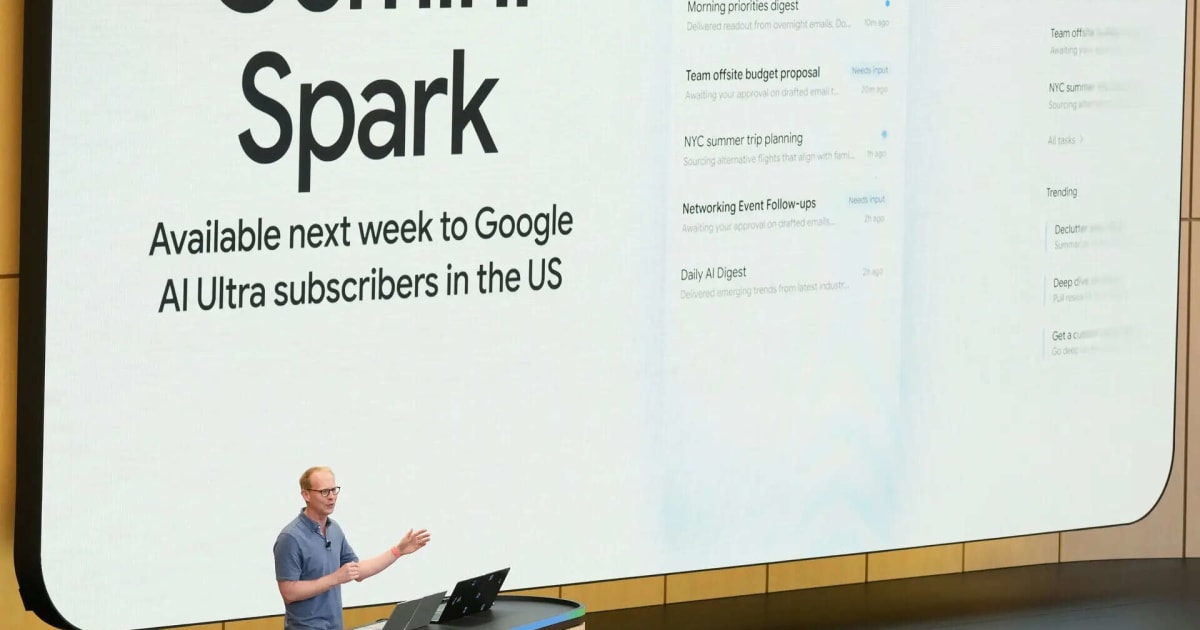
The unveiling of Gemini 3.5 Flash and Omni at Google I/O 2026 marks a pivotal shift in enterprise AI deployment. As infrastructure costs plummet and processing speeds soar, Indian IT giants face a binary outcome: transform their service models or risk obsolescence in an era of commoditized intelligence.
The AI Inflection Point: Why Google I/O 2026 Changes Everything
At Google I/O 2026, the tech giant didn't just iterate; it commoditized high-end intelligence. The release of Gemini 3.5 Flash and Gemini Omni represents a radical compression in the cost-to-performance ratio of Large Language Models (LLMs). For the Indian IT sector—the backbone of global digital transformation—this is not merely a software update; it is a fundamental shift in the economics of the industry.
Historically, Indian IT firms have thrived on a labor-arbitrage model, where scale was achieved through headcount. The advent of ultra-fast, low-latency models like Gemini Omni means that manual data processing, basic coding, and routine BPO tasks are now effectively 'solved' by API calls. This creates an urgent imperative for the Nifty IT index constituents to pivot from volume-based billing to value-added AI orchestration.
How will Gemini 3.5 Flash impact Indian IT service margins?
The market is currently underestimating the deflationary pressure this puts on legacy service contracts. When AI performance increases by 10x while costs drop by 80%, the traditional 'time and materials' billing model breaks. We anticipate a transition toward 'Outcome-Based Pricing,' where firms are compensated for the efficiency gains AI delivers rather than the man-hours logged.
During the 2022 generative AI hype cycle, the Nifty IT index saw a volatility spike of over 14% as firms scrambled to establish 'AI Centers of Excellence.' Today, the stakes are higher. The winners will be those who can integrate Gemini-powered agents directly into enterprise workflows—moving beyond 'chatbots' to 'autonomous agents' that manage supply chains, regulatory compliance, and cloud architecture.
Stock-by-Stock Breakdown: Who Wins the AI Arms Race?
- TCS (TCS.NS): With a massive cash pile and a conservative but deep bench of cloud talent, TCS is best positioned to lead the 'AI-led modernization' wave. Their ability to deploy Gemini-based solutions for Fortune 500 legacy migrations remains their strongest moat.
- Infosys (INFY.NS): Their 'Topaz' AI framework is currently the industry benchmark. Expect Infosys to capture significant market share in the financial services sector as they leverage Gemini Omni to automate complex KYC and risk-modeling processes.
- HCLTech (HCLTECH.NS): HCL’s dominance in engineering and R&D services makes them a prime candidate to benefit from the 'AI-Native' product development wave. They are the 'picks and shovels' play for firms looking to build AI-driven hardware/software ecosystems.
- Wipro (WIPRO.NS): The wildcard. Wipro’s aggressive investment in AI-led consulting could pay dividends if they successfully shed their legacy BPO weight, which is increasingly vulnerable to the Gemini-led automation wave.
- Tech Mahindra (TECHM.NS): As a leader in 5G and network automation, TechM is uniquely positioned to integrate Gemini’s low-latency capabilities into Edge Computing, a high-growth niche that legacy firms often overlook.
The Contrarian View: Are We Facing an AI Margin Squeeze?
Bears argue that the democratization of AI will lead to the 'commoditization of expertise.' If Google’s tools allow a mid-sized enterprise to build its own AI pipeline, why pay a premium for an Indian IT giant? This is the core risk: Margin Compression. If Indian IT firms fail to move up the value chain toward high-end strategic consulting, they risk becoming mere 'AI implementation kiosks'—a low-margin business vulnerable to price wars.
Conversely, Bulls argue that complexity is the ultimate savior. As AI models become more powerful, the systems they inhabit become exponentially more complex. Integrating an LLM into a global banking infrastructure requires more than just an API key; it requires security, governance, and bespoke architecture—the exact services that Indian IT firms dominate.
Actionable Investor Playbook: Navigating the Shift
Investors should look for firms with a high 'AI-Revenue-to-Total-Revenue' ratio. We recommend a staggered entry into the sector, focusing on the following:
- Monitor 'Revenue per Employee' metrics: A rising figure here indicates successful AI integration.
- Watch for 'AI-led Deal Wins': Look for press releases mentioning 'Agentic Workflow' or 'Autonomous Systems' rather than generic 'Generative AI' pilots.
- Entry Points: Look for P/E multiple contractions in the 22x-26x range for large-cap IT, which represents a historical 'buy' zone relative to their 5-year average growth rates.
Risk Matrix: Assessing the Downside
| Risk Factor | Probability | Impact |
|---|---|---|
| Rapid AI Commoditization | High | Medium |
| Talent Attrition to AI Startups | Medium | High |
| Regulatory/Compliance Backlash | Medium | High |
What to Watch Next: Catalysts for Q3 2026
Keep a close watch on the upcoming quarterly earnings calls. Management commentary regarding 'AI-related cost savings' versus 'AI-driven revenue growth' will be the primary indicator of success. Additionally, monitor Google's Cloud Next 2026 event; any further integration of Gemini into enterprise clouds will be a direct catalyst for Indian IT service providers to announce new partnership tiers.
See TCS's AI Score
Our algorithmic screener scores TCS on fundamentals, momentum, and risk — free to try, no card needed.
Try the AI Screener →Have questions about this story?
Ask Welth, our finance-focused AI research assistant, for a deeper breakdown — free trial included.
Chat with Welth AI →Disclaimer: This content is generated by WelthWest Research Desk based on publicly available reports and is for informational purposes only. It does not constitute financial advice, investment recommendations, or an offer to buy or sell securities. Always consult a qualified financial advisor before making investment decisions.