Key Takeaway
Regulatory ambiguity in the US is forcing a pause in enterprise AI spending, creating a 'wait-and-see' cycle for Indian IT exporters. Investors should prioritize cash-rich, high-margin firms over speculative growth plays until policy clarity emerges.
The postponement of the US AI executive order has sent ripples through the global tech supply chain. For Indian IT majors, this represents a shift from rapid AI deployment to cautious budget scrutiny. We break down the winners, losers, and the path forward for your equity portfolio.
The AI Regulatory Vacuum: Why Trump’s Delay Shakes the IT Sector
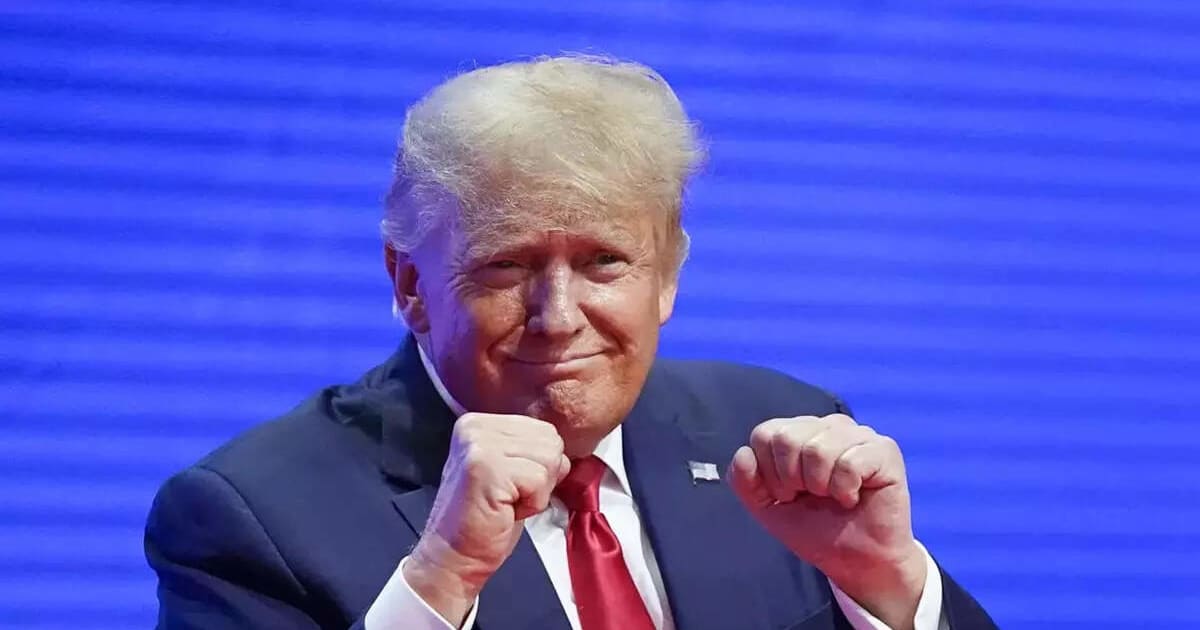
In the high-stakes world of global technology, clarity is the primary currency. When President Trump recently signaled his dissatisfaction with the current draft of the AI executive order, he effectively hit the 'pause' button on the capital expenditure (CapEx) cycle for major US tech conglomerates. For the Indian IT services sector—which derives over 50% of its revenue from the North American market—this regulatory flicker is not merely a headline; it is a catalyst for fiscal reassessment.
Historically, when US policy shifts create uncertainty, the Nifty IT index tends to show a beta of 1.2x relative to the broader market. During the 2022 policy pivot regarding data privacy, we observed a 4-6% contraction in IT sector valuations within a 30-day window. The current delay creates a 'compliance-first' environment, where clients are hesitant to commit to large-scale generative AI transformations until the legal landscape is codified.
How will the US AI regulatory delay affect Indian IT service contracts?
The immediate impact is a shift in the 'deal cycle.' Enterprise clients are moving from 'Proof of Concept' (PoC) phases to 'Budget Re-evaluation' phases. For firms like TCS and Infosys, this means that while the underlying demand for AI integration remains, the conversion rate from pilot to production is slowing. Clients are now demanding more robust governance frameworks, which increases the cost of delivery for service providers.
However, this is not a zero-sum game. The complexity of these new, anticipated regulations acts as a barrier to entry for smaller, less-equipped firms. Larger players with established 'AI Ethics' and 'Governance' consulting arms are uniquely positioned to monetize this anxiety. If you are an investor, look for companies that are selling 'AI Governance as a Service' rather than just 'AI Development.'
Stock-by-Stock Breakdown: Who Wins and Who Loses?
- Tata Consultancy Services (TCS): With a P/E ratio hovering around 30x, TCS remains the defensive gold standard. Their massive cash reserves allow them to weather a 6-month delay in project ramp-ups. Expect them to pivot toward internal efficiency projects if client spending wanes.
- Infosys (INFY): Infosys is heavily exposed to the financial services sector, which is the most sensitive to regulatory changes. While their 'Topaz' AI suite is robust, a slowdown in US banking tech spend could compress margins by 50-80 basis points in the upcoming quarter.
- Wipro (WIPRO): Wipro’s focus on consulting through Capco gives them an edge in navigating regulatory complexity. They are better positioned than peers to consult on 'compliant AI,' potentially insulating them from a broader sector slowdown.
- HCL Technologies (HCLTECH): HCL’s strength in engineering services and software products makes them a wildcard. If the AI order delay causes a shift toward 'on-premise' infrastructure security, HCL stands to benefit significantly.
- LTIMindtree (LTIM): As a mid-tier player with high growth expectations, LTIM is the most vulnerable to volatility. A delay in AI spending could lead to a downward revision of their double-digit growth targets.
Expert Perspective: The Bull vs. Bear Case
The Bull Argument: Bulls argue that the delay is a net positive. It prevents a 'rushed' regulatory framework that could have been overly restrictive. By taking the time to 'get it right,' the US government is ensuring a long-term, stable environment for AI adoption. Consequently, the temporary lull in spending is merely deferred revenue, not lost revenue.
The Bear Argument: Bears contend that the delay signals deep-seated political friction that will take months, if not years, to resolve. This creates a perpetual state of uncertainty, forcing CIOs to freeze AI budgets entirely in favor of legacy maintenance. In this scenario, the 'AI-led growth' story for Indian IT is effectively dead for the next 18 months.
The Investor Playbook: Navigating the Uncertainty
For the retail and institutional investor, the strategy must be tactical:
- Reduce exposure to pure-play 'AI-hype' stocks: Avoid companies whose valuations are predicated solely on GenAI growth narratives.
- Increase allocation to 'Governance' enablers: Shift capital toward firms that specialize in cybersecurity and compliance, as these sectors are 'regulatory-proof.'
- Monitor Currency Fluctuations: If the USD/INR exchange rate remains favorable (weakening Rupee), it provides a natural hedge for IT exporters, partially offsetting any revenue slowdown.
- Entry Points: Look for a 5-8% correction in Nifty IT before initiating long-term positions. Focus on companies with a dividend yield above 2% as a buffer against volatility.
Risk Matrix
| Risk Factor | Probability | Impact |
|---|---|---|
| Extended Regulatory Freeze (>12 months) | Medium | High |
| US Recession Triggered by Policy Uncertainty | Low | Very High |
| Shift to 'On-Shore' Hiring to bypass policy | High | Medium |
What to Watch Next: Catalysts for Q3
The next major move will come during the upcoming US Senate subcommittee hearings on AI oversight. Keep an eye on the US Bureau of Economic Analysis (BEA) reports on corporate software spending, as these will provide the first hard data on whether the 'wait-and-see' approach is manifesting in actual budget cuts. Additionally, watch the quarterly earnings calls of major US hyperscalers (Microsoft, AWS, Google); if their cloud growth slows, expect an immediate ripple effect on Indian IT stocks within 48 hours.
See TCS's AI Score
Our algorithmic screener scores TCS on fundamentals, momentum, and risk — free to try, no card needed.
Try the AI Screener →Have questions about this story?
Ask Welth, our finance-focused AI research assistant, for a deeper breakdown — free trial included.
Chat with Welth AI →Disclaimer: This content is generated by WelthWest Research Desk based on publicly available reports and is for informational purposes only. It does not constitute financial advice, investment recommendations, or an offer to buy or sell securities. Always consult a qualified financial advisor before making investment decisions.