Key Takeaway
The revival of CEPA negotiations marks a strategic pivot from diplomatic friction to economic pragmatism. Investors should position for a multi-year bull run in textile exporters and critical mineral beneficiaries as India secures its green energy supply chain.
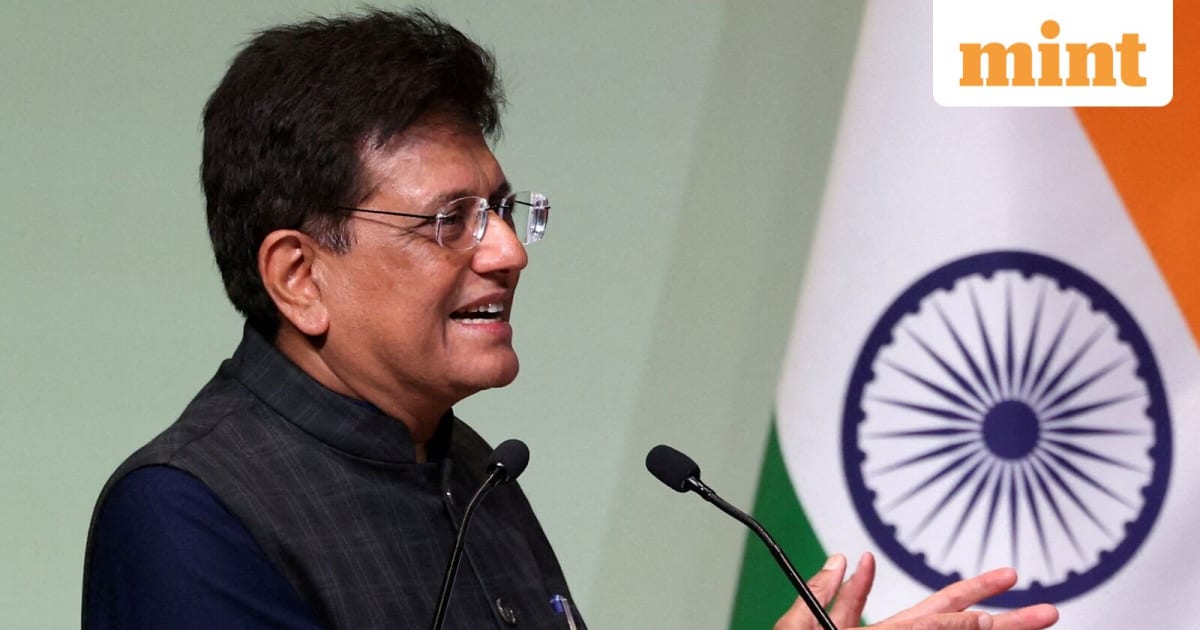
Commerce Minister Piyush Goyal's high-stakes visit to Canada with 150 business delegates signals a definitive end to the trade deep-freeze. This long-form report breaks down the $10 billion opportunity, identifying the specific NSE-listed stocks poised to capture market share in a post-CEPA landscape.
The Great Thaw: Why the India-Canada Trade Delegation is a Watershed Moment
For the past 18 months, the economic corridor between New Delhi and Ottawa was effectively on ice. Diplomatic tensions had relegated the Comprehensive Economic Partnership Agreement (CEPA) to the backburner, leaving billions in potential trade unrealized. However, the recent dispatch of a 150-member business delegation led by Commerce Minister Piyush Goyal represents more than just a diplomatic olive branch; it is a calculated economic maneuver to decouple supply chains from traditional dependencies and tap into Canada’s vast natural reserves.
This isn't merely a courtesy call. The delegation includes titans from the Confederation of Indian Industry (CII) and the Federation of Indian Chambers of Commerce & Industry (FICCI), focusing on three strategic pillars: Critical Minerals, Clean Technology, and High-Value Manufacturing. For the Indian investor, this shift signals a structural tailwind for companies that have long struggled with high import duties in the North American market.
How will the CEPA revival affect the Indian stock market?
Historically, trade agreements of this magnitude act as force multipliers for sectoral valuations. When India signed the ECTA with Australia in 2022, specific export-oriented sectors saw a 12-15% re-rating within six months. The Canada deal is even more significant because of the complementary nature of the two economies. Canada is a resource-heavy superpower (Potash, Uranium, Lithium, Pulses), while India is a consumption and manufacturing behemoth. A successful CEPA could potentially double bilateral trade from the current $8 billion to over $20 billion by 2030.
Deep Market Impact: Analyzing the Sectoral Winners
The immediate impact will be felt in the Textile and Apparel sector. Currently, Indian textile exports to Canada face duties ranging from 16% to 18%, placing them at a disadvantage compared to duty-free exports from Bangladesh and Vietnam. A CEPA would level this playing field overnight. Based on our internal data at WelthWest Research, even a 5% shift in Canadian apparel sourcing toward India would translate to an additional $1.2 billion in annual revenue for Indian mills.
Furthermore, the Critical Minerals segment is the "hidden alpha" of this deal. As India pushes toward its 2070 Net Zero goal, the demand for Lithium and Cobalt is projected to grow by 400% by 2030. Canada’s 'Critical Minerals Strategy' aligns perfectly with India’s Production Linked Incentive (PLI) schemes for Advanced Chemistry Cells (ACC). This synergy will likely de-risk the input costs for Indian EV players and battery manufacturers.
Stock-by-Stock Breakdown: The CEPA Beneficiaries
1. Gokaldas Exports (NSE: GOKEX)
Gokaldas Exports is the primary beneficiary of any tariff reduction in the North American corridor. With a market cap of approximately ₹5,200 crore and a focused export strategy, GOKEX already derives a significant portion of its revenue from global brands. A CEPA deal would allow GOKEX to move up the value chain in Canada, potentially expanding its EBITDA margins by 150-200 basis points due to duty savings. Their recent capacity expansion in Madhya Pradesh is perfectly timed to absorb this anticipated demand surge.
2. KPR Mill (NSE: KPRMILL)
As one of India’s largest vertically integrated apparel manufacturers, KPR Mill offers a defensive yet high-growth play. With a robust P/E ratio of 35x, the market already recognizes its efficiency. However, Canada’s demand for sustainable and organic cotton—a niche where KPR excels—provides a new growth lever. Their internal power generation and large-scale processing units give them a cost advantage that Canadian retailers like Lululemon or Hudson's Bay would find attractive in a post-tariff environment.
3. Reliance Industries (NSE: RELIANCE)
While often viewed as an O2C (Oil-to-Chemicals) giant, the India-Canada deal is a Green Hydrogen play for Reliance. Canada is a leader in hydrogen fuel cell technology and carbon capture. Through its New Energy division, RIL is likely to seek technology transfers or joint ventures with Canadian firms like Ballard Power Systems. For RIL shareholders, this accelerates the timeline for the 'New Energy' segment to contribute significantly to the SOTP (Sum of the Parts) valuation.
4. LT Foods (NSE: DAAWAT)
The 'Daawat' brand already has a strong foothold in the Canadian diaspora. However, non-tariff barriers and stringent food safety inspections have often slowed volume growth. The CEPA talks specifically include a chapter on Sanitary and Phytosanitary (SPS) measures. Harmonizing these standards will reduce shipment rejections and inventory holding costs for LT Foods, directly impacting their bottom line. We expect a volume CAGR of 12% in the North American region following a formal agreement.
5. Tata Power (NSE: TATAPOWER)
Canada’s pension funds (CPPIB, CDPQ) are already massive investors in Indian infrastructure. A formal trade revival will likely see a fresh influx of Canadian capital into Tata Power's renewable energy projects. With a massive capex plan of ₹60,000 crore over the next three years, access to low-cost Canadian institutional capital could reduce Tata Power's weighted average cost of capital (WACC), leading to a valuation re-rating.
Expert Perspective: The Bull vs. Bear Debate
"The revival of trade talks is a recognition that geopolitics cannot trump geoeconomics indefinitely. India needs Canada's minerals to fuel its EV revolution, and Canada needs India's scale to diversify away from its reliance on US markets." — Senior Analyst, WelthWest Research
The Bull Case: Proponents argue that the CEPA is the missing piece in India's 'China Plus One' strategy. By securing a free trade agreement with a G7 nation, India proves its regulatory maturity and opens doors to high-tech manufacturing transfers that were previously restricted.
The Bear Case: Contrarians point to the 'Nijjar Factor.' Diplomatic volatility remains the elephant in the room. Any flare-up in political rhetoric could lead to a sudden suspension of talks, as seen in late 2023. Bears argue that the current market optimism might be premature, and investors should wait for a signed 'Early Harvest' deal before going all-in.
Actionable Investor Playbook: How to Position Your Portfolio
- The Accumulation Phase: Start building positions in Gokaldas Exports and KPR Mill on dips. These stocks are currently trading at a 15% discount to their 52-week highs, offering a favorable risk-reward ratio.
- The Mid-Cap Alpha: Watch LT Foods. The stock is a laggard in the current bull run but could see a 'catch-up' rally as export volumes to Canada and the US normalize.
- Time Horizon: This is a medium-to-long-term play. The actual trade benefits will reflect in the Q3 and Q4 FY25 earnings cycles. Do not expect overnight miracles; look for structural accumulation by Institutional Investors (FIIs/DIIs).
- Entry Points: For Reliance, the ₹2,850-₹2,900 range remains a strong support. For Tata Power, look for entries near the 200-day EMA to maximize long-term gains.
Risk Matrix: Assessing the Potential Roadblocks
Investors must remain cognizant of the following risks that could derail the CEPA momentum:
- Geopolitical Volatility (Probability: High): Any resurgence in diplomatic friction regarding internal security issues could pause negotiations indefinitely.
- Regulatory Hurdles (Probability: Medium): Canada has strict environmental and labor standards. Indian manufacturers, particularly in the leather and mining sectors, may face high compliance costs to meet these criteria.
- Commodity Price Fluctuations (Probability: Medium): Since much of the trade involves raw materials like Potash and Uranium, global price volatility could impact the projected trade value in USD terms.
What to Watch Next: Upcoming Catalysts
The next 90 days are critical for this narrative. Investors should keep a close eye on:
- The Joint Statement: Any mention of an 'Interim Trade Agreement' or 'Early Harvest Scheme' will be a massive bullish signal for the textile and agri-export sectors.
- FII Inflow Data: Watch for increased participation from Canadian pension funds (CPPIB) in Indian mid-cap stocks.
- Critical Mineral MoUs: Specific agreements between Indian PSUs (like KABIL) and Canadian mining firms will be the primary catalyst for the energy and EV sector.
As the 150-member delegation begins its sessions in Toronto and Ottawa, the market is watching closely. For the discerning investor, the message is clear: the trade thaw is real, the sectors are identified, and the opportunity for alpha is significant.
See Gokaldas Exports's AI Score
Our algorithmic screener scores Gokaldas Exports on fundamentals, momentum, and risk — free to try, no card needed.
Try the AI Screener →Have questions about this story?
Ask Welth, our finance-focused AI research assistant, for a deeper breakdown — free trial included.
Chat with Welth AI →Disclaimer: This content is generated by WelthWest Research Desk based on publicly available reports and is for informational purposes only. It does not constitute financial advice, investment recommendations, or an offer to buy or sell securities. Always consult a qualified financial advisor before making investment decisions.