Key Takeaway
SpaceX's Starship V3 triumph signals a new era of commercial spaceflight, dramatically accelerating its IPO timeline. This seismic shift is poised to ignite investor interest and competition within India's burgeoning private space sector, directly benefiting key defence and satellite component manufacturers.
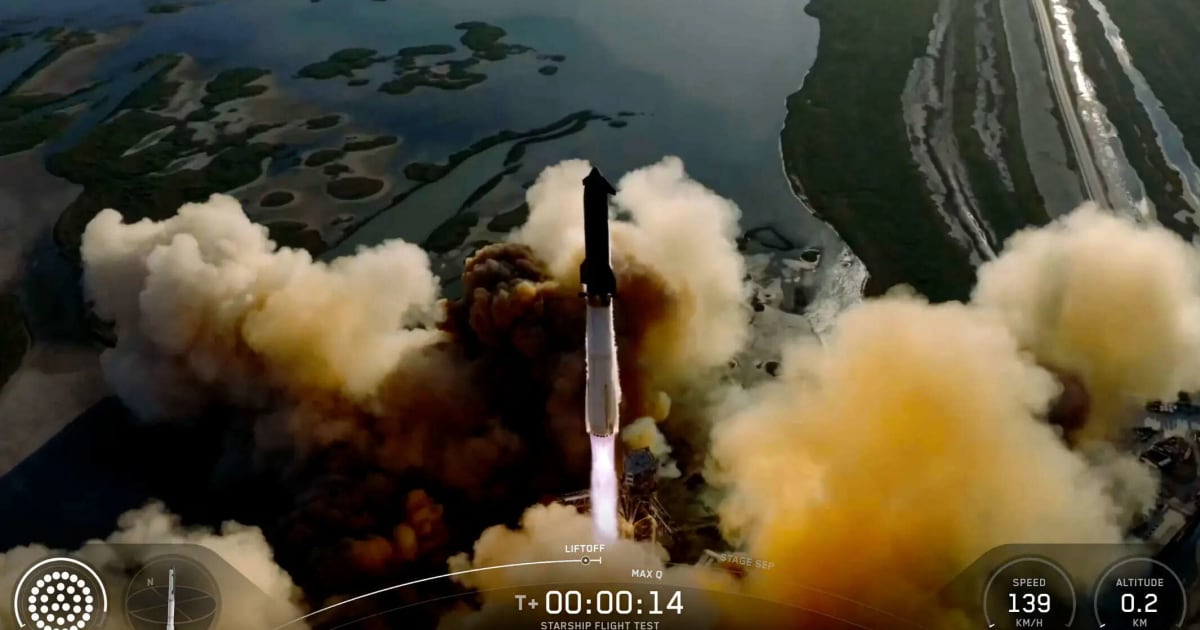
SpaceX's latest Starship test flight has not only validated its revolutionary reusable rocket technology but also fast-tracked its much-anticipated Initial Public Offering. This development is a significant catalyst for the global space economy and presents a compelling investment narrative for Indian defence and space-tech companies.
SpaceX Starship V3 Success: A New Orbit for Global Space Economics and Indian Defence Stocks
The recent, highly successful test flight of SpaceX's Starship V3 marks a pivotal moment, not just for the company, but for the entire global aerospace industry. This achievement transcends mere technological advancement; it is a powerful validation of the commercial viability and cost-effectiveness of super heavy-lift, fully reusable launch systems. The implications are profound, signaling a paradigm shift in how humanity accesses and utilizes space, and crucially, it is poised to dramatically accelerate SpaceX's long-awaited Initial Public Offering (IPO). For the Indian market, this event acts as a powerful accelerant, intensifying competition within the domestic private space sector and simultaneously broadening investor appetite for innovative space-tech startups and the critical satellite manufacturing supply chains that underpin them.
Why This Starship Milestone Matters NOW
For years, the high cost of launching payloads into orbit has been a significant barrier to widespread space commercialization. Traditional expendable rockets, while reliable, represent a substantial sunk cost with each mission. SpaceX's Starship program, with its ambitious goal of complete reusability, aims to fundamentally alter this economic equation. The V3 test flight, which successfully executed key objectives including orbital insertion and controlled re-entry, demonstrates that this vision is rapidly moving from concept to reality. This success directly translates into a more predictable and significantly lower cost per launch, opening up new markets for satellite constellations, space tourism, and even interplanetary missions. The imminent IPO of SpaceX, now seemingly within closer reach due to this demonstrated capability, will inject substantial capital into the sector and set new valuation benchmarks, creating a ripple effect across the entire space ecosystem.
Deep Market Impact Analysis: India's Space Ambitions and Defence Sector Resonance
The success of Starship V3 and the subsequent acceleration of its IPO have a multifaceted impact on the Indian stock market, particularly within the defence and aerospace sectors. Historically, India's space program has been dominated by government entities like ISRO. However, recent policy shifts have fostered a vibrant private space ecosystem. This SpaceX milestone serves as a global endorsement of this direction, making Indian space-tech startups more attractive to both domestic and international investors. We anticipate a surge in venture capital and private equity interest, mirroring trends seen in other high-growth technology sectors. Furthermore, the increased demand for satellite manufacturing and launch services globally will directly benefit Indian companies specializing in these areas. This isn't an entirely new narrative; we saw a similar, albeit smaller, uptick in interest for space-related equities following significant ISRO achievements in the past, but the SpaceX factor amplifies this considerably. The current sentiment is overwhelmingly bullish, with a medium-term impact expected as these developments translate into tangible business opportunities and revenue streams for listed companies.
The Indian defence sector, which often overlaps with aerospace and satellite technology, is particularly well-positioned to capitalize on this global space race. Companies involved in the manufacturing of complex aerospace components, satellite subsystems, and even ground segment infrastructure are likely to see increased order books. The drive for enhanced national security, coupled with commercial space ambitions, creates a dual demand driver. As global launch costs decrease, the deployment of more sophisticated surveillance, communication, and earth observation satellites becomes economically feasible. This translates into a greater need for the specialized manufacturing capabilities that Indian companies possess. The government's 'Make in India' initiative further bolsters this, encouraging domestic production and innovation within the defence and aerospace domains.
How Will SpaceX's Success Drive Indian Space-Tech IPOs and Valuations?
The impending IPO of SpaceX will serve as a critical benchmark for the valuation of private space companies globally. Investors will have a clearer understanding of the market's perception of space-based assets and technologies. For Indian space-tech startups, this means a potentially higher valuation ceiling and easier access to capital when they eventually go public. Companies that can demonstrate a clear path to profitability, technological differentiation, and a scalable business model will be prime candidates. We can expect a flurry of funding rounds and, subsequently, IPO filings from promising Indian ventures in the coming 18-36 months. This will not only democratize access to space technologies but also create significant wealth-generating opportunities for early investors. The competitive landscape will undoubtedly intensify, pushing Indian companies to innovate faster and achieve global standards of excellence.
Stock-by-Stock Breakdown: Navigating the Indian Defence and Aerospace Landscape
The ripple effects of SpaceX's Starship success will be felt across several listed Indian companies. Here's a detailed look at some key players and how they are positioned:
- MTAR Technologies Ltd (NSE: MTARTECH): This company is a significant beneficiary. MTAR Technologies manufactures critical components for various aerospace and defence applications, including high-precision machining for engines, fuel systems, and other complex assemblies. Their expertise in cryogenic technology and cleanroom manufacturing makes them indispensable for advanced space missions. Given the increased demand for satellite launches and potential future space infrastructure projects, MTAR's order book is expected to grow substantially. Their historical revenue growth has been robust, and with a market capitalization of approximately ₹10,000 crore and a trailing P/E of around 70, the stock already reflects significant growth expectations. The Starship success validates their long-term strategy and could lead to further rerating.
- Data Patterns (India) Ltd (NSE: DATAPATTNS): Specializing in electronic systems for defence and space, Data Patterns is another direct beneficiary. They provide solutions for radar, communication, and electronic warfare, all of which are crucial for modern satellite payloads and ground stations. The increasing deployment of satellite constellations for communication, surveillance, and earth observation will drive demand for their advanced electronic modules and systems. With a market cap around ₹15,000 crore and a P/E of approximately 90, the stock is trading at a premium, reflecting its strong growth prospects. The SpaceX catalyst enhances their already positive outlook.
- Hindustan Aeronautics Ltd (HAL) (NSE: HAL): While HAL is a behemoth in the Indian defence manufacturing space, its relevance to the space sector is growing. HAL is involved in the production of aerospace components and has capabilities in complex systems integration. As the Indian private space sector expands, HAL's role as a supplier of sub-systems and advanced materials could become more significant. Their large order book and strategic importance to national defence provide a stable base, but the space sector's growth offers an additional avenue for expansion. With a market cap exceeding ₹1.5 lakh crore and a P/E around 40, HAL offers a more defensive play with upside potential from space-related opportunities.
- Bharat Electronics Ltd (BEL) (NSE: BEL): BEL is a cornerstone of India's defence electronics industry, manufacturing a wide array of products including radar systems, communication equipment, and electronic warfare suites. These are vital for both military and civilian satellite applications. The growing need for secure and advanced communication satellites, as well as earth observation platforms, will directly translate into increased demand for BEL's products. BEL's diversified revenue streams and strong government backing make it a resilient investment. With a market cap of over ₹1 lakh crore and a P/E of around 45, BEL presents a solid investment with clear growth drivers from the expanding space economy.
Sector Peers and Analogues: Other companies in the broader defence and manufacturing ecosystem, such as Larsen & Toubro (L&T), which has capabilities in complex engineering and infrastructure, and specialized component manufacturers, will also see indirect benefits through increased industrial activity and potential sub-contracting opportunities.
Expert Perspective: Bulls vs. Bears on the Space Race
Bulls' Argument: The SpaceX Starship success is not an isolated event; it's the dawn of a new space economy. Reusable heavy-lift rockets will democratize access to space, leading to exponential growth in satellite constellations, space-based internet, tourism, and resource extraction. Indian companies like MTAR and Data Patterns are at the forefront of manufacturing the critical components needed for this expansion. The impending SpaceX IPO will unlock massive investor capital, creating a gold rush for space-tech. This is a generational investment opportunity, akin to the early days of the internet or semiconductors.
Bears' Argument: While Starship is impressive, the path to profitability for SpaceX and other space ventures is fraught with peril. The capital expenditure required is astronomical, and the regulatory landscape for space traffic management and debris mitigation is still nascent. SpaceX's IPO could face significant headwinds if market sentiment shifts or if unforeseen technical challenges arise. Furthermore, legacy defence players like HAL and BEL might struggle to pivot quickly enough to capture the high-growth segments of the new space economy, remaining tethered to slower-moving government contracts. Competition from other emerging space powers could also dilute market share. The current valuations of some Indian space-tech stocks already appear stretched, pricing in perfection.
Actionable Investor Playbook: Navigating the Space-Tech Investment Frontier
For investors looking to capitalize on the SpaceX-driven space boom, a strategic approach is paramount:
- Accumulate Quality: Focus on companies with proven technological capabilities, strong order books, and diversified revenue streams in the defence and aerospace sectors. MTAR Technologies and Data Patterns represent the high-growth, pure-play opportunities. Consider accumulating on dips.
- Strategic Exposure: For a more diversified and stable exposure, companies like BEL and HAL offer a blend of defence stability and emerging space opportunities. Their large market caps and established government relationships provide a safety net.
- Watchlist Emerging Players: Keep a close eye on upcoming IPOs and private placement opportunities within the Indian space-tech sector. The next 1-3 years will likely see several promising companies go public.
- Time Horizon: This is a medium to long-term play. While short-term volatility is expected, the fundamental growth drivers for the space economy are robust. Investors should have a time horizon of at least 3-5 years to fully realize the potential gains.
- Entry Points: For high-growth stocks like MTAR and Data Patterns, consider phased entry or averaging in, especially during periods of market correction or sector-specific consolidation. For BEL and HAL, current valuations offer reasonable entry points for long-term accumulation.
Risk Matrix: Navigating the Uncertainties of Space Investment
Despite the bullish sentiment, several risks could impact the trajectory of this investment theme:
- Regulatory Hurdles (Probability: Medium): The development of comprehensive global regulations for space traffic management, debris mitigation, and resource utilization is critical. Delays or stringent regulations could slow down commercial space activities.
- SpaceX IPO Delays/Valuation Concerns (Probability: Medium): Any significant setbacks in SpaceX's development, execution, or market reception of its IPO could dampen overall investor enthusiasm for the space sector. Unrealistic IPO valuations could lead to subsequent corrections.
- Geopolitical Tensions (Probability: Low to Medium): Increased geopolitical instability could impact global supply chains, defence spending priorities, and international collaboration in space, potentially affecting project timelines and investment flows.
- Technological Obsolescence (Probability: Low): While reusability is the current paradigm, rapid advancements in propulsion or launch technologies could, in the long term, render current systems less competitive. However, this is a longer-term risk for established players.
What to Watch Next: Catalysts for Continued Growth
Investors should closely monitor several key developments:
- SpaceX's Continued Starship Tests: Further successful flights, particularly those demonstrating orbital refueling and rapid turnaround, will reinforce confidence in the technology and accelerate the IPO timeline.
- SpaceX IPO Filing & Debut: The official filing of its S-1 document and the subsequent IPO date will be a major market event, setting valuation benchmarks.
- Indian Private Space Company Funding & IPOs: Announcements of significant funding rounds or IPO filings from prominent Indian space-tech companies will confirm the market's growing interest.
- Government Policy Announcements: Any new policies or incentives from the Indian government supporting the private space sector or defence manufacturing will be crucial catalysts.
- International Space Contracts: Increased awarding of significant satellite manufacturing or launch contracts to Indian companies from global clients would be a strong indicator of growing market share.
The era of accessible and affordable space travel and utilization is no longer a distant dream. SpaceX's Starship V3 success is the harbinger of this new reality, and astute investors in the Indian market are well-positioned to benefit from the ensuing economic transformation, particularly within the defence and aerospace sectors.
See MTAR Technologies's AI Score
Our algorithmic screener scores MTAR Technologies on fundamentals, momentum, and risk — free to try, no card needed.
Try the AI Screener →Have questions about this story?
Ask Welth, our finance-focused AI research assistant, for a deeper breakdown — free trial included.
Chat with Welth AI →Disclaimer: This content is generated by WelthWest Research Desk based on publicly available reports and is for informational purposes only. It does not constitute financial advice, investment recommendations, or an offer to buy or sell securities. Always consult a qualified financial advisor before making investment decisions.
