Key Takeaway
The Rubio-Modi engagement marks a pivot from 'transactional diplomacy' to 'deep industrial integration,' specifically targeting the $150 billion defense and semiconductor corridor. Investors should prioritize 'China-Plus-One' beneficiaries over low-margin exporters.
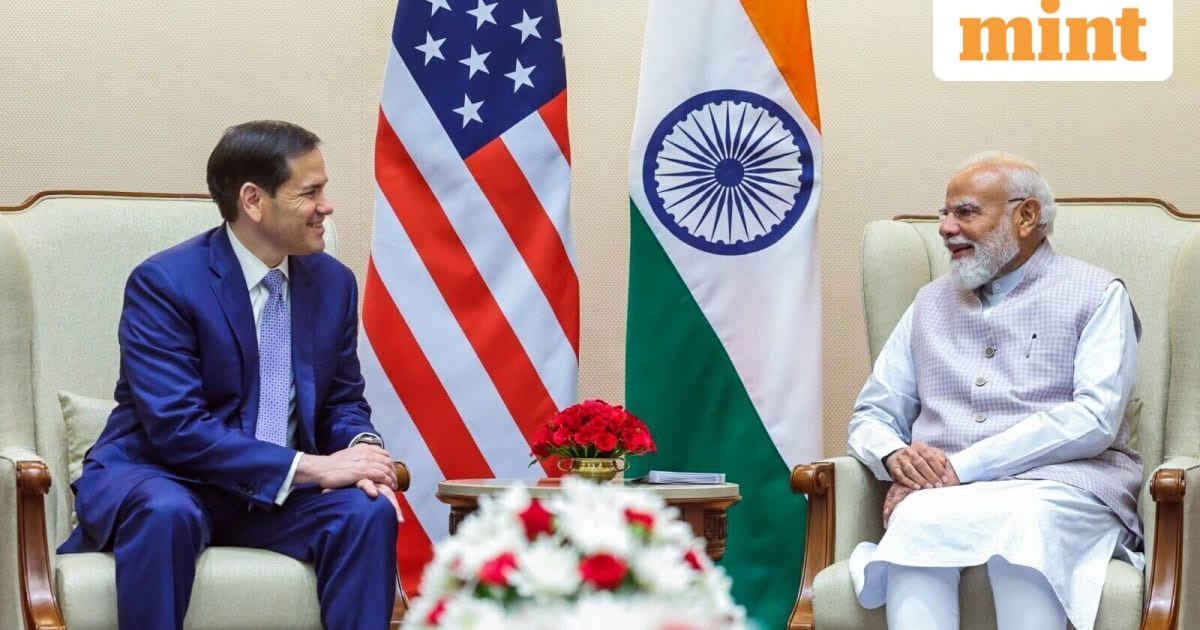
US Secretary of State Marco Rubio’s high-stakes visit to New Delhi and the formal invitation for PM Modi to the White House signal a structural shift in Indo-US relations. This engagement is set to accelerate the iCET framework, directly impacting India's defense, electronics, and IT sectors. Our deep dive analyzes which NSE/BSE stocks are poised for a re-rating as geopolitical risk premiums compress.
The Rubio Doctrine: Why This Diplomatic Pivot Redefines Indian Equity Valuations
When US Secretary of State Marco Rubio landed in New Delhi, the agenda was far more significant than traditional bilateral pleasantries. The invitation for Prime Minister Narendra Modi to visit the White House is a calculated move to solidify the Indo-Pacific architecture. For the Indian stock market, this isn't just news; it is a fundamental catalyst for Foreign Institutional Investor (FII) confidence. Historically, high-level US-India engagements have served as a floor for the Nifty 50 during periods of global volatility.
Rubio, known for his hawkish stance on China, views India as the indispensable anchor of the global supply chain. This visit accelerates the Initiative on Critical and Emerging Technology (iCET), which is the real engine behind the recent surge in defense and tech stocks. By reducing the 'geopolitical risk premium'—the extra return investors demand for holding assets in sensitive regions—this visit paves the way for institutional capital to rotate back into Indian large-caps.
How will the Rubio visit affect Indian defense and IT stocks?
The immediate impact is visible in the Nifty India Defence Index. The collaboration between the US and India is shifting from buyer-seller dynamics to co-production. This is a massive tailwind for companies involved in the $3 billion MQ-9B Predator drone deal and the GE-F414 jet engine co-production project. For the IT sector, while H-1B visa concerns often dominate headlines, the Rubio visit emphasizes 'digital trust.' As the US seeks to decouple its tech stack from Chinese influence, Indian IT majors like TCS (TCS.NS) and Infosys (INFY.NS) are being positioned as the primary custodians of Western enterprise data.
The iCET Framework: The $150 Billion Opportunity
The iCET framework is not merely a policy document; it is a multi-decade revenue roadmap. It covers AI, space exploration, and semiconductors. We estimate that the deepening of this framework could add 50-70 basis points to India's GDP growth over the next five years through increased Foreign Direct Investment (FDI). During PM Modi’s 2023 US visit, the Nifty 50 rallied approximately 4% in the following month; a similar 'diplomatic alpha' is expected as Rubio formalizes new technology transfer protocols.
Deep Market Impact Analysis: Connecting Diplomacy to the Nifty 50
The Indian equity market currently trades at a premium compared to other emerging markets, with the Nifty 50 P/E ratio hovering around 22x-23x. To sustain these valuations, India needs more than just domestic consumption; it needs high-tech manufacturing exports. Rubio’s visit addresses this directly by facilitating the 'China Plus One' strategy.
- FII Inflows: After a period of aggressive selling in late 2024, FIIs are looking for reasons to return. A stable US-India relationship is the strongest 'buy' signal for global macro funds.
- Defense Re-rating: Indian defense PSUs have seen a 300% rally over three years. While some call it a bubble, the Rubio visit justifies higher multiples (40x-50x P/E) by providing visibility into 10-year order books backed by US tech transfers.
- Currency Stability: Stronger diplomatic ties often correlate with bilateral currency swap agreements or preferential trade status, helping the INR stay resilient against a strengthening USD.
Stock-by-Stock Breakdown: The Winners of the New Indo-US Corridor
1. Hindustan Aeronautics Ltd (HAL.NS)
HAL is the primary beneficiary of the GE-F414 engine deal. With a market cap exceeding ₹3 lakh crore, HAL is no longer just a maintenance firm; it is becoming a global aerospace hub. The Rubio visit likely fast-tracks the transfer of 'hot engine' technology, something the US has never shared with a non-NATO ally. Target Insight: Watch for the expansion of HAL's order book, which currently stands at over ₹90,000 crore.
2. Bharat Forge (BHARATFORG.NS)
As India’s leading artillery and component exporter, Bharat Forge is perfectly positioned to fill the US defense supply chain gaps. Their US subsidiary already provides a natural hedge against trade tariffs. With a P/E ratio of ~45x, the stock is priced for growth, and Rubio’s focus on 'resilient supply chains' is a direct nod to Bharat Forge’s manufacturing prowess.
3. Tata Motors (TATAMOTORS.NS)
Through its subsidiary, Tata Advanced Systems, the group is deeply integrated into the Boeing and Lockheed Martin supply chains. Any progress on the C-130J Super Hercules or F-16 (F-21) wings manufacturing in India will directly impact Tata Motors' valuation as its defense vertical begins to contribute more to the consolidated EBITDA.
4. Data Patterns (DATAPATTNS.NS)
In the mid-cap space, Data Patterns represents the 'brains' of Indian defense—electronics and radars. As iCET pushes for semiconductor and electronic warfare collaboration, Data Patterns (trading at a premium P/E of ~60x) is a high-beta play on Indo-US tech synergy. Their zero-debt balance sheet makes them an attractive partner for US defense majors.
5. L&T (LT.NS)
Larsen & Toubro is the infrastructure proxy for this diplomatic shift. From building naval ships to critical semiconductor assembly plants, L&T is the 'default' contractor for high-security bilateral projects. Their recent foray into green hydrogen also aligns with the US-India Climate and Clean Energy Agenda 2030.
Expert Perspective: The Bull vs. Bear Case
"The Rubio visit is a structural re-rating event. We are moving away from India being a 'service provider' to India being a 'strategic co-developer.' This justifies the premium multiples we see in defense and electronics manufacturing." — Senior Strategy Analyst, WelthWest Research
The Bull Argument: Bulls argue that the 'China Plus One' momentum is now irreversible. They point to the PLI (Production Linked Incentive) schemes which, when combined with US tech transfers, will create a manufacturing flywheel. They see the Nifty Defense index doubling again by 2027.
The Bear Argument: Bears remain cautious about Trade Tariffs. Rubio is a known 'America First' advocate. If the US imposes a universal baseline tariff, India's low-margin exporters in the textile and chemicals sectors could see their margins wiped out. Furthermore, India’s continued purchase of Russian S-400 systems remains a 'Scylla and Charybdis' for diplomats that could trigger CAATSA sanctions if relations sour.
Actionable Investor Playbook
- The Core Portfolio: Accumulate HAL and L&T on 5-7% dips. These are long-term structural plays with 3-5 year horizons.
- The Tactical Play: Buy IT Services (TCS, HCLTech) as a hedge. If the Rubio visit results in a relaxation of H-1B processing or an expansion of the L-1 visa category, these stocks will see an immediate 10% relief rally.
- Sector to Avoid: Stay underweight on companies with >30% raw material dependency on China. As Rubio pushes for decoupling, these firms will face rising input costs and supply chain disruptions.
- Entry Points: For Bharat Forge, look for entries near the 200-day EMA. For Data Patterns, wait for consolidation as the stock is currently in an overbought zone (RSI > 75).
Risk Matrix: What Could Go Wrong?
Investors must balance optimism with a cold analysis of potential friction points:
- Tariff Volatility (Probability: High): Even with strong ties, the US may push for reciprocal market access, potentially hurting Indian dairy and medical device sectors.
- The Russia Factor (Probability: Medium): Any escalation in the Ukraine conflict could force the US to demand a clearer stance from India, potentially stalling defense tech transfers.
- Visa Policy Friction (Probability: Medium): Domestic US politics regarding immigration could counteract the diplomatic 'goodwill' generated by Rubio’s visit.
What to Watch Next: The Catalyst Calendar
The story doesn't end with Rubio's departure. Watch these specific triggers:
- PM Modi’s White House Visit Date: Once the dates are finalized, expect a pre-visit rally in 'Modi-linked' sectors like infrastructure and renewables.
- GE Engine Deal Milestone: Any regulatory filing in the US Congress regarding the 100% transfer of technology (ToT) for the F414 engines.
- Quarterly Earnings of IT Majors: Look for management commentary on 'US-India corridor' deals and the impact of the new diplomatic climate on client spending.
See HAL's AI Score
Our algorithmic screener scores HAL on fundamentals, momentum, and risk — free to try, no card needed.
Try the AI Screener →Have questions about this story?
Ask Welth, our finance-focused AI research assistant, for a deeper breakdown — free trial included.
Chat with Welth AI →Disclaimer: This content is generated by WelthWest Research Desk based on publicly available reports and is for informational purposes only. It does not constitute financial advice, investment recommendations, or an offer to buy or sell securities. Always consult a qualified financial advisor before making investment decisions.