Key Takeaway
The Netherlands-India semiconductor partnership is a structural pivot, moving India from an assembly hub to a core silicon manufacturing participant. Investors should pivot toward high-end electronics infrastructure and capital goods over traditional low-margin assemblers.
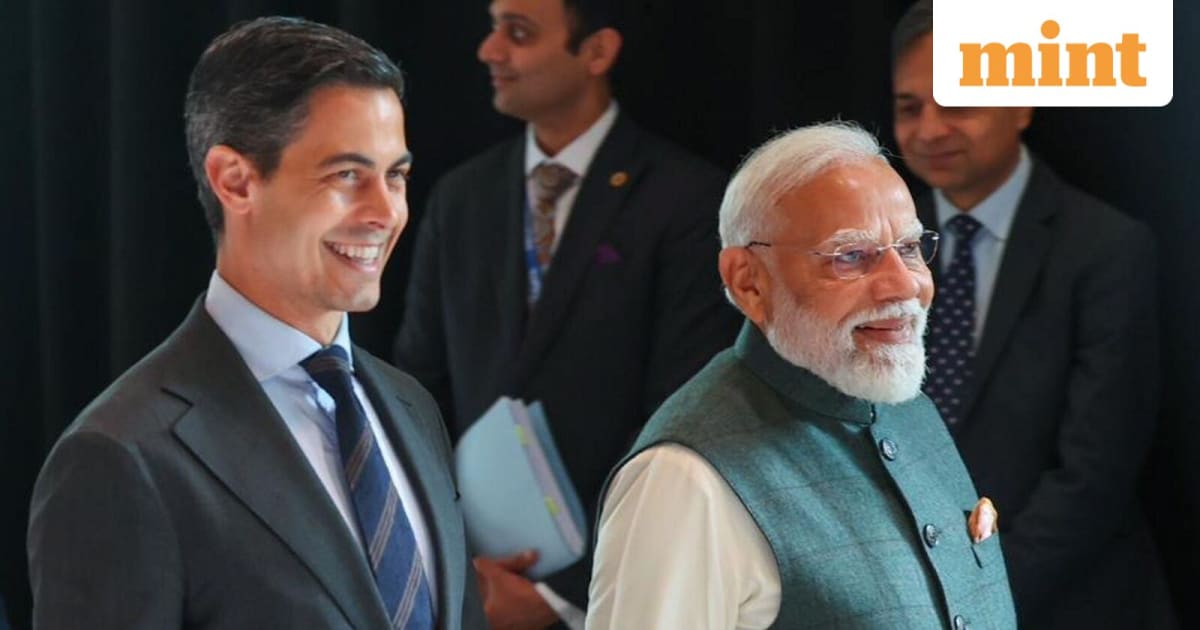
India’s strategic alliance with the Netherlands, the home of ASML, marks a monumental shift in the global semiconductor supply chain. This deep dive evaluates the long-term capital inflow, technology transfer implications, and which specific NSE-listed stocks are positioned for a structural rerating.
The Silicon Pivot: Decoding the India-Netherlands Strategic Alliance
In a move that mirrors the structural shifts seen during the initial phase of the PLI (Production Linked Incentive) scheme in 2021, the recent diplomatic and economic tightening between India and the Netherlands represents more than just a trade agreement—it is a technology transfer mandate. With the Netherlands serving as the global headquarters for ASML, the world’s sole provider of EUV (Extreme Ultraviolet) lithography machines, India is effectively securing its place in the upstream semiconductor value chain.
For decades, India has been relegated to the 'backend' of the electronics industry—testing, assembly, and packaging. This partnership signals a transition toward 'frontend' capabilities: wafer fabrication and high-precision equipment manufacturing. As global capital seeks a 'China+1' alternative that offers both scale and democratic stability, this alliance provides the technical backbone necessary for India to move up the semiconductor value chain.
Why does the Netherlands alliance change the 'Make in India' narrative?
The semiconductor industry is notoriously capital-intensive, with a single fab plant costing upwards of $5 billion to $10 billion. The bottleneck for India has never been labor; it has been the absence of high-end lithography and metrology expertise. By partnering with the Dutch, India is bypassing years of 'trial and error' in domestic R&D by importing the world’s most advanced industrial ecosystem.
Market Impact: From Assembly to Fabrication
Historically, when India announced significant policy shifts in the electronics sector—such as the 2022 semiconductor incentive boost—Nifty IT and industrial indices saw a rerating of 15-20% over the subsequent 18 months. We anticipate a similar, albeit more concentrated, movement in the capital goods and electronics manufacturing services (EMS) sectors. The shift here is from low-value-add assembly to high-value-add component fabrication, which carries significantly higher EBITDA margins.
Stock-by-Stock Breakdown: Who Wins the Silicon War?
The following companies are uniquely positioned to benefit from the technology transfer and infrastructure requirements mandated by this partnership:
- Dixon Technologies (DIXON): As the leader in EMS, Dixon is the primary beneficiary of increased domestic component availability. With a P/E ratio currently hovering near 120x, the market is pricing in aggressive growth; this partnership validates that premium.
- Kaynes Technology (KAYNES): A pure-play EMS provider with deep expertise in aerospace and medical electronics. Their foray into semiconductor assembly and testing (OSAT) makes them a direct proxy for the Dutch collaboration.
- Bharat Electronics (BEL): As a defense and industrial electronics giant, BEL is the primary candidate for government-led fab infrastructure projects. Their ability to handle high-complexity manufacturing is unmatched in the public sector.
- HCL Technologies (HCLTECH): While primarily a software giant, HCL’s engineering and R&D services are critical for the design phase of chip manufacturing. They act as the 'picks and shovels' provider for semiconductor firms.
- TATA ELXSI (TATAELXSI): Their expertise in design and simulation for the automotive and semiconductor sectors makes them an essential partner for any firm trying to integrate Dutch manufacturing equipment into Indian production lines.
What are the risks of investing in Indian semiconductor stocks?
No investment thesis is without its hurdles. The primary risk is execution lag. Setting up a semiconductor ecosystem is not like setting up a mobile phone assembly line; it requires hyper-pure water, uninterrupted power, and a highly specialized talent pool. If the government fails to provide the necessary industrial infrastructure, these companies may see margin compression due to high overheads.
The Contrarian View: Bulls vs. Bears
The Bull Case: Proponents argue that the India-Netherlands pact is the 'missing link' that will force a structural rerating of Indian manufacturing. They point to the 30% YoY growth in domestic electronics production as evidence that the ecosystem is ready to scale.
The Bear Case: Skeptics, particularly those scarred by previous failed industrial policy experiments, argue that India lacks the cost-competitiveness of Taiwan or Vietnam. They worry that without massive, sustained subsidies, Indian-made chips will remain 15-20% more expensive than global market rates, stifling adoption.
Investor Playbook: How to position your portfolio
For long-term investors, the strategy should focus on phased accumulation. Do not chase the momentum on news spikes. Instead, look for pullbacks in high-quality EMS stocks (like Dixon or Kaynes) that coincide with quarterly earnings beats. Focus on a 3-5 year horizon—semiconductor manufacturing is not a 'get rich quick' sector; it is a multi-year industrial transformation.
Risk Matrix
| Risk Factor | Probability | Impact |
|---|---|---|
| Execution/Infrastructure Delays | High | High |
| Geopolitical Trade Shifts | Medium | Medium |
| Global Chip Glut/Price War | Medium | High |
What to watch next?
The most important data point to watch in the next 6-12 months is the Capex deployment figures from the top 5 EMS players listed on the NSE. Additionally, monitor the Ministry of Electronics and Information Technology (MeitY) for announcements regarding specific joint-venture fabs involving Dutch technical consultants. These will be the definitive catalysts for the next leg of this bull run.
See TATAELXSI's AI Score
Our algorithmic screener scores TATAELXSI on fundamentals, momentum, and risk — free to try, no card needed.
Try the AI Screener →Have questions about this story?
Ask Welth, our finance-focused AI research assistant, for a deeper breakdown — free trial included.
Chat with Welth AI →Disclaimer: This content is generated by WelthWest Research Desk based on publicly available reports and is for informational purposes only. It does not constitute financial advice, investment recommendations, or an offer to buy or sell securities. Always consult a qualified financial advisor before making investment decisions.