Key Takeaway
The Tata-ASML alliance effectively de-risks India’s semiconductor entry, transforming Dholera from a speculative project into a viable pillar of the $100B domestic electronics economy.
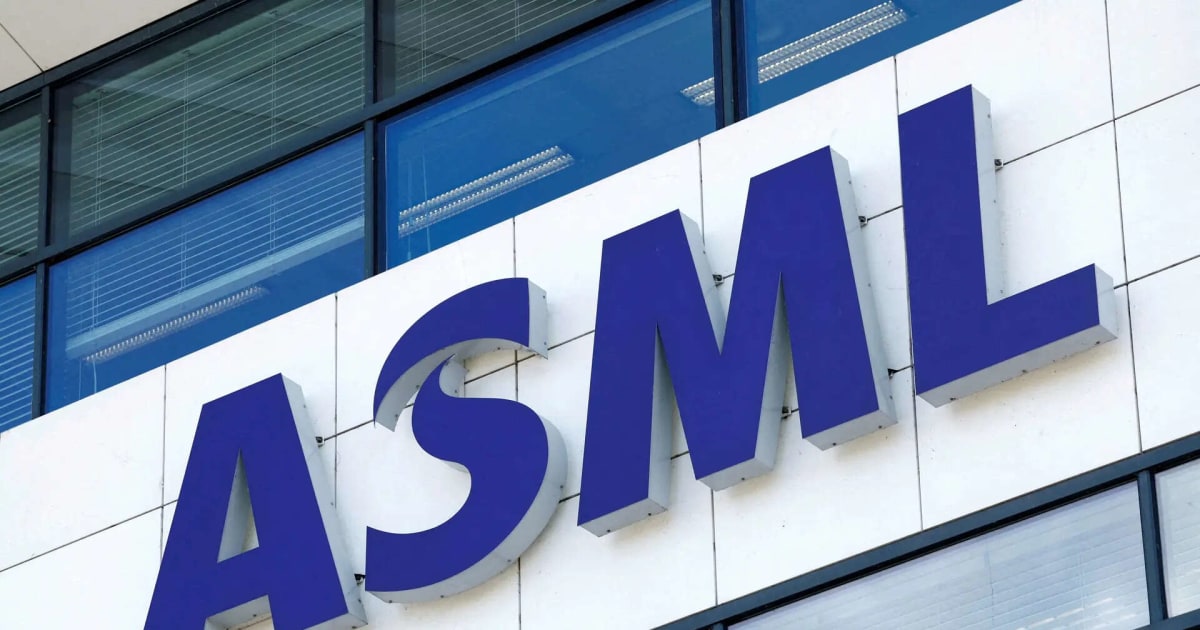
Tata Electronics has secured a partnership with lithography giant ASML, a pivotal move for the Dholera fab project. This analysis breaks down the ripple effects across the Indian equity market, assessing how industrial giants and tech players stand to gain from the country's push for high-end fabrication sovereignty.
The Dholera Milestone: Decoding the Tata-ASML Strategic Alliance
For decades, India’s electronics sector was defined by import-dependent assembly—essentially the final stage of a global value chain. The recent confirmation that Tata Electronics is integrating ASML’s advanced lithography technology into its Dholera semiconductor fab changes that narrative entirely. This is not merely a supply agreement; it is the acquisition of the 'keys to the kingdom' in global chip fabrication.
ASML, the Dutch colossus, maintains a near-monopoly on the extreme ultraviolet (EUV) and deep ultraviolet (DUV) machines required to print the nanometer-scale circuits that power everything from AI GPUs to automotive sensors. By embedding this technology into the Dholera ecosystem, Tata is bypassing the most significant barrier to entry in the semiconductor sector: technological obsolescence.
Why does the Tata-ASML partnership matter for the Nifty 50?
To understand the magnitude, one must look at the historical precedent of industrial localization in India. When the government launched the Production Linked Incentive (PLI) schemes in 2021, the Nifty 50 saw a distinct rerating of capital goods stocks. However, those gains were largely predicated on policy intent. The Tata-ASML deal provides the execution proof that investors have been waiting for.
The semiconductor industry operates on a high-capex, long-gestation model. With the Dholera fab, Tata is signaling a pivot toward high-margin, high-tech manufacturing that could, over the next 7-10 years, mirror the growth trajectory seen in Taiwan's TSMC during the 1990s. For the Indian market, this implies a structural shift in the industrial index, moving away from commodity-linked manufacturing toward value-added intellectual property.
How will this partnership impact the broader Indian semiconductor supply chain?
The immediate impact is the creation of a local 'multiplier effect.' ASML’s involvement requires a high-precision ecosystem of gas suppliers, chemical manufacturers, and specialized cleanroom infrastructure providers. We expect a significant uptick in CAPEX cycles for companies providing critical industrial gases and high-purity chemicals, which are currently imported at a 60-70% premium.
Stock-by-Stock Breakdown: Who wins in the Tata Ecosystem?
- L&T (Larsen & Toubro): As the primary infrastructure partner for large-scale industrial projects, L&T is the clear winner. Their order book for 'Smart World' and high-tech manufacturing facilities is poised for a 15-20% CAGR as the Dholera site scales.
- Tata Elxsi: While primarily a design and engineering firm, the move toward domestic fabrication creates a massive demand for local chip design services. Expect their R&D margins to expand as they pivot toward supporting Tata Electronics’ proprietary IP development.
- Siemens India: As the leader in industrial automation and digital twin software, Siemens is perfectly positioned to provide the 'factory of the future' stack required for ASML-enabled facilities. Their P/E ratio, while high at ~80x, is justified by their role as the backbone of India's Industry 4.0 shift.
- Bharat Electronics (BEL): BEL is the sleeper hit here. As the government pushes for indigenization in defense electronics, the synergy between the Dholera fab output and BEL’s defense manufacturing creates a closed-loop domestic supply chain that is immune to future geopolitical export bans.
The Contrarian View: Bulls vs. Bears
The Bull Case: Proponents argue that the 'Semicon India' mission is now irreversible. With ASML onboard, the risk of a 'stranded asset' at Dholera is effectively zero. Bulls focus on the long-term margin expansion as Tata moves up the value chain from basic assembly to complex silicon wafer production.
The Bear Case: Skeptics point to the 5-7 year gestation period. The capital expenditure required is immense, and any delay in operationalizing the fab could lead to significant balance sheet pressure for the Tata Group. Furthermore, if global chip prices collapse due to a supply glut from legacy foundries in China, the ROI on Dholera could be pushed back by years.
Investor Playbook: Navigating the Semiconductor Cycle
Investors should view this as a multi-year thematic play rather than a short-term trade.
- Entry Strategy: Accumulate positions in diversified industrial capital goods providers (like L&T) on any 5-8% market correction.
- Time Horizon: This is a 2027-2030 horizon play. Avoid looking at quarterly earnings volatility; focus instead on the 'milestone tracker' of fab construction and equipment installation.
- Monitor: Keep a close watch on the 'Import Substitution' data released by the Ministry of Electronics and IT. A decline in high-end chip imports is the primary indicator of success.
Risk Matrix: What could derail the momentum?
| Risk Factor | Probability | Impact |
|---|---|---|
| Geopolitical Export Controls | Medium | High |
| Execution Delays (Construction) | High | Medium |
| Capital Cost Overruns | Medium | High |
What to watch next: Catalysts for Q3 and Q4
Investors should track the upcoming SemiconIndia 2024/25 conference, where Tata Electronics is expected to announce its secondary tier of supply chain partners. Additionally, watch for any announcements regarding the 'Fab-to-Packaging' ecosystem, which will determine the total addressable market (TAM) for the Dholera facility. The release of the next quarterly CAPEX figures for Tata Group will provide the best quantitative insight into the pace of equipment procurement from ASML.
See TATAELXSI's AI Score
Our algorithmic screener scores TATAELXSI on fundamentals, momentum, and risk — free to try, no card needed.
Try the AI Screener →Have questions about this story?
Ask Welth, our finance-focused AI research assistant, for a deeper breakdown — free trial included.
Chat with Welth AI →Disclaimer: This content is generated by WelthWest Research Desk based on publicly available reports and is for informational purposes only. It does not constitute financial advice, investment recommendations, or an offer to buy or sell securities. Always consult a qualified financial advisor before making investment decisions.