Key Takeaway
The US allegation of India's potential role in circumventing China tariffs, while currently thin on evidence, introduces significant uncertainty for Indian exporters. Investors should brace for potential supply chain disruptions and increased scrutiny on sectors like textiles and electronics, demanding a re-evaluation of export-oriented portfolios.
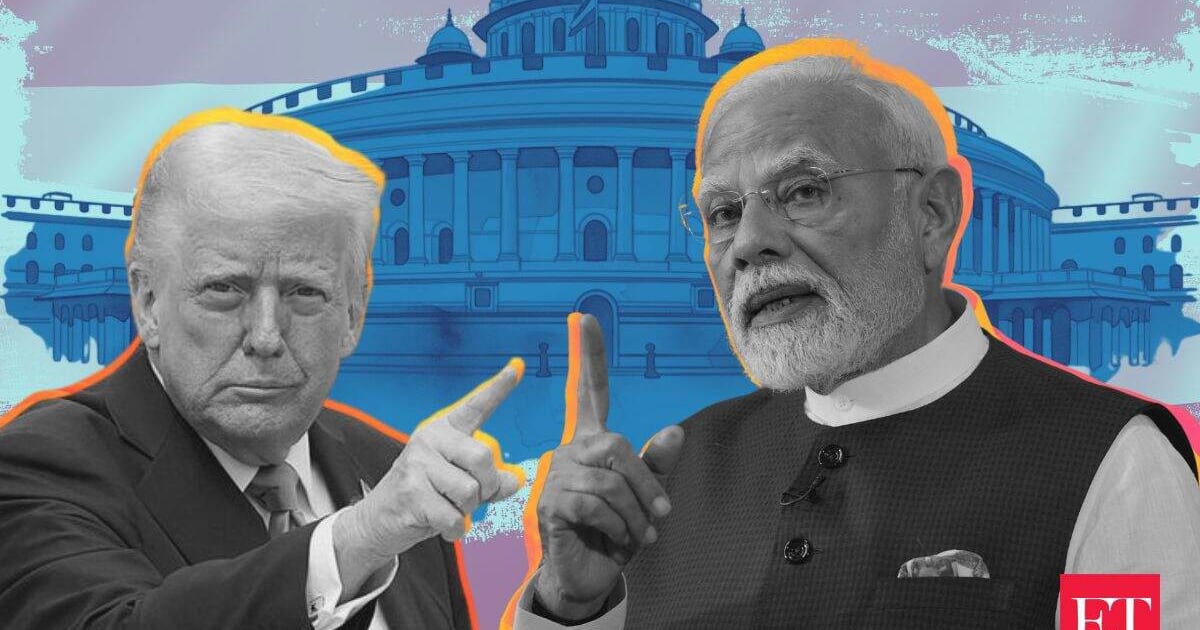
A recent US allegation regarding India's potential involvement in circumventing China tariffs has cast a shadow over India's export landscape. This deep dive explores the implications of the 'thin evidence' claim on Indian stocks, particularly those reliant on US export markets and Chinese intermediate goods. We analyze the market's potential reaction, pinpoint affected sectors, and offer an actionable investor playbook for navigating this emerging trade friction.
India's $67 Billion Tariff Cloud: Unpacking US Transshipment Allegations and the Looming Threat to Export Stocks
The quiet corridors of global trade are currently abuzz with a significant, albeit unsubstantiated, allegation from the United States. At its core, the US has signaled a potential concern regarding India's role in the circumvention of existing tariffs on Chinese goods, citing a staggering $67 billion in transshipped goods. While the immediate evidence supporting this claim remains elusive, as noted by organizations like the Global Trade Research Initiative (GTRI), the mere accusation has injected a palpable sense of unease into the Indian export ecosystem. This isn't just about trade policy; it's about the potential for increased scrutiny, disrupted supply chains, and a tangible impact on India's ambitious export growth trajectory, particularly its critical trade relationship with the United States.
Why Does This US Allegation Matter to Indian Markets Now?
The timing and nature of this allegation are crucial. India's export growth has been a cornerstone of its economic narrative, with the US standing as its largest trading partner. Any perceived threat to this relationship, however nascent, carries significant weight. Historically, such trade frictions, even when based on preliminary data, have triggered volatility in specific sectors. For instance, during the US-China trade war escalations in 2018-2019, sectors heavily reliant on global supply chains saw pronounced corrections. If the US were to pursue this allegation with stricter enforcement mechanisms—such as enhanced customs checks, new origin rules, or even punitive duties—Indian exporters would face a dual challenge: higher compliance costs and reduced competitiveness. This uncertainty alone is enough to warrant a re-evaluation of investment strategies, particularly for companies deeply embedded in the US export market or those utilizing Chinese intermediate goods for re-export.
Deep Market Impact Analysis: Connecting Transshipment Concerns to Indian Equities
The prospect of increased US scrutiny on Indian exports, stemming from the transshipment allegations, presents a bearish sentiment for several segments of the Indian stock market. While the Nifty 50 might show resilience due to its diversified nature, specific sectors and individual stocks could experience significant headwinds. The primary concern revolves around the potential for disrupted supply chains and increased trade barriers, which directly translate to reduced export volumes, diminished profitability, and a downward revision of earnings estimates.
Consider the historical parallel: when the US imposed anti-dumping duties on certain Indian steel products in 2016-2017, companies like Tata Steel (NSE: TATASTEEL) and JSW Steel (NSE: JSWSTEEL) saw their export-oriented revenues come under pressure, leading to periods of underperformance relative to the broader market. While the current situation is different in scope and origin, the mechanism of trade friction impacting corporate financials remains consistent.
The textiles and apparel sector, for instance, is particularly vulnerable. India is a significant global exporter of textiles, and many Indian manufacturers source synthetic fibers or certain components from China for further processing and export to the US. If the US implements stricter 'rules of origin' or requires more rigorous documentation to ascertain the true origin of goods, it could significantly complicate export procedures and increase costs. Similarly, the electronics manufacturing sector, which often relies on complex global supply chains involving Chinese components, could face similar challenges. The total market capitalization of these susceptible sectors combined runs into hundreds of billions of dollars, making the potential impact substantial.
Logistics and shipping companies, such as Container Corporation of India (NSE: CONCOR) and Gateway Distriparks (NSE: GDL), which handle a significant volume of US-bound cargo, could also see their volumes and freight rates impacted if overall trade slows or faces increased administrative hurdles. Their revenues are directly tied to the smooth flow of goods, and any friction could translate to a bearish outlook for their stock performance.
Stock-by-Stock Breakdown: Identifying Vulnerable Indian Companies
Analyzing specific Indian companies provides a clearer picture of potential exposure to the US transshipment allegations. Investors need to scrutinize companies with substantial export revenues to the US, particularly those in sectors identified as high-risk.
- Arvind Ltd. (NSE: ARVIND): A prominent player in textiles and apparel, Arvind has significant export exposure, including to the US market. While specific figures for US exports are not always delineated, the company's reliance on global supply chains for raw materials and its extensive denim and woven fabric operations make it susceptible. Increased scrutiny on textile origins could inflate compliance costs and potentially deter US buyers, impacting its ~INR 8,000 crore market cap. Sector peer: Raymond Ltd. (NSE: RAYMOND), also with a significant textile presence, could face similar pressures.
- Dixon Technologies (India) Ltd. (NSE: DIXON): A leading electronics manufacturing services (EMS) provider, Dixon manufactures a wide range of electronic products. While its primary focus is domestic manufacturing, its deep integration into global electronics supply chains means it could be indirectly affected if its clients, who are often large global brands, face issues with components sourced from China for re-export or if the broader electronics trade environment becomes more complex. Its current P/E ratio, trading significantly above industry averages, could see a correction if growth prospects are clouded. Sector peer: Amber Enterprises India Ltd. (NSE: AMBER), another EMS player, might also experience ripple effects.
- Welspun India Ltd. (NSE: WELSPUNIND): A global leader in home textiles, Welspun has a substantial presence in the US market. Any allegations leading to stricter import checks or tariffs on home textiles could directly impact its revenue and profitability. The company's global sourcing strategy, while diversified, could still be exposed to enhanced origin verification requirements. With a market capitalization exceeding INR 13,000 crore, even a small percentage impact on US sales could be significant. Sector peer: Trident Ltd. (NSE: TRIDENT), another large textile exporter, faces similar risks.
- Container Corporation of India Ltd. (NSE: CONCOR): As a major logistics provider for Indian trade, CONCOR's business thrives on smooth and efficient cargo movement. If US scrutiny leads to delays, increased paperwork, or reduced trade volumes, CONCOR's container handling and freight forwarding services would be directly impacted. This could lead to lower utilization rates and reduced revenue per container, affecting its ~INR 45,000 crore market cap.
Expert Perspective: Bulls vs. Bears on India's Trade Outlook
The US transshipment allegations have naturally bifurcated expert opinions, creating a classic bull-bear debate on India's trade future.
The Bearish Argument: Proponents of a bearish outlook emphasize the potential for a significant escalation. They argue that even without concrete proof, the US's public statement reflects a growing intent to address perceived tariff circumvention. This could lead to an immediate increase in compliance costs for Indian exporters, as they invest in stricter internal controls and documentation to prove origin. Furthermore, bears point to the political dimension, where trade issues can quickly become bargaining chips, potentially straining bilateral relations. They foresee a scenario where US buyers, to de-risk their supply chains, might gradually shift orders away from India, impacting long-term export growth projections. The precedent of past trade disputes, even minor ones, leading to protracted negotiations and market uncertainty reinforces their caution. They would highlight that even a 5-10% reduction in US export orders for a company like Welspun India could wipe out a significant portion of its annual profits, given current margins.
The Bullish Argument: Conversely, the bullish camp downplays the immediate threat. They highlight the phrase 'evidence is thin,' suggesting the US might be issuing a cautionary statement rather than preparing for immediate punitive action. Bulls argue that India's strategic importance to the US, particularly in the context of diversifying supply chains away from China (the 'China Plus One' strategy), means the US is unlikely to severely jeopardize trade relations without robust evidence. They also point to the resilience and adaptability of Indian businesses, which have historically navigated various global trade challenges. Furthermore, they believe that any increased scrutiny could be an opportunity for legitimate Indian exporters to demonstrate their compliance and gain market share from less scrupulous competitors. They might argue that the current market reaction is an overcorrection, presenting a buying opportunity for fundamentally strong export-oriented companies, especially if the allegations prove to be unsubstantiated or are resolved through diplomatic channels without significant trade barriers.
Actionable Investor Playbook: Navigating the Trade Headwinds
Given the current uncertainty surrounding the US transshipment allegations, investors need a well-defined strategy to protect and potentially grow their capital. This playbook outlines concrete steps across different time horizons.
What to Sell/Reduce Exposure:
- High-Leverage Exporters to US: Consider reducing exposure to companies with significant revenue concentration from US exports (over 40-50%) and high debt-to-equity ratios. These companies will be most vulnerable to any trade disruptions impacting cash flows.
- Textile & Electronics Manufacturers with China Component Dependency: For companies like Arvind (NSE: ARVIND) or Dixon Technologies (NSE: DIXON), which potentially rely on Chinese intermediate goods for re-export to the US, a cautious approach is warranted. Monitor their supply chain disclosures closely.
What to Watch/Monitor:
- Logistics Players: Companies like Container Corporation of India (NSE: CONCOR) are bellwethers for trade flow. Watch their quarterly results for any commentary on US-bound cargo volumes and freight rates.
- Diplomatic Developments: Keep a close eye on any official statements from the Indian Ministry of Commerce and Industry or the US Trade Representative's office. Diplomatic dialogues will be key in de-escalating the situation.
- Sector-Specific Compliance Costs: Monitor news for any industry-specific advisories or new compliance requirements issued by Indian or US customs authorities.
What to Buy/Consider:
- Domestic Demand-Driven Companies: Look for opportunities in sectors largely insulated from export volatility, such as domestic consumption plays (FMCG, certain financials, infrastructure companies focused on India).
- Diversified Exporters: Companies with a broad export base across multiple geographies, reducing reliance on the US market, might offer relative safety.
- High-Quality, Cash-Rich Companies: These companies are better positioned to weather any short-term trade disruptions and can even acquire distressed assets if the situation worsens for competitors.
Entry Points: For investors with a high-risk appetite, any significant dips (5-10% corrections) in fundamentally strong export-oriented companies due to this news, particularly if the allegations remain unsubstantiated, could present an entry point for a long-term horizon (2-3 years+). However, this requires a strong conviction that the issue will be resolved without severe trade barriers.
Time Horizons: For short-term traders, this presents an opportunity for volatility-driven plays, particularly in the immediate aftermath of any new announcements. For long-term investors, the focus should be on fundamental strength, supply chain resilience, and diversification. The resolution of such trade issues can take months, if not years.
Risk Matrix: Assessing the Probabilities of Trade Friction Escalation
Understanding the potential risks and their likelihood is critical for informed decision-making. We assess the following risks:
-
Increased US Scrutiny & Documentation Requirements:
- Probability: Medium-High (70%)
- Impact: Moderate
- The US is likely to increase its due diligence on Indian imports, potentially requiring more stringent documentation and proof of origin. This would lead to higher compliance costs and administrative burdens for Indian exporters, slowing down customs clearance.
-
Imposition of New Checks or Duties on Specific Indian Exports:
- Probability: Medium (40%)
- Impact: High
- If the US finds compelling evidence of systemic circumvention, it could impose new tariffs or quotas on specific categories of Indian goods (e.g., certain textiles, electronics). This would directly impact the competitiveness and profitability of affected sectors and companies.
-
Strained Bilateral Trade Relations & Broader Trade Friction:
- Probability: Medium (50%)
- Impact: High
- The allegations, if mishandled, could strain the broader US-India trade relationship, potentially impacting other areas of cooperation. This could lead to a less favorable trade environment for India overall, moving beyond just transshipment concerns.
-
Supply Chain Re-routing & Diversification by US Buyers:
- Probability: Medium (60%)
- Impact: Moderate-High
- Even without formal duties, the uncertainty and increased compliance burden could prompt US buyers to gradually diversify their sourcing away from India to perceived 'safer' countries, impacting India's long-term export growth prospects in key sectors.
What to Watch Next: Catalysts and Data Points Moving the Story
The trajectory of this developing trade narrative will be shaped by several upcoming catalysts and data releases. Investors should closely monitor these to anticipate market movements:
- Official Statements from US Trade Representative (USTR) & Indian Ministry of Commerce: Any formal pronouncements, particularly those outlining specific actions or diplomatic engagements, will be critical. Watch for joint statements or press conferences related to trade.
- US Customs and Border Protection (CBP) Enforcement Actions: Any news of increased inspections, seizures, or specific investigations initiated by the CBP against Indian imports would signal an escalation.
- Quarterly Earnings Calls of Export-Oriented Companies: Listen for management commentary from companies like Arvind, Welspun India, and Dixon Technologies regarding their US order book, supply chain resilience, and any increased compliance costs. Their forward guidance will be invaluable.
- Monthly Trade Data Releases (India & US): Closely track India's export data to the US and US import data from India, particularly for goods susceptible to transshipment (e.g., textiles, certain electronics components). Any unexplained dips or shifts could indicate early impacts.
- Reports from Trade Bodies & Think Tanks: The Global Trade Research Initiative (GTRI) and similar organizations will likely continue to publish analyses, providing deeper insights into the allegations and potential policy responses.
The coming months will be crucial in determining whether the US transshipment allegations remain a mere cloud on the horizon or evolve into a significant storm for India's export-driven economy and its stock market. Vigilance and a well-informed investment strategy will be paramount.
Run a free AI Stock Screen
Our algorithmic screener scores any NSE/BSE stock on fundamentals, momentum, and risk — free to try, no card needed.
Try the AI Screener →Have questions about this story?
Ask Welth, our finance-focused AI research assistant, for a deeper breakdown — free trial included.
Chat with Welth AI →Disclaimer: This content is generated by WelthWest Research Desk based on publicly available reports and is for informational purposes only. It does not constitute financial advice, investment recommendations, or an offer to buy or sell securities. Always consult a qualified financial advisor before making investment decisions.