Key Takeaway
India's semiconductor market is set for an exponential leap to $155 billion by 2031, transforming its electronics ecosystem. This creates a multi-decade investment opportunity across design, manufacturing, and consumption, favoring domestic champions and critical supply chain players.
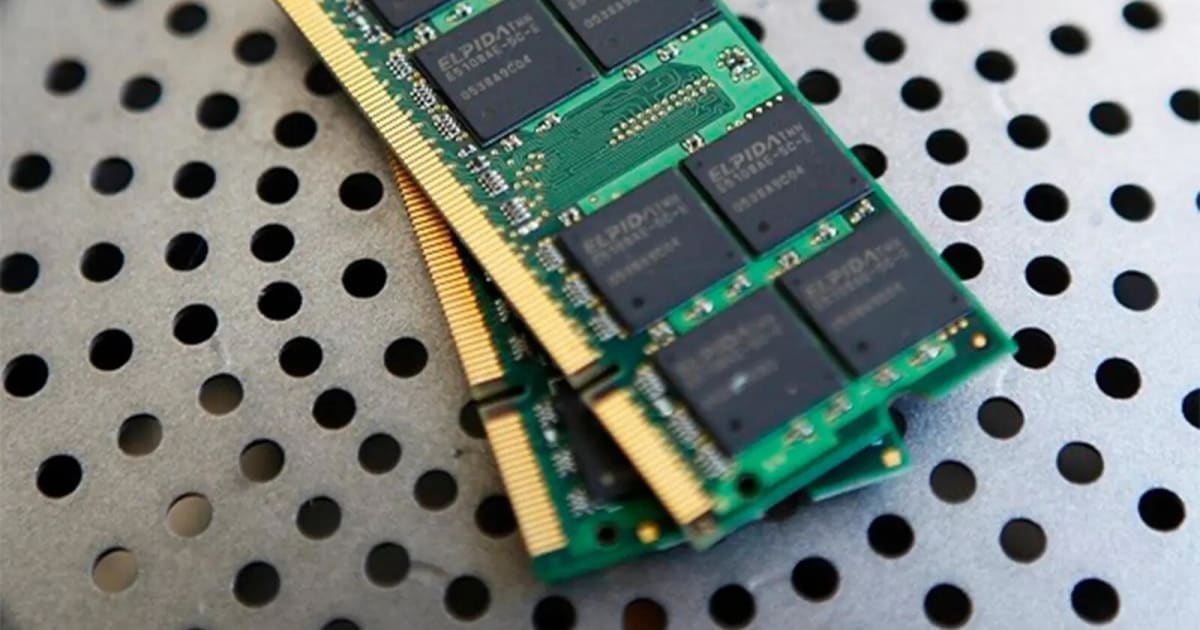
India is on the cusp of a semiconductor revolution, with its market projected to reach a staggering $155 billion by 2031. This isn't merely a statistic; it signals a profound shift in global supply chains, a surge in domestic manufacturing, and a golden era for Indian electronics companies. Our deep dive reveals the stocks poised to capitalize on this monumental growth and the strategic moves investors should consider now.
India's Semiconductor Surge: A $155 Billion Opportunity by 2031
The reverberations of a seismic shift are echoing through India's technology landscape. A recent projection indicates India's semiconductor market is poised to skyrocket to an astonishing $155 billion by 2031. This isn't just a growth forecast; it's a declaration of intent, signaling India's emergence as a formidable player in the global semiconductor arena, moving beyond mere consumption to significant contributions in design and manufacturing. This trajectory implies a compound annual growth rate (CAGR) exceeding 17% from current levels, dwarfing the anticipated global industry growth and presenting a generational investment opportunity for those positioned correctly.
Why does this matter now? The confluence of aggressive government incentives, a burgeoning digital economy, and geopolitical realignments has created a perfect storm for India to accelerate its semiconductor ambitions. The 'China Plus One' strategy adopted by global corporations, coupled with India's large domestic market and a growing pool of engineering talent, positions the nation uniquely. This isn't just about economic growth; it's about technological sovereignty and reducing critical import dependency, a strategic imperative underscored by recent global supply chain disruptions. The implications for the Indian stock market are profound, promising significant re-ratings and capital allocation shifts towards companies at the forefront of this technological renaissance.
Deep Market Impact: How India's Chip Boom Will Reshape the Nifty
The projected expansion of India's semiconductor market will send ripples across multiple sectors of the Indian economy and the Nifty 50. Historically, major industrial shifts in India, like the infrastructure boom of the early 2000s or the digital transformation post-2016, have led to significant re-allocation of capital and outperformance of specific sectors. The semiconductor surge is expected to be no different, with an estimated 9% share of global consumption by 2031, up from current low single digits. This indicates a robust domestic demand engine that will fuel local production and innovation.
The most direct beneficiaries will be the Electronics Manufacturing Services (EMS) providers and companies involved in Assembly, Testing, Marking, and Packaging (ATMP). These firms are critical for localizing the final stages of chip production and integrating them into finished electronic goods. We could see a re-rating similar to what happened with defense manufacturing stocks post-2014, where a 'Make in India' push led to multi-bagger returns. The Nifty IT index, for instance, might see a divergence, with companies focused on embedded systems and semiconductor design services outperforming traditional IT services, as demand for specialized engineering talent intensifies.
Beyond direct manufacturing, the ecosystem impact is immense. Specialty chemicals and materials suppliers, crucial for fab operations, will experience a demand surge. Industrial gas suppliers, providing ultra-high purity gases like nitrogen and argon, are integral to chip fabrication and will see increased order books. Moreover, sectors like Artificial Intelligence (AI), Internet of Things (IoT), and Automotive Electronics, which are voracious consumers of advanced semiconductors, will thrive, creating a virtuous cycle of demand and innovation. This broad-based impact suggests that investors need to look beyond obvious plays and consider the entire value chain.
Which Indian Stocks Will Benefit Most from the Semiconductor Growth?
Identifying the right companies is paramount to capitalizing on this monumental shift. While pure-play semiconductor manufacturing in India is still nascent, the ecosystem play is already underway, with several listed entities poised for significant gains. Here's a breakdown of key stocks:
- Dixon Technologies (India) Ltd. (NSE: DIXON): A leading EMS player, Dixon is strategically positioned to benefit from increased domestic electronics manufacturing, driven by government PLI schemes. As more semiconductors are consumed within India for products ranging from mobile phones to consumer durables, Dixon's assembly and manufacturing services will be in high demand. The company's diverse product portfolio and aggressive expansion plans make it a bellwether for India's electronics manufacturing growth. Its current market cap hovers around ₹50,000 crores, and sustained growth could see a re-rating of its P/E multiples, currently around 130x, as market sentiment shifts towards long-term domestic manufacturing plays.
- Kaynes Technology India Ltd. (NSE: KAYNES): Specializing in electronics system design and manufacturing (ESDM), Kaynes is a critical partner for companies looking to localize complex electronic product development. With its focus on high-reliability applications and diverse industry exposure (automotive, industrial, medical), Kaynes is well-placed to capture a significant share of the value addition as India's semiconductor consumption translates into finished goods. The company's smaller size (around ₹12,000 crore market cap) offers higher growth potential compared to larger peers, though its P/E of over 150x reflects already high market expectations.
- Syrma SGS Technology Ltd. (NSE: SYRMA): Another prominent EMS provider, Syrma SGS has a strong presence in high-mix, high-value precision manufacturing. Its capabilities in printed circuit board assembly (PCBA) and box-build solutions are crucial for integrating semiconductors into complex electronic products. As India's ATMP capabilities expand, Syrma's expertise will become increasingly valuable. With a market cap of approximately ₹9,000 crores, it represents a strong mid-cap play on the domestic electronics manufacturing theme.
- Data Patterns (India) Ltd. (NSE: DATAPATTNS): While primarily a defense and aerospace electronics solutions provider, Data Patterns stands to benefit from the broader push for indigenous high-tech manufacturing. Its expertise in embedded systems, design, and testing of complex electronic modules is directly transferable to the advanced requirements of the semiconductor ecosystem. As India moves up the value chain in chip design and specialized electronics, companies like Data Patterns, with their R&D capabilities, will find new avenues for growth. Its current P/E of around 100x reflects its specialized niche and growth potential.
- Tata Elxsi Ltd. (NSE: TATAELXSI) & HCL Technologies Ltd. (NSE: HCLTECH): These IT services giants are crucial for the 'design' aspect of the semiconductor value chain. Tata Elxsi, with its strong focus on embedded product design and engineering R&D, particularly in automotive and broadcast sectors, will see increased demand for semiconductor IP design, validation, and verification services. HCL Technologies, through its engineering and R&D services (ERS) division, offers comprehensive solutions for chip design, electronic product development, and software integration. As global semiconductor firms look to diversify their R&D hubs, Indian engineering talent, leveraged by these companies, will be highly sought after. Both companies, with their significant market caps (Tata Elxsi ~₹45,000 cr, HCL Tech ~₹380,000 cr), offer a relatively safer, large-cap way to play the design services segment.
- Vedanta Ltd. (NSE: VEDL) & Tata Group (Unlisted/Future Listings): These conglomerates represent the aspirational 'fab' players. Vedanta has publicly expressed its intent to establish a semiconductor fabrication unit in India, potentially with a foreign partner. While still in early stages and facing significant capital expenditure and technological hurdles, any concrete progress could unlock immense value. Similarly, the Tata Group has indicated interest in both chip manufacturing and ATMP. Any future announcements or successful execution would be monumental, attracting significant investor attention and potentially leading to new listings or re-ratings of existing group entities. These represent a high-risk, high-reward, long-term bet on India's deepest dive into semiconductor manufacturing.
Expert Perspectives: Bulls vs. Bears on India's Semiconductor Ambition
The narrative around India's semiconductor future, while overwhelmingly positive, isn't without its nuances. Both bullish and bearish arguments offer critical insights for a balanced investor perspective.
The Bulls argue: The sheer size of India's domestic market provides an unparalleled advantage. Unlike many smaller nations attempting to build semiconductor ecosystems, India has guaranteed demand for billions of devices, from smartphones to electric vehicles. This intrinsic demand mitigates market risks for new fabs. Government incentives, particularly the Production Linked Incentive (PLI) schemes, are substantial, covering a significant portion of capital expenditure, making India an attractive destination despite high initial costs. Furthermore, India's vast pool of STEM graduates offers a sustainable talent pipeline, a critical resource in the global chip talent crunch. They point to the success of India's IT services sector as a precedent for building a global technology powerhouse from scratch, albeit with different capital requirements.
The Bears, however, raise valid concerns: The capital intensity of semiconductor manufacturing is staggering, often requiring investments of $5-10 billion for a single advanced fab. Attracting and retaining such massive Foreign Direct Investment (FDI) consistently will be challenging. Technology transfer remains a significant hurdle; leading-edge process nodes are closely guarded secrets. India also lacks a mature ancillary ecosystem (e.g., specialized equipment manufacturers, high-purity chemical producers) that has taken decades to build in places like Taiwan or South Korea. Skilled labor, particularly at the technician and highly specialized engineering level for fab operations, is currently scarce. They argue that while assembly and packaging are achievable, full-scale, cutting-edge chip fabrication might remain a distant dream, limiting India's role to a consumer and design hub rather than a manufacturing giant. The recent withdrawal of Foxconn from a joint venture with Vedanta serves as a cautionary tale regarding execution risks.
Actionable Investor Playbook: Navigating the Semiconductor Opportunity
For investors looking to tap into India's semiconductor growth story, a multi-pronged strategy is advisable, considering different risk appetites and time horizons.
What to Buy:
- Long-Term Core Holdings (5-10 years): Accumulate strong EMS players like Dixon Technologies (NSE: DIXON) and Kaynes Technology (NSE: KAYNES) on dips. These companies are direct beneficiaries of the 'Make in India' push in electronics and will see sustained growth from increased domestic consumption of semiconductors. Consider entry points around 10-15% below recent highs, leveraging any broader market corrections.
- High-Growth Niche Plays (3-5 years): Companies like Syrma SGS Technology (NSE: SYRMA) and Data Patterns (NSE: DATAPATTNS) offer exposure to specialized manufacturing and advanced design capabilities. These are higher beta plays, likely to outperform significantly if India successfully moves up the value chain.
- Design Services Exposure (3-7 years): For a more diversified, lower-risk approach to the design segment, consider large-cap IT services firms with strong engineering R&D divisions like HCL Technologies (NSE: HCLTECH) and Tata Elxsi (NSE: TATAELXSI). These are less volatile and benefit from global shifts in semiconductor design outsourcing.
What to Watch:
- Potential Fab Players: Keep a close eye on announcements from Vedanta Ltd. (NSE: VEDL) and the Tata Group regarding their semiconductor manufacturing plans. Any concrete progress, especially securing a technology partner and breaking ground on a fab, would be a major catalyst. These are speculative plays for now but could offer immense upside.
- Ancillary Industries: Monitor specialty chemicals and industrial gas suppliers. While many are unlisted or global, identifying listed Indian companies that directly supply to potential fabs or ATMP units could yield hidden gems.
Entry Points and Time Horizon: This is a multi-year theme. Investors should adopt a staggered buying approach, accumulating positions during market corrections. A minimum time horizon of 3-5 years is recommended to fully realize the potential of this structural growth story. For fab-related plays, the horizon extends to 7-10 years.
Risk Matrix: Navigating the Hurdles to India's Chip Ambition
While the opportunity is vast, several risks could impede India's semiconductor journey. A comprehensive understanding of these challenges is crucial for investors.
- Execution Risk of Government Incentives (Probability: Medium-High): The success of PLI schemes and other government support is paramount. Delays in approvals, bureaucratic hurdles, or insufficient funding could deter foreign investors and slow down domestic capacity building. The government's ability to disburse incentives efficiently and create a stable policy environment is critical. This risk could impact the top-line growth of EMS players if new projects are delayed.
- Attracting and Retaining FDI & Technology Transfer (Probability: Medium): Establishing advanced fabs requires massive foreign investment and, crucially, access to cutting-edge technology from global leaders (e.g., TSMC, Intel, Samsung). Geopolitical considerations, intellectual property protection concerns, and the sheer scale of investment required pose significant barriers. A failure to secure strong global partners could relegate India to less advanced process nodes or assembly-only roles.
- Skilled Labor Availability (Probability: High): Semiconductor manufacturing demands a highly specialized workforce, from process engineers to cleanroom technicians. While India has a large engineering base, specific expertise in semiconductor fabrication is currently limited. Bridging this skill gap through rapid training programs, industry-academia collaboration, and attracting global talent will be a significant challenge that could cap the pace of expansion.
- Global Supply Chain Volatility & Geopolitical Tensions (Probability: Medium): While India aims for self-reliance, the semiconductor industry is inherently global. Disruptions in the supply of critical raw materials, equipment, or even political tensions impacting trade routes could affect India's manufacturing capabilities. Any shift in global trade policies could alter the economic viability of domestic production.
What to Watch Next: Catalysts and Data Releases
The India semiconductor story will unfold through a series of key events and data points. Investors should monitor these closely for market-moving insights:
- New PLI Scheme Announcements/Updates: Any modifications, extensions, or new schemes targeting specific segments (e.g., design, ATMP, or specific material production) will be significant catalysts. The budget session often brings such policy updates.
- Foreign Investment Pledges and MOUs: Concrete announcements of global semiconductor majors partnering with Indian entities for fab or ATMP facilities will be critical. Watch for news from major global players like Micron, Applied Materials, or Intel regarding their India plans.
- Vedanta/Tata Group Updates: Progress reports, technology partner announcements, or groundbreaking ceremonies for their semiconductor ventures will send strong signals about India's manufacturing ambitions.
- Quarterly Earnings of EMS & ESDM Players: Look for strong revenue growth, order book expansions, and margin improvements from companies like Dixon, Kaynes, and Syrma SGS, indicating increased domestic demand and successful execution of projects.
- Skill Development Initiatives: Announcements of new semiconductor-focused university programs, government-backed training centers, or industry collaborations to build the talent pipeline will be positive long-term indicators.
- Electronics Production Data: Monthly or quarterly data on overall electronics manufacturing output in India will provide a macro view of the sector's health and its increasing consumption of semiconductors.
The journey to $155 billion will be complex, but the foundational elements are in place. India's semiconductor market is not just growing; it's evolving, creating a landscape ripe with opportunity for discerning investors.
See Dixon Technologies (India) Ltd.'s AI Score
Our algorithmic screener scores Dixon Technologies (India) Ltd. on fundamentals, momentum, and risk — free to try, no card needed.
Try the AI Screener →Have questions about this story?
Ask Welth, our finance-focused AI research assistant, for a deeper breakdown — free trial included.
Chat with Welth AI →Disclaimer: This content is generated by WelthWest Research Desk based on publicly available reports and is for informational purposes only. It does not constitute financial advice, investment recommendations, or an offer to buy or sell securities. Always consult a qualified financial advisor before making investment decisions.