Key Takeaway
The 'Service Arbitrage' is shifting from corporate outsourcing to personal lifestyle, creating a structural tailwind for India's premium consumption and quick commerce sectors. Investors should pivot toward platform plays and luxury real estate as high-net-worth NRIs repatriate capital and demand.
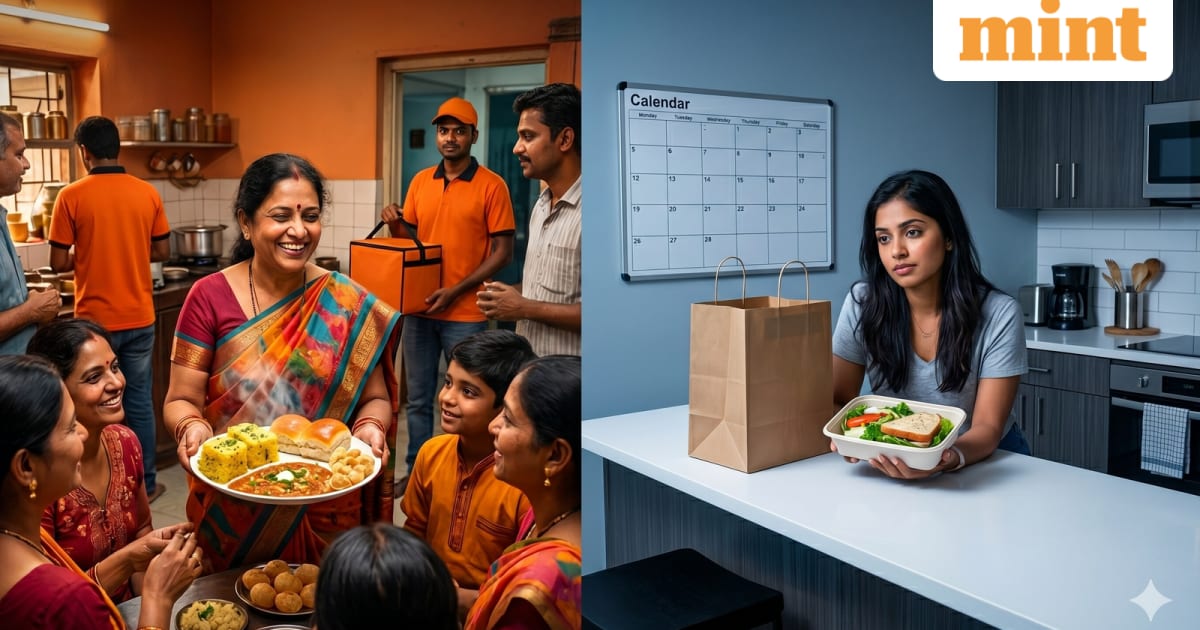
A viral social media debate comparing the convenience of Indian living to the high-cost Western lifestyle has highlighted a massive macroeconomic shift. This 'Return to India' (R2I) sentiment is not just social chatter; it is fueling a multi-billion dollar surge in premium real estate, 10-minute delivery ecosystems, and discretionary spending. We analyze the specific NSE/BSE stocks positioned to capture this migration of wealth and talent.
The Great Service Arbitrage: Beyond the Viral Discourse
In recent weeks, the digital landscape has been dominated by a singular, recurring theme: the 'Return to India' (R2I) phenomenon. What started as a viral social media post comparing the 'warmth and convenience' of India to the high-friction, high-cost lifestyle of the United States has evolved into a sophisticated economic debate. At WelthWest Research Desk, we view this not as a fleeting social trend, but as the manifestation of 'Service Arbitrage.'
For decades, India exported its talent to the West for higher wages. Today, a significant portion of that talent is looking back, realizing that while the US offers higher nominal income, India offers a superior 'Net Lifestyle Value.' This value is driven by a low-cost, high-density service economy that the West simply cannot replicate due to labor costs and geographic dispersion. For investors, this represents a structural shift in the Consumer Discretionary sector, where the demand for premiumization is no longer just local—it is being imported by global Indians with deep pockets and high expectations.
Why is the R2I Trend Accelerating Now?
The timing of this sentiment shift is critical. In 2024, the Indian digital infrastructure has reached a point of 'hyper-convenience.' The convergence of UPI (Unified Payments Interface), a robust gig economy, and the world's most aggressive quick commerce rollout has created an environment where the 'cost of time' in India is significantly lower than in the US or Europe. In the West, hiring a plumber, getting groceries delivered, or maintaining a household requires significant logistical effort and capital. In India, these services are commoditized and available at the tap of a screen.
According to recent migration data and wealth reports, India’s affluent class (those earning >$10,000 annually) is expected to grow to 100 million people by 2027. This demographic is the primary driver of the stocks we track. When an NRI (Non-Resident Indian) returns, they don't just bring back savings; they bring a consumption pattern that favors Zomato's Blinkit, Titan’s luxury watches, and DLF’s premium condominiums.
How will the rise of the 'Affluent India' segment affect stock valuations?
Traditional valuation models often struggle to price in the velocity of Indian consumption. When we look at the historical parallel of the 2021-2022 post-pandemic recovery, the Nifty 50 saw a massive re-rating of consumer stocks as domestic demand proved resilient against global headwinds. Today, the 'convenience economy' is the new alpha. Companies that act as platforms for this convenience are trading at premium P/E ratios because they are capturing a larger share of the household wallet than ever before.
Deep Market Impact: The Economics of 10-Minute Convenience
The backbone of the R2I allure is the Quick Commerce (Q-Commerce) sector. While the US saw the collapse or stagnation of companies like Buyk and Fridge No More, India’s Q-Commerce players are thriving. This is due to density and labor dynamics. In cities like Mumbai, Bengaluru, and Gurgaon, the population density allows a single 'dark store' to serve thousands of households within a 2km radius, making the unit economics of a ₹500 delivery order viable.
This has a secondary impact on the Real Estate sector. We are seeing a 'clustering' effect where premium residential projects are being marketed specifically on their proximity to 'service hubs' and their integration with smart-living features. The NSE Realty Index has reflected this, significantly outperforming the broader Nifty 50 over the last 12 months as inventory levels in the luxury segment (₹5 Cr+) hit record lows.
Stock-by-Stock Breakdown: The R2I Winners
1. ZOMATO (NSE: ZOMATO)
Zomato is no longer just a food delivery company; it is the ultimate proxy for the Indian convenience trade. Its acquisition of Blinkit has turned it into a logistics powerhouse. With a market cap exceeding ₹2.2 Lakh Crore, Zomato is trading at a forward P/E that reflects high growth expectations. The R2I crowd uses Blinkit for everything from organic produce to electronics, driving up the Average Order Value (AOV). Sector Peer: Swiggy (Upcoming IPO).
2. DLF LTD (NSE: DLF)
DLF is the undisputed leader in the premiumization of Indian living. Their recent project launches in Gurugram, such as 'The Arbour,' sold out within days, with a significant percentage of buyers being NRIs or recently returned professionals. With a debt-free balance sheet and a massive land bank, DLF is positioned to capture the 'lifestyle' demand that viral social media posts highlight. Sector Peer: Macrotech Developers (Lodha).
3. TITAN COMPANY (NSE: TITAN)
Titan captures the discretionary spend of the affluent Indian. Whether it is Tanishq for weddings or Helios for premium international watches, Titan is the gatekeeper of Indian luxury consumption. As the R2I trend brings more high-disposable-income individuals back, Titan’s margins in the jewelry segment (currently around 12-13%) are expected to remain robust. Sector Peer: Kalyan Jewellers.
4. GODREJ PROPERTIES (NSE: GODREJPROP)
Godrej Properties focuses on the aspirational middle and upper-middle class. Their focus on sustainable, amenity-rich townships directly appeals to the sensibilities of those returning from the West. Their booking value growth has consistently outpaced the industry average, making them a top pick for the urban expansion play.
5. TATA STEEL (NSE: TATASTEEL)
While often seen as a commodity play, Tata Steel is a secondary beneficiary of the R2I trend through the infrastructure and construction boom. Every premium condominium and new urban highway requires high-grade steel. As India builds out the physical infrastructure to match its digital convenience, Tata Steel’s domestic volumes are a key indicator of economic health.
Expert Perspective: The Bull vs. Bear Case
"The 'Return to India' trend is the ultimate validation of India's internal consumption engine. We are seeing a transition from 'cost-plus' living to 'value-plus' living, where the ease of life in Indian metros now rivals or exceeds that of Tier-1 global cities for the top 5% of the population." — Senior Macro Strategist, WelthWest
The Bull Argument: Bulls argue that India is in a 'Goldilocks' zone. Labor remains affordable enough to sustain the gig economy, while the consumer base is becoming wealthy enough to pay for convenience. This creates a virtuous cycle of job creation and consumption that will drive Nifty earnings growth for the next decade.
The Bear Argument: Contrarians point to the 'fragility of convenience.' The current model relies on a massive pool of low-cost labor. If labor laws tighten or if the 'minimum wage' for gig workers rises significantly, the unit economics of 10-minute delivery and affordable domestic help could crumble, erasing the very lifestyle advantage that is currently attracting global talent back to India.
Actionable Investor Playbook
- The Core Portfolio: Accumulate ZOMATO on dips. The company is turning the corner on profitability, and its dominance in the Q-Commerce space provides a wide moat against traditional retailers.
- The Real Estate Play: Focus on DLF and Godrej Properties. Look for entry points when the NSE Realty Index undergoes healthy corrections. The time horizon should be 3-5 years to capture the full cycle of premium project completions.
- The Discretionary Alpha: Maintain exposure to Titan. It remains the most consistent wealth creator in the Indian retail space, benefiting from the formalization of the jewelry market.
- Watch the Mid-caps: Keep an eye on companies like Ethos Ltd (luxury watch retail) which directly benefit from the R2I demographic's preference for global brands within India.
Risk Matrix
- Rising Labor Costs (Probability: Medium, Impact: High): A 20% increase in gig worker payouts could significantly hurt the margins of delivery platforms and the viability of the convenience model.
- Urban Infrastructure Saturation (Probability: High, Impact: Medium): If Indian cities become unlivable due to traffic and pollution, the 'R2I' sentiment could reverse despite the digital convenience.
- Global Recession (Probability: Low, Impact: High): A major slowdown in the US could reduce the 'exit capital' that NRIs bring back, slowing the premium real estate market.
What to Watch Next
Investors should monitor three key catalysts in the coming quarters:
- The Swiggy IPO: This will provide a fresh valuation benchmark for the entire convenience ecosystem and could lead to a re-rating of Zomato.
- RBI Policy Stance: Any pivot toward interest rate cuts will further ignite the premium real estate sector (DLF, GodrejPROP) as home loan costs for luxury properties become more attractive.
- Quarterly AOV (Average Order Value) Trends: Watch the earnings calls of consumer tech companies for mentions of AOV growth in Tier-1 cities—this is the most direct metric of the R2I impact.
See ZOMATO's AI Score
Our algorithmic screener scores ZOMATO on fundamentals, momentum, and risk — free to try, no card needed.
Try the AI Screener →Have questions about this story?
Ask Welth, our finance-focused AI research assistant, for a deeper breakdown — free trial included.
Chat with Welth AI →Disclaimer: This content is generated by WelthWest Research Desk based on publicly available reports and is for informational purposes only. It does not constitute financial advice, investment recommendations, or an offer to buy or sell securities. Always consult a qualified financial advisor before making investment decisions.