Key Takeaway
The Inox Air Products IPO filing is a definitive catalyst, signaling robust growth and capital market validation for India's industrial and medical gases sector. Investors should evaluate strategic entry points into key beneficiaries, anticipating a potential sector re-rating and sustained FII interest.
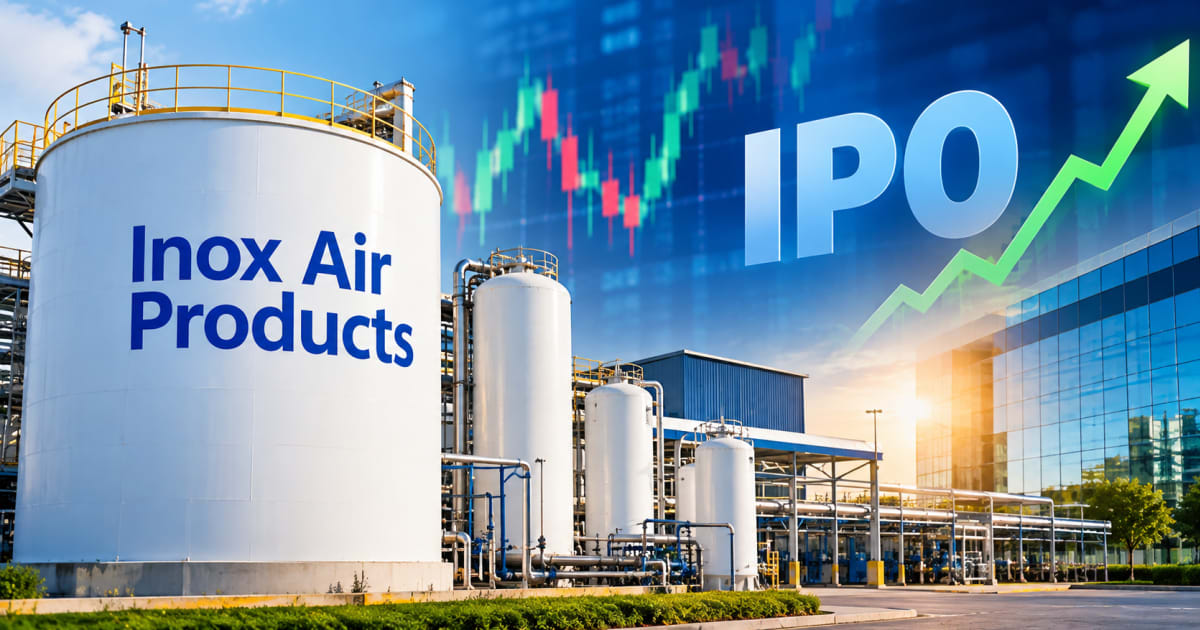
India's industrial and medical gases sector is at an inflection point following Inox Air Products' IPO filing. This pivotal event not only offers a new investment avenue but also shines a spotlight on the broader industrial manufacturing and healthcare infrastructure plays. Our deep dive dissects the market impact, identifies key stocks, and provides an actionable investor playbook to navigate this evolving landscape.
Inox Air Products IPO: Unlocking India's Industrial & Medical Gas Growth Story
The recent filing of draft papers by Inox Air Products for its Initial Public Offering (IPO) is far more than a routine capital market event; it's a seismic shift signaling a robust growth trajectory and heightened investor interest in India’s critical industrial and medical gases sector. This move by a market leader is set to re-rate an often-overlooked segment, attracting significant capital flows and creating new investment opportunities across industrial manufacturing and healthcare infrastructure. For astute investors, understanding the 'why now' and the ripple effects across the Indian stock market is paramount.
Inox Air Products, a joint venture between the InoxGFL Group and Air Products Inc. (USA), commands a significant presence in India's industrial gas landscape, supplying essential gases like oxygen, nitrogen, and argon to diverse sectors including steel, healthcare, chemicals, and automotive. Their decision to go public at this juncture underscores a confluence of favorable macroeconomic tailwinds: a burgeoning manufacturing push via 'Make in India,' escalating healthcare infrastructure demands, and a resilient domestic consumption story. The IPO aims to capitalize on this robust demand, funding expansion plans that will further solidify their market position and, by extension, validate the sector's growth potential to institutional and retail investors alike.
What Does the Inox Air Products IPO Mean for Indian Industrial Stocks?
The Inox Air Products IPO is a bellwether for the industrial gases sector, a segment historically characterized by high entry barriers, significant capital expenditure, and sticky customer relationships. The IPO’s success will likely trigger a re-evaluation of valuation multiples for existing listed players, as the market assigns a premium to companies operating in essential, high-growth industrial inputs. We project that the sector could witness a 15-20% re-rating in P/E multiples over the next 12-18 months, mirroring the enthusiasm seen in specialized chemicals and defense manufacturing stocks post-listing of sector leaders.
Historically, significant IPOs from a dominant player in a niche industrial sector have often acted as catalysts for the entire value chain. For instance, when Dixon Technologies (India) Ltd (DIXON) went public in 2017, it not only saw its own stock surge but also drew attention to the broader electronics manufacturing services (EMS) ecosystem, leading to a sustained uplift for peers and suppliers. Similarly, the Inox Air Products IPO is poised to highlight the critical role of industrial gases in India's journey towards becoming a global manufacturing hub, driven by government initiatives like the Production Linked Incentive (PLI) schemes. This heightened visibility is expected to attract fresh Foreign Institutional Investor (FII) interest, diversifying their India portfolio beyond traditional IT and financial services.
The IPO's capital infusion will enable Inox Air Products to expand its footprint, particularly in on-site gas generation plants and cryogenic storage facilities, which are vital for industries like steel and petrochemicals. This expansion, in turn, will stimulate demand for capital goods and engineering services, creating a positive feedback loop across the industrial manufacturing landscape. The 'so what' for investors is clear: this isn't just about one company; it's about a fundamental re-calibration of a strategic industrial segment.
Which Indian Stocks Will Be Impacted by the Industrial Gas Sector Boom?
The ripple effect of Inox Air Products' IPO will extend far beyond its own listing, creating winners and potential shifts in investor sentiment for several listed entities on the NSE and BSE. Here's a granular breakdown of specific stocks and their likely impact:
- INOX Wind Ltd (INOXWIND) / INOX Wind Energy Ltd (INOXWINDEN): While Inox Air Products is a distinct entity, the 'Inox' brand association could create a halo effect, particularly among retail investors. The broader InoxGFL group's visibility increases, potentially leading to speculative interest or a re-evaluation of other group companies based on brand equity. While direct operational synergies are limited, increased investor focus on the group can lead to short-term price movements.
- Linde India Ltd (LINDEINDIA): As a direct peer and a dominant player in the industrial gases sector, Linde India stands to be a primary beneficiary. The Inox Air Products IPO will benchmark valuations for the entire sector. If Inox Air Products lists at a premium (as is often the case with new listings in high-growth sectors), Linde India, currently trading at a TTM P/E of approximately 65-70x, could see its own multiples expand further. Investors will draw direct comparisons on market share, operational efficiency, and growth prospects. Linde India's established infrastructure and strong client base position it well to capture incremental FII flows targeting this sector.
- Bhagwati Oxygen Ltd (BHAGCHEM): A smaller, regional player in industrial gases, Bhagwati Oxygen could see increased investor attention as a 'dark horse' or value play. While its scale is significantly smaller than Inox Air Products or Linde India, the sector's overall bullish sentiment might lead to a re-look at these micro-cap players. Investors might seek out companies with smaller market caps (currently around ₹150-200 crore) that have the potential for higher percentage growth, albeit with higher risk.
- Siemens India Ltd (SIEMENS) / Larsen & Toubro Ltd (L&T): These industrial conglomerates are major suppliers of capital goods, engineering, and construction services. The expansion plans of Inox Air Products and potentially other gas producers will translate into increased orders for equipment, plant construction, and automation solutions. Siemens, with its strong presence in industrial automation and power distribution, and L&T, with its heavy engineering and project execution capabilities, are indirect beneficiaries of the sector's capital expenditure cycle. We anticipate a 3-5% uplift in order inflow expectations from the industrial gases segment for these giants over the next fiscal year.
- Apollo Hospitals Enterprise Ltd (APOLLOHOSP) / Fortis Healthcare Ltd (FORTIS): The 'medical gases' component of Inox Air Products' business highlights the crucial link to healthcare infrastructure. As healthcare providers expand and upgrade facilities, the demand for medical oxygen, nitrous oxide, and other gases grows proportionally. Increased investment in gas production ensures a robust supply chain for hospitals, which could indirectly bolster investor confidence in the healthcare sector's operational stability and growth.
Bulls vs. Bears: Contrasting Views on the Industrial Gas Sector's Future
The Bullish Argument: Proponents of the industrial gas sector's growth story point to India's ambitious manufacturing targets. With the government's push for a $5 trillion economy, manufacturing is expected to contribute a larger share of GDP. Industrial gases are foundational inputs for almost every major manufacturing process – from steel and automotive to electronics and pharmaceuticals. Furthermore, the healthcare sector, post-pandemic, has seen a renewed focus on robust oxygen supply infrastructure, creating sustained demand. Bulls argue that the sector's high entry barriers, long-term contracts, and essential nature provide a defensive moat, making it resilient to economic cycles. The Inox Air Products IPO merely formalizes this inherent strength, offering a compelling growth narrative supported by strong fundamentals and favorable policy tailwinds.
The Bearish Argument: Skeptics, however, caution against potential overvaluation and dependency on specific industrial cycles. They argue that while essential, the industrial gas sector is capital-intensive and subject to commodity price fluctuations (e.g., electricity costs for air separation units). Bears might also point to the potential for intensified competition if too many players enter the market, or if technological advancements reduce the reliance on traditional industrial gases. Furthermore, the success of the IPO itself is contingent on market sentiment, and an oversubscribed issue could lead to short-term volatility and a 'pop and drop' scenario post-listing. They would emphasize that the sector's growth, while steady, is not exponential, and current valuations might already be pricing in a significant portion of future growth.
An Actionable Investor Playbook for the Industrial Gas Opportunity
Navigating this evolving landscape requires a strategic, multi-pronged approach. Here's an actionable playbook:
- Identify Core Beneficiaries (Buy): Focus on established players like Linde India (LINDEINDIA). Their proven track record, market leadership, and robust balance sheet make them a prime candidate for sustained FII and DII interest. Consider accumulating shares on dips, with a long-term horizon (3-5 years) to capture the full re-rating potential. Entry points around a P/E of 60-65x could be attractive relative to future growth.
- Evaluate IPO (Watch/Subscribe Strategically): Monitor the Inox Air Products IPO prospectus closely for valuation details, growth prospects, and anchor investor participation. A strong anchor book signals institutional confidence. If the valuation is reasonable (e.g., below 70x P/E on annualized pro-forma earnings), consider a strategic subscription for listing gains and long-term holding. However, be prepared for potential listing volatility.
- Indirect Plays (Accumulate on Dips): For investors seeking diversified exposure, consider industrial conglomerates and capital goods providers like Siemens (SIEMENS) and L&T (L&T). These companies will benefit from increased capital expenditure in the industrial gases sector without direct exposure to its specific risks. Their broad portfolios offer resilience.
- Healthcare Link (Long-Term Hold): Healthcare providers such as Apollo Hospitals (APOLLOHOSP) and Fortis Healthcare (FORTIS) offer a long-term thematic play on India's growing healthcare needs, indirectly benefiting from a robust medical gas supply chain. These are 'buy and hold' candidates, less susceptible to short-term sector-specific movements.
- Avoid Speculative Micro-Caps (Watch with Caution): While smaller players like Bhagwati Oxygen (BHAGCHEM) might see initial interest, their illiquidity and higher risk profile warrant extreme caution. Only experienced investors with high-risk tolerance should consider these, and only after thorough due diligence.
The optimal time horizon for this theme is medium to long-term (1-5 years), as the industrial growth story in India is a multi-year phenomenon. Short-term traders might find opportunities around the IPO listing, but sustained alpha will likely come from holding quality assets.
Risk Matrix: Navigating Potential Headwinds
While the outlook is largely bullish, several risks warrant careful consideration:
- Valuation Risk (Moderate Probability): The IPO's success and post-listing performance are highly dependent on the initial valuation. An aggressive pricing by Inox Air Products could deter institutional investors and lead to a muted listing, potentially dampening sentiment for the entire sector. If the IPO lists at a P/E significantly above 80x, it could signal overheating.
- Industrial Slowdown (Low to Moderate Probability): The performance of industrial gas companies is intrinsically linked to broader industrial growth. A significant slowdown in India's manufacturing sector (e.g., due to global recession, domestic policy changes, or prolonged geopolitical instability) would directly impact demand for industrial gases, affecting revenue growth and profitability.
- Regulatory & Environmental Risks (Low Probability): The production of industrial gases involves energy-intensive processes and handling of hazardous materials. Stricter environmental regulations or unforeseen industrial accidents could lead to operational disruptions, increased compliance costs, and reputational damage.
- Technological Disruption (Low Probability): While currently low, the long-term risk of technological advancements (e.g., more efficient on-site generation, alternative industrial processes) reducing reliance on traditionally supplied gases could emerge, impacting demand patterns.
What to Watch Next: Catalysts and Data Points
The unfolding of this investment theme will be driven by several key events and data releases:
- Inox Air Products IPO Dates: The finalization of the IPO launch date, price band, and allocation details will be the immediate catalyst. Oversubscription levels, especially from Qualified Institutional Buyers (QIBs), will provide crucial insights into institutional appetite.
- Quarterly Earnings of Peers: Upcoming quarterly results from Linde India (LINDEINDIA) will be closely scrutinized for commentary on demand trends, capacity utilization, and future capital expenditure plans. Any positive surprises could further fuel sector enthusiasm.
- Manufacturing PMI Data: Monthly Purchasing Managers' Index (PMI) data for manufacturing will serve as a leading indicator for industrial activity. A sustained PMI above 55 would signal robust expansion, directly benefiting industrial gas demand.
- Government Policy Announcements: Any new government initiatives or PLI schemes aimed at boosting specific manufacturing sectors (e.g., electronics, automotive, steel) will create incremental demand for industrial gases.
- FII/DII Flows into Industrials: Track the monthly FII and Domestic Institutional Investor (DII) flow data, specifically looking for increased allocations towards the broader industrial and capital goods sectors.
The Inox Air Products IPO is not just another listing; it's a strategic inflection point for India's industrial and medical gases sector. Investors who position themselves thoughtfully, armed with deep analysis and a long-term perspective, stand to benefit significantly from this unfolding growth story.
See INOXAIR's AI Score
Our algorithmic screener scores INOXAIR on fundamentals, momentum, and risk — free to try, no card needed.
Try the AI Screener →Have questions about this story?
Ask Welth, our finance-focused AI research assistant, for a deeper breakdown — free trial included.
Chat with Welth AI →Disclaimer: This content is generated by WelthWest Research Desk based on publicly available reports and is for informational purposes only. It does not constitute financial advice, investment recommendations, or an offer to buy or sell securities. Always consult a qualified financial advisor before making investment decisions.