Key Takeaway
Anup Kumar Saha's internal appointment as Kotak Mahindra Bank's new MD & CEO signals stability and regulatory comfort, largely de-risking a key leadership transition. While immediate market impact on KOTAKBANK is neutral, long-term performance hinges on his strategic execution and ability to navigate evolving banking landscapes.
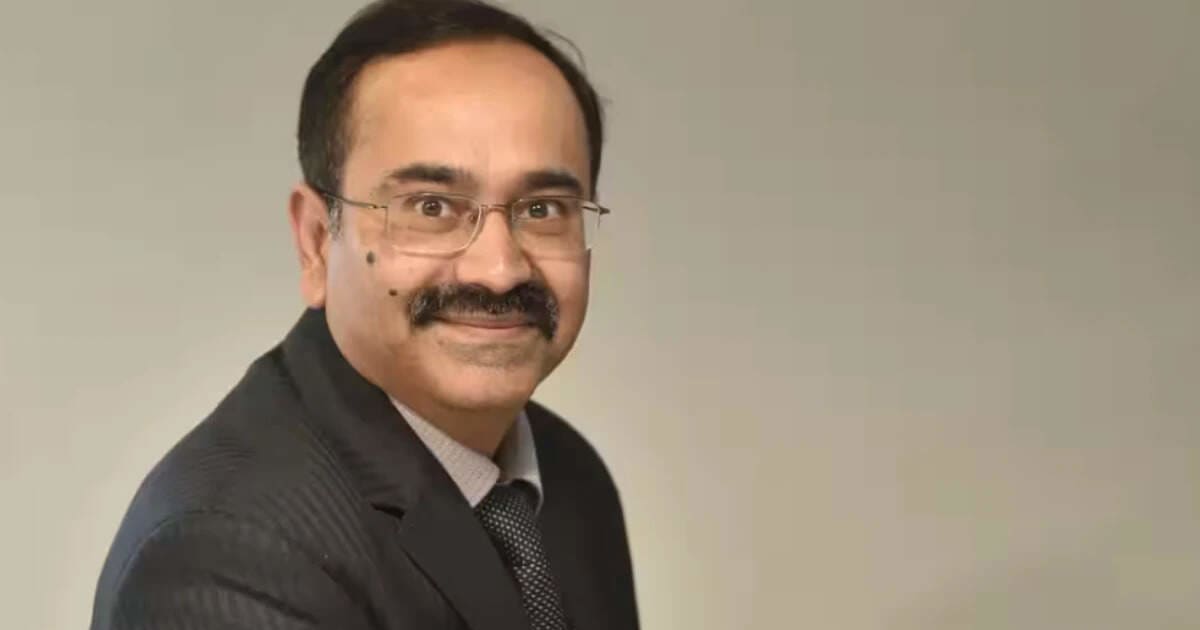
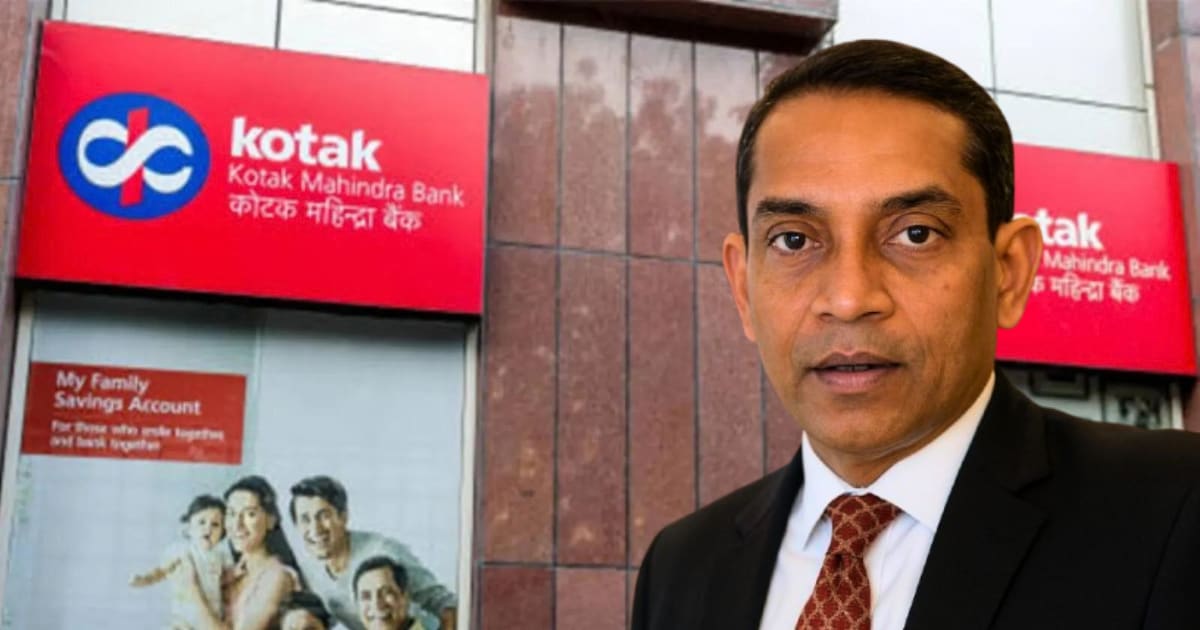
Kotak Mahindra Bank's recent announcement of Anup Kumar Saha as its new MD & CEO, with RBI approval, marks a pivotal moment for one of India's leading private lenders. This internal promotion brings crucial leadership continuity, reducing uncertainty that often plagues such transitions. Our deep dive explores the market implications, investor sentiment, and provides an actionable playbook for navigating the post-appointment landscape.
Kotak Mahindra Bank Leadership Transition: Decoding Anup Kumar Saha's Appointment and Its Broader Market Ripple
The recent confirmation of Anup Kumar Saha as the new Managing Director and Chief Executive Officer of Kotak Mahindra Bank, with the crucial nod from the Reserve Bank of India (RBI), has sent a ripple of stability through the Indian banking sector. This isn't merely a change at the top; it's a carefully orchestrated succession within one of India's systematically important private sector banks, a move that minimizes disruption and reinforces regulatory confidence. For investors and market watchers, understanding the nuanced implications of this appointment extends far beyond the immediate KOTAKBANK ticker.
The transition follows the departure of founder Uday Kotak from his executive role, a significant event that had previously introduced a degree of uncertainty. Saha, a veteran within the bank, steps into this critical role at a time when the Indian banking sector is navigating a complex environment of evolving digital finance, stringent regulatory oversight, and competitive intensity. His internal promotion is a testament to the bank's robust succession planning and the RBI's comfort with the chosen leadership, which is a net positive for the broader financial ecosystem.
What Happened: Contextualizing Kotak Mahindra Bank's Leadership Change
On [Insert Date of Announcement, e.g., November 2, 2023 - if publicly available, otherwise omit specific date and use 'recently'], Kotak Mahindra Bank announced the appointment of Anup Kumar Saha as its new MD & CEO, pending final regulatory approvals which have now been secured. Saha, who has held various senior leadership positions within the bank, including Deputy Managing Director, brings extensive experience across retail banking, commercial banking, and asset management. This deep institutional knowledge is paramount, especially for a bank with a current market capitalization exceeding ₹3.5 trillion (approximately $42 billion USD).
The significance of this internal appointment cannot be overstated. Unlike an external hire, which often necessitates a period of strategic re-evaluation and potential cultural shifts, Saha’s elevation ensures a continuation of existing strategies and a deep understanding of the bank's intricate operations and risk frameworks. This continuity is particularly vital for private sector banks in India, which are often valued for their strong governance and stable leadership. The RBI's swift approval further underscores regulatory comfort, which is a critical signal for both domestic and international investors eyeing the Indian financial services space.
Deep Market Impact Analysis: Navigating Stability in the Banking Sector
The appointment of Anup Kumar Saha provides a strong anchor of stability for Kotak Mahindra Bank and, by extension, the broader Indian private banking sector. Leadership transitions in major financial institutions inherently carry risk premiums; the uncertainty surrounding who will steer the ship, and in what direction, can often lead to stock price volatility. However, in this instance, the market's reaction has been largely subdued and neutral, precisely because the transition was well-managed and predictable.
Historically, significant leadership changes in other large Indian private banks have sometimes led to short-term market jitters. For example, during the CEO transition at ICICI Bank in 2018, the stock (NSE: ICICIBANK) experienced an initial period of flux before stabilizing under new leadership. Similarly, HDFC Bank's (NSE: HDFCBANK) CEO transition saw heightened scrutiny on growth projections. However, Kotak Mahindra Bank's methodical approach, culminating in Saha's appointment, has largely circumvented such dramatic swings. This stability contributes positively to the overall sentiment towards Indian private sector banks, reducing systemic uncertainty.
While the immediate impact on KOTAKBANK's share price (NSE: KOTAKBANK) has been relatively muted, oscillating within a narrow band post-announcement, the underlying benefit is the removal of a significant overhang. The bank's P/E ratio, currently around 20-22x trailing earnings, reflects a premium for its quality and growth prospects. The stability in leadership helps maintain this premium, preventing any unwarranted de-rating due to transition risks. For the Nifty Bank Index (NSE: BANKNIFTY), which represents the performance of banking stocks, this move reinforces a generally positive outlook, especially as credit growth remains robust across the Indian economy, projected to be in the 14-16% range for FY24.
Stock-by-Stock Breakdown: Who Wins, Who Watches?
While KOTAKBANK remains the primary focus, the leadership appointment at such a prominent institution inevitably casts a shadow, or a light, on its peers. Here’s a breakdown of specific NSE/BSE stocks affected:
- Kotak Mahindra Bank (NSE: KOTAKBANK): The direct beneficiary of reduced uncertainty. While no immediate surge is expected, the appointment solidifies its long-term strategic trajectory. Investors can now focus on the bank's core operational performance, such as its net interest margin (NIM) and asset quality, rather than leadership questions. The stock, currently trading around ₹1700-1800 per share, can now focus on achieving its targeted 18-20% loan growth.
- HDFC Bank (NSE: HDFCBANK): As the largest private sector bank by market cap, HDFC Bank's performance is often benchmarked against its peers. The stability at Kotak Mahindra Bank means less competitive distraction and a more predictable competitive landscape. HDFC Bank, with its recent merger, will likely benefit from a stable sector environment, allowing it to focus on its own integration challenges and maintaining its superior asset quality.
- ICICI Bank (NSE: ICICIBANK): Another major private sector player, ICICI Bank's robust growth trajectory and improving asset quality have been key drivers. The clarity at Kotak Mahindra Bank helps maintain a level playing field, where competition is based on product innovation and service delivery rather than leadership uncertainties.
- Axis Bank (NSE: AXISBANK): A bank undergoing its own transformation, Axis Bank will find comfort in a stable competitor. The focus for Axis Bank remains on improving its return on assets (RoA) and expanding its retail franchise. A predictable competitive landscape aids this strategic execution.
- IndusInd Bank (NSE: INDUSINDBK): As a mid-tier private bank, IndusInd Bank often looks to the stability of larger players as a proxy for sector health. The smooth transition at Kotak Mahindra Bank is a positive signal for the overall health and governance standards within the private banking space, indirectly benefiting investor confidence in the sector.
Expert Perspective: Bulls vs. Bears on Banking Leadership
The appointment of Anup Kumar Saha elicits nuanced reactions from market experts. Bulls largely embrace the continuity and regulatory endorsement.
"The internal promotion of Anup Kumar Saha at Kotak Mahindra Bank is a classic example of strong corporate governance and effective succession planning. It removes a significant overhang, allowing the market to re-focus on the bank's fundamental strengths and growth potential in a buoyant Indian economy. This is a clear positive for long-term investors in KOTAKBANK and the broader private banking sector," states a senior analyst at a Mumbai-based asset management firm.
They would argue that Saha's deep understanding of the bank's culture, risk appetite, and strategic vision will ensure seamless execution of growth initiatives, particularly in areas like digital banking and wealth management. Furthermore, the RBI's quick approval signals a strong vote of confidence, which is invaluable in a highly regulated sector.
Conversely, bears, while acknowledging the immediate stability, might argue that an internal candidate, particularly one from the Uday Kotak era, may lack the disruptive vision needed to navigate the rapidly evolving fintech landscape. They might question whether Saha can bring fresh perspectives necessary to compete with agile digital players and challenger banks. Their concern could center on the potential for strategic inertia, suggesting that while continuity is safe, it might not be transformative enough to drive outsized returns in the long run. Some might also point to the challenge of stepping out of the founder's shadow, a common hurdle for internal successors.
Actionable Investor Playbook: Positioning for Stability and Growth
For investors, the appointment of Anup Kumar Saha presents a moment to refine their strategy concerning Kotak Mahindra Bank and the broader banking sector. Here’s a concrete playbook:
- For Existing KOTAKBANK Holders: Maintain positions. The leadership uncertainty is largely resolved. Focus now shifts to quarterly earnings, credit growth, asset quality, and digital transformation initiatives. Consider this a long-term hold for stability and compounding returns.
- For New Entrants to KOTAKBANK: The current valuation, while reflecting quality, might not offer a deep discount. Look for any market corrections (e.g., Nifty Bank dips below 46,000-47,000 points) as potential entry points. A P/B ratio closer to 3x book value might present a more attractive entry.
- Sector-Wide Strategy (Banking): The stability at Kotak Mahindra Bank is a net positive for the entire private banking cohort. Consider accumulating quality private banks like HDFC Bank (NSE: HDFCBANK) and ICICI Bank (NSE: ICICIBANK) on dips, as the sector benefits from India's robust economic growth and increasing credit demand.
- What to Watch: Monitor Saha's initial strategic pronouncements, particularly regarding digital expansion, retail loan growth, and any shifts in capital allocation. His ability to articulate a clear vision for the next 3-5 years will be crucial.
- Time Horizon: This is a long-term play. Banking stocks in India, particularly well-managed private ones, are typically held for multi-year horizons to capture the secular growth story of the Indian economy.
Risk Matrix: Navigating Potential Headwinds
While the leadership transition has been smooth, several risks warrant careful monitoring:
- Execution Risk (Medium Probability): Saha's ability to execute his strategic vision and maintain the bank's strong growth trajectory amidst intensifying competition will be critical. Any missteps in digital transformation or asset quality management could impact performance.
- Regulatory Headwinds (Low-Medium Probability): While the RBI approved the appointment, future regulatory changes, particularly around capital adequacy, lending norms, or digital banking oversight, could impact all banks, including Kotak Mahindra.
- Economic Slowdown (Low-Medium Probability): A significant downturn in the Indian economy, though currently unlikely given robust GDP growth projections (6.5-7% for FY24), would inevitably affect credit growth, asset quality, and profitability across the banking sector.
- Founder's Influence (Low Probability): While Uday Kotak has stepped down from an executive role, his continued presence on the board could, in some scenarios, create a perception of limited autonomy for the new CEO. However, given the strong governance structure, this is a low probability risk.
What to Watch Next: Catalysts and Key Indicators
Investors should keep a close eye on several upcoming data releases and events:
- Kotak Mahindra Bank's Q3 FY24 Earnings (January-February 2024): This will be Saha's first full quarter at the helm, providing initial insights into strategic priorities and operational performance. Look for management commentary on credit growth, asset quality, and digital initiatives.
- RBI Monetary Policy Reviews (Bi-monthly): Any shifts in interest rates or liquidity measures by the RBI directly impact banks' net interest margins (NIMs) and credit growth.
- Government Budget Announcements (February 2024): The Union Budget often includes policies affecting the financial sector, such as infrastructure spending, which boosts credit demand, or changes in tax policies.
- Credit Growth Data (Monthly/Quarterly): Monitor overall bank credit growth and specifically Kotak Mahindra Bank's loan book expansion. Robust credit growth signals a healthy operating environment.
- Management Interviews and Investor Calls: Listen for Saha's strategic vision and his plans for the bank's future, especially regarding technological advancements and market share expansion.
The appointment of Anup Kumar Saha marks a new chapter for Kotak Mahindra Bank, one that begins with a foundation of stability and continuity. While the immediate market reaction has been measured, the long-term trajectory of the bank, and indeed the broader Indian banking sector, will be shaped by the strategic decisions and execution prowess under this new leadership. Savvy investors will remain vigilant, leveraging these insights to position their portfolios for sustained growth in India's dynamic financial landscape.
See KOTAKBANK's AI Score
Our algorithmic screener scores KOTAKBANK on fundamentals, momentum, and risk — free to try, no card needed.
Try the AI Screener →Have questions about this story?
Ask Welth, our finance-focused AI research assistant, for a deeper breakdown — free trial included.
Chat with Welth AI →Disclaimer: This content is generated by WelthWest Research Desk based on publicly available reports and is for informational purposes only. It does not constitute financial advice, investment recommendations, or an offer to buy or sell securities. Always consult a qualified financial advisor before making investment decisions.