Key Takeaway
The ₹728 crore infusion from blue-chip industrial houses transforms Jana SFB from a speculative play into a credible contender for a universal banking license, likely triggering a sector-wide valuation re-rating for Small Finance Banks.
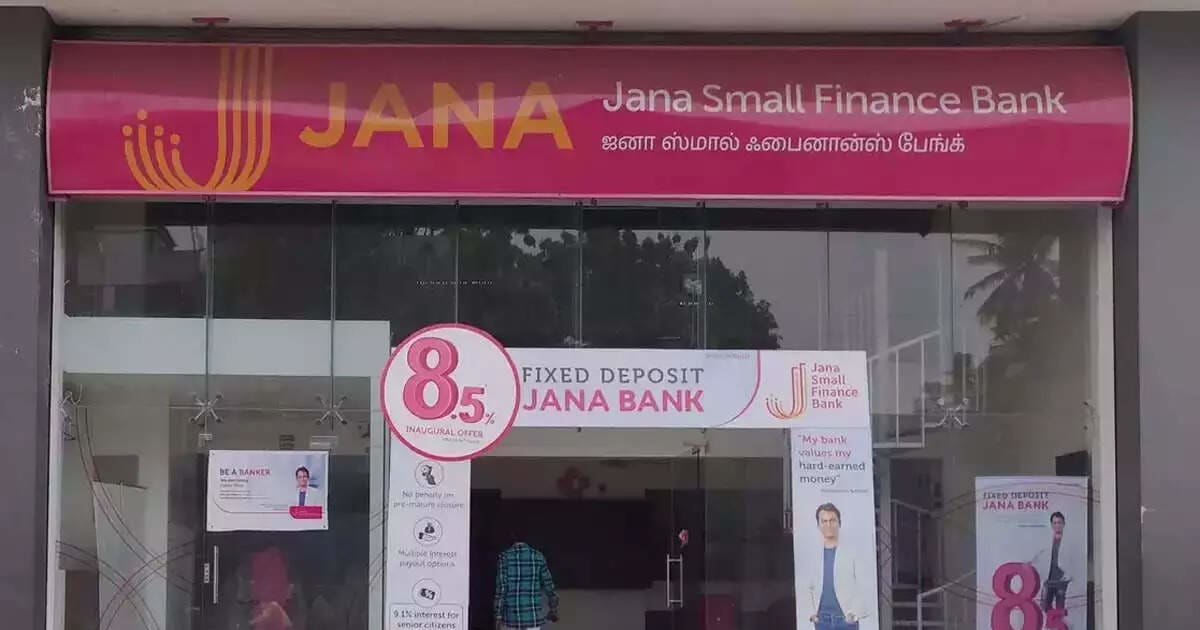
Jana Small Finance Bank has secured a massive capital commitment from the TVS Venu Group and Shruti Lohia, significantly bolstering its Tier-1 capital. This move directly addresses the RBI's stringent requirements for a universal bank license transition. Investors should watch for a shift in market sentiment as institutional 'smart money' enters the SFB space, potentially closing the valuation gap with mid-tier private banks.
The Strategic Pivot: Jana Small Finance Bank’s Institutional Renaissance
In the high-stakes world of Indian banking, capital is not merely a resource; it is a statement of intent. The recent announcement that Jana Small Finance Bank (NSE: JANABANK) has secured a ₹728 crore capital infusion from the TVS Venu Group and Shruti Lohia (of the Indorama family) is a watershed moment for the lender. For an institution that has navigated the arduous journey from a microfinance entity to a listed bank, this infusion is the final piece of the puzzle required to unlock its next phase of growth: the transition to a Universal Banking License.
This is not just another fundraise. The entry of the TVS Group—a name synonymous with corporate governance and long-term value creation—provides Jana SFB with a 'pedigree' that few of its peers can match. In the Indian equity markets, the 'promoter quality' and 'backing' often dictate P/B (Price-to-Book) multiples. This deal effectively puts a floor under Jana’s valuation while significantly raising its ceiling.
Why Does the TVS Venu Group Investment Matter Now?
The timing of this investment is critical. The Reserve Bank of India (RBI) recently updated its guidelines for Small Finance Banks (SFBs) seeking to transition into Universal Banks. Key criteria include a minimum net worth of ₹1,000 crore, a clean track record of at least five years, and robust Capital Adequacy Ratios (CAR). By securing ₹728 crore, Jana SFB is not just meeting these requirements; it is over-delivering to ensure a seamless regulatory approval process.
Historically, when high-profile industrial houses back a financial institution in India, it leads to a 'Liability Franchise Halo Effect.' Retail depositors are more likely to trust a bank backed by the TVS name, which in turn helps the bank lower its Cost of Funds (CoF). For Jana, which has been working to diversify its book away from unsecured microfinance towards secured loans (like housing and MSME), this capital provides the necessary buffer to aggressively scale its retail assets.
How will the Universal Bank License affect Jana SFB stock?
The transition from an SFB to a Universal Bank is the ultimate value-unlocking event in the Indian banking sector. Universal banks enjoy lower priority sector lending (PSL) requirements over the long term, greater operational flexibility, and a significantly lower cost of capital. When IDFC Bank transitioned or when AU Small Finance Bank (NSE: AUBANK) reached its current scale, their valuation multiples expanded from 1.5x P/B to over 3x P/B during peak cycles. Jana SFB, currently trading at a more modest valuation compared to its peers, stands to benefit from a massive 'catch-up' trade as the market begins to price in the universal bank probability.
Deep Market Impact: Connecting the Dots for Investors
The broader Small Finance Bank sector has been under pressure due to concerns over asset quality in the microfinance (MFI) segment and rising deposit costs. However, the Jana-TVS deal serves as a contrarian signal. It suggests that institutional investors see the current 'MFI stress' as a temporary cyclical blip rather than a structural failure.
In 2022, when the sector faced similar headwinds, the infusion of capital into players like Equitas and Ujjivan led to a 40-60% rally in their respective stock prices over the following twelve months. We expect a similar 'flight to quality' where investors rotate out of smaller, unbacked SFBs into those with strong institutional backing like Jana and AU Bank.
Stock-by-Stock Breakdown: The Winners and the Watchlist
- Jana Small Finance Bank (NSE: JANABANK): The primary beneficiary. The ₹728 crore infusion significantly improves its Tier-1 CAR. Expect the stock to test its previous highs as the market digests the reduction in 'regulatory risk.' Current P/B is attractive compared to its RoA (Return on Assets) potential of 1.5%+.
- AU Small Finance Bank (NSE: AUBANK): As the gold standard of the SFB sector, AU Bank often moves in tandem with positive sector news. The Jana deal validates the SFB-to-Universal Bank path, which AU is also pursuing. Any re-rating for Jana will likely lift AU’s floor.
- Equitas Small Finance Bank (NSE: EQUITASBNK): Equitas has already moved toward a diversified book. The Jana deal highlights that the market is willing to reward SFBs that successfully attract 'industrialist' capital. Watch for Equitas to benefit from sector-wide P/E expansion.
- Ujjivan Small Finance Bank (NSE: UJJIVANSFB): Often seen as the most sensitive to MFI cycles. While Jana is de-risking, Ujjivan remains a high-beta play. The Jana deal provides a positive sentiment backdrop, but Ujjivan will need to show similar capital strength to match Jana's momentum.
- TVS Motor Company (NSE: TVSMOTOR): While the investment is through the Venu Group (promoter level), the market often views such moves as a sign of the group's expanding financial ecosystem. It reinforces the 'TVS' brand's dominance in the Indian corporate landscape.
Expert Perspective: The Bull vs. Bear Case
"The entry of the TVS Group is a structural positive. It shifts the narrative from 'can this bank survive the MFI cycle' to 'how fast can this bank become a private sector powerhouse.' Jana's focus on secured lending is the right move for the next decade." — Senior Portfolio Manager, WelthWest Research
The Bull Case: Bulls argue that Jana SFB is currently undervalued. With a stabilized GNPA (Gross Non-Performing Asset) ratio and a rapidly growing CASA (Current Account Savings Account) base, the bank is primed for a 20-25% CAGR in its loan book. The TVS backing acts as a 'credit wrap' for the institution's reputation.
The Bear Case: Bears remain cautious about the RBI's unpredictability. Even with capital, the transition to a universal bank is not guaranteed. Furthermore, if the broader economy slows down, the bank's MSME and micro-loan portfolios could see a spike in delinquencies, eating into the newly raised capital.
Is Jana Small Finance Bank a good buy for the long term?
From a fundamental perspective, Jana SFB is transitioning from a high-risk microfinance lender to a diversified retail bank. For long-term investors, the entry point post-announcement offers a margin of safety provided by the new capital floor. The risk-reward ratio has shifted significantly in favor of the 'buy' side, especially for those with a 2-3 year horizon who want to play the universal banking theme.
Actionable Investor Playbook
Investors should consider a tiered approach to this development:
- Accumulation Zone: Look for entries in JANABANK between the ₹450-₹480 range (adjusted for market volatility). The capital infusion provides a strong support level.
- Sector Hedge: To play the SFB recovery while minimizing individual bank risk, consider a basket of JANABANK and AUBANK in a 40:60 ratio.
- Time Horizon: This is a 12-24 month play. The real value will be unlocked when the RBI formally accepts the universal bank application.
- Exit Strategy: Re-evaluate if GNPA crosses the 4% mark or if the RBI introduces more stringent capital norms for SFBs.
Risk Matrix: What Could Go Wrong?
- Regulatory Rejection (High Impact, Low Probability): If the RBI rejects the universal bank application due to legacy issues, the stock could see a 15-20% correction as the 'growth premium' evaporates.
- Asset Quality Stress (Medium Impact, Medium Probability): A slowdown in the rural economy could impact the MFI and MSME segments, leading to higher provisioning requirements.
- Execution Risk (Medium Impact, Low Probability): Transitioning to a universal bank requires massive investment in technology and human resources. Failure to manage this scale-up could compress margins.
What to Watch Next: The Catalyst Calendar
The market will be laser-focused on three key upcoming events:
- Quarterly Earnings: Watch for the Net Interest Margin (NIM) trends. If Jana can maintain NIMs above 7% despite rising costs, it’s a strong buy.
- RBI Application Filing: The formal submission of the universal bank license application will be the next major 'pop' for the stock.
- Credit Rating Upgrades: Following the capital infusion, keep an eye on rating agencies like CRISIL or ICRA. A rating upgrade would immediately lower the bank's borrowing costs.
See JANABANK's AI Score
Our algorithmic screener scores JANABANK on fundamentals, momentum, and risk — free to try, no card needed.
Try the AI Screener →Have questions about this story?
Ask Welth, our finance-focused AI research assistant, for a deeper breakdown — free trial included.
Chat with Welth AI →Disclaimer: This content is generated by WelthWest Research Desk based on publicly available reports and is for informational purposes only. It does not constitute financial advice, investment recommendations, or an offer to buy or sell securities. Always consult a qualified financial advisor before making investment decisions.