Key Takeaway
The government's pivot toward a lower reserve price for IDBI Bank signals a 'pragmatism over premium' strategy, designed to clear the RBI's stringent vetting hurdles and unlock massive liquidity for LIC while setting a valuation floor for the entire PSU banking sector.
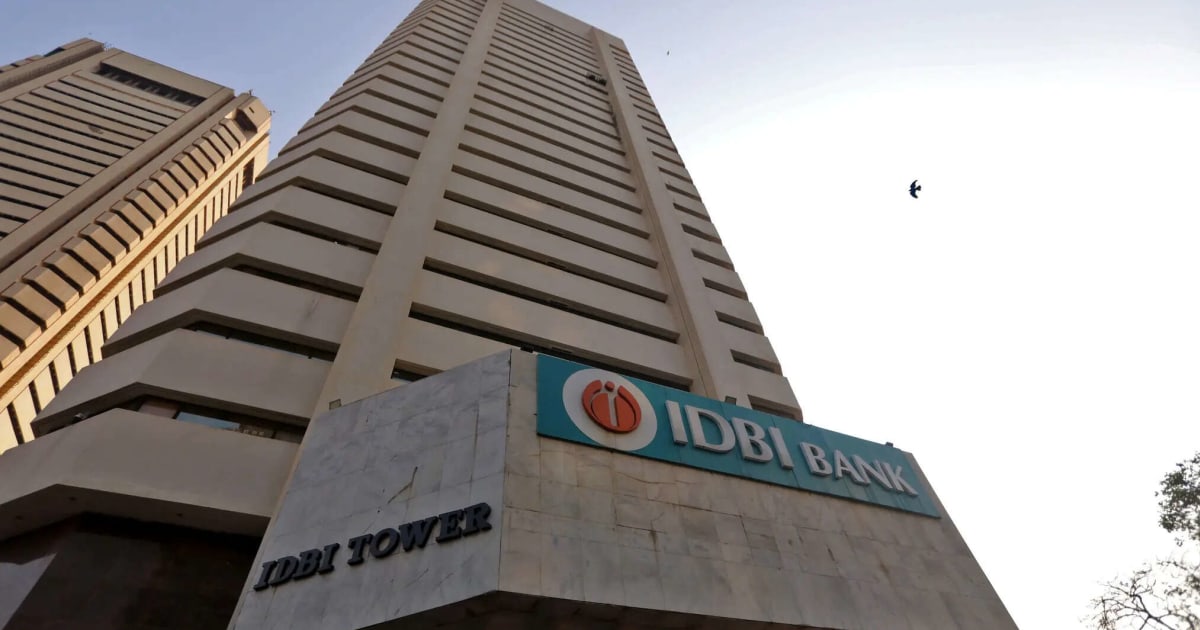
The Indian government is reportedly considering a reduction in the reserve price for the IDBI Bank stake sale to break a long-standing deadlock. This move aims to accommodate the high compliance costs of RBI's 'fit and proper' criteria, potentially accelerating a 60.72% stake transfer that could redefine the Nifty PSU Bank index. Investors should brace for a significant re-rating of IDBI and its parent, LIC, as the deal moves from 'if' to 'when'.
The Paradigm Shift: Pragmatism Over Premium in IDBI Privatization
For years, the privatization of IDBI Bank (NSE: IDBI) has been the 'white whale' of India's Department of Investment and Public Asset Management (DIPAM). However, recent intelligence suggests a fundamental shift in strategy. The government is now exploring a reduction in the reserve price—the minimum valuation at which it is willing to sell its stake. This isn't a sign of weakness; it is a calculated move to offset the 'compliance premium' that global bidders must pay to satisfy the Reserve Bank of India’s (RBI) grueling 'fit and proper' criteria.
The central issue has never been IDBI’s balance sheet, which has seen a remarkable turnaround, but rather the regulatory friction. By lowering the reserve price, the government is effectively subsidizing the entry of a high-quality private promoter. This move is designed to ensure that the 60.72% stake—comprising 30.48% from the Government of India and 30.24% from Life Insurance Corporation of India (NSE: LICI)—actually finds a home in the current fiscal year.
Why is the IDBI Bank Reserve Price Being Lowered Now?
To understand the 'why,' one must look at the math of the Indian banking sector. Historically, the government has been accused of overpricing assets, leading to failed auctions (recall the early attempts at Air India). Currently, IDBI Bank trades at a Price-to-Book (P/B) ratio of approximately 1.4x to 1.6x. While this is healthy for a turnaround story, global Private Equity (PE) giants like Fairfax Financial or Carlyle Group factor in the 'RBI friction cost'—the high cost of long-term capital commitment and the stringent restrictions on promoter voting rights.
The government realizes that a successful sale at a 10-15% discount to the current market euphoria is better than no sale at all. A successful IDBI exit provides a proof-of-concept for the privatization of other state-owned lenders like Central Bank of India or Indian Overseas Bank. It also helps meet the ambitious disinvestment targets that are crucial for maintaining India's fiscal deficit at 5.1% of GDP.
Deep Market Impact: Connecting the Dots to the Nifty PSU Bank Index
The ripple effects of a successful IDBI sale will extend far beyond its own ticker. When the government successfully divested its stake in Axis Bank (formerly UTI Bank) via SUUTI, the stock entered a multi-year bull run as private management unlocked operational efficiencies. We expect a similar trajectory for IDBI.
From a sector-level perspective, the Nifty PSU Bank Index has been on a tear, outperforming the Nifty 50 by over 30% in the last 12 months. However, much of this was driven by earnings recovery. The next leg of growth for the sector will be driven by 'privatization premiums.' If IDBI is sold even at a slight discount to the current market price, it sets a definitive floor for the valuation of all public sector banks. It signals to the market that these assets are liquid and that the government is a 'motivated seller' with a realistic outlook.
How will the RBI 'Fit and Proper' criteria affect the final valuation?
The RBI’s vetting process is the most significant non-financial barrier to this deal. Prospective bidders must prove their long-term intent, source of funds, and governance track record. For a foreign PE fund, this often means restructuring their entire India holding strategy. The market currently prices IDBI with a 'uncertainty discount.' A lower reserve price essentially compensates the buyer for the regulatory gauntlet they must run, which ironically makes the deal *more* likely to close, thereby potentially triggering a 'relief rally' in the stock despite the lower base price.
Stock-by-Stock Breakdown: The Winners and the Watchlist
1. IDBI Bank (NSE: IDBI | BSE: 500116)
As the primary target, IDBI is the epicenter of this volatility. The bank's Net NPA has plummeted from over 14% a few years ago to under 0.5% today. With a Capital Adequacy Ratio (CAR) well above regulatory requirements, it is a 'clean' bank ready for a private pilot. Impact: Bullish in the medium term. Any dip caused by news of a 'lower reserve price' should be viewed as a buying opportunity for long-term investors betting on private management efficiency.
2. Life Insurance Corporation of India (NSE: LICI | BSE: 543526)
LIC holds a 45.48% stake in IDBI. Selling a 30.24% slice would result in a massive cash infusion—potentially upwards of ₹35,000 - ₹40,000 crore depending on the final strike price. This liquidity would bolster LIC’s embedded value and could lead to a special dividend or aggressive expansion in its high-margin non-par product segment. Impact: Highly Bullish. LIC is currently undervalued relative to its private-sector peers like HDFC Life.
3. State Bank of India (NSE: SBIN | BSE: 500112)
As the bellwether of Indian banking, SBI’s valuation is often the ceiling for other PSU banks. A successful privatization of IDBI at a respectable P/B ratio would force a re-rating of SBI. If IDBI (a formerly distressed asset) can command 1.3x book, the market will argue that SBI deserves 1.8x to 2.0x. Impact: Indirectly Bullish via sectoral re-rating.
4. Bank of Baroda (NSE: BANKBARODA | BSE: 532134)
BoB is often cited as the next candidate for a significant stake sale or further consolidation. The IDBI deal provides the valuation framework for BoB. Investors looking for a 'sympathy play' often flock to BoB when IDBI news hits the wires. Impact: Neutral to Bullish; a benchmark for 'best-in-class' PSU performance.
Expert Perspective: The Bull vs. Bear Argument
"The government's willingness to negotiate on price is the clearest signal yet that they are serious about banking reforms. They are moving away from being a 'price-taker' in a volatile market to being a 'deal-maker' that prioritizes systemic efficiency over the last rupee of valuation." — Senior Analyst, WelthWest Research
The Bull Case: Bulls argue that a private-sector IDBI will see its Cost-to-Income ratio drop by at least 500-800 basis points within 24 months. They see the reserve price cut as a pragmatic necessity to clear the 'policy paralysis' that has dogged this deal since 2019.
The Bear Case: Contrarians worry that selling at a lower reserve price could trigger political backlash, with the opposition labeling it a 'fire sale' of national assets. This could lead to further delays or a 'pause' in the privatization agenda ahead of state elections, leaving retail investors trapped in a sideways-trending stock.
Actionable Investor Playbook: How to Position Your Portfolio
- Accumulation Zone: For IDBI Bank, the ₹82 - ₹88 range has shown strong institutional support. If the news of a lower reserve price causes a knee-jerk reaction toward ₹75, it represents a high-conviction entry point.
- The LIC Play: LIC is the safer way to play this theme. Even if the IDBI sale is delayed, LIC's core insurance business is improving. Buy on dips with a 24-month horizon to capture the 'value unlocking' from its various PSU holdings.
- Sectoral Hedge: If you are overweight on PSU banks, consider hedging with a small position in Nifty Bank Put Options to protect against a scenario where the RBI rejects the final bidders on 'Fit and Proper' grounds.
- Time Horizon: This is not a day-trade. The privatization process, including the final financial bids and the 'Fit and Proper' certification, could take another 6-9 months.
Risk Matrix: What Could Go Wrong?
- RBI 'Fit and Proper' Rejection (Probability: Medium-High): The RBI is notoriously protective of banking licenses. If the preferred bidder is a PE fund with a complex structure, the RBI may veto the deal, causing a 15-20% crash in IDBI shares.
- Political Headwinds (Probability: Medium): With several state elections on the horizon, any perception of 'undervaluing' a state asset could lead to the deal being put on the back burner.
- Market Correction (Probability: Low-Medium): A broader correction in the Nifty 50 could see liquidity dry up, forcing the government to postpone the sale to a 'better market window.'
What to Watch Next: Upcoming Catalysts
- RBI Vetting Report: Expected within the next quarter. This is the single biggest hurdle.
- DIPAM Roadshow Feedback: Watch for reports on interest from global sovereign wealth funds or PE consortiums.
- Quarterly Earnings: Continued improvement in IDBI’s RoA (Return on Assets) will make the 'lower reserve price' easier for the government to justify to the public.
See IDBI's AI Score
Our algorithmic screener scores IDBI on fundamentals, momentum, and risk — free to try, no card needed.
Try the AI Screener →Have questions about this story?
Ask Welth, our finance-focused AI research assistant, for a deeper breakdown — free trial included.
Chat with Welth AI →Disclaimer: This content is generated by WelthWest Research Desk based on publicly available reports and is for informational purposes only. It does not constitute financial advice, investment recommendations, or an offer to buy or sell securities. Always consult a qualified financial advisor before making investment decisions.