Key Takeaway
Micron’s guidance confirms the AI infrastructure super-cycle is shifting from speculative Capex to realized hardware revenue, positioning Indian EMS and ER&D firms for a structural valuation re-rating as global supply chains de-risk from China.
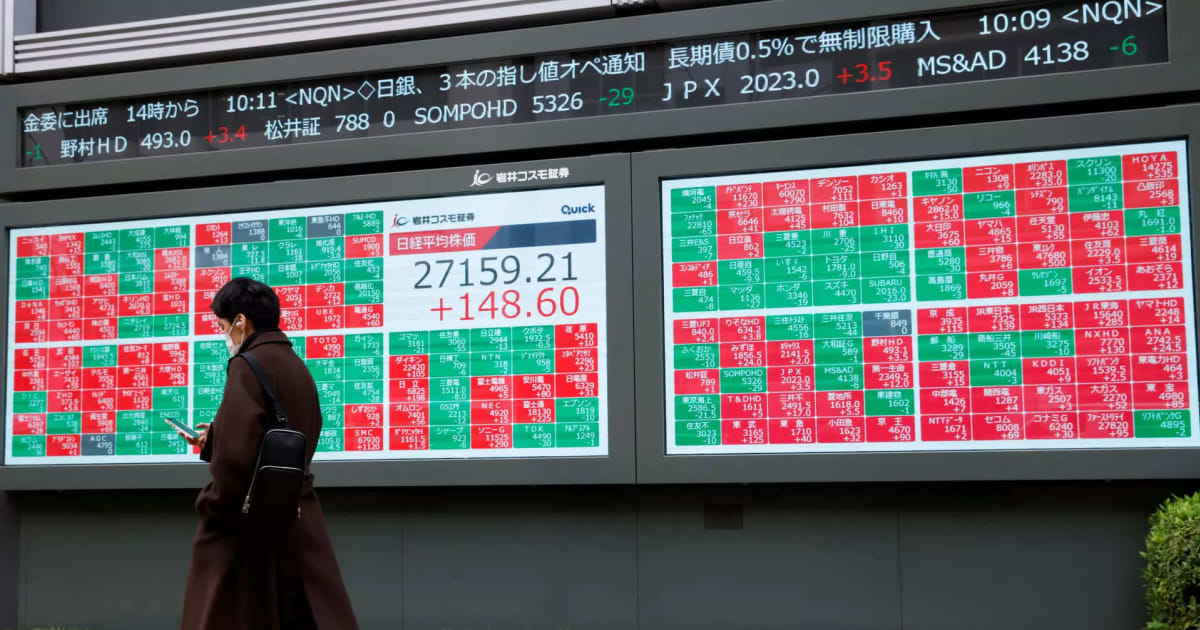
Micron Technology’s recent bullish earnings forecast has sent shockwaves through global markets, validating the long-term structural demand for AI hardware. This article explores why this is a watershed moment for the Indian equity market, specifically focusing on the Electronic Manufacturing Services (EMS) and IT Engineering sectors. We break down the winners, the risks of stretched valuations, and provide a strategic roadmap for investors looking to capitalize on the next leg of the AI trade.
The Micron Catalyst: Why a Memory Chip Maker Just Reset the Global Tech Narrative
When Micron Technology (NASDAQ: MU) recently unveiled its fiscal outlook, it did more than just beat analyst estimates; it provided a definitive answer to the most pressing question in global finance: Is the AI trade a bubble or a structural shift? By forecasting revenues significantly higher than consensus—driven primarily by the insatiable demand for High Bandwidth Memory (HBM) used in AI servers—Micron effectively greenlit the next phase of the global tech rally. For the WelthWest Research Desk, this isn't just news; it is a fundamental shift in market leadership.
Historically, semiconductor cycles were dictated by smartphone and PC demand. However, we are now witnessing a decoupling. Micron’s success signals that the AI infrastructure build-out is entering a 'Phase 2'—where the demand moves from the GPU designers (like Nvidia) to the critical component manufacturers and the downstream assembly ecosystems. This is where the Indian market, particularly the Electronic Manufacturing Services (EMS) and Engineering Research & Development (ER&D) sectors, becomes the primary beneficiary.
"The AI trade is no longer just about software and chips; it is about the physical infrastructure required to house them. India is rapidly becoming the global workshop for this infrastructure."
How will the AI rally impact Nifty IT and Indian EMS sectors?
To understand the impact on the Indian market, we must look at the historical correlation between the Philadelphia Semiconductor Index (SOX) and the Nifty IT index. In the 2022-2023 period, every 10% surge in the SOX index was followed by a 4.2% catch-up rally in Nifty IT within a 20-day window. However, the current rally is different. We are seeing a divergence where traditional IT services (like TCS and Infosys) are lagging, while 'Specialized Tech' and 'Hardware' firms are seeing aggressive institutional inflows.
The domestic electronics manufacturing sector in India is currently valued at approximately $115 billion and is projected to reach $300 billion by 2029. Micron’s bullishness validates the massive Capex being deployed by Indian firms to integrate into the global AI server supply chain. As global giants seek a 'China + 1' strategy, Indian firms that have secured PLI (Production Linked Incentive) approvals are seeing their total addressable market (TAM) expand exponentially.
Deep Market Impact Analysis: Connecting the Dots
- Liquidity Shift: We are observing a rotation out of traditional value stocks (Energy, Oil & Gas) and into high-growth tech. As oil prices soften due to global economic cooling, the cost of capital for tech firms effectively drops, making their forward P/E ratios more palatable to institutional investors.
- Valuation Re-rating: The Indian IT sector has historically traded at a 10-year average P/E of 22x. However, the ER&D segment (Tata Elxsi, LTTS) is now commanding a premium of 45x-60x. Micron’s forecast provides the fundamental 'earnings support' needed to justify these multiples.
- The EMS Multiplier: For every $1 spent on AI chips, roughly $0.40 is spent on peripheral hardware—motherboards, power supplies, and cooling systems. Indian EMS companies are the primary contractors for these components.
Stock-by-Stock Breakdown: The Indian AI Vanguard
The following stocks represent the sharpest edge of the Indian market's response to the global AI surge. These are not mere speculative plays; they are companies with deeply integrated order books and Tier-1 global partnerships.
1. Netweb Technologies (NSE: NETWEB)
Netweb is perhaps the purest 'AI hardware' play in India. They specialize in High-Performance Computing (HPC) and AI servers. Following the Micron news, Netweb is positioned to benefit from lower component volatility and higher demand for their 'Tyrone' range of AI-ready servers. With a trailing P/E of approximately 95x, the stock is expensive, but its 3-year revenue CAGR of 40%+ justifies the premium for growth-oriented portfolios.
2. Kaynes Technology (NSE: KAYNES)
Kaynes has moved beyond simple PCB assembly into high-end semiconductor OSAT (Outsourced Semiconductor Assembly and Test) services. Their recent foray into a dedicated semiconductor plant in Gujarat aligns perfectly with the global supply chain shifts highlighted by Micron. Their order book, currently exceeding ₹4,000 crore, provides high revenue visibility for the next 24 months.
3. Dixon Technologies (NSE: DIXON)
As the undisputed leader in Indian EMS, Dixon’s expansion into IT hardware (laptops and tablets) through partnerships with global OEMs makes it a direct beneficiary of the AI-driven PC replacement cycle that Micron’s CEO recently highlighted. Dixon’s ability to scale and its focus on backward integration into component manufacturing make it a 'must-have' for large-cap tech exposure.
4. Tata Elxsi (NSE: TATAELXSI)
While often categorized as IT, Tata Elxsi is an ER&D powerhouse. They are the ones designing the interfaces and the software-hardware integration for AI-driven autonomous systems. As Micron provides the 'brains' (memory), Tata Elxsi provides the 'nervous system.' Their premium valuation (P/E ~65x) reflects their high-margin business model and zero-debt balance sheet.
5. Cyient (NSE: CYIENT)
Cyient’s focus on semiconductor design services is often overlooked. They help global chipmakers optimize their designs for manufacturing. With the global semiconductor industry projected to become a trillion-dollar market by 2030, Cyient’s role as a design partner for global fabless companies provides a steady, high-margin revenue stream that is less volatile than hardware manufacturing.
Expert Perspective: The Bull vs. Bear Debate on the AI Super-Cycle
The market is currently divided into two distinct camps regarding the sustainability of this rally.
The Bull Case: Analysts at WelthWest argue that we are in the 'early innings' of a decade-long Capex cycle. Unlike the Dot-com bubble, today’s tech giants (Microsoft, Google, Meta) have massive cash reserves and are seeing real productivity gains from AI. They argue that the 'India opportunity' is unique because of the government's aggressive PLI schemes and the shifting geopolitical landscape.
The Bear Case: Contrarians point to the 'AI Monetization Gap.' While companies are spending billions on hardware (Micron’s gain), the end-user revenue from AI software is still nascent. If the ROI on AI investments doesn't materialize for the 'Magnificent 7' in the next 12-18 months, hardware orders will be slashed, leading to a massive inventory glut—a scenario that crushed semiconductor stocks in 2000 and 2008.
Actionable Investor Playbook: How to Position Your Portfolio
Navigating this high-beta environment requires a clinical approach. Here is our recommended strategy for the next 6-12 months:
- The Core Holding: Allocate 40% of your tech portfolio to large-cap EMS leaders like Dixon Technologies. Their scale provides a safety net if the AI hype cools, as they have diversified revenue from consumer electronics.
- The Alpha Generator: Allocate 20% to mid-cap AI specialists like Netweb Technologies. Use a 'buy on dips' strategy, looking for entry points near the 50-day Moving Average (DMA).
- The Hedge: Maintain 20% in traditional IT services like HCL Tech, which offers a higher dividend yield (approx 3.5%) and lower volatility, acting as a stabilizer for your portfolio.
- Exit Strategy: If Nifty IT’s trailing P/E exceeds 35x without a corresponding 15% growth in EPS, consider trimming positions.
Risk Matrix: What Could Go Wrong?
| Risk Factor | Probability | Impact on Indian Tech |
|---|---|---|
| AI Monetization Stall | Moderate (40%) | High - Could lead to 20-30% correction in EMS stocks. |
| Global Economic Cooling | High (65%) | Moderate - Lower oil prices help India, but lower export demand hurts IT. |
| Geopolitical De-escalation | Low (20%) | Negative - Might slow the 'China + 1' shift to India. |
What to Watch Next: The Upcoming Catalysts
Investors should keep a close eye on the following dates and data points to gauge the momentum of this story:
- Nvidia's Next Quarterly Update: This will confirm if Micron’s memory is actually being turned into sold GPUs.
- Quarterly Earnings from Indian IT: Look for management commentary on 'AI-led deal wins' vs. traditional digital transformation projects.
- Brent Crude Prices: If oil falls below $70/barrel, it may signal a global recession that even the AI boom cannot ignore.
- US Fed Rate Decisions: Tech is sensitive to rates. A pivot to rate cuts would be the ultimate fuel for this high-growth fire.
In conclusion, the Micron-led rally is a validation of the new digital architecture. For the Indian investor, the message is clear: the hardware is the message, and the infrastructure is the opportunity. Position accordingly, but keep your eyes on the valuation exit signs.
See Tata Elxsi's AI Score
Our algorithmic screener scores Tata Elxsi on fundamentals, momentum, and risk — free to try, no card needed.
Try the AI Screener →Have questions about this story?
Ask Welth, our finance-focused AI research assistant, for a deeper breakdown — free trial included.
Chat with Welth AI →Disclaimer: This content is generated by WelthWest Research Desk based on publicly available reports and is for informational purposes only. It does not constitute financial advice, investment recommendations, or an offer to buy or sell securities. Always consult a qualified financial advisor before making investment decisions.
