Key Takeaway
Geopolitical risk premiums are decoupling from US labor resilience, creating a tactical divergence. Investors should hedge against crude volatility while pivoting toward domestic defense and energy security plays.
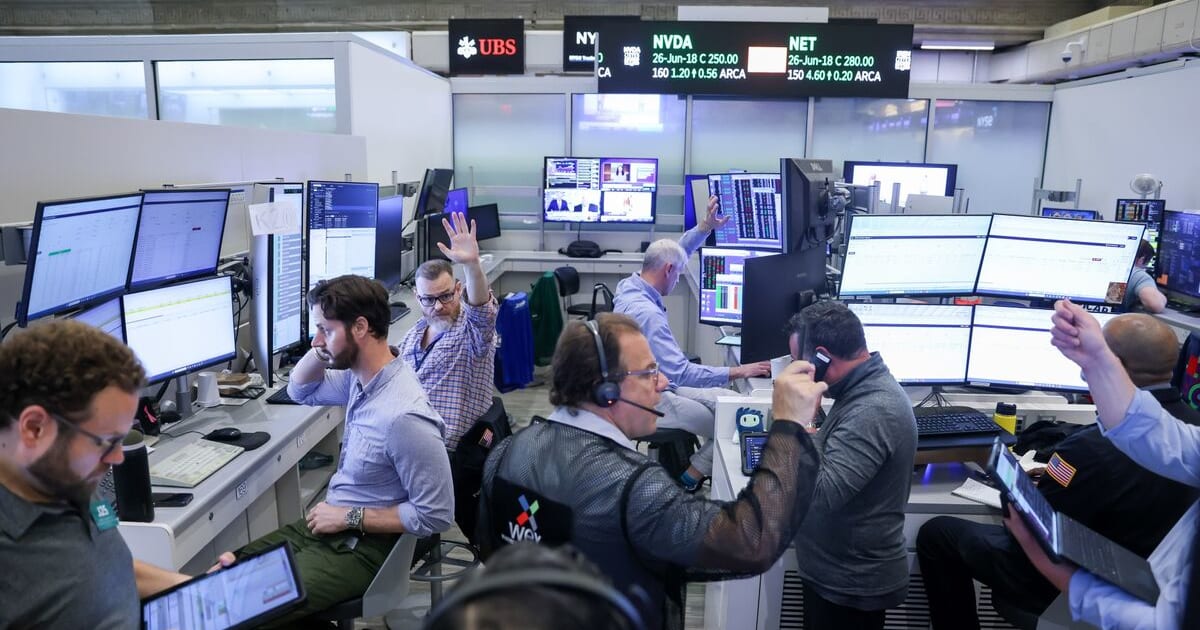
As US markets navigate a volatile labor landscape and escalating Middle East tensions, the shockwaves are hitting the Indian bourses. We analyze the sector-specific winners and losers, providing a strategic roadmap for managing portfolio risk in an unpredictable macro environment.
The Great Decoupling: US Macro Resilience Meets Geopolitical Friction
The global financial architecture is currently caught in a tug-of-war between two diametrically opposed forces: the surprising, labor-market-driven resilience of the US economy and the mounting geopolitical risk premium originating from the Middle East. For the Indian investor, this is not merely a headline event; it is a fundamental shift in the cost of capital and the trajectory of the Nifty 50.
While US equity markets have showcased an uncanny ability to absorb 'bad news'—treating soft labor reports as a precursor to Federal Reserve dovishness—the Middle East situation introduces a supply-side shock that the US central bank cannot manage with interest rate levers alone. When Brent crude fluctuates, the impact on India’s Current Account Deficit (CAD) is immediate and mechanical, forcing the Reserve Bank of India (RBI) into a defensive posture.
How do Middle East tensions impact the Indian Stock Market?
Historically, when geopolitical heat rises in the Middle East, the correlation between Indian equities and global risk-off sentiment tightens significantly. During the 2022 energy crisis, we observed a 12-15% correction in the Nifty 50 over a quarter as FIIs (Foreign Institutional Investors) retreated to the safety of the US Dollar and gold. The current environment mirrors this dynamic, though with a higher baseline of domestic consumption resilience.
The primary transmission mechanism is the oil import bill. India imports over 85% of its crude requirements. A sustained $10/barrel increase in Brent crude translates to a roughly 0.4-0.5% hit to the GDP growth rate and adds nearly 30-40 basis points to headline CPI inflation. This creates an 'inflationary ceiling' for the RBI, effectively delaying any anticipated rate cuts that the market has been pricing in for the second half of the fiscal year.
Sectoral Winners and Losers: A Tactical Breakdown
In this high-stakes environment, the divergence between sectors is becoming stark. The market is currently rewarding 'Energy Independence' and 'Strategic Autonomy' while punishing 'Crude Dependency'.
The Winners: Energy Security and Defence
- ONGC (NSE: ONGC): As a pure-play upstream producer, ONGC is the primary hedge against rising oil prices. With a market cap exceeding ₹4 trillion, its realizations are directly linked to global benchmarks. Even with windfall taxes, higher net realizations provide a margin of safety.
- HAL (NSE: HAL) & Bharat Electronics (NSE: BEL): Geopolitical instability necessitates higher defense spending. HAL, with its massive order book of over ₹90,000 crore, remains insulated from global energy shocks, benefiting instead from the government's mandate to boost domestic defense manufacturing.
The Losers: Crude Derivatives and Consumer Discretionary
- InterGlobe Aviation (NSE: INDIGO): Aviation Turbine Fuel (ATF) constitutes roughly 40% of an airline's operating cost. A spike in oil prices is a direct margin compression event. Indigo’s P/E ratio, already elevated due to growth expectations, becomes vulnerable to sudden earnings downgrades in a high-cost environment.
- Asian Paints (NSE: ASIANPAINT): As a chemical-heavy business, crude oil derivatives are its primary raw material. When crude prices soar, the company faces a binary choice: erode margins or pass costs to consumers, potentially hurting volume growth.
Expert Perspectives: The Bull vs. Bear Debate
The Bull Case: Proponents argue that the Indian economy's structural transformation—the 'China+1' strategy and massive infrastructure spending—is secular, not cyclical. They suggest that the current volatility is a buying opportunity for high-quality domestic cyclicals, as the long-term earnings growth of the Nifty 50 remains in the 12-15% CAGR range.
The Bear Case: The skeptics point to the FII flows. If the US 10-year Treasury yield remains sticky due to labor market resilience, emerging markets like India face a 'double whammy': higher cost of capital and a weaker Rupee. They argue that valuations in mid-caps and small-caps are stretched, and any external shock could trigger a violent mean reversion.
Actionable Investor Playbook: Navigating the Uncertainty
Investors should adopt a 'Barbell Strategy' to navigate the coming months:
- Defensive Allocation: Increase exposure to Gold ETFs or gold-linked assets. Gold serves as the ultimate hedge against geopolitical tail risks.
- Energy Hedge: Maintain a 5-7% weight in upstream energy stocks like ONGC or OIL to offset rising fuel costs elsewhere in the portfolio.
- Avoid High-Beta Consumption: Reduce exposure to companies with high sensitivity to raw material inflation (paints, logistics, and aviation) until crude oil stabilizes below the $80/barrel mark.
- Cash Reserves: Keep 15-20% of the portfolio in liquid funds. The volatility index (India VIX) is likely to remain elevated; keep cash ready to deploy during systemic 'panic sell' days.
Risk Matrix
| Risk Factor | Probability | Impact |
|---|---|---|
| Brent Crude > $95/barrel | Moderate | High |
| RBI maintains 'Higher for Longer' stance | High | Medium |
| Sudden FII outflow due to US Yield spike | Moderate | High |
What to Watch Next
The next 30 days are critical. Watch for the US Non-Farm Payroll (NFP) data release, which will dictate the Fed’s next move. Domestically, monitor the RBI MPC minutes for any change in the 'withdrawal of accommodation' stance. Finally, any escalation in the Middle East that impacts the Strait of Hormuz will be the ultimate catalyst for a shift in global risk appetite—keep your alerts set for crude oil supply disruptions.
See ONGC's AI Score
Our algorithmic screener scores ONGC on fundamentals, momentum, and risk — free to try, no card needed.
Try the AI Screener →Have questions about this story?
Ask Welth, our finance-focused AI research assistant, for a deeper breakdown — free trial included.
Chat with Welth AI →Disclaimer: This content is generated by WelthWest Research Desk based on publicly available reports and is for informational purposes only. It does not constitute financial advice, investment recommendations, or an offer to buy or sell securities. Always consult a qualified financial advisor before making investment decisions.