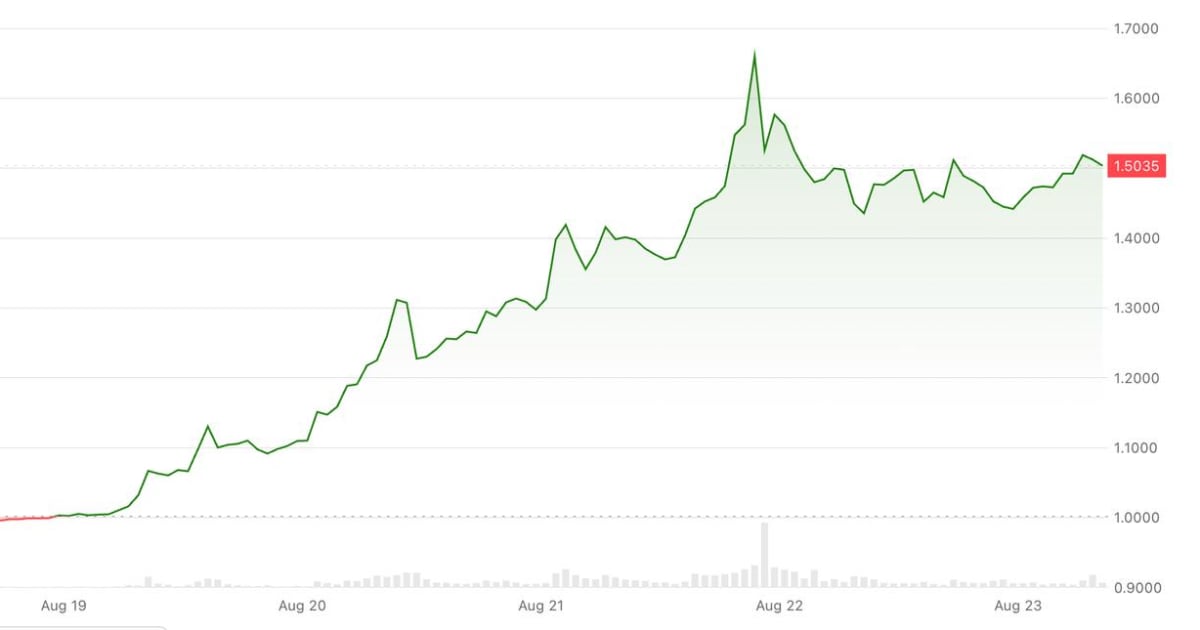
Key Takeaway
MSCI's crypto exclusion proposal signals a new era of risk assessment for digital asset exposure in traditional indexes. While direct Indian market impact is minimal now, it sets a critical precedent for any future crypto ventures by Indian public companies, demanding proactive risk management from investors.
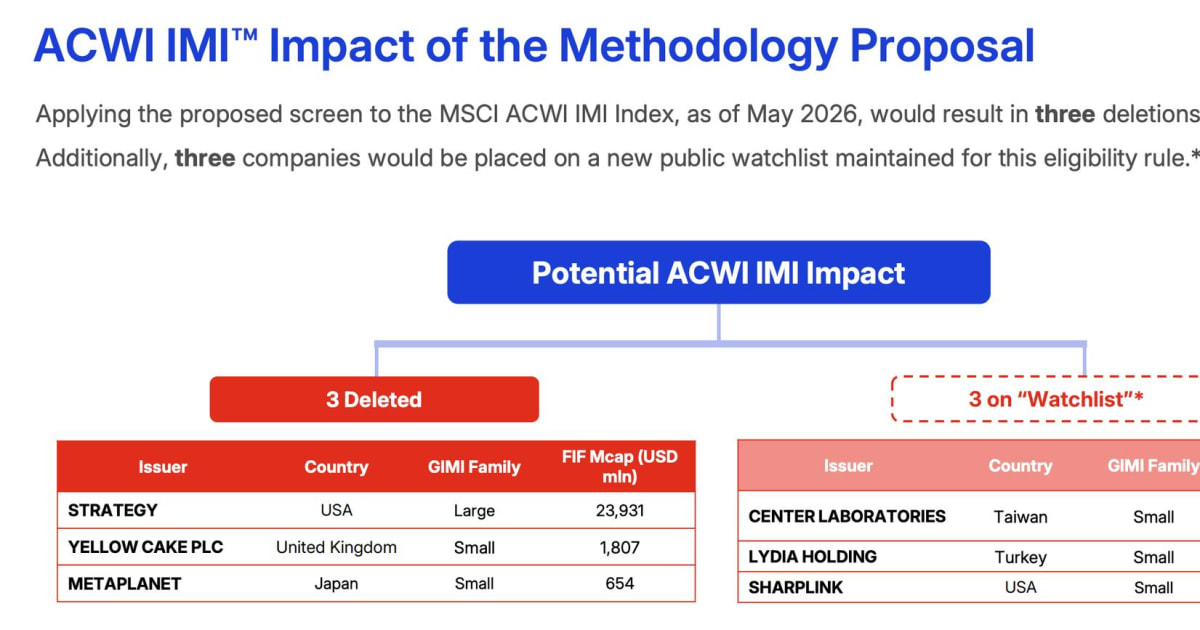
MSCI, a global index provider, is proposing to exclude companies with significant crypto holdings from its standard stock indexes. This move could significantly reduce institutional demand for such companies globally. While Indian markets currently have limited direct exposure, this precedent warrants a deep dive into potential future implications for Indian firms venturing into the digital asset space.
MSCI's Crypto Index Shake-Up: A Precedent for Indian Market Scrutiny?
The financial world is abuzz with MSCI's latest consultation: a proposal to potentially exclude companies with substantial cryptocurrency holdings from its widely tracked standard equity indexes. This isn't merely a technical adjustment; it's a significant re-evaluation of how traditional finance views and integrates the volatile world of digital assets. For investors globally, and particularly those looking at emerging markets like India, understanding this shift is paramount. While the immediate direct impact on Indian publicly traded companies appears limited due to a scarcity of firms with direct, material crypto balance sheet exposure, this move by MSCI establishes a powerful precedent. It signals a heightened level of caution from major index providers, which could profoundly influence future institutional investment policies and risk assessments for any Indian firms contemplating significant crypto ventures or direct holdings.
The core event revolves around MSCI's consideration of a framework that would reclassify companies primarily deriving value or operations from cryptocurrencies. Firms like MicroStrategy (MSTR) and Metaplanet (3350.T), known for their substantial Bitcoin treasuries, are explicitly cited as potential candidates for exclusion. The 'why now' stems from a combination of persistent crypto market volatility, evolving regulatory landscapes globally, and a desire by index providers to maintain the integrity and comparability of their traditional benchmarks, which are designed for conventional equity risk profiles. This proposal, therefore, is not just about crypto; it's about the very definition of a 'standard' stock and the risks institutional investors are willing to implicitly accept through index tracking products. The sentiment surrounding this development is unmistakably bearish for heavily crypto-exposed entities, though the broader market impact is currently assessed as low, primarily confined to a niche segment of publicly traded companies.
What Does MSCI's Proposal Mean for Global Institutional Investment?
The ramifications of MSCI's proposal for global institutional investment are substantial, even if indirect for many. Index inclusion is a powerful determinant of institutional capital flows. Pension funds, mutual funds, and ETFs often track MSCI indexes, meaning any company excluded would automatically see a reduction in passive demand. This 'forced selling' by index-tracking funds can exert significant downward pressure on stock prices, irrespective of fundamental business performance. For instance, MicroStrategy, with a market capitalization exceeding $25 billion and a substantial Bitcoin treasury, could face considerable selling pressure if excluded. Its P/E ratio, often influenced by its crypto holdings rather than just software revenue, could compress further as the institutional 'crypto premium' dissipates.
Historically, similar reclassifications or exclusions by major index providers have triggered material shifts in capital allocation. When a company moves from a large-cap to a mid-cap index, or is removed entirely, the immediate effect is often a dip in valuation as funds adjust their portfolios. While this situation is unique due to the asset class involved, the mechanism of institutional response remains consistent. The primary risk is a reduced institutional appetite for companies whose balance sheets or revenue streams are significantly tied to cryptocurrencies, potentially leading to a persistent valuation discount compared to their peers without such exposure. This move also signals a cautious, almost segregationist, approach from established financial infrastructure towards integrating crypto into traditional portfolios, forcing a clearer distinction between 'tech innovation' and 'speculative asset holding' in the eyes of major benchmarks.
How Will This Impact Indian Stock Market & Crypto-Exposed Entities?
The direct impact of MSCI's proposed crypto exclusion on the Indian stock market is currently quite limited, primarily because very few publicly traded Indian companies have direct, material balance sheet exposure to cryptocurrencies. Unlike MicroStrategy, which explicitly holds billions in Bitcoin, most Indian firms listed on the NSE or BSE do not report significant crypto assets. This is largely due to India's evolving regulatory stance on cryptocurrencies, which has historically ranged from outright bans to a more recent, albeit cautious, acceptance with a heavy taxation framework.
However, dismissing the proposal's relevance to India would be short-sighted. This development sets a critical precedent. As the global financial landscape evolves, and if India's regulatory environment for digital assets becomes clearer and more favorable, more Indian companies might explore incorporating cryptocurrencies into their treasury management or business models. Should this occur, MSCI's current stance would immediately become a significant consideration for such firms and their investors. For example, if a major Indian IT services company, say Infosys (INFY.NSE) or Tata Consultancy Services (TCS.NSE), were to allocate a substantial portion of its treasury to Bitcoin in the future, or if a fintech player like Paytm (PAYTM.NSE) were to integrate crypto payments to the extent that it became a material part of its operations and balance sheet, they could theoretically face similar scrutiny from index providers. While highly speculative for now, the 'what if' scenario is where the true Indian market risk lies.
Consider the broader tech and fintech sectors in India. Companies like Zomato (ZOMATO.NSE) or Nykaa (NYKAA.NSE), while not holding crypto, operate in digital-first ecosystems where future integration of digital assets could be a strategic consideration. If they were to pursue such strategies aggressively, they would now face a clear signal from global index providers about potential institutional investor disinterest. The proposal essentially draws a line in the sand: traditional equity indexes are for traditional equity risks. This could indirectly influence the strategic decisions of Indian companies, potentially slowing down or re-shaping any future plans to venture deeply into the crypto space if index inclusion is a priority for attracting institutional capital. While no immediate Indian stocks are 'affected' in the same vein as MicroStrategy, the long-term strategic implications for any future crypto-curious Indian firm are undeniable.
Contrarian Views: Bulls vs. Bears on Crypto's Index Future
The debate around MSCI's proposal naturally elicits strong reactions from both crypto bulls and bears, highlighting the deep philosophical divide in valuing digital assets. Bears would unequivocally argue that MSCI's move is a necessary and prudent step to protect traditional equity investors from the inherent volatility and speculative nature of cryptocurrencies. They emphasize that the valuation of companies like MicroStrategy is heavily influenced by the price of Bitcoin, making their stock performance less reflective of their core business operations. From a bear's perspective, an index's primary role is to offer diversified exposure to economic sectors, not to act as a proxy for a volatile, unregulated asset class. They might point to historical market bubbles, arguing that separating highly speculative assets from core equities helps maintain market stability and investor confidence. The argument is simple: if you want crypto exposure, buy crypto directly, or invest in specialized crypto funds, not through a traditional stock index that implicitly bundles it with unrelated risks.
Conversely, crypto bulls would contend that MSCI's proposal is backward-looking and fails to recognize the rapidly evolving financial landscape. They would argue that companies strategically holding crypto are simply adapting to a new asset class that offers diversification, inflation hedging, or even a competitive advantage in a digital economy. For them, excluding these companies is akin to ignoring innovation and penalizing firms that are forward-thinking. Bulls might highlight that Bitcoin, for instance, has outperformed many traditional assets over various timeframes and that companies leveraging it are simply optimizing their treasury. They would also argue that by excluding these companies, MSCI is depriving investors of exposure to firms that are genuinely pioneering the convergence of traditional business models with the digital asset economy. From this perspective, the move represents a missed opportunity to evolve traditional indexes to reflect emerging realities, potentially pushing innovative companies into less liquid, specialized investment vehicles.
The 'middle ground' perspective might suggest that MSCI's move is a temporary measure, reflecting the current regulatory and market maturity of cryptocurrencies. As the asset class matures, gains clearer regulatory frameworks, and demonstrates more stable price discovery, these companies might eventually find their way back into standard indexes. This nuanced view acknowledges both the current risks and the long-term potential of digital assets to integrate into mainstream finance.
Actionable Investor Playbook: Navigating the New Index Landscape
For investors, MSCI's proposal necessitates a review of portfolio construction and risk assessment, particularly concerning any indirect exposure to crypto assets through traditional equities. Here's an actionable playbook:
- Scrutinize Holdings for Hidden Crypto Exposure: While direct Indian market impact is low, review your global equity holdings for companies with significant crypto treasuries or primary business models tied to digital assets. Be aware of firms like MicroStrategy (MSTR) and Metaplanet (3350.T) which could face immediate pressure.
- Evaluate Index Fund Mandates: If you invest in broad market ETFs or mutual funds tracking MSCI indexes, understand that their underlying composition may soon exclude these crypto-centric firms. This means your passive exposure to the 'crypto-equity' segment will diminish.
- Consider Direct Crypto Exposure (If Aligned with Risk Appetite): If you believe in the long-term potential of cryptocurrencies, this exclusion might push you towards direct investment in Bitcoin or other digital assets, or specialized crypto funds, rather than relying on traditional equity indexes for this exposure.
- Monitor Indian Fintech & IT Sector for Future Ventures: Watch companies like Paytm (PAYTM.NSE), Zomato (ZOMATO.NSE), or even larger IT players like Wipro (WIPRO.NSE). While not currently crypto-heavy, any future significant foray into digital assets could subject them to similar index scrutiny, potentially impacting their institutional appeal. Their current P/E ratios and market caps are not currently reflecting crypto risk, but this could change with strategic shifts.
- Time Horizons: This is a medium-to-long-term development. The immediate impact is on specific global stocks, but the precedent set will influence future strategic decisions and investment policies over the next 1-3 years, especially if crypto adoption grows in India.
Risk Matrix: Assessing the Probabilities
Understanding the potential risks associated with MSCI's proposal is crucial for informed decision-making. Here's a concise risk matrix:
- Reduced Institutional Demand for Crypto-Holding Stocks (High Probability): If MSCI proceeds with exclusion, index-tracking funds will be forced to sell. This is the most direct and immediate risk for identified companies. Probability: 80-90%.
- Valuation Compression for Affected Stocks (High Probability): Reduced demand inevitably leads to downward pressure on stock prices and potentially lower valuation multiples as the 'index premium' disappears. Probability: 70-80%.
- Delayed Crypto Adoption by Indian Public Firms (Medium Probability): The precedent set by MSCI might make Indian companies, particularly those prioritizing institutional investment, more hesitant to embrace significant crypto holdings or business models in the near future. Probability: 50-60%.
- Erosion of 'Crypto as a Corporate Strategy' Narrative (Medium Probability): This move could undermine the argument that holding crypto is a legitimate corporate treasury strategy, pushing companies towards more traditional asset allocations. Probability: 40-50%.
What to Watch Next: Catalysts and Data Releases
The evolving landscape around crypto and traditional finance is dynamic. Investors should monitor several key areas:
- MSCI's Final Decision & Implementation Date: The most immediate catalyst will be MSCI's final announcement regarding the proposal, including the specific criteria for exclusion and the effective date. This will trigger the actual rebalancing by index funds.
- Other Index Providers' Responses: Watch if other major index providers like FTSE Russell or S&P Dow Jones Indices follow suit with similar proposals. A concerted move would amplify the impact.
- Regulatory Developments in India: Any clarity or significant shifts in India's cryptocurrency regulations (e.g., a comprehensive legal framework, official recognition of crypto as an asset class) could either mitigate or exacerbate the long-term implications for Indian companies.
- Corporate Earnings Reports of Crypto-Exposed Firms: Monitor the financial performance and treasury updates of companies like MicroStrategy. Their stock performance post-exclusion, if it occurs, will provide real-world data on the impact.
- Global Institutional Investor Surveys: Keep an eye on reports and surveys detailing institutional sentiment and allocation trends towards digital assets. This will offer insight into whether the broader investment community is aligning with or diverging from MSCI's cautious stance.
The MSCI proposal, while seemingly technical, is a powerful signal. It underscores the ongoing tension between traditional financial structures and the disruptive force of digital assets. For Indian investors, while the direct tremors are minimal now, the precedent set could shape strategic corporate decisions and investment opportunities for years to come.
Run a free AI Stock Screen
Our algorithmic screener scores any NSE/BSE stock on fundamentals, momentum, and risk — free to try, no card needed.
Try the AI Screener →Have questions about this story?
Ask Welth, our finance-focused AI research assistant, for a deeper breakdown — free trial included.
Chat with Welth AI →Disclaimer: This content is generated by WelthWest Research Desk based on publicly available reports and is for informational purposes only. It does not constitute financial advice, investment recommendations, or an offer to buy or sell securities. Always consult a qualified financial advisor before making investment decisions.