Key Takeaway
New trading regulations have significantly curtailed options turnover on the NSE, directly impacting its highly anticipated IPO valuation and signaling potential shifts in broader Indian market liquidity. Investors must re-evaluate derivatives-reliant strategies and monitor brokerage firm exposures.
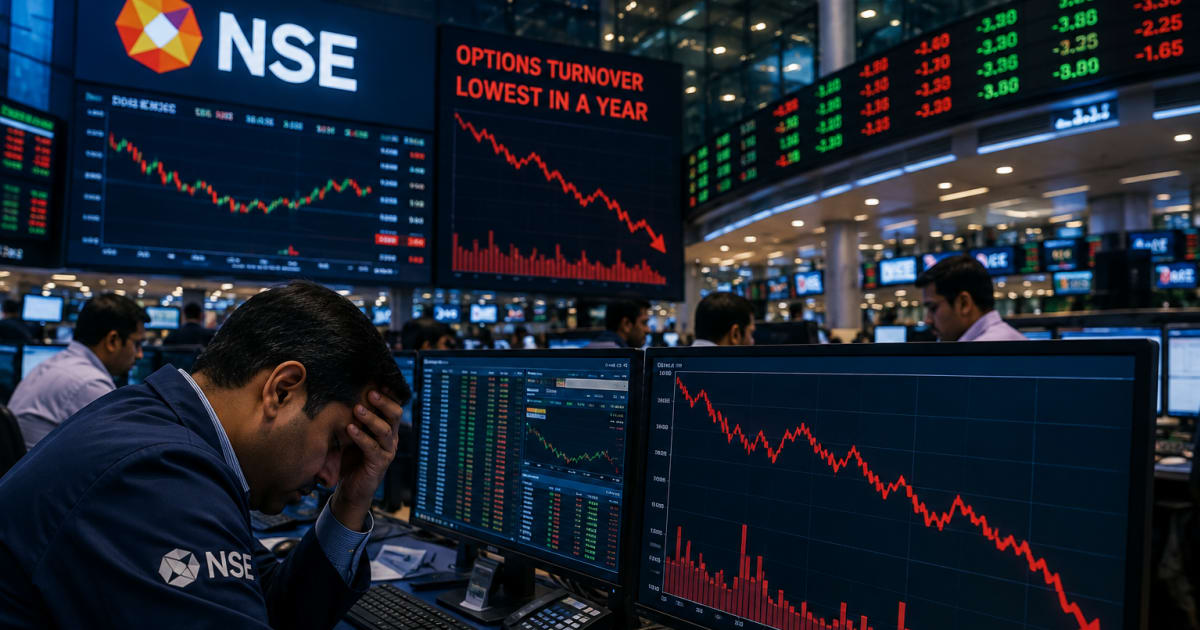
India's National Stock Exchange (NSE) is grappling with a dramatic drop in options turnover, a direct consequence of new trading regulations and a revised closing auction system. This decline casts a long shadow over its long-awaited IPO, potentially forcing a valuation haircut or further delays. The ripple effects extend across the Indian financial ecosystem, impacting brokerage revenues, high-frequency trading firms, and the very depth of the derivatives market.
NSE Options Turnover Plummets: A Deep Dive into India's Derivatives Market Shift
The National Stock Exchange of India (NSE), the undisputed behemoth of India's capital markets, is currently navigating turbulent waters. Recent data reveals a precipitous decline in options turnover, a critical revenue driver and a key indicator of market liquidity. This dramatic shift, largely attributed to new regulatory frameworks and an altered closing auction mechanism, isn't just a blip on the radar; it's a fundamental recalibration with profound implications for the NSE's long-anticipated Initial Public Offering (IPO) and the broader Indian financial landscape.
For years, the NSE's derivatives segment has been a cash cow, propelling it into the ranks of the world's largest exchanges by volume. The allure of its IPO, once pegged at a multi-billion dollar valuation, was largely fueled by the robust growth and consistent profitability of this segment. Now, with volumes shrinking, the very foundation of that valuation is being questioned. This isn't merely an academic exercise; it's a tangible threat to the NSE's financial future and a signal for investors to reassess their exposure to India's dynamic, yet increasingly regulated, derivatives market.
What Triggered the Options Turnover Decline on NSE?
The core of this market upheaval lies in two significant regulatory interventions. Firstly, stricter margin requirements for certain derivative positions have been phased in, increasing the capital commitment needed for traders. This directly impacts leverage-sensitive participants. Secondly, and arguably more impactful, is the revised closing auction system introduced by the NSE. Traditionally, the closing minutes of trading saw a flurry of activity, particularly in options, as traders adjusted positions, hedged exposures, or engaged in high-frequency strategies to capitalize on end-of-day price movements. The new system, designed to curb volatility and potential manipulation, has inadvertently stifled this activity, leading to a noticeable drop in volumes during a historically active period.
Consider the sheer scale: options turnover on the NSE has reportedly plunged by over 30% in recent weeks compared to previous averages. While specific official figures from NSE are awaited, market participants and brokerage houses confirm a substantial contraction. This isn't a cyclical dip; it's a structural change. The last time the Indian derivatives market experienced such a significant structural shift was in 2020 with the introduction of new peak margin rules, which similarly led to an initial volume contraction before adaptation. However, the current decline seems more persistent, given the combined impact of margin changes and the closing auction mechanism.
Deep Market Impact Analysis: Unpacking the Ripple Effects
The implications of this derivatives slowdown extend far beyond the NSE's balance sheet. It touches every corner of the Indian equity market, from institutional investors managing vast portfolios to individual retail traders seeking speculative gains or hedging strategies.
Revenue Hit for Exchanges: For the NSE, derivatives trading fees constitute a substantial portion of its overall revenue. A sustained drop in turnover directly translates to lower transaction charges and clearing fees, impacting its profitability. While the NSE's current market capitalization is not publicly traded, its last reported valuation estimates for the IPO ranged from INR 2.5-3 trillion ($30-36 billion). A significant revenue hit from its derivatives segment could easily shave 10-15% off this valuation, forcing a re-evaluation of its IPO pricing or even a delay.
Brokerage Firms Under Pressure: Brokerage houses, particularly those with a significant reliance on derivatives trading volumes from their high-net-worth individual (HNI) and institutional clients, are feeling the pinch. These firms often generate a substantial chunk of their trading revenue from futures and options (F&O) segments. A decline in volume means fewer trades, lower brokerage commissions, and reduced income from ancillary services like margin funding for derivative positions. This could put pressure on their operating margins and overall profitability. For instance, a brokerage firm generating 40-50% of its trading revenue from F&O would see a direct and immediate impact.
Liquidity and Market Depth Concerns: A decline in options turnover also raises concerns about market depth and liquidity. Derivatives play a crucial role in price discovery and efficient risk management. Reduced activity can lead to wider bid-ask spreads, making it more expensive for participants to enter or exit positions. This increased friction can deter market makers and high-frequency trading (HFT) firms, further exacerbating liquidity issues. In a market known for its robust retail participation in options, this could lead to increased price volatility, particularly in less liquid underlying assets.
Historically, periods of reduced derivatives liquidity, such as during the 2008 global financial crisis or even minor regulatory tweaks in 2017, have often coincided with heightened volatility in the underlying cash market. While the current situation is not as severe, the trend is concerning for market stability.
Stock-by-Stock Breakdown: Who Wins and Who Loses?
The impact of this derivatives market shift will not be uniform. While the NSE itself is the primary affected entity, its unlisted status means investors must look at publicly traded proxies and related entities. Here's a breakdown of specific stocks and sectors:
- ICICI Securities (NSE: ISEC): As one of India's largest retail and institutional brokerage houses, ICICI Securities has a significant exposure to F&O trading. A sustained decline in derivatives volumes will directly impact its broking revenue. Investors should monitor its quarterly results for signs of revenue contraction in its retail and institutional broking segments. Its current P/E ratio of ~15x might face downward pressure if profitability wanes.
- Angel One (NSE: ANGELONE): A leading discount broker with a strong focus on retail traders, Angel One has seen phenomenal growth driven by increased participation in F&O. Its business model is highly sensitive to trading volumes. A reduction in options activity could curb its growth trajectory and impact its client acquisition strategy. Its historical growth rate in client additions and trading activity needs close monitoring.
- Motilal Oswal Financial Services (NSE: MOTILALFS): While diversified across broking, wealth management, and asset management, Motilal Oswal's broking arm still contributes significantly. A slowdown in derivatives trading could affect its overall financial services revenue, though its broader diversification offers some cushion compared to pure-play brokers.
- 5paisa Capital (NSE: 5PAISA): Another prominent discount broker targeting the retail segment, 5paisa Capital's fortunes are closely tied to trading activity. Being a smaller player, it might be more susceptible to volume contractions than larger, more diversified peers.
- Multi Commodity Exchange of India (NSE: MCX): While MCX primarily deals in commodity derivatives, it operates in the same regulatory environment and faces similar challenges regarding market liquidity and participant behavior. Any broader sentiment shift against derivatives or further regulatory tightening could indirectly affect MCX's volumes and investor perception, despite its distinct product offerings.
Sectoral Impact: The Financial Services sector (NSE: NIFTYFIN), particularly the capital market intermediaries, will bear the brunt. While large banks (e.g., HDFC Bank, ICICI Bank) have diversified revenue streams, their investment banking and treasury operations that deal with institutional clients in derivatives could see minor impacts. The broader impact on the NIFTYFIN index itself might be muted due to the dominance of banking giants, but the sub-segment of brokerage and exchange-related firms will show clear signs of stress.
Expert Perspective: Bulls vs. Bears on NSE's Future
The market is sharply divided on the long-term implications of this options turnover dip.
The Bearish Argument: Proponents of a bearish outlook emphasize the structural nature of the decline. They argue that the new regulations are here to stay, and traders will find it harder to generate the same level of activity or profitability. This will permanently impair the NSE's revenue potential from derivatives, forcing a significant downward revision of its IPO valuation. Furthermore, they contend that reduced liquidity could lead to a 'death spiral' where lower volumes deter market makers, leading to even lower liquidity and higher transaction costs, ultimately driving participants away. "This isn't a temporary blip; it's a recalibration of risk-taking in the Indian market," states a veteran derivatives trader at a Mumbai-based prop firm. "The days of easy leverage and high-frequency arbitrage are becoming harder to find."
The Bullish Counter-Argument: Optimists, however, view this as a temporary adjustment period. They point to the inherent adaptability of the Indian market and its participants. They argue that while initial volumes have dipped, traders will eventually find new strategies within the revised regulatory framework. Furthermore, they highlight India's strong economic growth trajectory and increasing financialization, which will continue to attract new participants to the capital markets, including derivatives. "The Indian market has always absorbed regulatory changes," counters a fund manager specializing in emerging markets. "This is a phase of consolidation. The underlying demand for hedging and speculation in a growing economy remains robust. The NSE's brand and market dominance will ensure its long-term success, even if the IPO valuation adjusts slightly." They also suggest that the NSE might introduce new, innovative products or adjust its fee structure to compensate for lost volumes, as it has done in the past.
Actionable Investor Playbook: Navigating the Derivatives Shift
For investors, this situation presents both risks and opportunities. A strategic approach is crucial:
- Sell/Reduce Exposure: Consider reducing exposure to brokerage firms with a high dependence on F&O volumes, especially those with less diversified revenue streams. Stocks like ANGELONE and 5PAISA, while offering high growth potential in bull markets, carry higher sensitivity to derivatives volume shifts.
- Watch Closely: Monitor larger, more diversified financial services entities like ICICI Securities (NSE: ISEC) and Motilal Oswal (NSE: MOTILALFS). While not immune, their broader business lines offer some resilience. Watch their quarterly earnings calls for specific commentary on derivatives volumes and their impact.
- Consider Alternatives: Look for opportunities in sectors less directly impacted by derivatives trading, or in financial services firms with strong asset management or wealth management divisions, which offer more stable, fee-based revenue.
- Time Horizon: For short-term traders, the increased volatility and wider spreads in options might present opportunities, but with higher risk. Long-term investors should factor in a potentially lower growth trajectory for derivatives-heavy financial intermediaries and adjust their valuation models accordingly.
- Entry Points: Any significant dip in the share prices of affected brokerage firms, driven by this news, could present an attractive entry point for long-term investors who believe in the eventual adaptation of the market and the continued growth story of India. However, this requires a conviction that the current regulatory headwinds are temporary or manageable.
Risk Matrix: Assessing the Potential Downside
- Continued Low Turnover (Probability: Medium-High): If options turnover remains suppressed for an extended period (beyond 2-3 quarters), the NSE might be forced to significantly delay its IPO or accept a substantially lower valuation. This would also put sustained pressure on brokerage profitability.
- Regulatory Escalation (Probability: Medium): Further regulatory tightening, such as increased transaction taxes on F&O or stricter position limits, could further exacerbate the problem, making derivatives trading even less attractive. This risk is always present in a dynamic regulatory environment.
- Reduced Market Depth & Increased Volatility (Probability: Medium): A persistent decline in liquidity could lead to wider bid-ask spreads and higher price volatility, making it more challenging for all market participants, from hedgers to speculators. This could deter foreign institutional investors (FIIs) who rely on deep, liquid markets.
- Brokerage Firm Consolidations (Probability: Low-Medium): Smaller, less capitalized brokerage firms heavily reliant on F&O income might face severe financial stress, potentially leading to consolidations or exits from the market if profitability becomes unsustainable.
What to Watch Next: Upcoming Catalysts and Data Releases
Investors should keep a close eye on several key indicators and events:
- NSE's Official Statements: Any public statements from the NSE regarding its IPO timeline, valuation expectations, or plans to address the derivatives volume decline will be critical.
- Quarterly Earnings of Brokerage Firms: The upcoming quarterly results (Q4 FY24 and Q1 FY25) of listed brokerage firms (e.g., ICICI Securities, Angel One) will provide concrete data on the impact of reduced F&O volumes on their revenue and profitability. Pay attention to management commentary on client activity and future outlook.
- SEBI's Stance: Any further communications or clarifications from the Securities and Exchange Board of India (SEBI) regarding derivatives regulations, especially concerning the closing auction or margin requirements, could significantly alter the market dynamics.
- Market Participant Feedback: Anecdotal evidence and surveys from brokerage houses, proprietary trading firms, and institutional investors about their trading strategies and challenges will offer real-time insights into market sentiment and adaptation.
- New Product Launches: The NSE might attempt to introduce new derivative products or modify existing ones to reignite interest and volumes. Any such announcement would be a significant catalyst.
The current situation with NSE's options turnover is a litmus test for the resilience and adaptability of India's capital markets. While challenges are evident, the long-term growth story of India remains compelling. However, investors must differentiate between broad market trends and specific sectoral headwinds to make informed decisions.
Run a free AI Stock Screen
Our algorithmic screener scores any NSE/BSE stock on fundamentals, momentum, and risk — free to try, no card needed.
Try the AI Screener →Have questions about this story?
Ask Welth, our finance-focused AI research assistant, for a deeper breakdown — free trial included.
Chat with Welth AI →Disclaimer: This content is generated by WelthWest Research Desk based on publicly available reports and is for informational purposes only. It does not constitute financial advice, investment recommendations, or an offer to buy or sell securities. Always consult a qualified financial advisor before making investment decisions.