Key Takeaway
Ola Electric's deferred ₹1,000 crore rights issue and CEO Bhavish Aggarwal's stake pledge reflect a potential recalibration of valuation expectations in India's EV startup ecosystem. This event, while specific to an unlisted entity, casts a spotlight on the broader funding climate for high-growth, capital-intensive EV ventures, potentially influencing future investor sentiment and IPO prospects within the auto sector.
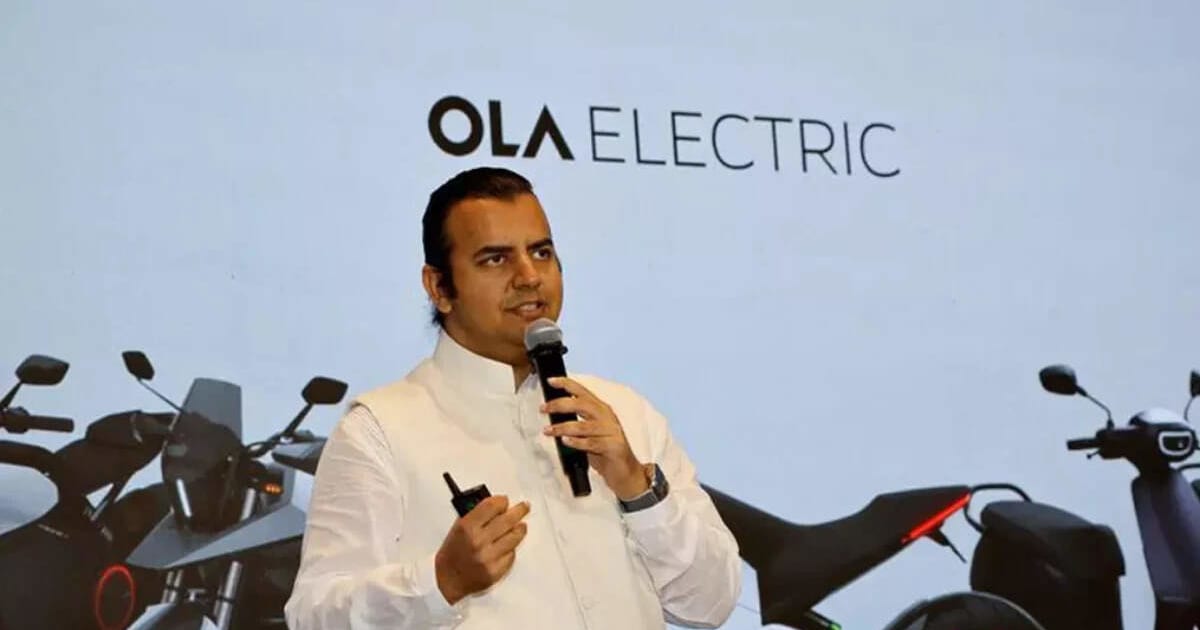
Ola Electric, a prominent Indian EV manufacturer, has deferred a significant ₹1,000 crore rights issue, with its CEO pledging personal stake as a show of confidence. This move, while not directly impacting public markets, signals potential shifts in the private EV funding landscape. Our deep dive explores the implications for investor sentiment, the broader auto sector, and offers an actionable playbook for navigating this evolving environment.
Ola Electric's Funding Recalibration: A Bellwether for India's EV Startup Ecosystem?
The recent deferral of Ola Electric's ambitious ₹1,000 crore rights issue, coupled with CEO Bhavish Aggarwal's personal stake pledge, has sent ripples through India's burgeoning electric vehicle (EV) startup landscape. While Ola Electric remains a privately held entity, this development is far more than an internal corporate decision; it serves as a crucial barometer for the health and evolving dynamics of private capital allocation within the capital-intensive EV sector, with potential knock-on effects for publicly traded auto ancillaries and future IPO aspirants.
At WelthWest Research Desk, we believe this event signals a potential re-evaluation of valuation benchmarks and investor appetite for high-growth, pre-profit EV ventures. In an environment where capital efficiency and clear paths to profitability are gaining precedence over hyper-growth narratives, the deferral could indicate a more cautious approach from institutional investors or internal adjustments to strategic funding pathways. Understanding these nuances is critical for investors navigating the Indian auto sector's electrifying transformation.
What Happened with Ola Electric and Why Does it Matter Now?
Ola Electric, a dominant force in India's two-wheeler EV segment, had plans to raise ₹1,000 crore via a rights issue – a mechanism typically used by public companies but also employed by private firms to raise capital from existing shareholders. The board meeting scheduled to approve this crucial fundraising initiative was deferred, with the company’s founder and CEO, Bhavish Aggarwal, subsequently pledging a portion of his personal stake as a gesture of commitment and confidence in the company’s trajectory. This move, while aimed at bolstering investor trust, simultaneously highlights the immediate capital requirements and the strategic maneuvering involved in securing funding for rapidly expanding, yet loss-making, ventures.
This development matters now because it unfolds against a backdrop of increasing scrutiny on tech and startup valuations globally. Post-pandemic, the 'growth at all costs' mantra has given way to a focus on sustainable unit economics and profitability. For a company like Ola Electric, which commands a significant market share in a nascent but fiercely competitive sector, securing capital at a desirable valuation is paramount for continued expansion, R&D, and infrastructure development. Any perceived hitch in this process, even for a private entity, can influence broader investor perceptions of the sector's risk-reward profile, potentially impacting future public market listings and the funding environment for other unlisted EV players.
Deep Market Impact Analysis: Navigating EV Sector Headwinds in India
While Ola Electric is not listed on the NSE or BSE, its funding dynamics are not isolated from the broader Indian stock market, particularly the auto sector. The deferral could trigger a recalibration of investor sentiment towards the entire EV value chain, from component manufacturers to charging infrastructure providers, as it hints at potential challenges in converting ambitious growth projections into sustained profitability without continuous capital infusions at premium valuations.
Historically, periods of funding uncertainty for prominent private players in a sunrise sector have often led to a temporary cooling of investor enthusiasm for listed peers. For instance, during the dot-com bust of 2000-2001, even established tech companies on the BSE saw significant valuation corrections as private funding dried up for nascent internet ventures. While the current situation is far from a bust, it underscores the sensitivity of investor sentiment to capital availability. The Indian EV market is projected to reach $150 billion by 2030, but achieving this growth requires consistent, well-priced capital. If private valuations come under pressure, it could make IPOs of other EV startups less attractive, potentially shifting investor focus towards established automotive players with robust balance sheets and diversified portfolios, such as Maruti Suzuki (NSE: MARUTI) or Tata Motors (NSE: TATAMOTORS), which are making significant strides in EVs through internal funding.
The impact is likely to be felt most acutely by companies whose growth narratives are heavily tied to the rapid expansion of the overall EV ecosystem, rather than just internal combustion engine (ICE) vehicle sales. This includes battery manufacturers, charging station developers, and specialized component suppliers. A perceived slowdown in private EV investment could translate into slower order book growth for these entities, even if their fundamentals remain strong.
Stock-by-Stock Breakdown: Who Wins and Loses from EV Funding Shifts?
The Ola Electric situation, while not directly tied to listed stock performance, creates a ripple effect across the Indian automotive and ancillary sectors. Here's how specific NSE/BSE stocks could be impacted:
- Tata Motors (NSE: TATAMOTORS): As a diversified auto giant with a strong EV portfolio (Nexon EV, Tiago EV) and significant internal funding capabilities, Tata Motors could ironically benefit from potential funding headwinds for pure-play EV startups. Investors might increasingly view TATAMOTORS as a 'safer' bet within the EV space, offering established manufacturing, distribution, and a proven track record. Its current market capitalization stands at approximately ₹3.1 lakh crore, with a P/E ratio of around 15x (TTM, adjusted for one-offs), which appears attractive compared to the astronomical valuations often sought by unlisted EV startups. Any slowdown in competitors' expansion due to funding issues could solidify Tata Motors' market leadership in India's passenger EV segment.
- Maruti Suzuki India Ltd. (NSE: MARUTI): While slower to embrace EVs, Maruti's massive distribution network and financial strength position it well to capture market share once its EV offerings scale up. Should private EV startups face valuation or funding challenges, Maruti's methodical, internally funded EV strategy might appear more appealing to cautious investors. MARUTI, with a market cap of over ₹3.4 lakh crore and a P/E of roughly 29x, represents stability, and a shift in investor preference towards established players could see a rerating, especially as its EV pipeline matures.
- Exide Industries Ltd. (NSE: EXIDEIND): A major player in lead-acid batteries, Exide is strategically investing in lithium-ion battery manufacturing, crucial for EVs. However, if the overall pace of EV adoption by new entrants slows due to funding challenges, the demand for battery components could be indirectly affected. While Exide's long-term prospects in the EV battery space remain strong, a near-term sentiment dampener could see some pressure on its stock. Its current market cap is around ₹29,000 crore.
- Sona BLW Precision Forgings Ltd. (NSE: SONACOMS): Sona Comstar is a leading global supplier of precision-forged components for EVs and conventional vehicles. Its strong order book for EV components makes it a direct beneficiary of EV growth. However, if new EV model launches or production ramp-ups by smaller players are delayed due due to funding constraints, SONACOMS' growth trajectory, currently priced at a premium (P/E over 70x), could see some short-term volatility. The market might re-evaluate the risk associated with a high dependency on the overall health of the EV ecosystem, especially with a market cap of approximately ₹33,000 crore.
- Greaves Cotton Ltd. (NSE: GREAVESCOT): Through its Ampere Electric brand, Greaves Cotton is a significant player in the electric two-wheeler and three-wheeler segments, directly competing with Ola Electric in parts of the market. While Ola's funding deferral might open up space for competitors in the long run, in the short term, it signals potential sector-wide challenges in fundraising and valuation. This could lead to increased caution among investors for companies like GREAVESCOT, which are also in growth phases within the EV space and require capital for expansion. Its market cap is around ₹3,300 crore.
Expert Perspective: Bulls vs. Bears on Indian EV Funding
The Ola Electric situation elicits divergent views among market experts:
The Bulls argue: "This is a temporary blip, a market correction in private valuations, not a fundamental flaw in India's EV story. The underlying demand for electric mobility, driven by government incentives, rising fuel costs, and environmental consciousness, remains robust. Established players with strong balance sheets and diversified product portfolios like Tata Motors will continue to thrive, and any funding 'shakeout' simply strengthens the survivors. Bhavish Aggarwal's stake pledge is a strong signal of founder conviction, which should reassure investors about the company's long-term vision. This merely means a more realistic valuation environment, which is healthier for the sector in the long run, preventing unsustainable bubbles."
The Bears counter: "The deferral signals deeper issues. High burn rates, intense competition, and the sheer capital intensity of scaling EV manufacturing mean that even prominent startups are struggling to secure funding at previous premium valuations. This isn't just about Ola Electric; it's a warning shot for the entire unlisted EV ecosystem. If a market leader faces such hurdles, what does it mean for smaller, less established players? It suggests a tougher road ahead for IPOs, potentially delaying market access for many EV pure-plays. Investors should exercise extreme caution, focusing on profitability and proven business models rather than relying solely on growth narratives fueled by private capital."
Actionable Investor Playbook: Navigating EV Sector Volatility
For investors looking to capitalize on or mitigate risks from the evolving EV funding landscape, here's an actionable playbook:
- Watch for Quality in Established Players (Buy/Accumulate): Focus on auto majors like Tata Motors (NSE: TATAMOTORS) and Maruti Suzuki (NSE: MARUTI). Their diversified revenue streams, strong balance sheets, and internal funding capabilities make them more resilient to private market funding fluctuations. Look for entry points during any sector-wide corrections. Tata Motors, with its aggressive EV push and global footprint, remains a compelling long-term play.
- Selective Engagement in Ancillaries (Watch/Hold): Companies like Sona BLW Precision Forgings (NSE: SONACOMS) and Exide Industries (NSE: EXIDEIND) are critical to the EV ecosystem. However, their valuations often reflect aggressive growth assumptions. Monitor their order books, client diversity, and profitability metrics closely. Any sustained slowdown in new EV model launches could impact their near-term performance. Consider holding existing positions but be cautious about new aggressive entries until more clarity emerges on the broader EV funding environment.
- Avoid Speculative Bets on 'Proxy' EV Plays (Sell/Avoid): Steer clear of smaller, less established companies whose stock prices have surged purely on the 'EV theme' without robust fundamentals, clear profitability pathways, or significant market share. These are most vulnerable to sentiment shifts and funding contagion.
- Long-Term Horizon for True Innovators: For investors with a time horizon of 5-10 years, the Indian EV story remains intact. This current phase might present opportunities to accumulate quality stocks during periods of short-term volatility. The goal is to identify companies that can weather funding cycles and emerge stronger.
Risk Matrix: Assessing the Road Ahead for Indian EV Investments
The Ola Electric situation highlights several pertinent risks for investors in the Indian EV space:
- Valuation Correction in Private EV Market (Probability: Medium-High): The deferral could indicate that private investors are demanding more realistic valuations, moving away from hyper-growth multiples. This could make future fundraising more challenging for other unlisted EV startups and potentially delay their IPO plans.
- Slower Pace of EV Adoption for New Entrants (Probability: Medium): If funding becomes scarce, smaller EV players might struggle to scale production, expand charging infrastructure, or invest in R&D, potentially slowing the overall pace of market penetration by new brands. This benefits established players.
- Increased Competition from ICE Majors (Probability: High): As the private EV startup space faces headwinds, traditional auto manufacturers with deep pockets and established supply chains (e.g., Mahindra & Mahindra, Hyundai India) are likely to intensify their EV strategies, presenting stiffer competition.
- Regulatory and Policy Uncertainty (Probability: Medium): While the Indian government is supportive of EVs, any changes to subsidies, FAME II scheme extensions, or import duties could significantly alter the economic viability of EV projects, impacting both listed and unlisted entities.
What to Watch Next: Catalysts and Data Points
Investors should closely monitor the following developments to gauge the trajectory of India's EV market and its listed players:
- Ola Electric's Next Funding Round: The eventual outcome of Ola Electric's fundraising efforts, whether through a rights issue, private placement, or pre-IPO round, will be a key indicator of investor appetite and valuation benchmarks for the sector. Watch for announcements regarding successful capital raises or further deferrals.
- Q3 and Q4 FY24 Earnings of Auto & Ancillary Companies: Pay close attention to management commentary on EV order books, production ramp-ups, and capital expenditure plans from listed players like Tata Motors, Maruti, Exide, and Sona Comstar. Any revised guidance related to EV segments will be crucial.
- Monthly EV Sales Data: Track the sales figures for electric two-wheelers, three-wheelers, and passenger vehicles. Sustained growth, especially from established brands, would signal underlying market strength despite funding noise.
- Government Policy Updates: Keep an eye on any new announcements regarding EV subsidies, charging infrastructure development, or battery manufacturing incentives from the Ministry of Heavy Industries or NITI Aayog.
- IPO Pipeline for Other EV Startups: Any news regarding the public listing plans of other prominent Indian EV startups will provide insights into the broader market's readiness to absorb new EV equity offerings.
The deferral of Ola Electric's rights issue is a significant moment for India's EV ecosystem. It underscores the transition from a 'growth-at-any-cost' mentality to a more discerning approach focused on sustainable business models and realistic valuations. For savvy investors, this period of recalibration offers both challenges and unique opportunities to position portfolios for the long-term electrification of Indian mobility.
Run a free AI Stock Screen
Our algorithmic screener scores any NSE/BSE stock on fundamentals, momentum, and risk — free to try, no card needed.
Try the AI Screener →Have questions about this story?
Ask Welth, our finance-focused AI research assistant, for a deeper breakdown — free trial included.
Chat with Welth AI →Disclaimer: This content is generated by WelthWest Research Desk based on publicly available reports and is for informational purposes only. It does not constitute financial advice, investment recommendations, or an offer to buy or sell securities. Always consult a qualified financial advisor before making investment decisions.