Key Takeaway
The Pemex-Petrobras alliance signals a technological shift in deep-water extraction that could stabilize global crude supply, offering a long-term 'stability hedge' for Indian refiners while forcing domestic explorers like ONGC to accelerate their technical capabilities.
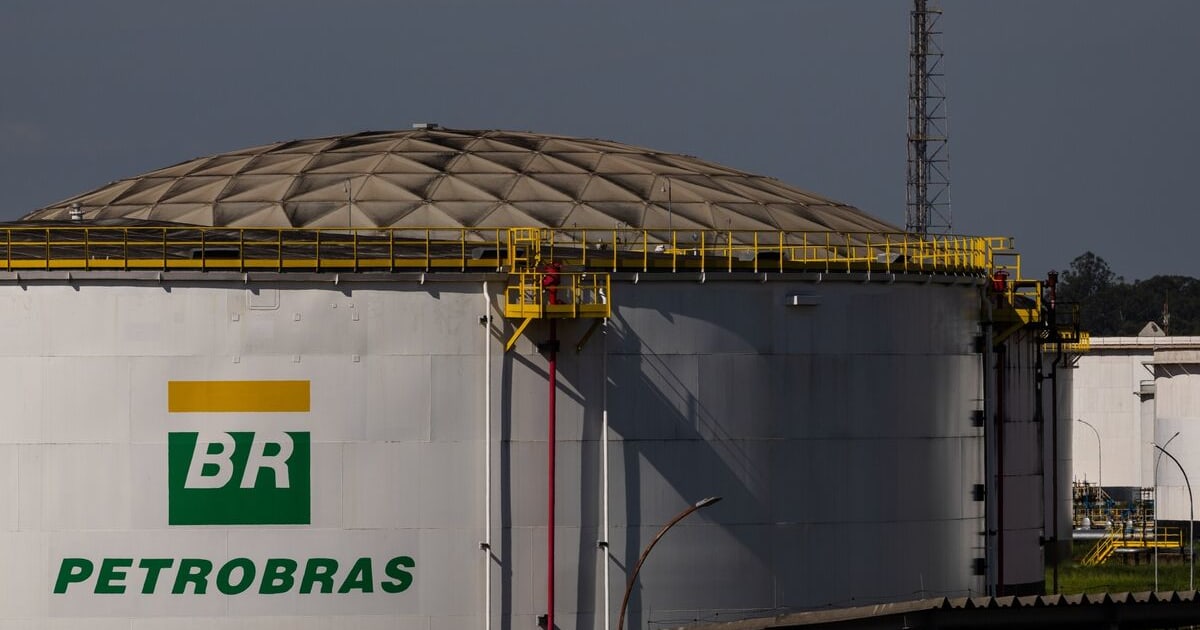
As Mexico's Pemex and Brazil's Petrobras join forces to exploit massive pre-salt oil reserves, the global energy landscape is poised for a supply-side shift. This analysis explores how this Latin American partnership influences Indian crude import costs and the valuation of NSE-listed energy stocks.
The Latin American Energy Pivot: Why the Pemex-Petrobras Alliance Matters Today
In a move that has sent ripples through the global energy corridors, Petróleos Mexicanos (Pemex) and Petróleo Brasileiro S.A. (Petrobras) have formalized a strategic alliance aimed at conquering the final frontier of conventional oil: the pre-salt layers. To the uninitiated, pre-salt oil refers to high-quality crude trapped beneath thick layers of salt, often miles below the ocean floor. While the technical challenges are immense, the rewards are transformative. Petrobras, globally recognized as the pioneer of pre-salt extraction, is bringing its 'Lula' and 'Libra' field expertise to Mexican waters, where Pemex has struggled with declining production from mature shallow-water fields.
Why does this matter now? We are currently in a volatile 'higher-for-longer' energy environment where OPEC+ supply cuts are battling sluggish global demand. By unlocking pre-salt reserves, which are estimated to hold tens of billions of barrels, these two giants are creating a non-OPEC supply buffer. For India, the world’s third-largest oil consumer importing over 85% of its crude requirements, any structural increase in global supply is a macroeconomic win. Historically, when non-OPEC production increases—much like the U.S. Shale Revolution of 2014—Indian markets see a cooling of the Current Account Deficit (CAD) and a subsequent re-rating of refining stocks.
How will the Pemex-Petrobras deal affect Indian crude oil prices?
The primary mechanism through which this alliance affects the Indian market is the Global Supply Elasticity. Pre-salt oil is typically 'light and sweet,' similar to the Brent benchmark that dictates Indian basket pricing. As Petrobras shares its proprietary deep-water drilling technologies with Pemex, the cost of extraction in the Gulf of Mexico is expected to drop from the current high-marginal costs to a more competitive $35-$45 per barrel range.
For the Indian economy, the math is simple but profound. According to RBI research, every $10 per barrel increase in oil prices can impact India’s GDP growth by approximately 30-35 basis points and widen the CAD by 0.5%. Conversely, a Pemex-Petrobras success story provides a long-term 'cap' on price spikes. When the pre-salt fields in Brazil's Santos Basin ramped up production in 2021-2022, it provided a critical offset to the supply shocks caused by geopolitical tensions in Eastern Europe, preventing Brent from sustaining levels above $120 for extended periods.
Deep Market Impact: Connecting the Dots to the NSE and BSE
The impact on the Indian energy sector is bifurcated into two categories: the Upstream Explorers and the Downstream Refiners.
- Upstream Pressure: Companies like ONGC and Oil India are currently under pressure to increase domestic production. The Pemex-Petrobras alliance sets a new global benchmark for 'Technical Efficiency.' If Petrobras can successfully extract oil at 5,000 meters depth at a profit, Indian investors will demand similar technological leaps from ONGC in the Krishna-Godavari (KG) Basin.
- Downstream Stability: For refiners like Reliance Industries and BPCL, the diversification of global supply sources reduces 'Geopolitical Premium' costs. A more liquid global market allows these firms to optimize their crude sourcing mix, potentially boosting Gross Refining Margins (GRMs) by $0.50 to $1.00 per barrel over a 3-year horizon.
“The Pemex-Petrobras alliance is not just a regional deal; it is a signal that the technology to unlock the world’s most difficult oil is becoming commoditized. This is a long-term bearish signal for crude prices and a bullish signal for oil-importing economies like India.” — Senior Analyst, WelthWest Research
Stock-by-Stock Breakdown: Indian Energy Winners and Watchlist
1. Oil and Natural Gas Corporation (NSE: ONGC)
Impact: Neutral to Negative. ONGC (Market Cap: ~₹2.4 Trillion, P/E: ~5.2) is the closest Indian parallel to Pemex. Both are state-backed giants grappling with aging fields. The Pemex-Petrobras deal puts a spotlight on ONGC's deep-water capabilities in the KG-DWN-98/2 block. Investors should watch if ONGC seeks similar technical partnerships with Petrobras to de-risk its high-capex offshore projects. Failure to match global efficiency gains could lead to a valuation discount relative to global peers.
2. Reliance Industries Ltd (NSE: RELIANCE)
Impact: Positive. Reliance operates the world’s largest refining complex at Jamnagar. With a P/E ratio hovering around 25-28, RIL's valuation is driven by its ability to process 'complex' crudes. Pre-salt crude, while high quality, requires sophisticated refining to maximize value. Reliance is perfectly positioned to bid for this Latin American crude if it reaches the spot market, potentially improving its GRMs compared to less complex state-run refiners.
3. Oil India Ltd (NSE: OIL)
Impact: Neutral. Oil India (Market Cap: ~₹60,000 Cr) has a smaller offshore footprint than ONGC but is aggressive in international acquisitions. This alliance may open doors for Oil India to participate in farm-in opportunities in the Mexican pre-salt blocks as Pemex looks for capital partners to fund the Petrobras-led technical projects.
4. Larsen & Toubro (NSE: LT)
Impact: Positive. L&T’s Hydrocarbon segment is a major beneficiary of global offshore Capex. As Pemex and Petrobras ramp up deep-water infrastructure spending, the global demand for offshore platforms, subsea pipelines, and modules will surge. L&T, with its massive fabrication yards and international execution track record, is a prime 'pick-and-shovel' play for this deep-water revolution.
Expert Perspective: The Bull vs. Bear Case
The Bull Case: Optimists argue that this alliance will lead to a 'Golden Age' of deep-water exploration. By pooling resources, Pemex and Petrobras reduce the individual risk of 'dry holes.' For India, this means a more stable Brent price environment (range-bound between $70-$85), which is the 'Goldilocks zone' for the Indian economy—high enough to encourage domestic production but low enough to keep inflation in check.
The Bear Case: Contrarians point to the 'Political Risk' inherent in both Mexico and Brazil. Both companies have historically been used as fiscal tools by their respective governments. A shift in political leadership could lead to 'Resource Nationalism,' where the benefits of the alliance are swallowed by domestic subsidies or sudden changes in tax regimes. Furthermore, the high Capex required for pre-salt (often exceeding $10 billion per project) could strain balance sheets if oil prices dip below $60.
Actionable Investor Playbook: How to Position Your Portfolio
Investors should not expect an immediate 10% jump in Indian stocks based on this news. Instead, this is a structural catalyst.
- The Long-Term Play: Accumulate Reliance Industries on dips. Its refining complexity is a natural hedge against shifting crude qualities coming out of the pre-salt layers.
- The Technical Play: Monitor L&T. Its hydrocarbon order book is a leading indicator of global offshore health. If L&T starts winning subsea contracts in Latin America, it’s a confirmation of the pre-salt boom.
- The Yield Play: ONGC remains a dividend play. While its growth may be capped by the technical challenges of matching Petrobras, its current P/E suggests much of the risk is already priced in. Entry point: Look for support levels near the 200-day EMA.
Risk Matrix: What Could Go Wrong?
- Technical Complexity (Probability: High): Pre-salt drilling involves managing extreme pressures. A single 'Deepwater Horizon' type event in the Gulf of Mexico would halt the alliance and spike global prices.
- Political Volatility (Probability: Medium): Upcoming elections or policy shifts in Brazil or Mexico could deprioritize international cooperation in favor of state-controlled isolation.
- Energy Transition (Probability: Low in the short-term): Rapid acceleration in EV adoption could peak oil demand before these pre-salt fields reach full capacity in the 2030s, turning them into 'stranded assets.'
What to Watch Next
Keep a close eye on the first joint bidding round for Mexican pre-salt blocks, expected in the coming quarters. Additionally, watch for the IEA Oil Market Report updates on non-OPEC supply forecasts. If the IEA begins revising Mexican production upwards for 2026-2027, that will be the signal that the Pemex-Petrobras alliance is yielding tangible results, providing a 'green light' for long-term positions in Indian energy and infrastructure stocks.
See ONGC's AI Score
Our algorithmic screener scores ONGC on fundamentals, momentum, and risk — free to try, no card needed.
Try the AI Screener →Have questions about this story?
Ask Welth, our finance-focused AI research assistant, for a deeper breakdown — free trial included.
Chat with Welth AI →Disclaimer: This content is generated by WelthWest Research Desk based on publicly available reports and is for informational purposes only. It does not constitute financial advice, investment recommendations, or an offer to buy or sell securities. Always consult a qualified financial advisor before making investment decisions.