Key Takeaway
The RBI is signaling a shift from 'innovation at all costs' to 'governed growth.' Investors must pivot toward banks with robust tech-governance and avoid NBFCs relying on 'black-box' credit models that lack transparency.
The Reserve Bank of India (RBI) has issued a significant warning regarding the unbridled integration of AI in financial services, citing systemic risks like algorithmic bias and data breaches. This move foreshadows a strict regulatory framework that will reshape the competitive landscape of the Indian banking sector. We analyze the winners, the losers, and the specific NSE/BSE stocks that will feel the heat of this digital pivot.
The Digital Sentinel: Why the RBI’s AI Cautionary Note is a Watershed Moment
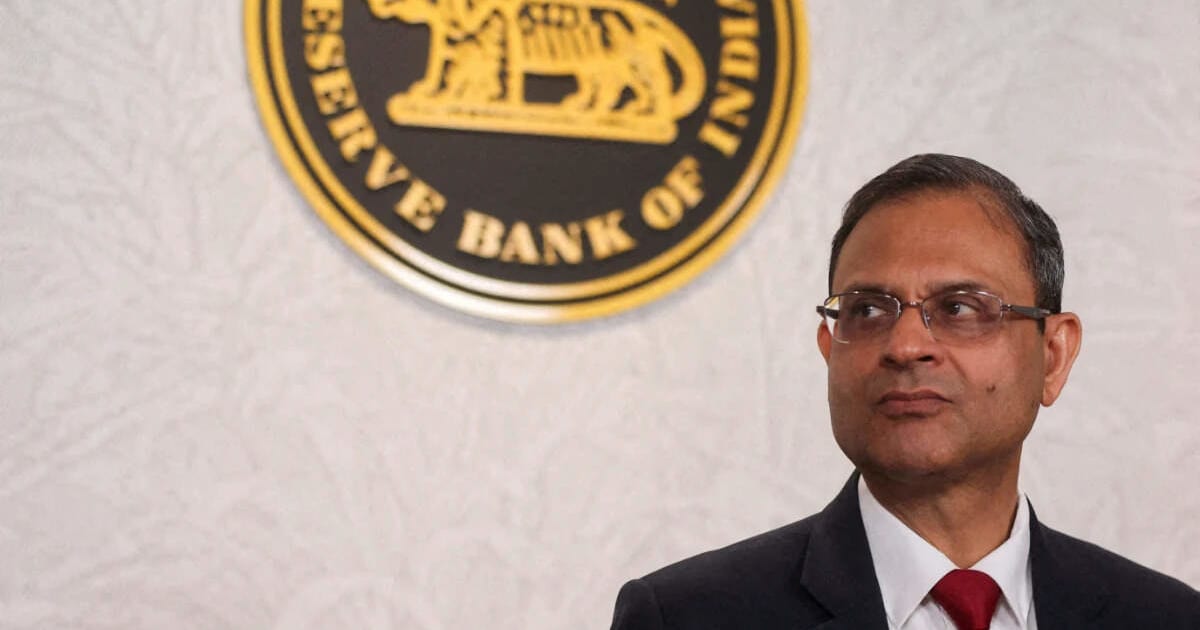
In a financial ecosystem increasingly driven by algorithms, the Reserve Bank of India (RBI) has fired a warning shot that reverberated across the Dalal Street boardrooms. Deputy Governor Swaminathan J’s recent remarks on the risks of Artificial Intelligence (AI) without adequate safeguards mark a transition point for Indian banking. This isn't merely a suggestion; it is the precursor to a formal regulatory framework that will likely mandate algorithmic transparency, data sovereignty, and ethical AI audits.
For the uninitiated, the Indian banking sector has been on a digital tear. From automated credit scoring to AI-driven customer service bots, the 'cost-to-income' ratios of major lenders like HDFC Bank (HDFCBANK) and ICICI Bank (ICICIBANK) have been optimized through technology. However, the RBI is now highlighting the 'black box' problem—where even the bankers don't fully understand why an AI model rejected a loan or how it might behave during a liquidity crunch. This 'model opacity' is now viewed as a systemic risk to the Indian economy.
How will RBI AI regulations affect bank stocks and fintech growth?
The immediate impact will be felt in the Operating Expenses (Opex) of financial institutions. When the RBI tightened norms on unsecured lending in November 2023, the Nifty Bank index saw a sharp correction of nearly 3% within a week as markets priced in slower growth. Similarly, a mandate for 'Explainable AI' (XAI) will require banks to overhaul their tech stacks. We expect a 50-100 basis point increase in IT spending as a percentage of total revenue for mid-tier banks and NBFCs over the next 24 months.
Deep Market Impact: The Shift from 'Growth' to 'Governance'
The Indian stock market has historically rewarded aggressive digital adopters. However, the narrative is shifting toward 'Quality of Tech' rather than 'Quantity of Tech.' Historically, when the RBI introduces tighter oversight—much like the Asset Quality Review (AQR) of 2015—the initial reaction is a compression in P/E multiples for the sector. Currently, the Nifty Bank trades at a Price-to-Book (P/B) ratio of approximately 2.8x, which is near its long-term average. Any regulatory friction that slows down credit disbursement via AI models could lead to a de-rating of high-growth NBFCs that currently trade at premium valuations of 4x-6x P/B.
"AI in the hands of a bank without a robust governance framework is like a high-speed train without brakes. The RBI is simply ensuring the tracks are reinforced before the speed increases." — Senior Analyst at WelthWest Research.
We anticipate a divergence in the performance of the Nifty Financial Services Index. Firms that have already invested in 'Data Governance' will see their compliance costs stay flat, while laggards will face significant margin pressure. This creates a 'moat' for the 'Big Three' (HDFC, ICICI, SBI) while posing an existential threat to smaller fintechs that rely on aggressive, opaque algorithms to capture market share.
Stock-by-Stock Breakdown: Identifying the Beneficiaries and the Vulnerable
1. HDFC Bank (NSE: HDFCBANK) | Market Cap: ₹12.5 Trillion
HDFC Bank is currently in the middle of a massive tech transformation post-merger. While higher compliance costs are a headwind, HDFC's scale allows it to absorb these costs more efficiently than smaller peers. With a P/E ratio hovering around 19x, the stock remains a 'Safety Play.' The RBI’s move might actually help HDFC Bank by slowing down the aggressive customer acquisition of smaller fintech rivals who were using 'loose' AI models to undercut the market leader.
2. State Bank of India (NSE: SBIN) | Market Cap: ₹7.5 Trillion
SBI sits on the largest repository of financial data in India. The challenge for SBI has always been the modernization of legacy systems. The RBI's focus on AI risks will force SBI to accelerate its 'YONO 2.0' evolution with a focus on security. Trading at a P/B of 1.6x, SBI offers deep value, but the risk of 'implementation lag' in complex AI governance remains a key monitorable for investors.
3. LTIMindtree (NSE: LTIM) | Market Cap: ₹1.8 Trillion
LTIMindtree is a primary beneficiary. As banks scramble to comply with new RBI AI standards, they will turn to Tier-1 IT consultants. LTIM has a strong footprint in the BFSI (Banking, Financial Services, and Insurance) vertical, which contributes over 35% of its revenue. Expect a surge in 'RegTech' and 'Data Auditing' contracts for LTIM in the coming quarters.
4. Tata Elxsi (NSE: TATAELXSI) | Market Cap: ₹450 Billion
While often associated with automotive tech, Tata Elxsi's 'AI Safety' and 'Ethical AI' frameworks are world-class. As the RBI mandates third-party audits for AI models in banking, Tata Elxsi’s niche expertise in high-reliability software makes it a dark horse winner in this regulatory cycle.
5. Quick Heal Technologies (NSE: QUICKHEAL) | Market Cap: ₹35 Billion
Cybersecurity is the flip side of the AI coin. AI-driven fraud is a major concern for the RBI. Quick Heal, through its enterprise arm 'Seqrite,' is well-positioned to capture the increased cybersecurity spend from cooperative banks and smaller NBFCs that are now required to fortify their digital perimeters by the regulator.
Expert Perspective: The Bull vs. Bear Debate on AI Regulation
The Bull Case: Proponents argue that the RBI's proactive stance prevents a 'Flash Crash' style event in the Indian credit market. By mandating safeguards now, the RBI is ensuring that the 15-20% credit growth seen in the Indian economy remains sustainable and doesn't lead to a spike in NPAs (Non-Performing Assets) caused by faulty automated lending decisions.
The Bear Case: Contrarians suggest that the 'Regulatory Sandbox' is becoming a 'Regulatory Cage.' They argue that excessive compliance will stifle innovation, making Indian banks less competitive against global fintech giants. This could lead to a 'brain drain' of AI talent from the Indian financial sector to more liberal jurisdictions like Dubai or Singapore.
Actionable Investor Playbook: Navigating the AI Regulatory Wave
- Short-term (0-6 months): Accumulate Tier-1 IT stocks on dips. The demand for compliance-related software is inelastic. Watch for the RBI's upcoming 'Master Direction' on Digital Lending for more clues.
- Medium-term (6-18 months): Be cautious with 'Fintech-first' NBFCs. If their cost of acquisition rises due to regulatory friction, their valuations will compress. Look for entry points in HDFC Bank if it touches the ₹1,450-₹1,500 range.
- Long-term (2+ years): Focus on 'Data Governance' specialists. The future of banking isn't just about who has the best AI, but who has the most 'compliant' AI.
Risk Matrix: Assessing the Downside
- Regulatory Overreach (Probability: High): The RBI might impose such stringent audit requirements that small-ticket digital lending becomes unviable, impacting the 'Financial Inclusion' narrative.
- Cybersecurity Breach (Probability: Medium): Even with safeguards, the rapid deployment of AI creates new attack vectors. A major breach at a Top-5 bank could lead to a sector-wide sell-off.
- Global Tech Slowdown (Probability: Low): While domestic demand is strong, any global pullback in AI investment could slow down the local implementation of these safeguards.
What to Watch Next: The Catalysts
Investors should keep a close eye on the RBI’s Monetary Policy Committee (MPC) minutes and any follow-up circulars from the Department of Supervision. Specifically, watch for the launch of a 'National AI Governance Framework' for financial services. Additionally, the quarterly earnings calls of LTIMindtree and Tata Elxsi will provide the first data points on whether banks are already increasing their 'RegTech' budgets. The next 12 months will separate the tech-leaders from the tech-pretenders in the Indian banking space.
See HDFC BANK's AI Score
Our algorithmic screener scores HDFC BANK on fundamentals, momentum, and risk — free to try, no card needed.
Try the AI Screener →Have questions about this story?
Ask Welth, our finance-focused AI research assistant, for a deeper breakdown — free trial included.
Chat with Welth AI →Disclaimer: This content is generated by WelthWest Research Desk based on publicly available reports and is for informational purposes only. It does not constitute financial advice, investment recommendations, or an offer to buy or sell securities. Always consult a qualified financial advisor before making investment decisions.