Key Takeaway
The RBI’s decision to mandate domestic settlement for G-Secs effectively rings-fences the Indian sovereign bond market. While this preserves central bank control and liquidity, it creates a friction barrier for global passive funds that could dampen the 'index inclusion' rally.

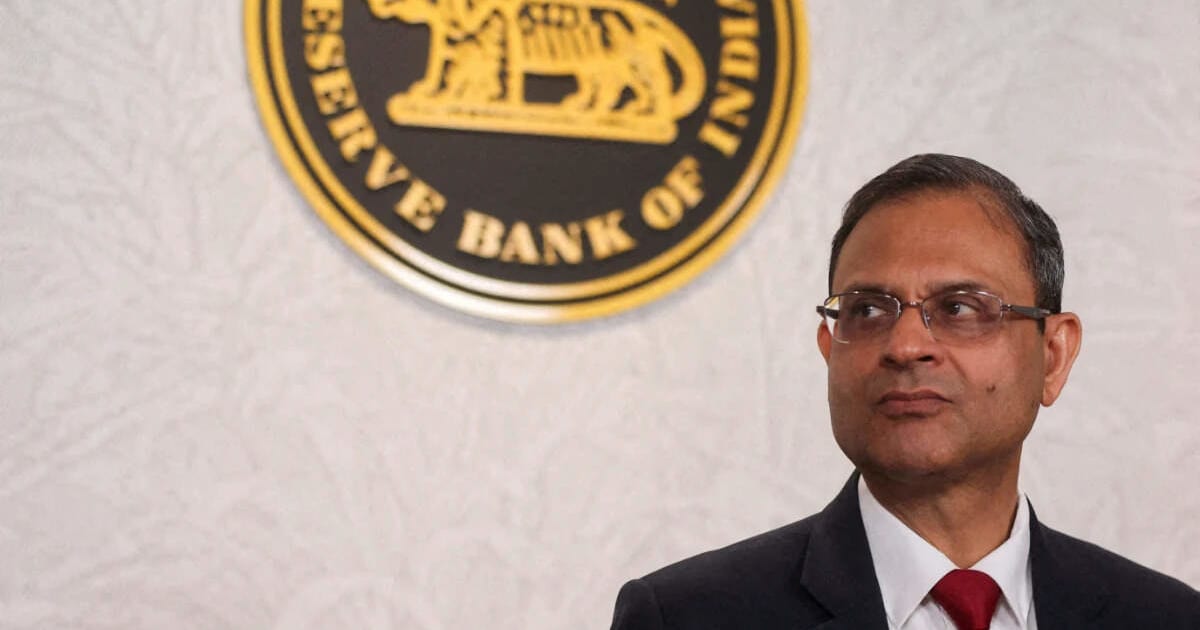
The Reserve Bank of India has signaled a firm 'no' to offshore settlement for sovereign bonds, prioritizing the NDS-OM platform over international clearing houses. This strategic move aims to retain domestic market oversight but risks alienating global passive capital. We analyze the implications for Indian banking stocks and long-term yield stability.
The Sovereignty Play: Why the RBI is Choosing Control Over Convenience
In a move that underscores the Reserve Bank of India’s (RBI) cautious approach to financial liberalization, the regulator has effectively slammed the door on offshore settlement for Indian Government Securities (G-Secs). By insisting that all transactions occur via the Negotiated Dealing System-Order Matching (NDS-OM) platform, the RBI is prioritizing domestic price discovery and systemic control over the operational ease favored by global clearing houses like Euroclear.
For the average investor, this is more than a technical clearing debate; it is a fundamental shift in how India integrates with global capital markets. While the recent inclusion of Indian bonds in the J.P. Morgan GBI-EM index suggested a transition toward global integration, the RBI’s latest stance confirms that this integration will be on India's terms—not the West's.
How will the RBI’s stance on G-Sec settlement affect foreign capital inflows?
The primary friction point is 'operational efficiency.' Global passive funds, which manage trillions in assets, prefer to settle trades through international custodians to minimize currency risk and administrative overhead. By mandating domestic settlement, the RBI forces these funds to establish a local presence or rely on Indian custodial banks, adding a layer of cost and complexity. Historically, when emerging markets have imposed similar capital controls—such as Brazil in the early 2010s—we saw an initial cooling of foreign inflows followed by a stabilization of yields as domestic participants stepped in to fill the void.
Deep Market Impact: The Domestic Liquidity Shield
The RBI’s move is essentially a liquidity insurance policy. By keeping settlement on the NDS-OM, the regulator ensures that it retains granular oversight of every transaction, preventing the 'shadow' trading that offshore settlement can facilitate. This is critical for maintaining stability during periods of global volatility. In 2022, when global yields spiked, the Nifty 50 saw significant outflows, yet the Indian bond market remained relatively insulated due to the high participation of domestic institutional investors (DIIs). This policy reinforces that insulation, though it may come at the cost of slightly higher yield volatility if foreign demand fluctuates based on settlement friction.
Stock-by-Stock Breakdown: Winners and Losers in the Banking Sector
The banking sector is the primary transmission mechanism for this policy. Here is how the landscape shifts for key players:
- State Bank of India (SBIN): As the primary dealer and the largest player in the G-Sec space, SBIN stands to benefit from sustained domestic volume. With a P/E ratio hovering around 10-11x, SBIN remains a play on the 'domestic control' narrative.
- PNB (PNB) & Bank of Baroda (BANKBARODA): These public sector giants benefit from the RBI’s mandate, as their institutional desks are deeply integrated with the NDS-OM. They effectively act as the gatekeepers of domestic liquidity.
- HDFC Bank (HDFCBANK): As the largest private player, HDFC Bank’s custodial services arm will likely see increased demand as foreign investors look for local partners to navigate the mandatory domestic settlement process. This could provide a marginal boost to their non-interest income.
Expert Perspective: Bulls vs. Bears
The Bull Case: Proponents argue that the RBI’s move protects the Indian Rupee (INR) from the volatility of 'hot money' that flows in and out of offshore-settled bonds. By forcing investors to engage with the domestic ecosystem, the RBI ensures that the bond market remains a tool for local economic development rather than a speculative playground for global macro hedge funds.
The Bear Case: Critics contend that this is a missed opportunity. By creating a 'friction cost,' India risks being viewed as a 'difficult' market, potentially limiting the depth of the investor base. This could lead to a lower 'index inclusion premium' than previously anticipated, as passive funds may opt for more accessible emerging market debt elsewhere.
Actionable Investor Playbook
Investors should calibrate their expectations for the Indian debt market over the next 12-24 months:
- Watch the Yields: Monitor the 10-year G-Sec yield closely. If it trends upward due to perceived settlement difficulty, look for entry points in high-dividend-yielding public sector banks.
- Custodial Plays: Keep a close watch on private banks with robust custodial businesses. HDFC Bank and ICICI Bank are likely to see increased volume in their settlement services.
- Tactical Rotation: As this policy matures, expect a rotation into domestic-oriented financial stocks that benefit from a stable, government-monitored interest rate environment.
Risk Matrix
| Risk Factor | Probability | Impact |
|---|---|---|
| Increased Yield Volatility | Medium | Medium |
| Reduced Global Passive Inflows | High | Medium |
| Regulatory Reversal | Low | High |
What to Watch Next: Catalysts for the Coming Quarters
The next major catalyst will be the upcoming RBI Monetary Policy Committee (MPC) meeting. Pay close attention to the Governor’s commentary on 'market development' and 'foreign exchange management.' Additionally, watch the quarterly data on FII investment in debt. If we see a stagnation in the inflow figures despite index inclusion, it will confirm that the settlement friction is indeed acting as a meaningful barrier to entry.
See SBIN's AI Score
Our algorithmic screener scores SBIN on fundamentals, momentum, and risk — free to try, no card needed.
Try the AI Screener →Have questions about this story?
Ask Welth, our finance-focused AI research assistant, for a deeper breakdown — free trial included.
Chat with Welth AI →Disclaimer: This content is generated by WelthWest Research Desk based on publicly available reports and is for informational purposes only. It does not constitute financial advice, investment recommendations, or an offer to buy or sell securities. Always consult a qualified financial advisor before making investment decisions.