Key Takeaway
The Reliance-Meta partnership is the 'Jio Moment' for Indian AI. By localizing compute in Jamnagar, Reliance is shifting from a consumer connectivity play to an enterprise-grade AI infrastructure powerhouse, creating a new moat for the next decade of digital growth.
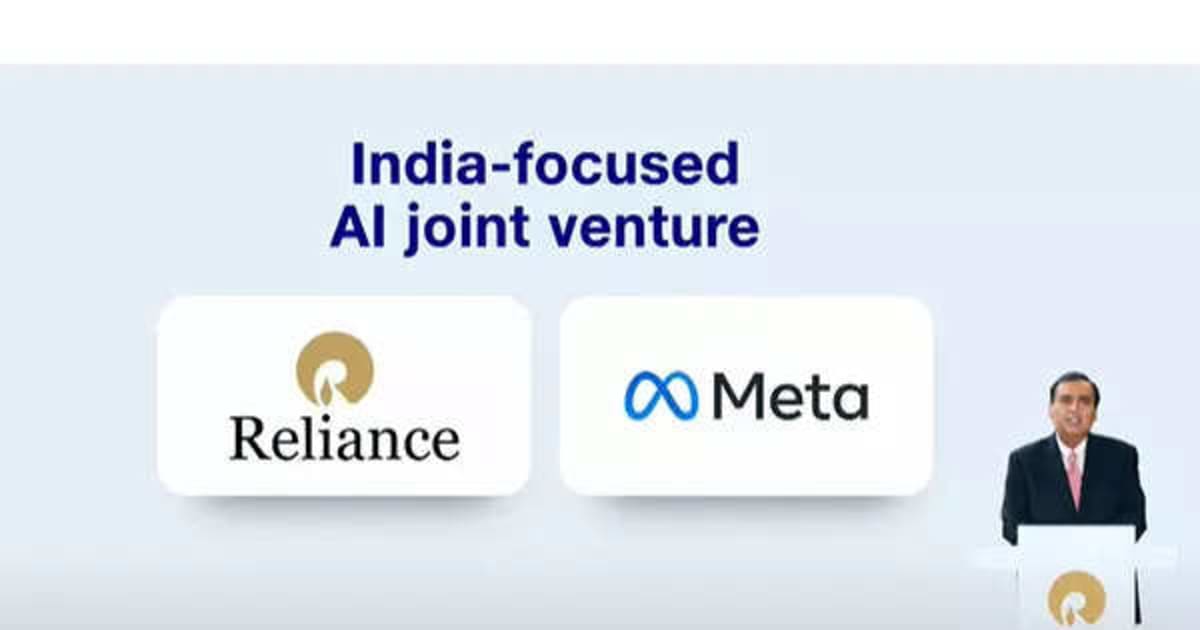
Reliance Industries and Meta are launching India’s first large-scale AI data center in Jamnagar. This deep dive explores the strategic implications for Indian tech, the infrastructure supply chain, and why this marks a turning point for sovereign AI capabilities.
The Jamnagar Pivot: Why the Reliance-Meta AI Deal Changes Everything
For two decades, the Indian IT sector acted as the world’s back office. Today, the announcement of a massive 168 MW AI data center in Jamnagar, Gujarat—a joint effort between Reliance Industries and Meta—signals that India is graduating from a service provider to an infrastructure owner. This is not merely a leasing agreement; it is a fundamental reconfiguration of the Indian digital stack.
As global hyperscalers struggle with energy-constrained data centers in the US and Europe, Reliance is leveraging its captive energy infrastructure in Jamnagar to solve the single greatest bottleneck in artificial intelligence: the 'Power-Compute' nexus. By integrating high-density AI clusters with its own power generation, Reliance is creating a defensive moat that traditional cloud providers will find difficult to replicate.
How will the Reliance-Meta partnership redefine Indian AI infrastructure?
The core of this deal lies in sovereign AI. By hosting massive AI compute nodes on Indian soil, Reliance is positioning itself as the primary landlord of the Indian digital economy. Historically, India has relied on foreign cloud providers for high-end AI compute, leading to data latency and sovereignty concerns. This move flips the script, forcing enterprise-grade AI applications to run on infrastructure that Reliance controls.
The scale of 168 MW is substantial. To put this in perspective, a standard enterprise data center typically operates at 10-20 MW. A 168 MW facility dedicated to AI indicates a facility optimized for high-performance computing (HPC) and GPU-heavy workloads, likely utilizing NVIDIA’s H100/B200 architecture. This is a direct challenge to the current dominance of AWS, Azure, and Google Cloud in the Indian enterprise segment.
Deep Market Impact: The Ripple Effect on Nifty IT and Beyond
The market impact of this partnership will be felt across three distinct waves. First, the Infrastructure Wave: firms involved in cooling, power management, and fiber connectivity will see a massive uptick in order books. Second, the Integration Wave: IT services firms will pivot their consulting arms to manage the migration of enterprise workloads to this new sovereign cloud. Third, the Enterprise Adoption Wave: Indian conglomerates will finally have the local compute capacity to train proprietary LLMs without relying on offshore infrastructure.
In 2022, when the 5G rollout began, the Nifty IT index experienced a 12% volatility spike as the market repriced the value of digital infrastructure. We expect a similar, albeit more sustained, rerating for companies that demonstrate direct exposure to the 'AI-Compute' supply chain.
Stock-by-Stock Breakdown: Winners and Laggards
- Reliance Industries (RELIANCE): The primary beneficiary. By controlling the 'pipes' and the 'power,' Reliance secures a high-margin recurring revenue stream that is decoupled from retail volatility. With a market cap exceeding ₹19 lakh crore, this AI pivot provides the necessary growth catalyst to justify its current P/E of ~28x.
- Tata Consultancy Services (TCS): As a leader in AI integration, TCS is the natural partner for enterprises looking to migrate to the Jamnagar cloud. Their focus on custom AI solutions makes them a 'buy' for investors betting on the software layer of this infrastructure.
- Infosys (INFY): Infosys has been aggressive in their 'Topaz' AI suite. Their ability to manage complex cloud transitions will be critical as the Reliance-Meta data center goes live, positioning them as a key implementation partner.
- Sterlite Technologies (STLTECH): The unsung hero. Massive data centers require massive fiber backhaul. As Reliance expands its data center footprint, STLTECH’s optical interconnect solutions will see increased demand, potentially reversing recent margin compression.
- HCL Technologies (HCLTECH): HCL’s strength in infrastructure management services (IMS) makes them a prime candidate for managing the day-to-day operations of large-scale, private-enterprise AI clouds.
The Contrarian View: Are We Overestimating the AI Moat?
Bears argue that AI is a capital-intensive game with a 'winner-takes-most' dynamic dominated by global hyperscalers. They contend that Reliance’s entry into data centers is a high-Capex gamble that could pressure their debt-to-equity ratio if AI adoption in India does not scale at the projected 35% CAGR. Furthermore, the risk of 'energy cannibalization'—where the data center consumes power intended for the grid—could invite regulatory scrutiny.
Conversely, bulls argue that India’s unique data residency laws and the sheer scale of the Indian consumer market provide a 'local advantage' that global players cannot bypass. If Reliance successfully bundles AI compute with its Jio connectivity, it creates a 'sticky' ecosystem that locks in enterprise clients for years.
Actionable Investor Playbook: Navigating the AI Shift
For institutional and retail investors, the strategy should be tiered:
- The Core Play: Accumulate RELIANCE on dips. Their control over both the energy supply and the data infrastructure makes them the ultimate proxy for India’s AI growth.
- The Implementation Play: Watch TCS and INFY. These firms will be the 'consultants of record' for the massive digital transformation projects that will follow the launch of this data center.
- The Infrastructure Play: Monitor STLTECH for breakthroughs in high-speed connectivity orders.
Time Horizon: This is a 3-5 year thesis. Investors should look for entry points during quarterly earnings volatility when the market focuses on short-term margin compression rather than long-term infrastructure wins.
Risk Matrix: What Could Derail the Jamnagar Project?
| Risk Factor | Probability | Impact |
|---|---|---|
| Regulatory Scrutiny (Data Sovereignty) | Medium | High |
| Energy Supply Chain Bottlenecks | High | Medium |
| AI Talent Shortage in India | Medium | Low |
What to Watch Next
Investors should monitor the upcoming Reliance AGM for specifics on the 'Jio AI Cloud' pricing model. Additionally, watch for any announcements regarding partnerships between Reliance and global GPU manufacturers, which would confirm the scale of their compute capability. The next 6 months will be defined by the first wave of enterprise pilot programs on this new infrastructure—this will be the 'proof of concept' that validates the investment thesis.
See RELIANCE's AI Score
Our algorithmic screener scores RELIANCE on fundamentals, momentum, and risk — free to try, no card needed.
Try the AI Screener →Have questions about this story?
Ask Welth, our finance-focused AI research assistant, for a deeper breakdown — free trial included.
Chat with Welth AI →Disclaimer: This content is generated by WelthWest Research Desk based on publicly available reports and is for informational purposes only. It does not constitute financial advice, investment recommendations, or an offer to buy or sell securities. Always consult a qualified financial advisor before making investment decisions.