Key Takeaway
The semiconductor correction is a canary in the coal mine for global tech CAPEX. Investors should rotate out of high-beta IT services and into domestic consumption plays to hedge against slowing Western digital transformation budgets.
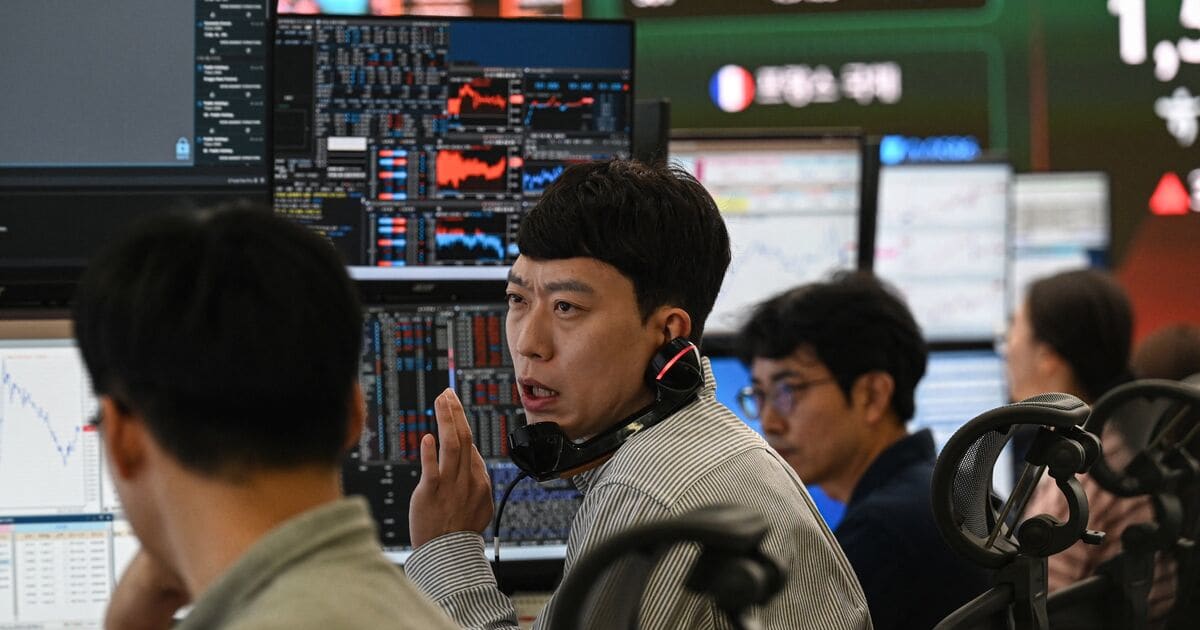
South Korean semiconductor volatility is signaling a cooling phase in the global AI-driven rally. As a bellwether for the global supply chain, this shift threatens the revenue growth of Indian IT giants. We break down the risks to your portfolio and where the smart money is moving.
The Semiconductor Bellwether: Why Seoul’s Volatility Matters in Mumbai
In the global financial ecosystem, South Korea serves as the high-frequency pulse of the semiconductor industry. When the KOSPI tech index swings, it isn't merely a local market tremor; it is a leading indicator of global corporate CAPEX. Recent volatility in major Korean chipmakers has sent shockwaves through global markets, signaling that the 'AI Supercycle' is entering a period of critical re-evaluation.
For the Indian investor, the connection is direct and structural. The Indian IT services sector, which contributes roughly 7.5% to the nation’s GDP, relies heavily on the digital transformation budgets of Western enterprises. When global chip demand falters, it signals that the hardware-led infrastructure boom is hitting a valuation ceiling, inevitably leading to a tightening of discretionary tech spending in the US and Europe.
How will the semiconductor slowdown impact Indian IT stocks?
The correlation between global semiconductor demand and Indian IT revenue is rooted in the ‘Tech Spend Cycle.’ During the 2022 inflationary environment, a similar cooling in chip demand preceded a multi-quarter slowdown in the Nifty IT index, which saw a drawdown of nearly 25% from its peak. Today, the stakes are higher due to the massive capital allocation toward Generative AI.
If Western clients—ranging from banking giants to retail conglomerates—begin to prioritize cost optimization over aggressive AI experimentation, the order books of Indian IT majors will face immediate pressure. We are already seeing a shift in deal structures from ‘transformational’ to ‘efficiency-led,’ which inherently carries lower margins.
Stock-by-Stock Breakdown: Who is Most Exposed?
- TCS (TCS.NS): As the industry leader, TCS is shielded by its massive scale and legacy maintenance contracts. However, its high P/E ratio (currently trading at ~30x) leaves it vulnerable to multiple compression if growth guidance is revised downward.
- Infosys (INFY.NS): Infosys has higher exposure to discretionary spending in the financial services sector. Any reduction in US banking tech budgets will show up in their quarterly guidance first, making it a high-beta play in this environment.
- HCL Technologies (HCLTECH.NS): With a strong footprint in engineering and R&D services, HCL is directly linked to semiconductor and hardware manufacturing. If global hardware demand remains volatile, HCL’s R&D segment may face significant headwinds.
- Dixon Technologies (DIXON.NS): As a pure-play electronics manufacturing services (EMS) firm, Dixon is highly sensitive to the semiconductor supply chain. While domestic demand is robust, global chip shortages or price spikes could compress their already thin manufacturing margins.
- Wipro (WIPRO.NS): Wipro’s ongoing restructuring makes it a wildcard. In a cooling market, the company’s ability to capture high-margin AI projects is critical; failure to do so could lead to further underperformance relative to peers.
The Expert Perspective: Bulls vs. Bears
The Bull Case: Proponents argue that the current volatility is a temporary digestion phase. They contend that AI is a secular trend, not a cyclical one, and that the long-term demand for data center infrastructure will eventually override short-term hardware volatility. They point to healthy cash reserves in the IT sector as a buffer against market turbulence.
The Bear Case: Skeptics, including our desk at WelthWest, argue that the market has priced in perfection. With valuations at historic premiums, any miss in earnings growth due to reduced client CAPEX will lead to a sharp correction. History shows that when semiconductor cycles turn, IT services firms are rarely spared, regardless of their 'AI-ready' marketing.
Actionable Investor Playbook
Investors should adopt a 'Barbell Strategy' to navigate the coming months:
- Defensive Rotation: Increase exposure to FMCG (e.g., HUL, Nestle India) and domestic consumption stocks. These sectors act as a hedge, as they are decoupled from global tech spending cycles.
- Watch the P/E Ratios: Avoid IT stocks trading at significant premiums to their 5-year average. Focus on companies with strong free cash flow yields rather than speculative growth narratives.
- Monitor Client CAPEX: Keep a close watch on the quarterly earnings calls of major US tech giants (Microsoft, AWS, Google). Their commentary on future-year spending is the most accurate predictor of Indian IT revenue growth.
Risk Matrix
| Risk Factor | Probability | Impact |
|---|---|---|
| US Recessionary Pressure | Medium | High |
| Sustained Chip Price Volatility | High | Medium |
| Currency Devaluation (USD/INR) | Low | Medium |
What to Watch Next
The upcoming earnings season for Nifty IT companies will be the definitive catalyst. Specifically, look for management commentary on 'Deal Pipeline Conversion' and 'Client Discretionary Spending.' If firms begin to guide for lower growth in Q3/Q4, the current semiconductor-led volatility will likely evolve into a broader correction for the Indian technology sector.
See TCS's AI Score
Our algorithmic screener scores TCS on fundamentals, momentum, and risk — free to try, no card needed.
Try the AI Screener →Have questions about this story?
Ask Welth, our finance-focused AI research assistant, for a deeper breakdown — free trial included.
Chat with Welth AI →Disclaimer: This content is generated by WelthWest Research Desk based on publicly available reports and is for informational purposes only. It does not constitute financial advice, investment recommendations, or an offer to buy or sell securities. Always consult a qualified financial advisor before making investment decisions.