Key Takeaway
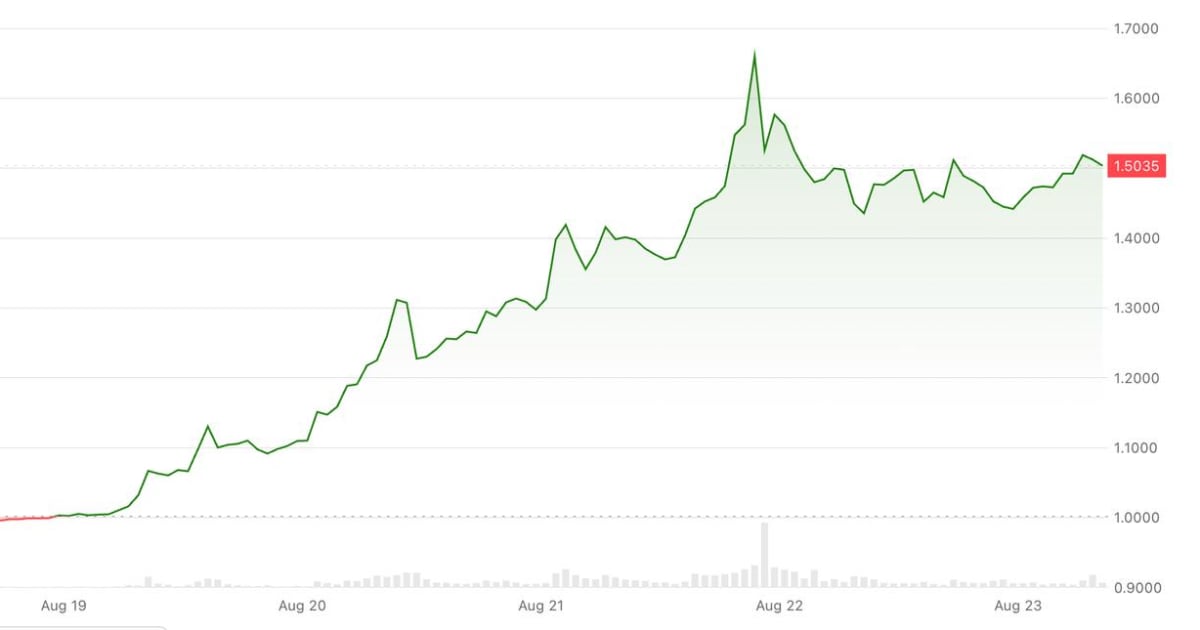
Shiprocket's stellar IPO debut, commanding a 35% premium, unequivocally validates investor appetite for India's digital-first logistics and D2C enablement sector. This event is a powerful catalyst, set to re-rate valuations across the logistics tech landscape and intensify the focus on last-mile delivery innovators, compelling investors to reassess their positions in both established players and emerging disruptors.
Shiprocket's impressive 35% IPO premium isn't just a win for one company; it's a seismic shift for India's entire e-commerce logistics ecosystem. This article dissects the implications for D2C brands, last-mile delivery innovators, and traditional logistics giants. Discover which Indian stocks are poised for significant movement and how savvy investors can capitalize on this evolving landscape.
Shiprocket's Bumper IPO: A Watershed Moment for India's Logistics & D2C Ecosystem
The Indian stock market witnessed a significant event recently as Shiprocket, a prominent player in the e-commerce logistics and enablement space, made its public debut with a staggering 35% premium over its IPO price. This wasn't merely a successful listing; it was a powerful affirmation of investor confidence in the burgeoning digital infrastructure supporting India's direct-to-consumer (D2C) revolution and the broader e-commerce landscape. For WelthWest Research Desk, this event transcends a single company's performance, signaling profound shifts across the logistics tech sector and offering a critical lens through which to re-evaluate investment strategies in a rapidly evolving market.
The core of Shiprocket's appeal lies in its sophisticated platform, which empowers D2C brands, SMEs, and social commerce businesses with end-to-end logistics solutions, from warehousing and shipping to payment gateways and marketing tools. In a nation where e-commerce penetration is still expanding rapidly beyond tier-1 cities, facilitated by increasing internet access and smartphone adoption, companies like Shiprocket are not just service providers; they are fundamental enablers. Their ability to streamline complex supply chains for a diverse array of merchants, particularly those without the scale of e-commerce giants, positions them at the heart of India's digital commerce growth story. This successful IPO, therefore, isn't just about Shiprocket's valuation; it's about the market's conviction in the long-term viability and profitability of the e-commerce enablement model in India.
What Does Shiprocket's IPO Mean for the Indian Logistics Sector?
Shiprocket's robust listing, which saw its shares trade significantly above their issue price, injects a palpable bullish sentiment into the broader logistics and e-commerce enablement sector on the Indian stock exchanges. This performance serves as a benchmark, potentially encouraging a new wave of tech-logistics startups to consider public listings, thereby expanding the universe of investable companies in this high-growth segment. Historically, strong IPOs in nascent but critical sectors have often acted as catalysts, drawing greater institutional and retail investor attention, and this appears to be the case here. For instance, the enthusiasm seen during Zomato's IPO in 2021, despite subsequent market corrections, initially galvanized interest in India's digital economy stocks. Shiprocket's listing, while smaller in scale, carries similar thematic weight for its niche.
The premium reflects a market that understands the strategic importance of efficient, technology-driven logistics for the future of Indian retail. With India's e-commerce market projected to reach $300 billion by 2030, the underlying logistics infrastructure is paramount. Companies that can offer scalability, cost-efficiency, and tech-integration for last-mile delivery and supply chain optimization are poised for exponential growth. This dynamic is shifting the competitive landscape, putting pressure on traditional logistics players to innovate or risk losing market share to agile, tech-first counterparts. The valuation premium Shiprocket commanded suggests investors are willing to pay for this future growth potential, even in a market environment where capital has become more discerning.
Deep Market Impact: Re-rating the Indian Logistics & E-commerce Enablement Landscape
The reverberations of Shiprocket's IPO success are set to be felt across the Indian stock market, particularly within the logistics and e-commerce enablement segments. This event provides a fresh valuation anchor, compelling analysts and investors to re-assess the growth trajectories and intrinsic values of both established players and emerging tech disruptors. The market's willingness to assign a substantial premium to a company facilitating D2C brands underscores the strategic importance of this niche. This isn't merely about transporting goods; it's about providing the digital backbone for millions of small and medium enterprises to access a national, and increasingly global, customer base.
The current market sentiment, while cautious globally, has shown a distinct appetite for Indian growth stories, especially those linked to digital transformation. Shiprocket's IPO provides a tangible data point for this trend. We anticipate a re-evaluation of P/E multiples and revenue growth projections for companies operating in similar spaces, as investors seek to identify the 'next Shiprocket.' The increased investor confidence could lead to a 'flight to quality' within the sector, where companies demonstrating robust technology platforms, clear profitability pathways, and strong customer acquisition metrics will attract premium valuations. Conversely, logistics firms heavily reliant on legacy infrastructure and lacking significant tech integration may face valuation headwinds as the market increasingly favors digital agility.
Stock-by-Stock Breakdown: Navigating the Impact on NSE/BSE Logistics Players
Shiprocket's successful listing creates a ripple effect across several listed Indian logistics and e-commerce enabling companies. Investors should pay close attention to the following stocks:
- Delhivery (DELHIVERY): As a direct peer in the tech-enabled logistics space, Delhivery stands to benefit significantly from the positive sentiment generated by Shiprocket's IPO. Delhivery, with its extensive network and integrated logistics solutions, has been a bellwether for the sector. Shiprocket's premium valuation could act as a re-rating catalyst for Delhivery, whose shares have experienced volatility since its own IPO. Investors will be scrutinizing Delhivery's upcoming quarterly results for signs of sustained growth and path to profitability, with the expectation that market comparisons to Shiprocket's performance will drive renewed interest. A sustained positive momentum in the broader logistics tech space could push Delhivery's P/S (Price-to-Sales) multiple closer to its post-IPO highs, from its current range.
- Blue Dart Express (BLUEDART): A stalwart in express logistics, Blue Dart represents the more traditional, yet highly efficient, segment. While not a direct tech-logistics pure-play like Shiprocket, Blue Dart's premium services and strong brand recall position it favorably to capitalize on the overall expansion of e-commerce volumes. The challenge for Blue Dart, and its opportunity, lies in demonstrating its continued ability to integrate technology, enhance last-mile efficiency, and potentially cater to the growing D2C segment. An uptick in overall logistics activity fueled by D2C growth could indirectly boost Blue Dart's parcel volumes, but investors will be looking for strategic partnerships or tech investments to maintain competitiveness against agile startups.
- Allcargo Logistics (ALLCARGO): Allcargo operates across various logistics segments, including container freight stations, inland container depots, and project logistics. While not directly comparable to Shiprocket's D2C focus, the broader optimism in the logistics sector can lead to increased investor interest in well-diversified logistics players. Allcargo's robust balance sheet and established infrastructure provide a strong foundation. The impact here is more thematic; if the Shiprocket IPO signals increased capital allocation to logistics infrastructure, Allcargo, with its asset-heavy model, could see renewed institutional interest, especially if it can articulate a clear strategy for digital integration across its diverse operations.
- Gati (GATI): Gati, known for its express distribution and supply chain solutions, is another player that will be under the spotlight. Similar to Blue Dart, Gati faces the imperative to leverage technology to optimize its network and service offerings. The success of Shiprocket highlights the value placed on technology-driven efficiency and customer-centric solutions. Gati's ability to adapt and expand its digital offerings for the e-commerce and D2C segments will be crucial. A significant push into tech-enabled services or partnerships could make Gati an attractive turnaround story within the bullish logistics context.
- TCI Express (TCIEXP): As a leader in express distribution, TCI Express focuses on time-definite cargo delivery. While its core clientele is B2B, the overall sentiment shift towards efficient logistics will benefit TCI Express. The increased investment in logistics infrastructure and the push for faster delivery cycles across the economy, driven by e-commerce, will create tailwinds for companies like TCI Express that excel in speed and reliability. Investors will watch for TCI Express's continued market share gains and operational efficiencies in a competitive environment.
Expert Perspective: Bulls vs. Bears on Indian Logistics Tech
The Shiprocket IPO has ignited a fresh debate among market experts regarding the future trajectory of India's logistics tech sector. The bulls, buoyed by the strong listing, argue that this marks the beginning of a significant re-rating for companies enabling the D2C revolution. They point to India's vast underserved merchant base, the exponential growth in online shopping, and the critical role technology plays in democratizing access to efficient logistics. Bullish analysts emphasize the 'network effect' of platforms like Shiprocket, where more merchants attract more logistics partners, leading to better service and lower costs, creating a virtuous cycle. They foresee sustained high revenue growth for these enablers, justifying premium valuations based on future profitability and market capture in a fragmented, yet rapidly consolidating, industry. The argument is that these companies are not just logistics providers but essential software layers for the future of commerce.
Conversely, the bears strike a more cautious tone. While acknowledging the sector's growth potential, they highlight several risks. The primary concern revolves around profitability and intense competition. The logistics sector, especially last-mile delivery, is notoriously capital-intensive and operates on thin margins. Bears question the long-term sustainability of current growth rates and whether companies can transition from revenue growth to consistent, substantial profits without significant price increases that could deter D2C brands. They also point to the fragmented nature of the market, where numerous regional and national players compete fiercely, potentially leading to price wars and margin erosion. Furthermore, the ability to scale while maintaining service quality across India's diverse geographical landscape presents operational challenges. Some contrarians also argue that established e-commerce giants like Amazon and Flipkart are continuously enhancing their in-house logistics capabilities, posing a structural threat to third-party providers. The key for bears is not the absence of opportunity, but the challenge of translating that opportunity into predictable, high-margin returns for shareholders.
Actionable Investor Playbook: Navigating the New Logistics Landscape
For investors looking to capitalize on the shifts brought about by Shiprocket's IPO, a nuanced approach is essential. This is not a 'buy everything' moment, but rather an opportunity to strategically position portfolios for long-term growth in India's digital economy.
- For Growth-Oriented Investors (Time Horizon: 3-5 years):
- Buy/Accumulate: Consider accumulating shares of Delhivery (DELHIVERY) on dips. Its comprehensive network and established market position make it a prime beneficiary of the sector's re-rating. Look for entry points around its 52-week lows, if market corrections present such opportunities. The long-term thesis for Delhivery remains strong, underpinned by India's e-commerce trajectory.
- Watch: Keep a close watch on smaller, unlisted logistics tech startups that might be eyeing IPOs in the next 12-24 months. These could offer significant alpha if they follow Shiprocket's trajectory. Monitor private equity funding rounds for clues.
- For Value-Oriented Investors (Time Horizon: 1-2 years):
- Watch/Evaluate: Blue Dart Express (BLUEDART) and Gati (GATI). These traditional players are under pressure to innovate. Look for concrete announcements regarding tech investments, strategic partnerships, or significant expansions into D2C enablement. A clear pivot towards digital solutions could make them attractive value plays if their valuations haven't fully priced in this potential transformation. Monitor their quarterly earnings for improving digital revenue streams.
- For Diversification (All Horizons):
- Consider: Broader exposure to the Indian e-commerce theme through ETFs or mutual funds that heavily invest in technology and consumer discretionary sectors, as logistics is an indispensable component of this ecosystem.
Entry points should be carefully considered, especially given broader market volatility. Employ a staggered buying approach rather than deploying capital in one go. The goal is to build exposure to companies that are either direct beneficiaries of the D2C boom or those successfully adapting to the tech-driven paradigm shift in logistics.
Risk Matrix: Navigating the Road Ahead
While the outlook for India's logistics tech sector appears promising, several risks warrant close monitoring:
- Intensified Competition (Probability: High): The success of Shiprocket will undoubtedly attract more players, both domestic and international, into the e-commerce logistics and enablement space. This heightened competition could lead to pricing pressures, impacting margins for all participants. Existing players will need to continually innovate and differentiate their offerings.
- Sustaining Profitability (Probability: Medium): While revenue growth is strong, achieving and sustaining profitability in the capital-intensive logistics sector is challenging. Companies need to demonstrate operational efficiencies, optimize network utilization, and scale effectively without compromising service quality. Any delays in achieving profitability could temper investor enthusiasm.
- Regulatory Changes (Probability: Medium): The logistics sector is subject to various regulations concerning transportation, warehousing, and labor. Any adverse policy changes, such as new taxes, stricter labor laws, or environmental mandates, could increase operational costs and impact profitability.
- Economic Slowdown (Probability: Medium): A significant slowdown in India's economic growth or consumer spending could directly impact e-commerce volumes, subsequently affecting demand for logistics services. While e-commerce has shown resilience, a prolonged downturn could pressure growth rates.
What to Watch Next: Catalysts and Data Points
The narrative around India's logistics and e-commerce enablement sector is dynamic. Investors should keep an eye on the following catalysts and data releases:
- Quarterly Earnings of Listed Peers: Pay close attention to the next quarterly results from Delhivery (DELHIVERY), Blue Dart Express (BLUEDART), and Gati (GATI). Look for management commentary on e-commerce volumes, D2C partnerships, and technology integration initiatives. Any significant shifts in their P&L or balance sheets related to tech adoption will be key.
- E-commerce Sales Data: Monitor reports from industry bodies (e.g., IAMAI, RedSeer) on India's overall e-commerce growth, especially during festive seasons. Strong growth figures will reinforce the bullish thesis for logistics enablers.
- New IPO Filings: Keep an eye on SEBI filings for other tech-logistics or D2C enablement startups. A strong pipeline of quality IPOs would signal continued investor interest and sector maturity.
- Venture Capital Funding Rounds: Significant funding rounds for private logistics tech companies indicate continued investor confidence and potential future IPO candidates.
- Government Policy Announcements: Any initiatives related to logistics infrastructure development (e.g., National Logistics Policy implementation) or support for MSMEs and D2C brands could provide tailwinds for the sector.
Shiprocket's IPO is more than just a successful listing; it's a powerful signal illuminating the path forward for India's digital economy. As the D2C revolution gains further momentum, the companies that seamlessly power its logistics backbone are poised for significant growth, making this a crucial sector for long-term investors to understand and strategically engage with.
See Delhivery (DELHIVERY)'s AI Score
Our algorithmic screener scores Delhivery (DELHIVERY) on fundamentals, momentum, and risk — free to try, no card needed.
Try the AI Screener →Have questions about this story?
Ask Welth, our finance-focused AI research assistant, for a deeper breakdown — free trial included.
Chat with Welth AI →Disclaimer: This content is generated by WelthWest Research Desk based on publicly available reports and is for informational purposes only. It does not constitute financial advice, investment recommendations, or an offer to buy or sell securities. Always consult a qualified financial advisor before making investment decisions.